A piece of wood from the Swedish warship Vasa sold on Tradera for 26,300 kronor in 2005. Forty-two thousand people had clicked on the listing. Five bidders stayed in until 25,000 kronor. Jonas Nordlander, then the auction website’s managing director, knew something the spectators did not: the winner had been prepared to pay 47,600. A seventeenth-century shipwreck had produced a thoroughly modern bargain.
There is something pleasingly awkward about this early glimpse of Nordlander. A technology entrepreneur is explaining the price of old timber, with a museum’s objections hovering nearby. The internet has not made the object newer, prettier or more useful. It has brought together people who disagree, quite expensively, about what it is worth.
That small transaction offers a way into a career usually described through much larger numbers. Nordlander co-founded Tradera, helped build Avito in Russia and later became an investor. More recently, he has become a co-owner of Sibbjäns, a working farm and hotel on Gotland. Across these ventures, useful work begins with something already there.
Before Moscow, 750,000 things for sale
Tradera launched in 1999. By April 2006, when eBay bought it, the Swedish auction marketplace had more than 750,000 listings available at any given time. Collectibles shared the site with electronics, antiques and household goods. The announced purchase price was approximately 365 million kronor, before acquisition costs and a cash adjustment.
For eBay, which had launched its own Swedish service a year earlier, buying Tradera brought an established local trading community. For Nordlander, it closed one stretch of work and briefly opened another as an employee. He joined eBay, then left. A successful sale had apparently failed to produce a lasting enthusiasm for the salaried life.
He was considering where to build next. Russia was among the places his non-compete allowed him to operate. There was also an opportunity he could understand: people had accumulated possessions, internet use was growing, and selling secondhand goods remained inconvenient. A marketplace builder could recognise the ingredients without pretending to know the country.
The auction that needed a different answer
In October 2007, Nordlander had been in Moscow for about six months. Avito had just launched. Eight Russian employees covered development, design, marketing, accounts and support. His account of getting started included bureaucracy, language difficulties and the search for qualified people. Even after a previous company sale, he was back to assembling a small office.
Filip Engelbert was already involved in Russian business through Kontakt East and the Yellow Pages operation. Their paths converged around Avito, and Engelbert became Nordlander’s co-founder. The partnership supplied experience Nordlander lacked, along with someone to share the daily complications. In his later telling, companionship belonged beside business knowledge in the calculation.
The first model mixed classified advertisements with auctions. By 2009, the auction side had disappointed. Nordlander pointed to three practical obstacles: logistics, payments and trust. An auction depends on a chain of promises. The winning bid matters rather less if paying or receiving the item is uncertain.
Avito moved towards a clearer classifieds model. The distinction sounds modest until you consider the different behaviour it asks of a customer. A familiar business idea had crossed a border and encountered unfamiliar conditions. The response was to change the business. Previous success supplied experience; it did not supply an exemption from learning.

What is your clutter worth?
One of Avito’s early television campaigns made its case through an ordinary apartment full of belongings. Price tags appeared around the rooms. The question, translated from Russian, was simple: how much was your clutter worth? Nordlander explained that the advertisement needed to show people that objects sitting at home could be sold.
This was an explanation of a habit as much as a promotion for a website. A service can exist before customers have a reason to think of using it. An unwanted object is easy to overlook precisely because it is familiar. Put a price beside it and the household acquires a small, unexpected balance sheet.
The business grew quickly. Its reported revenue rose from about 7 million kronor in 2010 to 70 million in 2011 and more than 200 million in 2012. Television advertising helped build the audience, but it also cost money. In 2013, Nordlander was still discussing the company’s expected first profitable year. Scale had arrived before profit.
Historical revenue, not profit. The 2012 bar uses 200 as a conservative visual baseline.
A promise has to survive payday
Nordlander’s descriptions of leadership return to ordinary obligations. Employees had to see that salaries arrived and promises were kept. During one disruption to the company’s bank accounts, the founders used private money to pay staff. A speech about trust would have been cheaper. It would also have been less persuasive.
He wanted people to recruit colleagues who could do things better than they could themselves. That required managers to tolerate expertise beyond their own. He also described spending much of his early time on hiring. In a small company, each appointment changes both the work and the standards by which future appointments are judged.
“Talent wants to work with talent.”
Jonas Nordlander, 2021
The co-founders gave their kitchen a rather less polished line: “don’t fuck it up”. The language spared everybody another carefully laminated mission statement. Nordlander’s explanation was practical: protect the things that work and keep the basic obligations intact as the business grows. A successful company can become surprisingly inventive about forgetting them.
Learning when the map is large enough
His appetite for opportunity also produced a lesson in distraction. Nordlander spent almost two years travelling between Morocco, Cairo and Moscow as the founders explored the Middle East and North Africa. Looking back in 2021, he thought the expansion had diluted attention that could have created more value in the Russian business.
It is an unusually useful admission because the argument concerns opportunity cost. A venture can work and still be an expensive use of a founder’s time. The more successful the original business becomes, the harder that comparison gets. An exciting new market must compete with the unglamorous improvements available in the existing one.
Avito’s ownership changed in stages. Kinnevik sold its entire 31 percent interest to Naspers in 2015 for $846 million, in a transaction valuing Avito’s equity at $2.7 billion. In January 2019, Naspers increased its holding to 99.6 percent in a $1.16 billion transaction based on a $3.85 billion company valuation.
Those are company and shareholder transaction figures. The career that followed included investing through Otiva and backing other entrepreneurs. His interests also extended to journalism: in 2016, he and Engelbert invested a combined 500,000 kronor in Blank Spot Project, the foreign-reporting venture associated with Martin Schibbye, Nils Resare and Brit Stakston.
There was a management handover, too. Vladimir Pravdivy became Avito’s CEO in 2016. Later, he described the founders as helpful mentors as he adjusted to the broader responsibilities of the role. Nordlander’s part in the company therefore includes the work of letting another executive take charge.
The next business had a planting season
On southern Gotland, Nordlander and his wife, journalist Kina Zeidler, joined Susanna and Pontus Rönn in creating Sibbjäns. The venture combines accommodation, a restaurant and farming on a former horse farm. It soft-opened in 2025; April 2026 marked the start of its first full season.
The project began with a much smaller idea. Nordlander recalled thinking it would be enjoyable and would not demand too much involvement from him. Then the restaurant’s ventilation system turned out to cost more than the original total budget. The partners committed more fully. Agriculture had delivered an introductory course in capital expenditure.
He subsequently described kneeling to plant, among 40,000 plants the team had put into the ground. He credited gardener Karin Winarve and her colleagues. His new vocabulary included ponds, growing tunnels and a root cellar. He freely acknowledged how little he had known about these systems before joining the project.
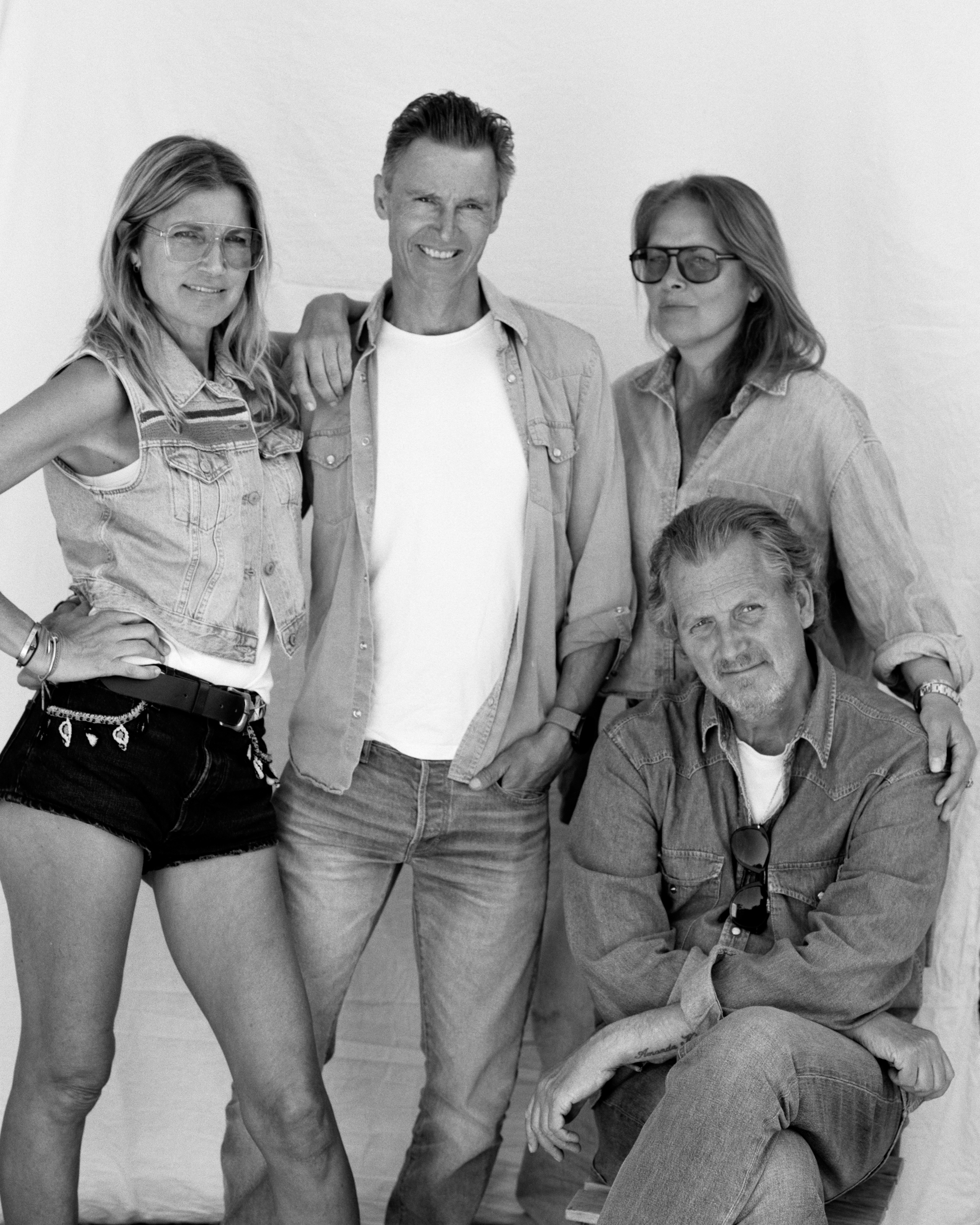
The working operation involves specialists. Architect and project manager Maja Berg helped realise the buildings. Kina handles marketing and PR. The team includes growers, kitchen staff and people responsible for the hotel. On its own team page, Nordlander receives a pleasantly economical description: “a happy and proud contributor”.
There are 22 individually designed rooms across the hotel and bunkhouse. The rooms carry the names of women important to the founders’ families and friendships. Traditional building methods and local craftsmanship sit beside the practical demands of feeding guests. A farm hotel offers plenty of opportunities to discover that attractive ideas require maintenance.
Twenty-two rooms, and more to learn
Sibbjäns appeared on the 2026 Condé Nast Traveler Hot List. Nordlander welcomed the recognition publicly, then described a wider ambition: he wanted visitors to take inspiration from the property’s growing, water use, buildings, animals and approach to waste. The award concerned a place to stay; his stated hopes extended to what guests might carry home.
Water is a particularly concrete concern. The farm uses rain collection, and its food draws on vegetables, eggs and meat produced on the property. Such details give the project something more demanding than a countryside aesthetic. Seasons influence what can be grown, served and stored. The land keeps its own calendar.
Seen together, these businesses suggest a recurring interest in overlooked capacity. Tradera connected objects with bidders. Avito made household possessions easier to sell. Sibbjäns gives an existing farm another working life. The comparison has limits, of course. A garden cannot be persuaded to grow faster by a well-designed advertisement.
But Nordlander has put himself back among people who know things he is learning. There is a long distance between an auction listing and a planting bed, and a familiar satisfaction at either end: something that might have sat unused has found a purpose. This time, the work includes getting his knees dirty.