Gordon Whitten kept making the same trip: Omaha to San Diego. He would print his boarding pass, get to the airport and look at a mostly empty sheet of paper. According to the account Mark Rabe later gave AdExchanger, that unused space supplied Sojern’s first idea. Put useful destination information on the page. Sell advertising beside it. A document that got someone onto an airplane could also earn money.
- The signal: someone is planning a particular trip.
- The customer: a travel business trying to win that booking.
- The bargain: some hotels pay only after the guest stays.
A ticket to somewhere
Whitten founded Sojern in 2007. By 2008, major U.S. airlines were signing up for its boarding-pass service. The modest insight had a substantial advantage: an airline already knew where a passenger was going. An advertisement for a restaurant at that destination could be relevant in a way a random restaurant advertisement could not.
When Rabe became chief executive in 2011, the company was developing a larger application of those relationships. In an interview that November, he described a new audience-targeting business built on airline data. The advertising could follow the traveler beyond the check-in page. By early 2013, Travel Weekly reported that data-related revenue had overtaken boarding-pass ad sales.
Read that sequence carefully. A useful business was already sitting inside the first business. The paper supplied distribution; the trip supplied context. Once those could be separated, Sojern could sell the second advantage across more of the internet.
The hotel wants the relationship
Today, Sojern combines travel intelligence, audience targeting, campaign management and guest software. Hotels are an obvious customer, but destinations, attractions, airlines and agencies also use its services. Its August 2026 company description puts annual usage at more than 13,000 travel marketers.
Rabe explained the targeting problem in a 2018 PhocusWire interview: the same person can arrange business travel at short notice and plan a holiday much further ahead. An average traveler is therefore a poor guide to the next booking. The relevant unit is the trip in progress. That is why Sojern’s expertise in travel signals matters more to its pitch than a broad demographic description of its audience.
For a hotel, the problem is unusually personal. It can provide the room, the breakfast and the welcome, yet another company may control the booking relationship. Sojern tries to bring travelers to the hotel’s own booking channel through search, metasearch, social, display, video and connected television.
The Grand Mark Prague offers a concrete example. In Sojern’s published case study, the hotel reported over €45,000 in direct-booking revenue in under four months. Its direct-booking share grew from roughly 10-15% to almost 30%. Revenue manager Jiří Černý credited Sojern with part of that increase. The qualification matters: these are reported campaign results, not an experiment proving that every attributed booking was additional.
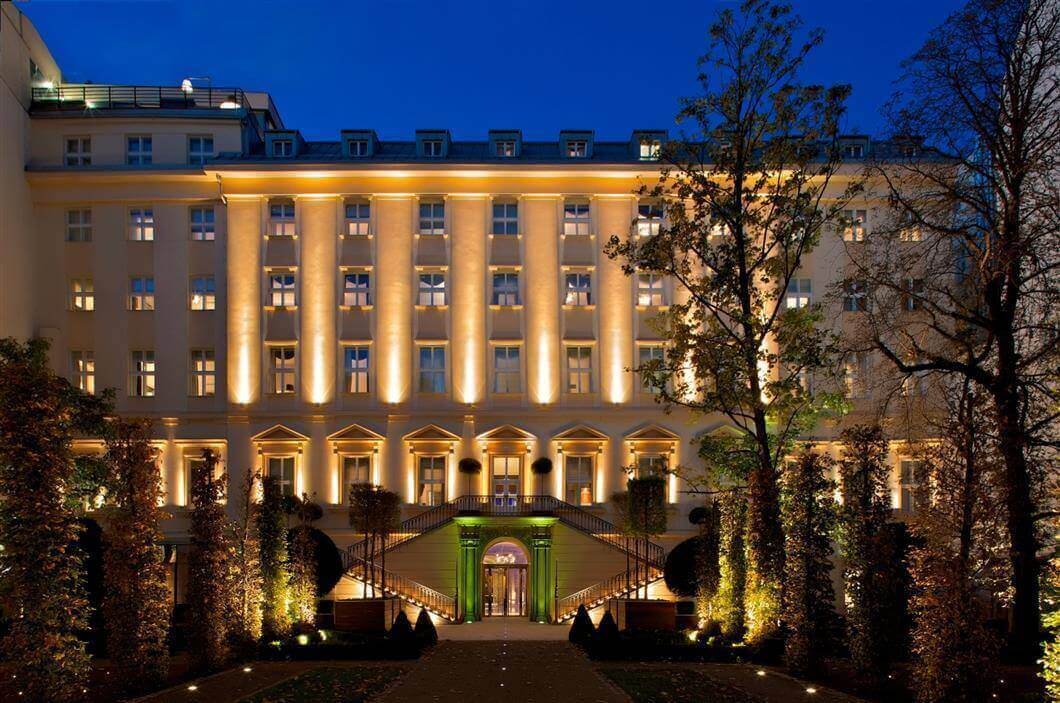
“It doesn’t need to be complicated to be a good solution.”
Jiří Černý · The Grand Mark Prague
VIK Hotels encountered a less glamorous obstacle: rates appearing incorrectly on some metasearch engines. Its case study describes adopting Sojern to expand coverage and achieve price accuracy. The lesson travels well. Before buying more attention, check what a prospective guest actually sees.
Fifteen percent, after checkout
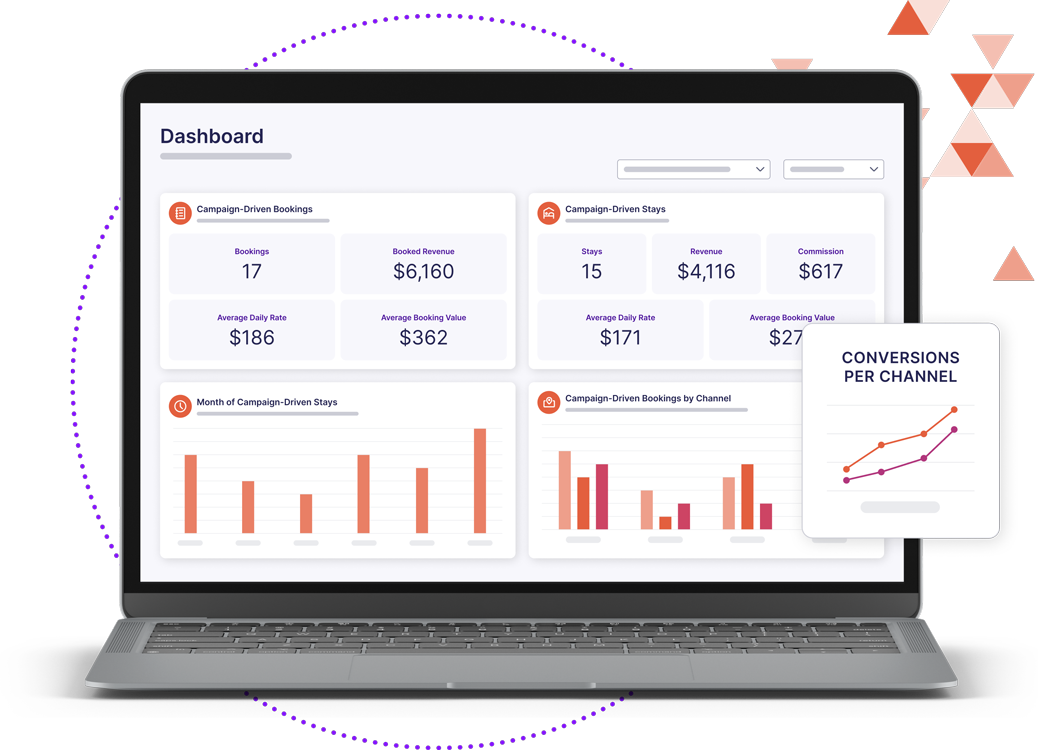
Sojern’s public commission offer is straightforward: a hotel pays 15% on bookings Sojern drives, after the guest completes the stay. Sojern funds and manages the campaigns. Other arrangements charge by impressions or as a percentage of budget. Guest experience software uses monthly pricing; setup and integration charges can apply.
The commission model moves the advertising payment behind the stay. It also gives a hotel a cost it can put into a spreadsheet. A $1,000 booking leaves $850 after a 15% marketing commission, before operating costs and other charges. Direct distribution still needs an acquisition budget.
Illustrative arithmetic. Before operating costs, taxes and other fees. This is not a profit estimate or a quote.
For a small team, outsourcing the work is another part of the purchase. Someone has to build creative, coordinate channels, inspect results and adjust spending. Sojern sells that execution alongside its technology. A larger organization can instead use its traveler audiences within an existing advertising setup. These are different buying situations, which helps explain the mix of commission plans, managed campaigns and audience products.
The buyer’s harder question is how many bookings would have happened anyway. My practical reading: compare retained incremental revenue, cancellations and the full cost of distribution. Accurate rates, a working booking engine and reliable measurement are prerequisites. Advertising cannot make an uncompetitive offer profitable by itself.
The guest is still here
Sojern expanded beyond acquisition in July 2023 by buying VenueLytics. That brought an AI concierge, guest feedback, reputation tools and email and text marketing into its offering. The logic is commercial and familiar: answering a guest’s question, resolving a complaint and encouraging another visit belong to the same relationship that began with the first advertisement.
The people running those systems call themselves Sojernistas. Published values include being genuine and winning as a team. Employee interviews describe hybrid work, while the company has documented a global inclusion council. Those are specific practices behind the culture claim, rather than evidence that every employee has the same experience.
A bigger map
TCV led a $120 million financing round in 2018. RateGain completed its acquisition of Sojern in November 2025; a subsequent filing recorded consideration of $250.35 million, subject to working-capital adjustment. In March 2026, RateGain announced Adara’s unification under the Sojern brand.
The market position is clearer than a software label suggests. Sojern combines specialized data with execution and service. Hotel marketers can also consider overlapping offerings from Koddi, Triptease and Cendyn, or operate advertising themselves. Ascott chose Sojern as one of five global marketing partners after a six-month selection process in 2025. PubMatic provides another route for activating its travel audiences.
By October 2026, Sojern was convening European destination leaders in Athens to discuss measurement, AI and partnerships. The setting has changed considerably since Whitten’s commute. The useful question remains small enough to fit on a boarding pass: where is this person going, and what have they yet to choose?