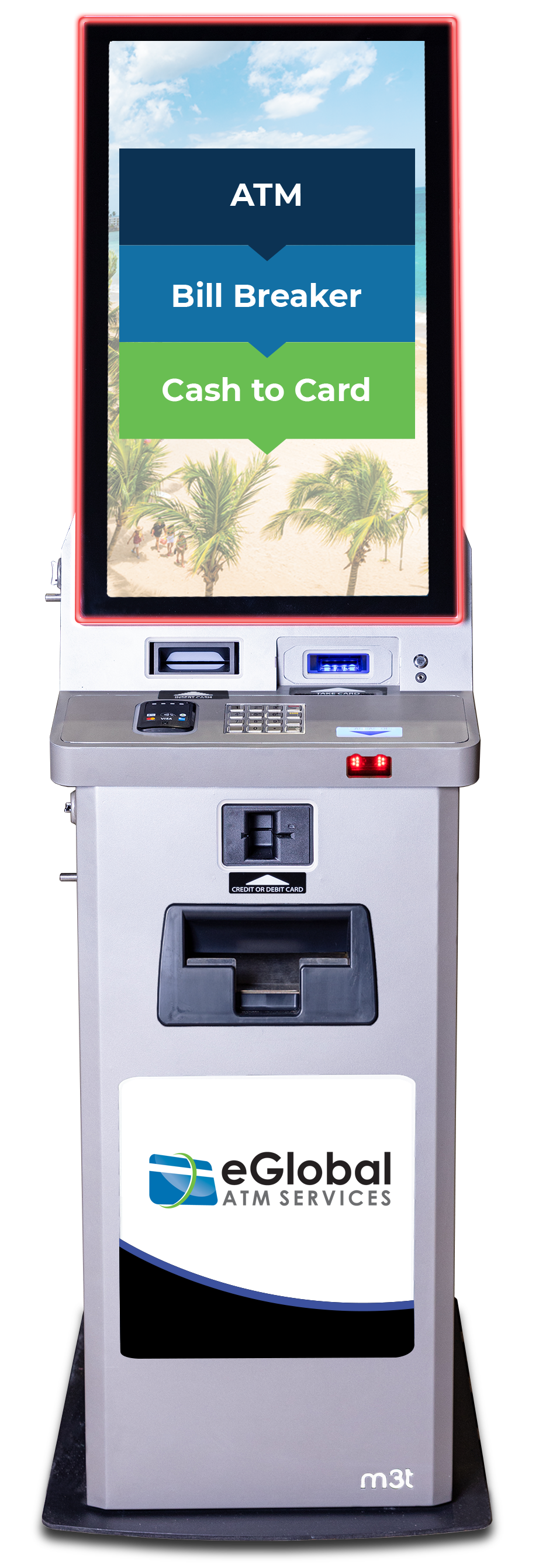
A hotel can stop accepting cash and still need a machine that hands it out. At the Orlando World Center Marriott, guests need bills for tips and spending beyond the property. Other guests arrive holding cash they cannot spend inside it. The front desk inherits both problems. eGlobal’s answer is a kiosk that moves money in either direction, with a third option for anyone whose twenty-dollar bill is too large for the occasion.
- eGlobal runs ATM programs for hotels, convenience stores, retailers, and financial institutions.
- Its ATM+ combines cash withdrawals, bill breaking, and cash-to-card conversion.
- The useful idea: remove cash-handling work without stranding people who carry cash.
The hotel that still needed change
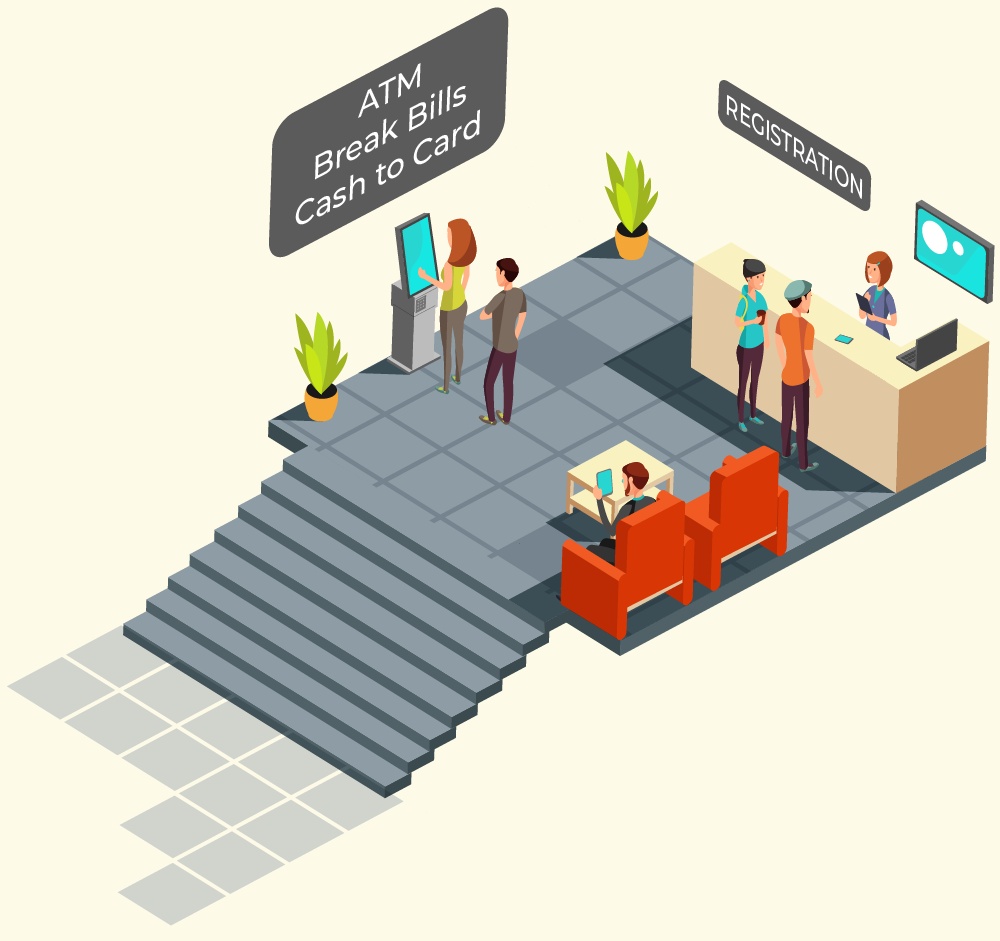
After COVID, the Marriott property moved to cashless operations. A conventional ATM addressed only half its problem: it could produce cash, but could not make that cash useful at a card-only outlet. eGlobal installed ATM+ alongside traditional ATMs. Guests could withdraw money, exchange larger bills for smaller ones, or feed in cash and receive a prepaid Mastercard usable on or off the property.
“It was a constant service challenge.”
Hector Diaz, Bell Services Manager, Marriott Orlando World Center
That short description, from bell services manager Hector Diaz, explains the purchase better than a catalogue of features. According to eGlobal’s February 2026 account, the installation reduced staff cash-handling hours, armored courier pickups, and front-desk requests for change. Those are the reported benefits. The operational logic is straightforward: give recurring requests a dedicated destination, and employees can stop improvising an answer.
A machine is the easy part
The business began with an unusually practical apprenticeship. Brothers Tim and Burt Matthews owned convenience stores. Grant Victor’s history dates their launch of eGlobal ATM Services, also known as eCash ATM, to 2000. They were selling a service they understood from the merchant’s side of the counter. In 2006, eCash ATM became Grant Victor, with eGlobal operating as a strategic business unit.
Today, eGlobal sits between the building owner, the machine manufacturer, and the networks that authorize a withdrawal. It places equipment, arranges processing, manages cash requirements, monitors terminals, and coordinates maintenance. Merchants can also own their machines and buy processing or share management duties. Independent operators use its Market Partner program and online toolbox for terminal setup, changes, and compliance submissions.
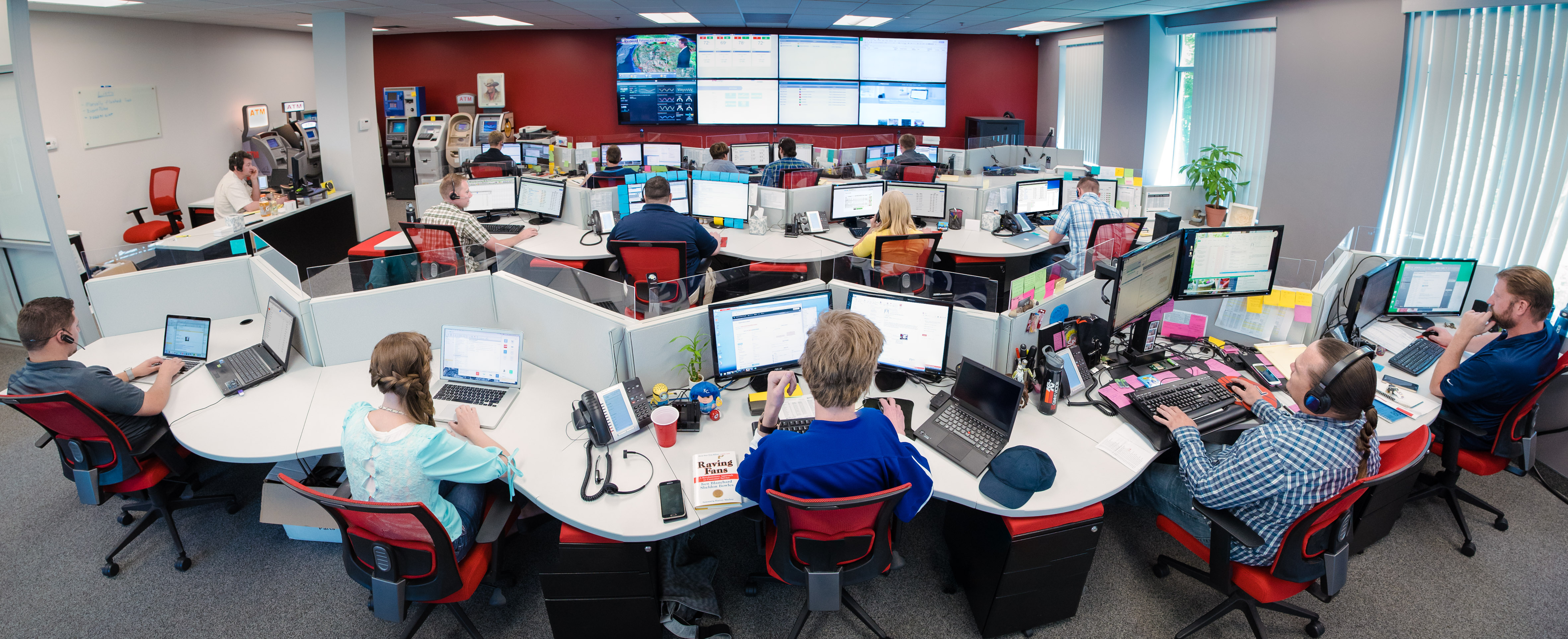
Its market position rests on that combination. A hotel can buy hardware elsewhere. It still needs someone to notice that the terminal is running short before a convention arrives. eGlobal’s hospitality service includes cash forecasting, remote error clearing, and cabinets designed around a property’s materials and available space. Its hospitality page advertises a 99.95% uptime guarantee. That is a service promise, rather than an independently audited performance result.
Advertised uptime guarantee, backed by remote monitoring and a 24/7 support center.
The connection came first
Before the kiosk could take on more tasks, the network behind the ATM needed attention. An OptConnect case study describes eGlobal’s earlier reliance on DSL and dial-up connections. The limitation was access: employees could not do everything they wanted remotely. eGlobal evaluated managed wireless connectivity and found it cheaper than DSL and faster than dial-up, according to the case study.
The partnership began in 2009. Cellular connectivity let the team inspect balances and journal reports, clear errors, update software, and change screen graphics without visiting each terminal. OptConnect’s account reports one million monthly transactions on the eGlobal ATMs using its connectivity at the time of the case study. The lesson travels beyond cash machines: improve the connection to distributed equipment, and you can change the economics of looking after it.
Who pays for the convenience?
eGlobal’s merchant-processing FAQ describes a processing fee deducted from surcharge revenue. It also says there is no application fee, registration fee, terminal-change fee, or minimum-transaction penalty. Full-service placement can involve shared revenue. Ownership, processing, and managed placement are therefore different buying decisions, even when the customer sees an identical machine.
The trade is capital and labor against retained revenue. A merchant operating its own ATM assumes more work; a managed customer buys relief from that work. NationalLink and Lieberman Companies offer competing hospitality ATM programs, including ownership and placement options. eGlobal’s case rests on hospitality experience, its kiosk functions, and the Grant Victor network of equipment, repair, and service businesses. Each buyer still has to compare the actual agreement.
A bigger job for the same corner
The customer relationships show how far the model can extend. In September 2013, eGlobal announced a renewal with BJ’s Wholesale Club covering more than 200 ATMs, continuing a relationship begun in 2009. The arrangement also offered banks and credit unions an ATM-branding program with surcharge-free transactions for their account holders. A retailer’s floor space could become another institution’s customer access point.
Another route emerged in October 2024, when Hyosung announced a Hyosung Pay pilot with eGlobal at selected western U.S. convenience stores and hotels. Its Pivot cash-recycling ATM was designed to accept merchant deposits and reuse cash for withdrawals. Announced consumer services included MoneyGram transfers and Fiserv CheckFreePay bill payments. These were pilot capabilities, separate from the three-function ATM+ proposition. The attraction was doing more useful work in an existing location.
Big screen.
Small bills.
Fewer detours.
Start with the till
eGlobal’s October 2026 rollout guide offers the most copyable part of this story. Decide which outlets will stop accepting cash, place the kiosk on the route to those outlets, train staff to explain it, then compare 90 days after launch with 90 days before. Count active tills, cash drops, audit variances, and payment complaints.
A kiosk saves little cash-handling work if every outlet keeps its till. A property with many cash-paying guests should begin with one outlet and review the result. That makes the device a consequence of an operating decision. For eGlobal, the opportunity is in the untidy space between how a hotel wants to accept money and how its guests actually carry it.