In May 2026, Niklas Östberg put a date on leaving the company he had helped build. By the end of March 2027, Delivery Hero would have a different chief executive. The supervisory board would look for a successor. After fifteen years, the founder could begin the peculiar business of becoming a former founder-CEO. There was a plan, a timetable and a public announcement. Those usually make a fairly convincing finish line.
By September, he had moved it. Östberg would stay. Between those announcements, Uber had agreed a proposed takeover of Delivery Hero, and the Swedish entrepreneur had rediscovered his appetite for running the operation. The reversal had an almost comic neatness: preparing to leave had helped him find reasons to remain. A company built around bringing things to people was keeping its founder a little longer.
“I am now more energized than ever to continue leading the company into this next phase.” That was his explanation on September 24. It is a useful place to meet him: still making plans, still revising them, still drawn to the work inside a business whose outlines have repeatedly changed. The farewell would have to wait for another delivery window.
Before dinner, there was distance
Östberg was born in 1980 in Skinnskatteberg, Sweden. Before he was interested in conquering delivery markets, he wanted to compete in cross-country skiing. He attended a ski school in Torsby and reached Sweden’s junior national team. The ambition was serious enough to include dreams of a world championship. Eventually, other possibilities began to look more interesting than a professional sporting career.
The competitive habits survived the change of venue. In a 2016 interview conducted around a run, he described a family in which his brother and sister also skied and each tried to outdo the others. He liked statistics and measuring performance. He sometimes joined calls with American investors while running in the evening. The time difference helped. A conference call, evidently, need not be a sedentary occupation.
There is a temptation to turn every former athlete into a management theory. Östberg supplies a more practical connection. Training requires repetition, and progress can be measured. Business gave him another setting in which effort, comparison and results mattered. The skiing story also establishes something simpler: he had wanted to win at something long before food delivery offered him a market.
A habit carried overDistance. Repetition.
Something to measure.From ski training to building a business
A pizza business with an appetite
He studied industrial engineering and management at KTH in Stockholm, with an exchange year at ETH Zurich, then worked at Oliver Wyman. Consulting took him to Zurich. The route into entrepreneurship was comparatively modest: Pizza.nu, a Swedish online pizza-ordering business that later became part of Onlinepizza. Before the international holding company, there were restaurants to sign up and orders to get through.
In his own later account, he put €40,000 of savings into a terminal, a website and sales. He remembered Just Eat arriving with funding, a sales force, cars and television advertising. His own operation had one salesperson and very little marketing money. The details matter because they put machinery and selling back into a story that might otherwise sound as though somebody simply invented an app.
Pizza.nu and Onlinepizza merged in 2008. Östberg became a significant shareholder and chairman, helping expand into Finland, Poland and Austria. But he wanted to raise capital and move faster than his fellow owners. A profitable business in several countries could be a satisfactory destination. For him, it was becoming a departure lounge. In 2011, he helped start Delivery Hero in Berlin.
Berlin, with several steering wheels
The new venture brought him together with Kolja Hebenstreit, Markus Fuhrmann and Lukasz Gadowski. Berlin offered entrepreneurial contacts and a place to build an international operation. Delivery Hero bought Onlinepizza in 2012, bringing his old business into his new one. The circle was tidy; building the company around it would be less so. Acquisitions meant integrating teams as well as adding countries to a presentation.
At first Östberg shared the chief executive role with Fabian Siegel. In January 2013, Siegel stepped down and Östberg became sole CEO. The company was already handling millions of orders across twelve countries. Those early leadership arrangements are a reminder that Delivery Hero emerged from a network of founders and operators. It took several people to assemble the machine that one person would eventually lead.
His operating idea left room for local judgment. Food habits differ, and he argued for giving local leaders authority while supporting them with technology and services from Berlin. A central platform could help several businesses without requiring every market to behave identically. The complication was deciding which decisions belonged where. A restaurant menu may travel badly; software can travel rather well.
He was also capable of identifying an omission in his own approach. Asked in 2018 what he would change if he could begin again, he said he would give teams and company culture more attention earlier. Rapid expansion had produced too many competing demands. That answer adds a useful qualification to the acquisitive founder: buying reach does not automatically produce an organisation people can run.
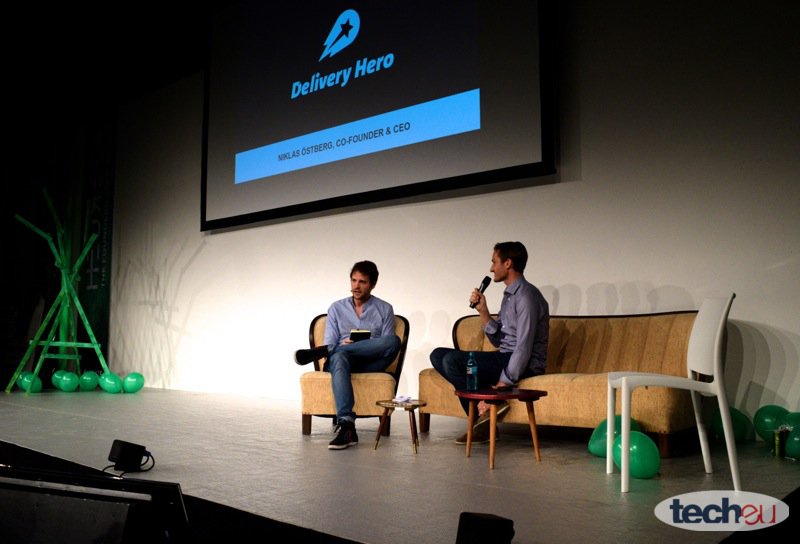
The telephone was an opponent, too
In 2016, when asked about competition, Östberg pointed to the telephone. People already ordered takeaway; much of the opportunity was moving an existing habit online. He also wanted restaurants to get useful information about returning customers and dishes that disappointed. His interest extended beyond transmitting an order. There were decisions inside the restaurant business that a platform could help improve.
This was an unusually domestic setting for a large technological ambition. The raw material was dinner, with its familiar mixture of impatience, preference and routine. He wanted technology to make choosing and ordering easier, then make the experience good enough to repeat. The glamour was largely optional. Whatever the valuation, somebody still had to answer for the food arriving.
Delivery Hero floated in Frankfurt on June 30, 2017, raising close to €1 billion. The listing gave the expanding business a public share price and another set of expectations. By early 2018, it was receiving about a million orders a day. There was now a much bigger audience watching the experiment. Public markets, unlike dinner guests, rarely wait politely without commenting.
- 2011Delivery Hero begins in Berlin
- 2013Östberg becomes sole CEO
- 2017Frankfurt stock market listing
- 2026A planned exit. A decision to stay.
Knowing when to leave the table
Östberg’s competitiveness has included selling businesses. In December 2018, Delivery Hero announced the sale of its German food delivery operations to Takeaway.com for approximately €930 million in cash and shares. Lieferheld, Pizza.de and the German Foodora operation were part of the transaction. A Berlin headquarters did not require a permanent attachment to every German order.
The consideration included €508 million in cash and a stake in Takeaway.com. That turned a competitor into an investment and released money for other opportunities. It was a revealing distinction between a company’s home and its allocation of capital. Sentiment might have preferred to defend the original territory. The transaction allowed Östberg to put resources elsewhere.
Acquisitions continued to change the map. In July 2022, Delivery Hero completed the closing actions for taking control of Glovo, whose founders Oscar Pierre and Sacha Michaud remained involved. Glovo retained its brand and management. Again, expansion meant working with an existing entrepreneurial operation. The group’s reach depended on relationships with other founders as well as the appetite of its own.
The price of being convinced
Persistence also has an expensive side. In a 2025 conversation with Harry Stebbings, Östberg looked back on excessive confidence about valuation and financing. He said he would have reduced risk sooner and raised equity rather than relying on debt at the time. A belief in a much larger future business had influenced the choices made in the present.
He also discussed the push into logistics: an early effort failed, but he continued investing in the underlying idea that arranging delivery could improve the customer experience. The distinction requires judgment. Abandon every unsuccessful experiment and little changes; defend every investment and the bill keeps arriving. His career contains decisions on both sides of that uncomfortable boundary.
He has invested personally beyond Delivery Hero, including in GetYourGuide, Beekeeper and Peakon. That places him within a wider European network of entrepreneurs, rather than solely at the centre of one company. It also gives his story several scales: the individual investment, the local operating business and the international group. Each asks a different version of the same question about where effort and money should go next.
An everyday business, an unfinished deal
In 2026, the next step acquired a different shape. Uber proposed paying €41.50 per Delivery Hero share, implying a fully diluted equity value of €13 billion. A separate agreement would send operations in fourteen markets to SSW Partners, conditional on the Uber transaction. The proposed combination was a change in ownership and structure, with regulatory approvals and other conditions still ahead.
Delivery Hero and Uber continued operating independently. Completion was expected in the second half of 2027. That distinction matters to Östberg’s position: he remained the CEO of Delivery Hero while the transactions progressed. Supervisory board chair Kristin Skogen Lund welcomed his decision to stay as the company worked through them. The founder who had prepared a handover was now part of the continuity plan.
The operating focus was the “Everyday App” strategy, extending customer relationships across food, groceries and other purchases. For the first half of 2026, Delivery Hero reported €427 million in adjusted EBITDA and €348 million in free cash flow before extraordinary items. These are defined company measures, rather than interchangeable descriptions of profit. They indicate the financial questions now accompanying the ambition to grow.
The job is still recognisable beneath the transactions: persuade someone to order, help a partner fulfil it and make the experience worth repeating. Östberg once wanted a world championship and later wanted a pizza business to move faster. Now he has chosen to keep running the company he had announced he would leave. For a founder so interested in progress, arriving appears to remain a provisional arrangement.
Reported company measures. Adjusted EBITDA is not net income.