Big Whiskey was a customer before he was a restaurant name. In the company’s telling, he visited a small-town tavern, ordered one generously poured drink, and entertained the room. His request was simple: “I’m only going to have one, so make it a big one.” The memorable part was the company he kept.
- A broad menu helps groups agree.
- Franchise growth depends on support teams and training.
- Existing buildings and outdoor games shape the next chapter.
That story explains an otherwise puzzling restaurant. Big Whiskey’s American Restaurant & Bar sells burgers, steaks, wings, salads, cocktails, and whiskey. It welcomes families while showing sports. It offers brunch alongside a serious bottle collection. Put those things on a spreadsheet and they look like competing identities. Put them around a table and they look like a group deciding where to eat.
The company’s proposition is that nobody has to win that argument. The whiskey enthusiast can explore, the children can order from their own menu, and the sports fan can follow the score. Familiar American food gives the gathering a center. The bar supplies another reason to stay.
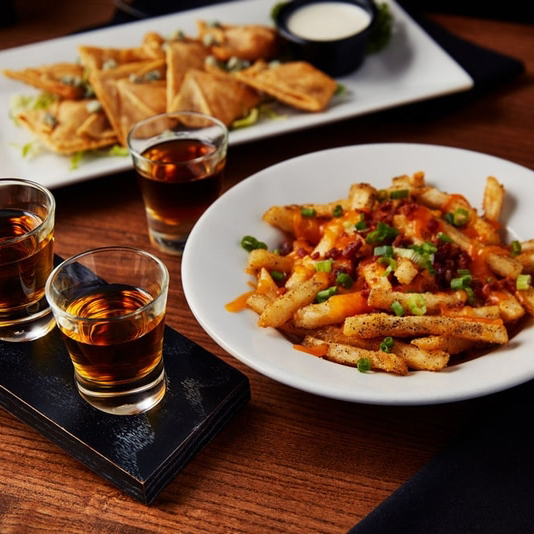
an appetite.For the curious. Fries for the negotiators. Photograph: Big Whiskey’s
02First, learn to leave the room
The original restaurant opened in downtown Springfield, Missouri, on July 4, 2006. Paul Sundy, Mike Heslin, and Randy Gildehaus were the co-founders named in the company’s eleventh-anniversary account. They had worked together in restaurants. Their experiment began with a practical ambition: create somewhere people would want to return.
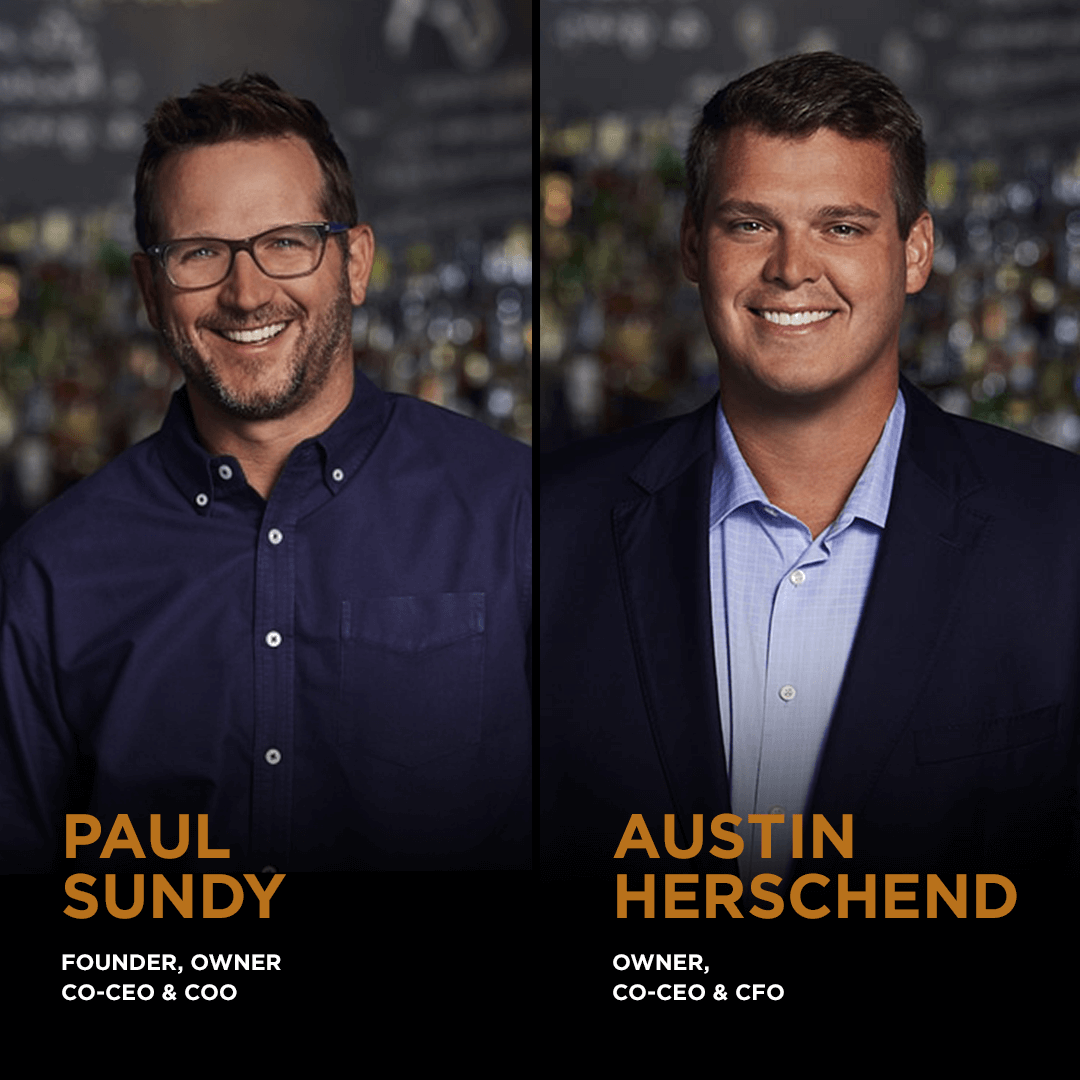
By 2015, there were five locations in three cities. Austin Herschend, an investor since 2013, became chief executive of the franchising business. His background included finance and involvement in Herschend Family Entertainment. The restaurant group also hired Franchise Dynamics to help sell franchises. Expansion now required a second set of skills.
A January 2017 Biz 417 report describes investment in marketing, legal services, accounting, and a director of operations. Sundy had narrowed his attention to Big Whiskey’s after participating in other concepts. The first franchisees needed an organization behind them. They were about to carry the company’s reputation into new cities, with unfamiliar teams and customers.
The first franchise restaurants opened in Bentonville, Arkansas, and Lee’s Summit, Missouri, in 2017. The lesson for another operator is wonderfully unglamorous: before selling someone your restaurant, build the office that can help them run it.
“The first 10 or so franchisees are the make or break.”
PAUL SUNDY / JANUARY 2017
03Vegas was an opening, then a closing
Geography soon supplied a harder test. Big Whiskey’s opened at Town Square in Las Vegas in February 2019, taking over the former Pot Liquor space. The proposition traveled with it: American dishes, sports, families, and a substantial whiskey selection. A second Las Vegas-area restaurant had also been planned.
By October, Eater Vegas reported that the Town Square restaurant had closed. That short run deserves space in a growth story. An established menu and a recognizable concept do not make a new market behave like the old one. For a prospective franchisee, the useful question is what the particular building, neighborhood, and operating team can sustain.
The contrast matters because Big Whiskey’s later expansion continued elsewhere. A restaurant brand can retain appeal while an individual unit fails. Treating those as separate questions makes the business more intelligible than either a victory lap or a sweeping verdict.
04Keep the hood. Change the evening.
By October 2024, the company was explicitly promoting conversions of existing restaurants. Its approach preserves expensive infrastructure, including kitchen hoods and bathrooms, while changing the feel and circulation of the space. Existing parking and site improvements can also remain. Flexibility in the floor plan is part of the offer to franchisees.
The capital still matters. The franchise website lists approximately $4 million for its ground-up investment comparison, excluding land. That figure describes a format, rather than a quote for every property. Reusing a suitable building is an obvious lever; it loses its advantage when the retained infrastructure cannot serve the restaurant you need to operate.
Then comes the yard. Announced in December 2024 after a Lebanon, Missouri, prototype, Whiskey’s Yard adds outdoor games, sports screens, and a walk-up bar. Cornhole and giant Jenga give a group something to do between ordering and leaving. The site becomes an activity as well as an address.
05Five weeks before the first ticket
What travels between locations is increasingly explicit. Big Whiskey’s U, detailed in March 2025, combines on-site instruction with digital learning. An opening team arrives five weeks before launch. Training builds toward the demands of a busy service. Videos, presentations, and quizzes remain available on phones and store computers.
The company says the program was built by people who had worked in its restaurants, including former servers and hosts. That is a useful kind of expertise: knowing where a written instruction falls apart when several tables need attention at once. For franchise buyers, the product includes a way to teach hospitality under pressure.
In January 2026, Big Whiskey’s reported eight openings in less than twelve months, including Owensboro, Rogers, and Hoover among the recent additions. In March, it announced a single-day sales record at Hoover. These are company-reported milestones. They show activity and capacity at particular restaurants, rather than guaranteeing the performance of the next one.
- −5WEEKS TO OPEN
The opening team arrives on site.
- 01FIRST SERVICE
Training prepares the team for a rush.
- ↗KEEP LEARNING
Digital lessons stay within reach.
06Give the group a reason to return
The consumer business earns its money from meals, drinks, and gatherings; the franchise business licenses the concept and supports operators. Catering, pickup, delivery, gift cards, and party bookings extend the occasions it can serve. In the market, it competes for nights that could otherwise go to a neighborhood grill, a sports bar, or a casual-dining chain.
The return visit receives its own machinery. Legendary Loyalty awards a point per dollar, with food rewards at published thresholds. Community Give Back Nights ask qualifying groups to bring at least 50 guests and donate a percentage of sales during designated weekday evening hours. Local relationships become something a manager can schedule.
The 2026 football promotions make the logic particularly clear: draft-party reservations, an incentive for the commissioner, and perks for attendees. August’s Game On announcement added a sampler and smashburger. The organizer gets help assembling the evening; the restaurant gets a group with a reason to gather.
Copy the sequence: accommodate the group, make returning worthwhile, and teach the staff how to keep the evening moving. A diner seeking quiet or a narrowly focused culinary experience may choose elsewhere. Big Whiskey’s is betting on the complicated table: different appetites, one reservation, and enough reasons to come back.