The most important person at a restaurant table may be the one who orders last. Everyone else can find something. This person needs to ask about the sauce, the breading, the ingredient nobody thought to mention. Until that conversation happens, the group has not really chosen a restaurant. It has merely found a possibility.
Stephen Silverstein understood the commercial implications. In a 2011 interview, the founder of Not Your Average Joe’s explained that accommodating one guest could bring in that guest’s entire party. The person with the narrowest choice could have the widest influence. For a neighborhood restaurant, that is a useful place to begin.
- American comfort food, made from scratch, with room for requests.
- A regional chain serving diners across six Eastern states.
- Takeout, family meals and events extend the business beyond dinner out.
The person who picks for everyone
Silverstein opened the first Joe’s in Dartmouth, Massachusetts, in 1994. His background was in clothing retail, and he told AllergyEats he had never worked in a restaurant before starting one. He brought a retailer’s interest in the individual customer into a business that also requires repetition: another service, another shift, another plate.
“Our basic operating premise is guest obsession,” he said. His explanation was practical. Chefs who prepared food from scratch could discuss a guest’s requirements and alter a preparation. The kitchen had more room to respond because it controlled the cooking.
There is a business lesson here, though it comes with a condition. Flexibility requires people who know the ingredients and can communicate accurately. Joe’s publishes allergen information and offers a gluten-sensitive menu. Its event menu also states that the kitchens are not gluten-free and cannot guarantee against cross-contamination. Accommodation is work performed for a particular guest, with limits that need explaining.
One guest’s requirements can become the whole table’s decision.
An implication of Silverstein’s approach
The menu has to remember you
The food occupies a recognizable stretch of American casual dining: chicken, burgers, pizza, salads, seafood and pasta, with enough variation to interest someone who has eaten here before. Families and groups can find different kinds of meals without negotiating several restaurant stops. The competition includes independent neighborhood places and full-service chains such as The Cheesecake Factory.
That positioning leaves a small but consequential question: how adventurous should dinner become? In 2018, incoming chief executive Peter D’Amelio told Restaurant Business, “We got a little too chefy.” He described a drift away from the creative comfort food guests loved. A menu can impress its authors while becoming less useful to its customers.
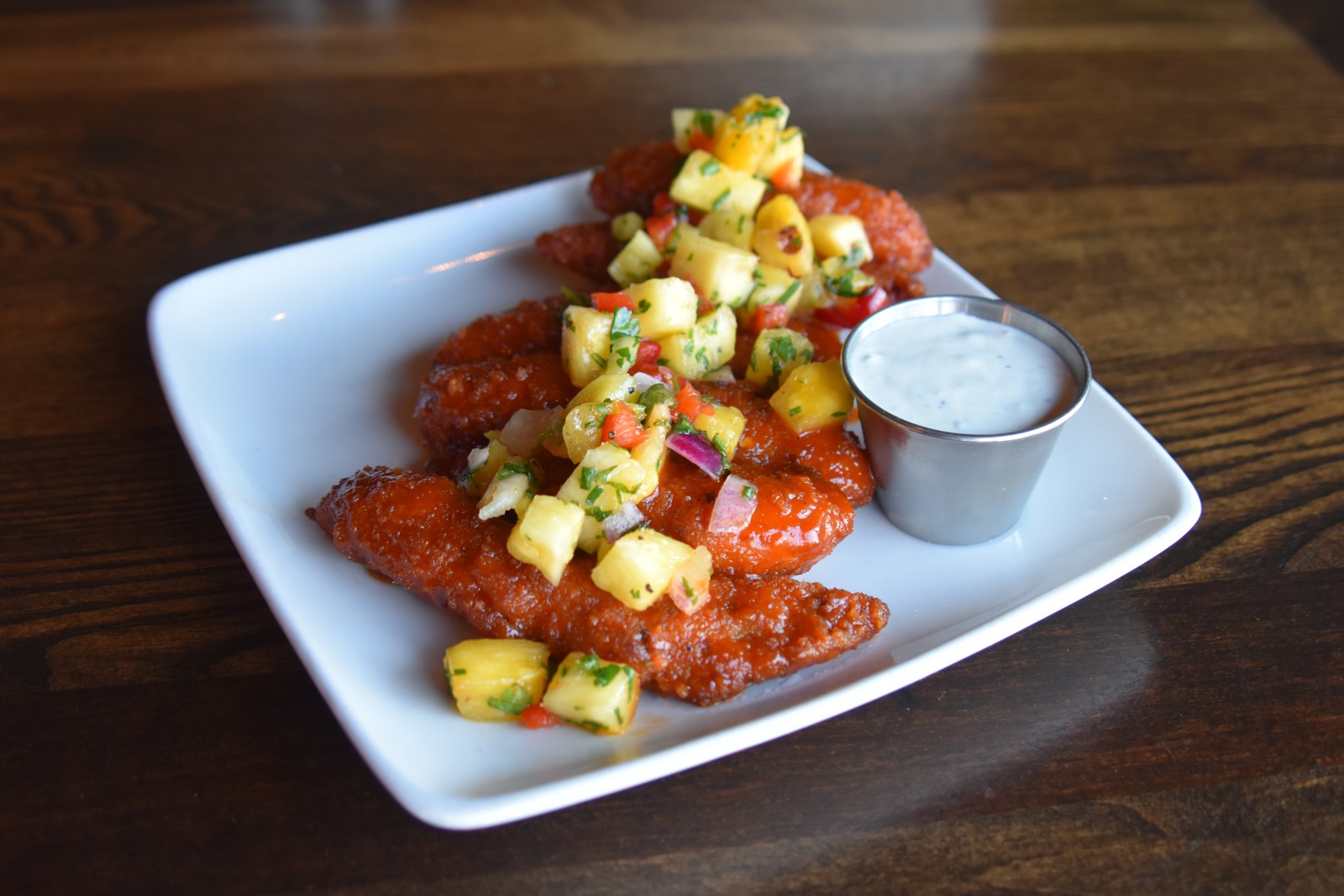
Today’s offerings make the balance visible. Mustard-crusted chicken remains a named classic. Seasonal features add another reason to look: the current Oktoberfest selection includes pork schnitzel, bratwurst and autumn-spiced sangria. A regular can stay with the dependable order; a companion can try something different. Those are two useful customers to keep at the same table.
Money needs an address
The growth story contains an equally instructive mismatch. Inc. reported in 2014 that Silverstein’s earlier expansion had raised $6.5 million and added headquarters staff before an adequate property pipeline existed. Cash was going out while openings lagged. A 2007 credit-card breach and the recession compounded the problem.
The response was a pause, followed by tougher site selection and more attention to restaurant-level leadership. The later expansion criteria included projected annual sales of $4 million per site and a 35 percent return on investment. General managers were paid about 10 percent above market. These were historical targets and practices, rather than promises about today’s economics.
- 01Check the site
- 02Prove the operators
- 03Open the doors
Editorial interpretation of the early expansion reset.
In November 2012, Bruckmann, Rosser, Sherrill & Co. led a growth investment through convertible preferred stock. Joe’s then operated 17 restaurants. The announcement specified expansion capital, but did not disclose the amount. Money could finance the next opening; it could not make every address equally promising.
A new door. A familiar goodbye.
Bedford, Massachusetts, supplies a recent example of the local work behind a chain’s name. At a June 2025 licensing meeting, CEO Joe McGuire described the planned restaurant as a replacement for the closed Burlington location. The Select Board approved its licenses unanimously. The premises had housed Cafe Luigi, a restaurant residents remembered.
The town’s September report records the opening on September 27, 2025. Bedford Food Bank was the opening charity, with fundraising tied to the celebrations and a portion of checks. That fits the company’s broader nonprofit program, which lets individual restaurants choose causes. Local discretion gives the neighborhood relationship a person responsible for it.
Then comes the less cheerful entry. Watertown’s Joe’s announced its last service for February 11, 2026, after 27 years. The goodbye followed Peabody’s December closure. A new restaurant and a long-established closure can belong to the same company in the same season. Any account of Joe’s as a simple march of expansion would miss that.
Dinner, with the arithmetic attached
For customers, the immediate choices are straightforward: reserve a table, order pickup or delivery, or feed a larger group. The published family menu prices mustard-crusted chicken at $72 for a portion designed for four to six people; the catering version is $130 for ten to twelve. Those are listed tray prices, before any applicable extras.
About $12-$18 per person, calculated from the published portion range. Tax and other charges extra.
Events have their own arithmetic. The Silver prix fixe menu is listed at $40 per person and Gold at $50, before tax and a 20 percent gratuity. The booking deposit is $150. Most locations advertise semi-private areas; Bedford has a fully private space for up to 45 guests. Confirming the room matters as much as choosing dessert.
The useful idea to copy is quite modest: preserve a familiar reason to return, and give staff the knowledge to handle the exception. It becomes harder when the location cannot support the costs or the kitchen cannot reliably fulfill the request. Joe’s makes that tension unusually visible. Dinner still has to work for the person who hesitates before ordering.