The most revealing thing about Luna Grill is the chore it wants to take off your hands. Dinner. The ordinary, recurring kind that requires somebody to remember the groceries, marinate the chicken and negotiate with a child about vegetables. The Mediterranean restaurant chain has given that ambition a plain name: replace your kitchen. It is a useful way to understand a business whose real contest begins well before anyone orders hummus.
Sean and Maria Pourteymour opened their first restaurant in San Diego in 2004. Today, the company lists 62 restaurants across California, Texas and Arizona. Alongside individual meals, it sells family bundles, event catering and the convenience of an app. The pitch has the intimacy of a neighborhood dinner spot and the operational demands of a chain. Every new kitchen has to make the same promise believable.
That tension makes Luna worth watching. Mediterranean ingredients give it a recognizable place in fast casual. The household routine it hopes to serve gives it a much wider set of rivals, from the local Greek restaurant to whatever is already in the refrigerator.
A family recipe for the six o’clock problem
The founders’ food backgrounds explain the menu better than a map of restaurant trends. Maria grew up around her family’s Greek restaurant; Sean brought a Persian culinary background. Their cooking traditions meet in a menu that accommodates kabobs, hummus, salads and gyro meat. The origin is also domestic: the couple wanted everyday meals they felt comfortable feeding their two daughters.
On the company’s account, the aim was to make that kind of food approachable and convenient for other families. A customer need arrived before the expansion strategy. You can see the usefulness of that starting point: parents do not have to develop an interest in restaurant categories before deciding that somebody else should cook tonight.
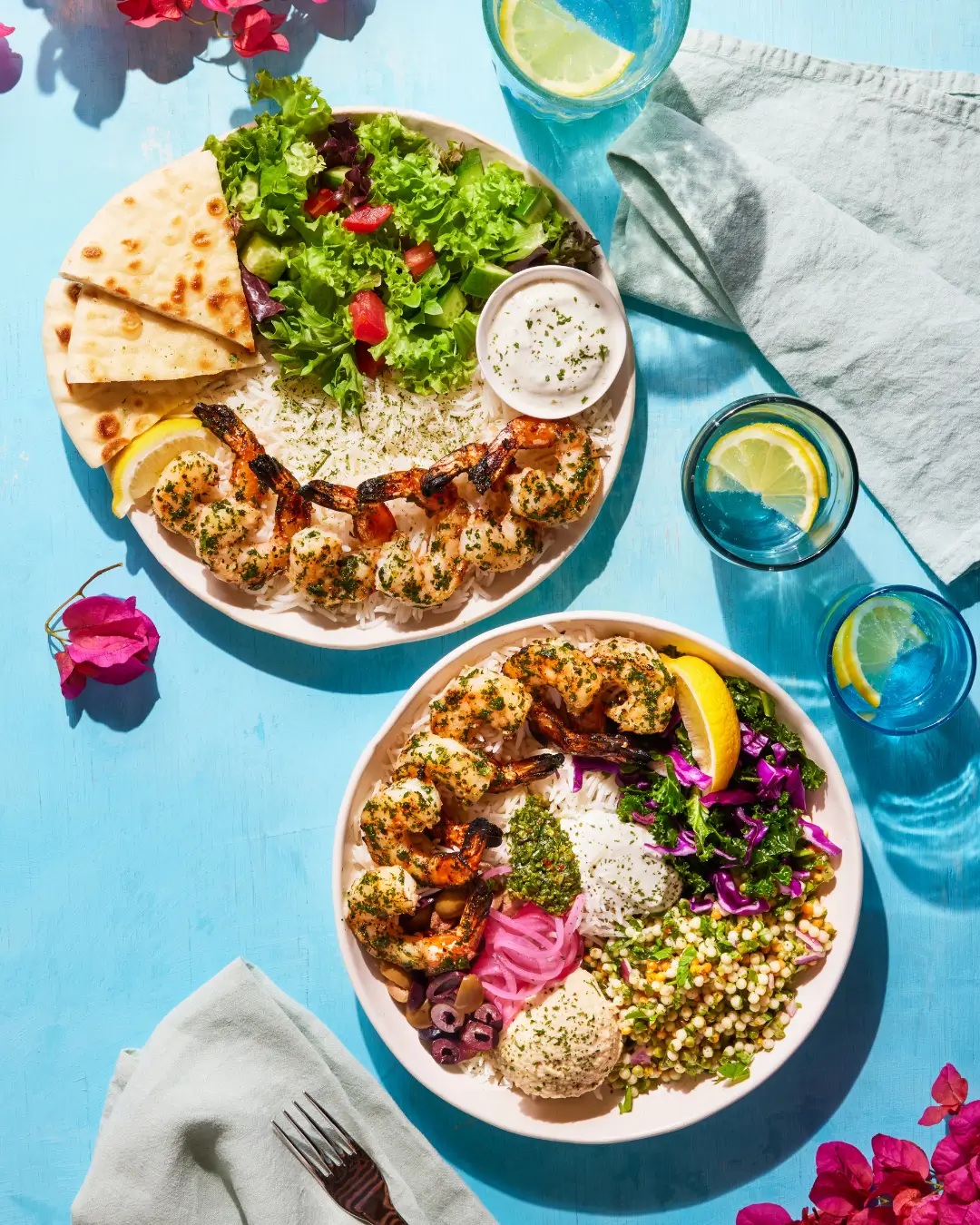
Luna’s plates arrive with pita, a choice of sauce and two sides. Bowls, salads and pitas cover other appetites, while the family meals enlarge the order without making everyone choose a separate dinner. These are different answers to a familiar question: how many people are hungry, and how much organizing can the person ordering tolerate?
The brakes came before the next opening
Luna Grill had 38 company-owned restaurants when PWP Growth Equity invested in September 2017. The money was intended to support expansion in existing markets and new ones. The deal also paired the founders with investors experienced in consumer businesses. It was a conventional growth transaction supporting a rather personal food proposition.
By 2019, the chain had reached roughly 50 restaurants. Yet the next move involved slowing down to work on infrastructure. In an interview that year, Sean described the importance of people, systems and processes. His advice included this unglamorous line: “Never to be shy to hit the brakes.” For a founder discussing expansion, it was a useful admission that restaurant count cannot tell the whole story.
“Never to be shy to hit the brakes.”
Sean Pourteymour · 2019
Rich Pinnella joined as chief brand officer in 2019 after a long career at Taco Bell. The strengthened leadership team was preparing for a further growth push in 2020 when the pandemic interrupted the timetable. In the founders’ later telling, building a brand and preparing it to scale called for different capabilities. The early constraint was the organization supporting the restaurants.
There is something readers can copy here without opening a grill: inspect the work behind the promise before selling that promise to more people. Hiring ahead of growth, clarifying responsibilities and accepting a slower timetable are decisions. They deserve scrutiny alongside a ribbon cutting.
Twenty seasonings had to audition
A chain’s expertise shows up in small choices that customers may never hear about. Chief culinary officer Michelle Goncalves described one in a 2025 Spiceology interview. Her team wanted a new chicken flavor that felt distinctive but remained broadly appealing. They tasted more than 20 seasonings before a supply-chain colleague brought back a container of Greek Freak. Its citrus note, including orange peel, caught her attention.
Goncalves brought years of Taco Bell and Qdoba experience to Luna. She also described buying Mediterranean cookbooks when she arrived. Experience in one cuisine did not eliminate the need to study another. The detail gives the menu work some texture: an experienced developer still has to learn what belongs on the plate.
The current menu offers roasted garlic lemon chicken across several formats, from a plate to a pita and a Santorini Bowl. That bowl brings together couscous, rice, vegetables, hummus, tzatziki and schug. The business logic is easy to follow: a protein and its flavor can travel across familiar meal formats. Customers gain another choice; the kitchen works with recognizable components.
For diners, the distinction is practical. Luna promises kabobs grilled over an open flame after ordering. That promise asks for preparation and execution at each restaurant. It also gives the customer something concrete to judge beyond the broad word “fresh.”
The dinner arithmetic: $51.99 for four
The kitchen-replacement claim becomes more interesting when it reaches the bill. Luna’s online catering menu lists a Family Meal for 4 at a base price of $51.99. Divide that by four and the starting point is approximately $13 a person, before tax, delivery charges or upgrades. The ordering page requires a location for final pricing and availability, so the figure is a reference point rather than a universal quote.
The same listing puts additional prices beside options such as salmon, steak and upgraded salads. That makes “dinner for four” a starting configuration. A household comparing it with groceries should compare the actual order, including fees, against the ingredients it would otherwise buy and use. Time saved shopping and cleaning has value, but its value differs from one family to the next.
Luna also uses offers to make particular occasions easier to choose. Its Kids Eat Free promotion is for Club Luna members dining in Monday through Thursday. It requires an adult entrée, allows one free kids meal per adult entrée and caps the offer at two per check. The San Diego Airport location is excluded.
The conditions tell you who the promotion serves. A family willing to eat in on a weekday can use it; a household ordering delivery cannot. For Luna, attaching an offer to an occasion makes more commercial sense than treating every visit as identical.
The app wants to become a habit
Club Luna awards one point per eligible dollar spent, with a $10 reward at 100 points. Its current offers include Monday savings and an app-only build-your-own bowl. The app also provides ordering ahead, ingredient modifications and a menu curator. A repeat customer can use it to make a familiar order easier or assemble a different one.
In a 2024 Digital Hospitality interview, Luna marketing executive Maddie Nixon explained the company’s emphasis on loyalty and repeat engagement. The conversation described a collaboration with unPLUG Dining to connect the digital experience with the business’s needs. A restaurant app earns its place on a phone when it removes effort from a decision people already make often.
Billy Grenham became Luna’s first chief marketing officer in December 2024. The following July, the brand and Dietitian Live announced access to virtual registered-dietitian sessions for rewards members, alongside nutrition education. The partnership offered a different reason to participate in a restaurant loyalty program: help thinking about food beyond the next purchase.
The offer needs to be read with its terms. Dietitian Live described broad insurance coverage for ongoing sessions, with most of its clients paying nothing out of pocket. Individual eligibility and coverage still matter. A restaurant membership alone does not establish the price of continuing care.
Luna’s own nutrition page provides another useful tool: customizable meal information reviewed by Healthy Dining’s registered dietitians. Guests can examine ingredients and nutrients instead of relying on a Mediterranean label. The company also states that its kitchens are not allergen-free. Personalization can make a menu more usable without resolving every dietary constraint.
Catering moved online. The phone stayed.
Office lunches and group events expand the business beyond the individual entrée. Luna offers individual meals and larger formats, with catering specialists available to help customers assemble an order. Its published catering instructions call for 24 hours for delivery, with same-day pickup available and minimums applying. Group lunch requires a little more choreography than grabbing a pita.
In a May 2025 Lunchbox interview, sales and community-engagement executive Kevin Reading described customers shifting toward individually packed meals and digital ordering after the pandemic. Luna responded by improving its online experience. He also described keeping calls before and after catering orders, preserving human contact around the transaction.
Reading said a build-your-own buffet, designed to simplify bulk ordering and ease operational strain, had come to represent more than 20 percent of catering sales. That is a management-reported snapshot, but the design lesson travels: solve an inconvenience for the people making an order as well as the people receiving it. Better checkout alone cannot ensure lunch arrives as expected.
More kitchens, the same dinner promise
Luna entered Arizona with its Mesa opening in November 2025. The expansion brought the company into a third state, extending a footprint long concentrated in Southern California and Dallas-Fort Worth. By September 2026, its company profile described 62 restaurants.
Dated snapshots: September 2017, November 2025, September 2026.
The recent sales figures suggest an audience for the proposition. QSR reported first-quarter 2026 same-store sales growth of 13.3 percent and transaction growth of 9.3 percent. Management’s stated aim was 67 restaurants by year-end. That remains a target, not a completed expansion.
Pinnella, promoted to CEO in 2025, has emphasized leadership development, including communication and conflict resolution. Luna’s careers materials likewise advertise training and advancement. Those commitments matter in a company-operated network: more orders require people who can prepare, coordinate and serve them consistently.
The proposition will be less persuasive where price dominates the dinner decision, where no location is convenient, or where the customer needs the speed of an already assembled meal. Luna’s opportunity rests on a narrower, recognizable bargain: a household likes the food, can afford the order and trusts the kitchen enough to return. Winning Tuesday makes Wednesday possible. The grill still has to earn it.
Visit the kitchen. Hear the people.
Order, explore the menu or hear how the business works.