A family tree and a classified advertisement have something in common: both become more interesting when somebody else turns up. Nils Hammar has spent much of his working life on that problem. At Skype, he worked on products and marketing that helped people communicate across borders. At Kindo, he helped turn family relationships into an online network. At Saltside, the people arriving might have a motorcycle to sell.
The objects changed. So did the countries. The recurring question was how to give people a useful reason to find one another. Hammar’s career follows that question from an early internet communications company to family networking and then into classifieds in Bangladesh, Sri Lanka and Ghana. Its most revealing moments include a large investment, a difficult withdrawal and businesses that eventually attracted a rival buyer.
The family comes online
Hammar studied at the Stockholm School of Economics and joined Skype in 2004. His work included managing marketing and product management teams in Europe and the United States. There was also a spell at Lunarstorm, the Swedish social networking business. Before Saltside, he had already worked on two quite different versions of the same proposition: people would use the internet to maintain relationships.
In 2007, he co-founded Kindo, a London-based family network. A family tree supplied its organizing structure, while the service let relatives stay in touch. It was an invitingly practical idea. Most families already have an information system; it usually consists of somebody who remembers everybody’s birthday and is increasingly annoyed that nobody else does.
Kindo gave that work a shared online home. Relatives could contribute material, build their tree and share photographs. The product crossed languages as well as generations. By the time MyHeritage announced its acquisition in September 2008, Kindo was available in 17 languages, including Arabic, Chinese, Russian and Hindi. International use was part of the product’s design.
Hammar explained the connection to his earlier job in a sentence: “When I worked at Skype, we saw firsthand how powerful the Internet could be in helping families communicate”. Kindo brought that experience into a more specific setting. The ambition was to help relatives stay connected despite geography, with events and memories alongside the family tree.
The acquisition took the team into MyHeritage and gave the buyer new commercial operations in London. Hammar had helped build a business around a familiar social need and seen another company decide that its team and product belonged inside a larger service. It would become a recurring outcome in his career, although the next version would take considerably longer.
A Swedish company with local names
Saltside began in 2011, with Hammar as a co-founder and CEO and Kinnevik as an institutional co-founder. Its purpose was to build online marketplaces in underserved countries. Bikroy became its Bangladesh brand, ikman its Sri Lankan brand and Tonaton its Ghanaian brand. The corporate name could stay backstage while each local website developed its own audience.
The approach put Hammar in a different business from family networking. Buyers and sellers often began as strangers. They needed enough relevant listings, enough confidence to respond and a workable way to complete an exchange. The usefulness of the website depended on what happened after the visitor found something worth buying.
Hammar’s stated aim in 2014 was to give millions of people access to safe and efficient markets. Tonaton’s name means “buy and sell” in Twi. There is an appealing lack of ceremony in that description. A platform can have international shareholders and an elaborate operating structure; the customer still wants to know whether the advertised thing exists and whether the seller will answer.
Forty million dollars, and reasons to stay put
In January 2015, Saltside raised $40 million from Hillhouse Capital, Brummer & Partners and Kinnevik. Kinnevik contributed $5 million and retained a 61 percent holding after the round. The company had grown beyond 200 employees. These were substantial resources for the less fashionable markets Hammar had chosen.
The investment announcement also described a business spread across locations. Saltside had been founded in Gothenburg; its headquarters at the time were in Dubai. Building local consumer brands from an international organization required work across offices, languages and markets. The simplicity of a classified listing concealed a fairly complicated employer.
Hammar’s account of the funding was notably concerned with competition. The money would help Saltside maintain its position in the countries it already served. In a 2015 interview, he emphasized commitment when entering a market: “When we enter its big and for the long term”. The phrasing leaves little room for the casual experiment.
That is a consequential promise for an operator. Entering another country means taking on another set of customer expectations and daily decisions. A launch can be announced in an afternoon. Building a place that people remember to visit again takes longer, and competitors are free to spend the intervening time making themselves useful.
The listing is the easy part
By late 2015, Hammar was discussing the appeal of markets that many European startups overlooked. He saw improving internet access and changing consumer behavior. He also described the gaps in delivery and payments that made online commerce harder. A website could be ready before the surrounding services were dependable enough for customers.
His January 2016 account of Saltside’s operations put trust near the center of the job. He described manual seller checks and cash on delivery as ways of making transactions more reassuring. He also pointed to expensive data. Those details give the business a human scale: somebody has to verify the seller, somebody has to receive the goods, and somebody has to pay to browse.
Read together, those concerns explain the distance between launching a marketplace and operating one. The screen offers a tidy arrangement of categories and photographs. Behind it sit questions that software can help organize but cannot simply wish away. For Hammar, the opportunity came with a long list of dependencies.
“A marketplace is a micro cosmos of the general economy.”
Nils Hammar · January 2017
Nigeria interrupts the plan
Efritin, Saltside’s Nigerian marketplace, exposed those dependencies. In January 2017, Hammar confirmed a sharp reduction in investment and the departure of the local staff. The immediate plan was to keep the website running remotely, using teams elsewhere. Closing the local operation and closing the website were separate decisions.
He linked the pullback to Nigeria’s economic conditions and the high cost of mobile data. His explanation was unusually plain for a founder discussing a retreat: a marketplace reflects the economy around it. A slowdown affects the people buying and selling; expensive connectivity makes participation harder before a transaction has even begun.
The episode complicates an otherwise tempting expansion story. More countries do not automatically make a stronger company. Hammar had argued for sustained commitment, yet here he was reducing it. The public explanation shows an operator responding to conditions that the original opportunity could not override. Staff bore the immediate consequences of that adjustment.
How colleagues describe the work
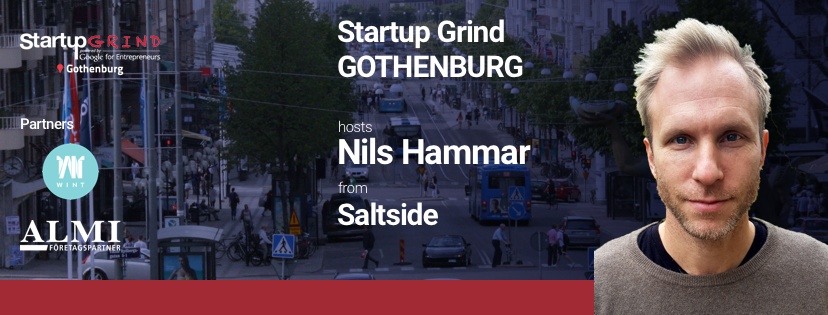
In November 2017, Hammar appeared at Startup Grind in Gothenburg for a fireside conversation. The program joined his early Skype experience to Kindo and Saltside. A career that could look like a succession of unrelated websites was already long enough to discuss as a journey through international online businesses.
Colleagues offer a more intimate view of the operator. Adnan Atique Chowdhury, who worked on the Bikroy and ikman brands, describes Hammar’s creative approach alongside his concern for results. His recommendation recalls hearing Hammar explain how he had envisioned the brands. The founder was involved in the identities customers encountered.
Another public recommendation describes a calm leader who trusts colleagues and gives them ownership. These are colleagues’ assessments, but they add something to the funding announcements: the experience of working with him over time. The portrait is of someone concerned with direction and willing to let other people carry responsibility.
There is also tennis. Hammar’s professional biography makes room for that interest after the degrees and companies. It is a small, welcome detail in a career otherwise expressed in markets and milestones. Even the busiest corporate biography can spare a line for a racket.
When a rival buys what you built
Saltside’s later history includes two sales to Jiji. Tonaton changed hands in 2022. In May 2026, Jiji announced its acquisition of Bikroy from Saltside, marking its first acquisition outside Africa. The same group that had built the Ghanaian and Bangladeshi businesses had now sold both to the same buyer.
The Bikroy announcement described a plan to retain the brand and local team while introducing Jiji’s technology and commercial systems over time. That detail matters to Hammar’s story. The local identity was durable enough to remain useful under different ownership. Years of building a familiar destination had produced something the purchaser wanted to keep.
Neither transaction supplies a public personal payday for Hammar. They do show what became of businesses he helped establish. Kindo found a home inside MyHeritage. Tonaton and Bikroy became acquisitions for another marketplace operator. Saltside’s Sri Lankan marketplace, ikman, continues the local classifieds business.
Across those outcomes, Hammar’s work returns to the same ordinary activity: people finding one another with a purpose. A relative adds a photograph. A seller posts a listing. A buyer decides to make contact. International expansion, investment and ownership changes depend on enough of those small decisions happening again tomorrow.