The strange thing about Hustle Con was what people liked best. Sam Parr and John Havel had assembled a conference for people who wanted to build startups without knowing how to code. Attendees said they came for practical tactics. Yet, in the founders’ account, their favorite talk was the least tactical. The product they thought they were selling and the experience people valued were drifting apart.
- Free business and technology news, written for curious builders.
- A newsletter audience became paid research, podcasts, and a software company’s acquisition.
- The useful lesson: test what people value before adding another product.
So they asked a better question: How had the event made people feel? One attendee described the hope of seeing someone accomplish something improbable. The founders began to see a publication inside their conference business. Readers wanted examples of lives and companies they could imagine building themselves. An instruction manual was only part of the appeal.
That discovery still explains The Hustle. It makes business readable for people who would rather investigate an odd little company than memorize another chief executive’s quarterly talking points. Its subjects are money, technology, and ambition. Its entry point is curiosity.
First, fill a room. Then, an inbox.
The legal business began in 2014; Havel joined Parr as co-founder in 2015. The daily newsletter arrived in 2016. That sequence matters. Before there was a daily publishing obligation, there were conference customers and an email list. Content had already done a job someone could measure: persuading people to buy tickets.
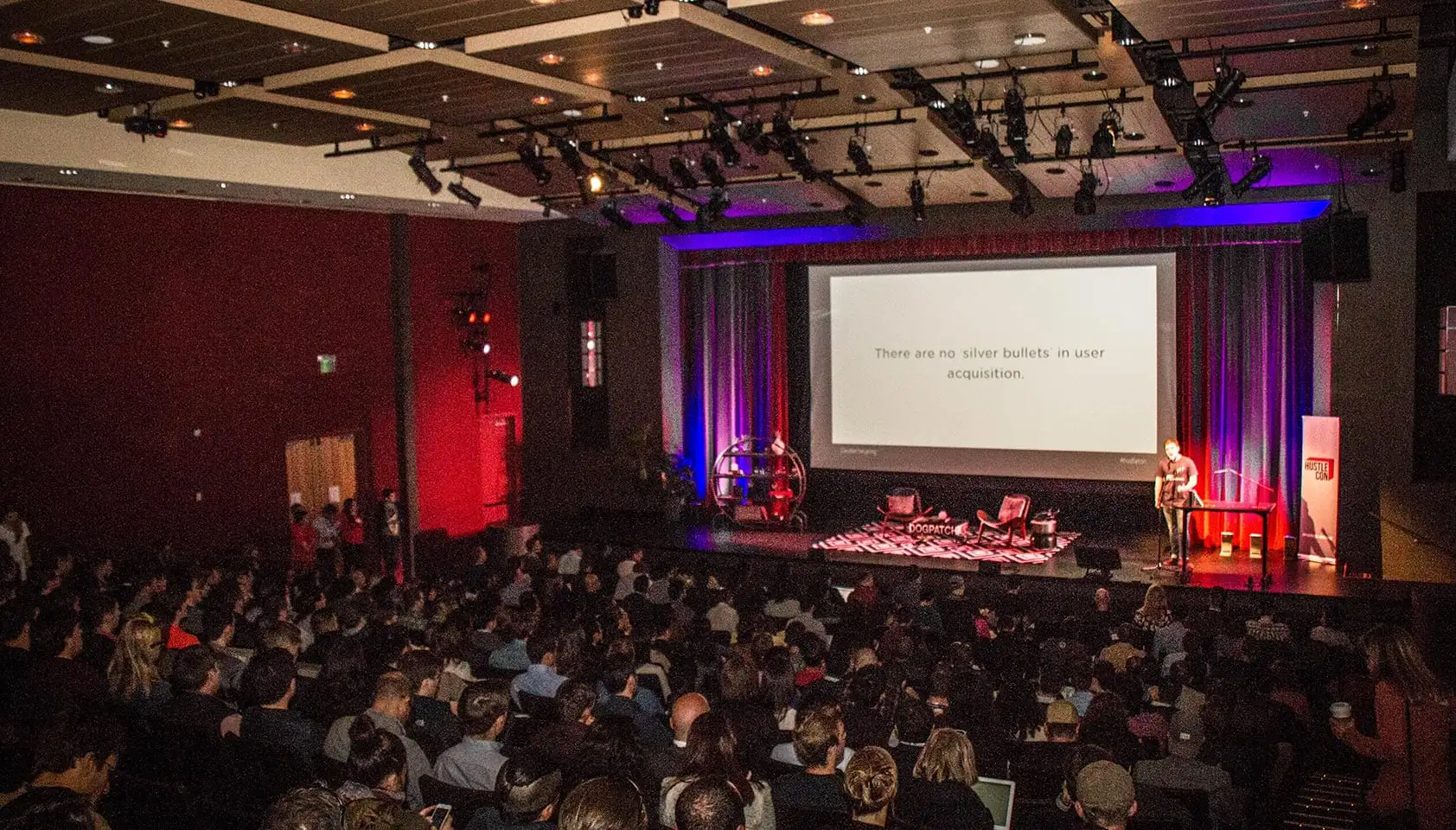
In an early launch account, Parr reported selling 600 tickets at $300 each without advertising spending. That is $180,000 in ticket sales before sponsorships, a calculation rather than a profit figure. He described roughly $250,000 raised from investors and about $500,000 available, including conference profits, to build the publication. Email was a distribution decision with a budget behind it.
The voice was deliberate: conversational, funny, sometimes rude. The company’s investor pitch argued that publishing for subscribers let a small writing team concentrate resources on growth. A reader who returns tomorrow is a different business proposition from a stranger who clicks once.
The second sale was an idea
The daily email solved an ordinary problem: too much news, too little patience. Founders, aspiring entrepreneurs, and busy professionals could get a short briefing without turning business reading into homework. Morning Brew offers a close alternative for the daily habit; specialist technology publications and business newspapers compete for the same attention with different depths and voices.
The Hustle’s expertise lay in selection and explanation: finding the economics inside an overlooked business, then making a reader care. Its Sunday Originals gave those curiosities more room. Today, its free guides add worksheets, startup templates, side-hustle ideas, and research methods. A reader can skim for conversation material or follow an interesting market into further investigation.
In June 2019, the company introduced Trends, a paid research and community product. Its researchers combined data, industry reports, interviews, and case studies to explain where opportunities might be forming. Subscription technology partner Piano described an unusually sensible launch process: listen to engaged readers, make sample reports, and see whether the response justifies more work.
Parr later described an early test: a $30 research offer brought in about $5,000; a subsequent $300 version generated about $50,000. Those are his retrospective sales figures, not audited margins. The sequence is still useful. Sell a small version of the insight before financing an elaborate membership business.
An audience does not travel automatically
Expansion exposed the limits of that logic. My First Million, launched in 2019 and co-hosted by Parr and Shaan Puri, initially benefited from newsletter promotion. Parr recalled roughly 60,000 downloads for its first episode, followed by a fall into the 10,000 range. The audience had tried the show. It had not yet acquired another habit.
He credited two years of consistently recording two or three episodes a week with building substantial monthly listening. The copyable part is the commitment to improving a repeatable product. A giant mailing list does not remove the work of making audio people choose again.
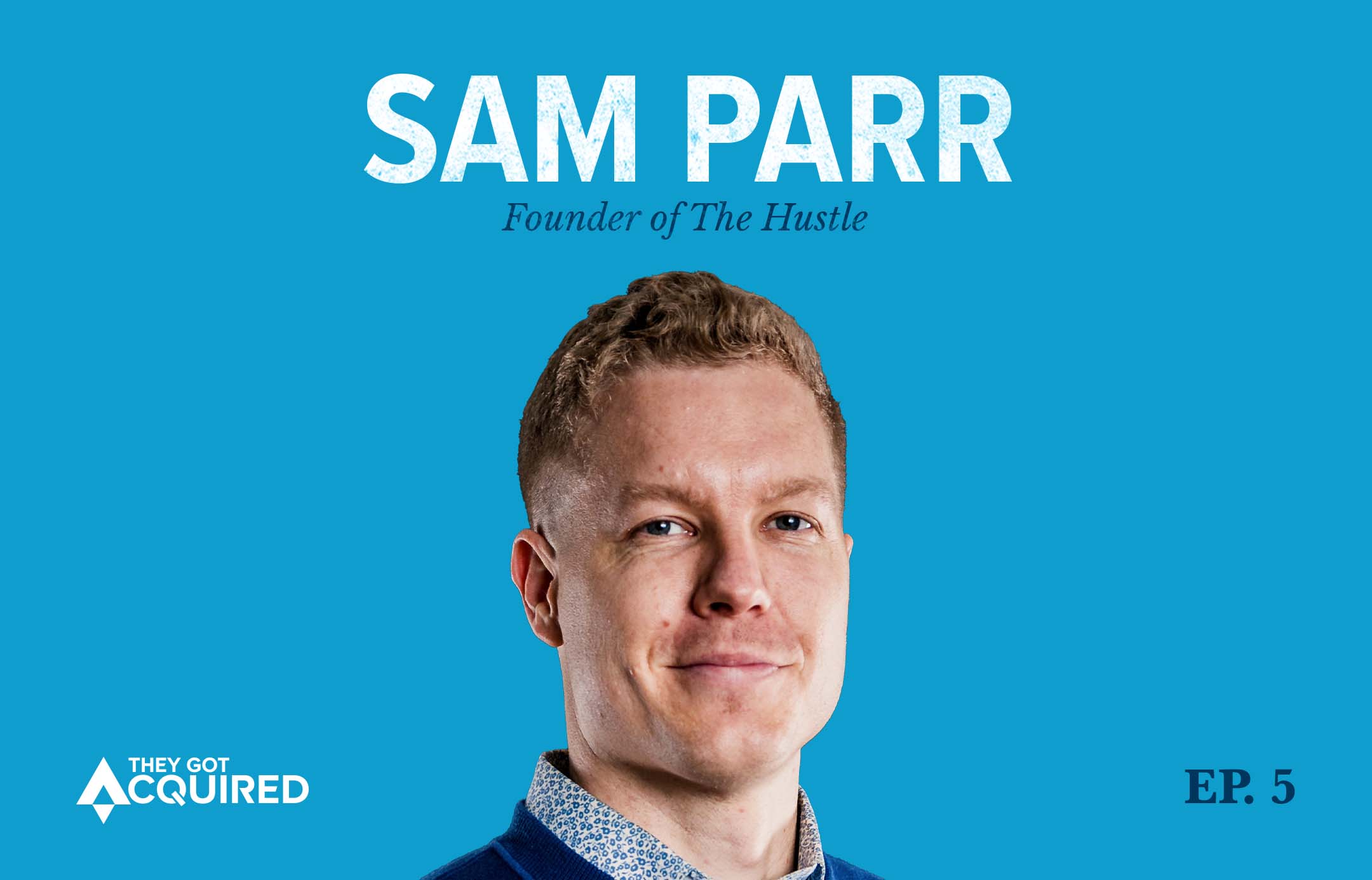
The founder’s job changed, too. Managing roughly 30 employees left Parr exhausted. He was considering hiring a chief executive when HubSpot approached. In his account, the attraction included financial security and the chance to spend more time creating. Growth had produced a company whose daily demands were increasingly different from the work he enjoyed.
Why the buyer sold software
HubSpot completed the acquisition on February 9, 2021. Its annual report records a $20.299 million total purchase price and $17.2 million cash paid net of cash acquired. Those accounting figures offer firmer ground than the deal rumors. For HubSpot, the newsletter, podcast, and research reached people who might eventually need its customer software.
“We’ve built HubSpot on the belief that you earn attention by being of value.”
Kieran Flanagan · HubSpot’s acquisition rationale
That is my reading of the transaction: a publisher’s relationship with readers could also serve a software company’s distribution. HubSpot’s own filing explicitly connected the acquired media assets with promoting its products and acquiring customers. The newsletter could be useful long before a reader needed a CRM.
- 01Useful stories
- 02Repeat readership
- 03Future software demand
The business model has since shifted. Historically, The Hustle earned money through advertising, events, and research subscriptions. Its current signup page promises a free newsletter without ads and directs readers toward business-building resources. Trends.co now redirects to HubSpot’s Trends blog. The old paid membership and today’s public offering belong to different chapters.
For readers, the bargain is straightforward: a manageable briefing and a supply of questions worth pursuing. For a company hoping to copy it, the conditions are tougher. It needs distinctive editorial work, reliable distribution, and an audience whose interests connect to something economically useful. A list of uninterested addresses will not do the job. The Hustle’s asset was the reason people opened the next email.
Keep following the curiosity
Read The Hustle, browse Originals and the newsletter archive, or explore founder guides and Trends.
Watch the business stories↗Why America Loves This Gas Station The Hustle · video↗Sam Parr on building and selling The Hustle Nathan Barry · founder interview↗My First Million Founder conversations & business ideas