In October 2022, Bloomberg Media announced a curious plan for a publisher: it would stop accepting a certain kind of advertising. From January, outside companies would no longer sell ads to its readers through open-market auctions. Publishers usually celebrate finding another buyer. Bloomberg was showing some buyers the door.
- Business journalism for readers whose decisions have financial consequences.
- Subscriptions, advertising, events and licensing pay the bills.
- The useful lesson: earn a repeat visit before squeezing another sale from the current one.
The click it could live without
The calculation becomes less mysterious when you know the size of the sacrifice. Digiday reported that open auctions accounted for about 5% of Bloomberg Media’s ad inventory. That is a share of available advertising, not revenue. The company had already been moving toward private deals. Leaving the remaining auction business meant surrendering some easy income in exchange for greater control.
What had stopped working to management’s satisfaction was the experience around the journalism. In its announcement, Bloomberg described third-party demand channels as an obstacle to controlling that experience. Audience Accelerator, introduced that October, offered advertisers targeting based on Bloomberg’s own audience data. The company was replacing part of the machinery between reader and advertiser with a relationship it could manage itself.
There is a practical distinction here. A click can earn money and still be a poor outcome if it sends a valuable reader away. Bloomberg’s decision suggests that the next visit mattered more than selling every available impression. That is an interpretation of its strategy, rather than proof that removing an ad automatically creates a subscriber.
The Terminal’s public-facing cousin
Bloomberg Media is the consumer-facing media division of Bloomberg L.P. Its newsroom resources come from a parent founded in 1981 by Michael Bloomberg and his founding colleagues Thomas Secunda, Duncan MacMillan and Charles Zegar. Bloomberg added a news service in 1990. Financial information acquired reporters, then more ways to reach people.
Today, the division’s shop window includes Bloomberg.com, its app, Businessweek, television, radio, podcasts and live events. Its subject is business in the expansive sense: markets, technology, politics, climate and the people making consequential decisions. A finance professional can follow market developments; an executive can examine a rival; a policymaker can follow the economic consequences of policy. These are useful reading habits, not guarantees of better decisions.
A Bloomberg news subscription does not include the Bloomberg Terminal. The distinction matters. The Terminal belongs to the parent’s professional information business. Media competes for readers’ time and subscription budgets with publications such as the Financial Times and The Wall Street Journal, and for viewing time with business broadcasters such as CNBC.
“Subscription businesses are built one subscriber at a time.”
Justin Smith and John Micklethwait · Launch memo, May 2018
The paywall arrived in May 2018. Digital access launched at $34.99 a month after a six-month introductory offer of $9.99 a month. All Access was $39.99 after the same introduction. Those historical prices reveal the ambition: ask readers to treat the journalism as a recurring professional expense. In October 2026, Bloomberg Media reported 750,000 subscribers.
A cover with a longer shelf life
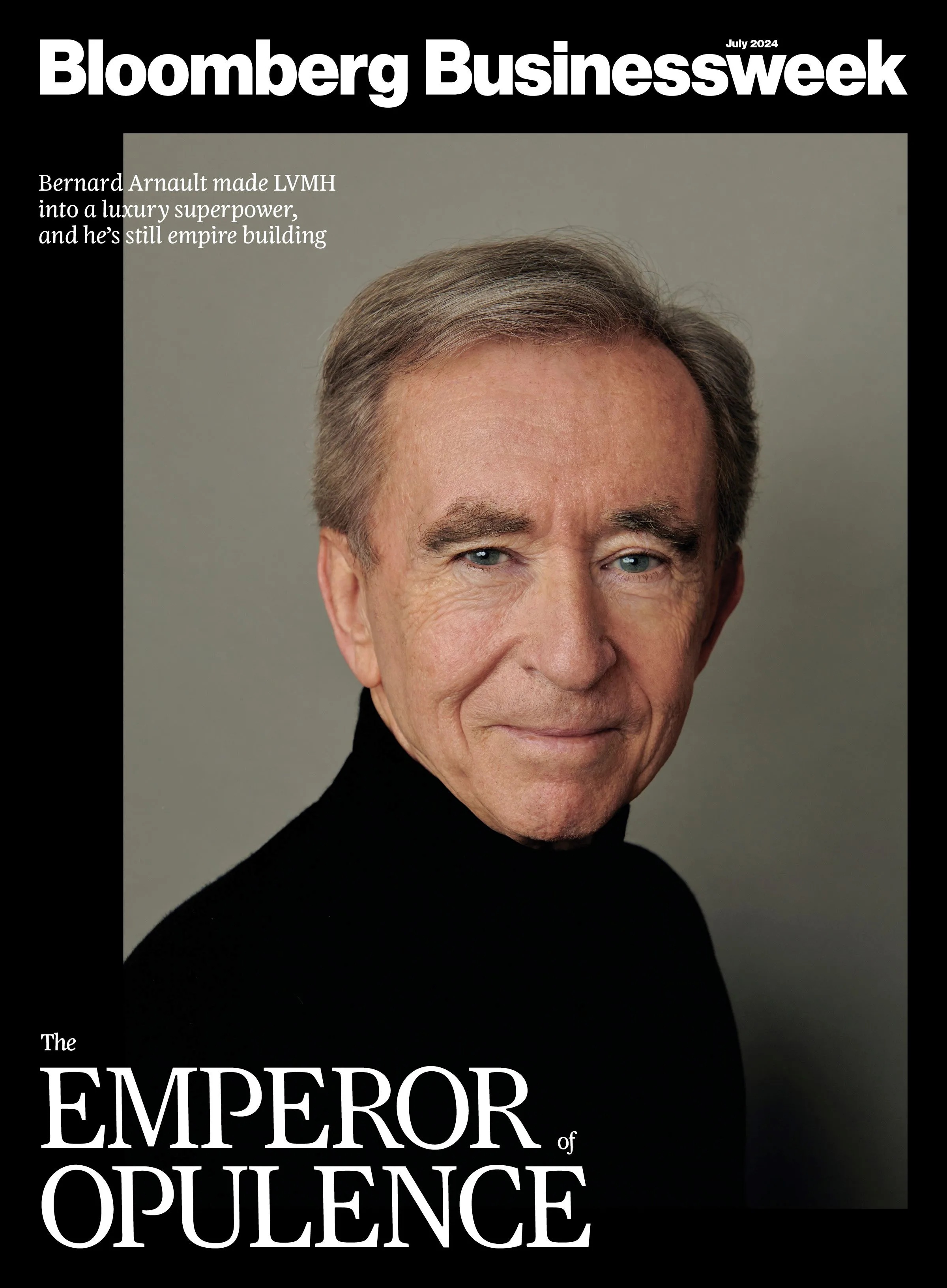
Consider the pleasing contradiction in the magazine rack. In June 2024, Bloomberg Businessweek became a monthly print magazine. The name survived the schedule change. The debut monthly edition, featuring LVMH’s Bernard Arnault, ran to 120 pages, with higher-quality paper and more room for photography, graphics and long reporting.
The accompanying digital product kept publishing daily. This gave the formats different assignments: the website could respond to events; the magazine could offer something worth keeping around. The same relaunch connected Businessweek reporting with video and live programming. A story could have several useful lives without asking a printed magazine to keep pace with a phone.
One newsroom, several receipts
Readers are only one customer. Advertisers buy access to business audiences; sponsors support events; publishers and broadcasters license material. Bloomberg Media Studios creates commercial content for brands. That work is distinct from newsroom reporting, although it draws on the company’s knowledge of its audience and its production capabilities.
Company-reported revenue changes. Bar lengths show magnitude; orange marks decline. Event sponsorship, included in ads + sponsorship, rose 30%.
In the company’s February 2026 account of 2025, total revenue grew 6%. Subscription revenue rose 10%, while advertising and sponsorship increased 5%. Event sponsorships, within that advertising total, rose 30%. Licensing and partnerships declined 2%. The unevenness is instructive: diversification gives a business several engines, each exposed to different customer decisions.
Partnerships also extend the reporting’s route to market. Bloomberg and Falic Media launched Bloomberg Línea in 2021, combining global material with local reporting in Latin America. Media Distribution supplies news, photographs, video and data in more than 130 countries. The advantage is a reporting network that can serve several products and markets. Reproducing the interface would be easier than reproducing those relationships.
For a brand partner, the proposition is more specific than buying a large crowd. Bloomberg knows the business context in which people are paying attention. For a reader, the proposition runs the other way: spend time here and understand the financial angle of a wider story. Keeping those two promises compatible is a continuing management task, especially when commercial storytelling and independent reporting share a corporate home.
Build the return visit
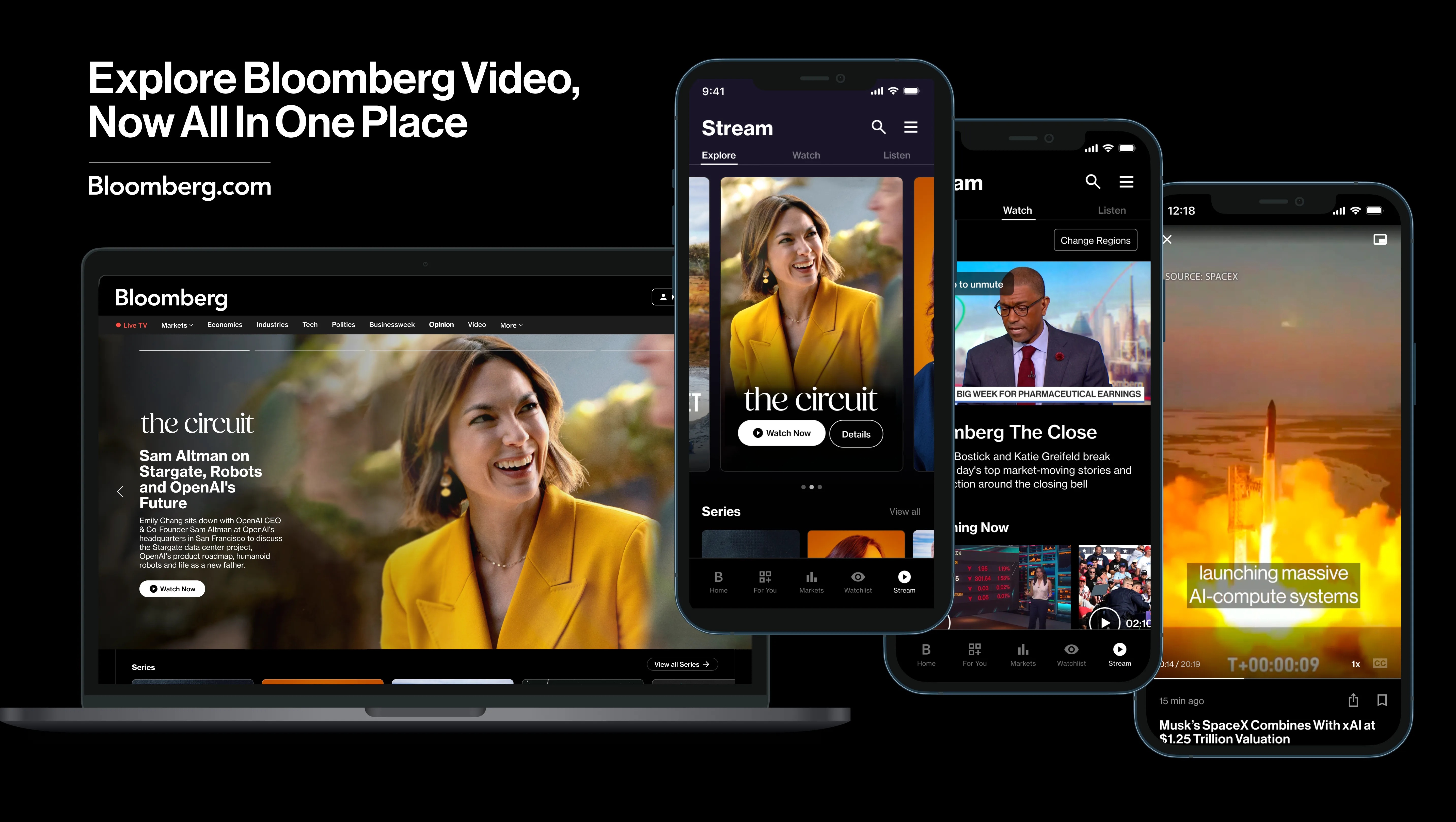
In February 2026, Bloomberg introduced a unified video experience and an app tab called Stream, bringing live television, Originals and audio together. Select videos became subscriber exclusives. In September, Mark Gurman’s Power On newsletter gained a weekly podcast. These extensions give an existing interest somewhere else to go inside Bloomberg’s world.
There is evidence of substance behind the formats. In October, Businessweek and DCTV won a Gerald Loeb Award for Can’t Look Away, a documentary built from Olivia Carville’s reporting on social media and child safety. An investigation became a film without abandoning its original subject.
The copyable move is to identify why a valuable audience returns, then remove the obstacles and build around that habit. Its conditions are demanding. Bloomberg already had a recognized brand, professional readers and direct advertiser demand; open auctions were a small remaining slice. A publisher dependent on those auctions would face a different bill. Before turning buyers away, it needs another reason for both readers and advertisers to come back.
Follow the money
Read / Watch / Follow