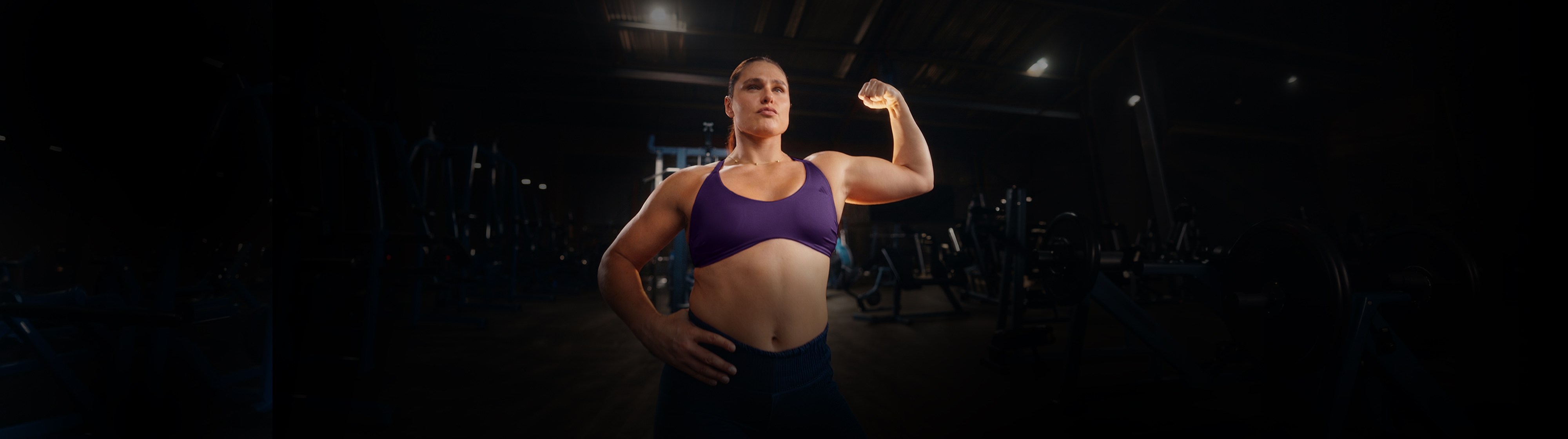
Put an Olympic rugby player in a gym with a celebrity guest. Give them something strenuous to do, then let them talk. The premise of Power Hour with Ilona Maher, announced in August 2026, sounds almost suspiciously uncomplicated. Where is the scoreboard? Where is the panel arguing about the scoreboard? Wave Sports & Entertainment, the company behind the series, has been building toward this sort of sports show for years: one in which the person can be more interesting than the result.
- Wave builds and distributes shows around athletes, creators and entertainers.
- Fans supply attention; advertisers and media clients supply business.
- Its useful trick: make the short clip an invitation to the longer relationship.
Maher’s guests were announced to include Kylie Kelce, basketball player Azzi Fudd and creator Bretman Rock. That is a casting decision with a business argument inside it. Sport supplies the setting and the host’s credibility. The potential audience stretches beyond people who can explain rugby sevens. A viewer can arrive for the guest, stay for the host and return for the next conversation.
The television in your pocket
Brian Verne and Ishaan Sutaria founded the business in 2017 as WAVE.tv. Its early proposition was distribution: take sports entertainment to the places younger fans were already watching. The portfolio divided attention into recognizable interests, with brands such as Buckets for basketball and Jukes for football. It could serve a particular obsession without asking the viewer to subscribe to an entire television package.
There was real operational work underneath that idea. Rights partnerships supplied material. Editors shaped it for social platforms. Separate brands gave different fandoms a place to gather. In 2020, TheWrap reported partnerships with organizations including Major League Baseball, its players association and the International Basketball Federation. This was a media operation built to work inside other companies’ feeds.
“We’re really programming for that TV in your pocket.”
Greg Bobolo, then SVP of strategy and partnerships, 2021
The pocket television had a catch. In March 2022, a Sportico analysis described a wider problem for social media businesses: delivering views to advertisers had become harder and more expensive. A large following did not remove the platform’s power over distribution. That pressure helps explain the attraction of original shows, although it does not establish that Wave’s earlier operation had failed.
A clip gets attention. A person gets a return visit.
Wave’s next move put recognizable people at the center. The company adopted the Sports & Entertainment name in 2021 and opened an 8,500-square-foot Santa Monica studio. In 2022, it launched New Heights with Jason and Travis Kelce. The brothers brought something a highlights library could not manufacture: a shared history, professional experience and reasons to interrupt each other.
Before their opposing Super Bowl appearances in February 2023, the show accumulated more than 66 million social views over two weeks, according to figures Wave shared with Fast Company. The publication described short podcast clips as entry points. That distinction matters. A clip can deliver its own joke while introducing a larger program. Distribution and production become parts of the same job.
Illustration of the model, not a measured conversion funnel.
For a creator, Wave offers the surrounding machinery: development, production, editing, distribution and commercial partnerships. For a fan, the product is a familiar voice available through YouTube or a podcast app. For an advertiser, it is access to a show’s community. Those are three different customers’ problems being addressed by one production operation.
The money behind the microphone
Building that machinery required capital. Wave announced a $32 million Series A in July 2020, comprising both equity and debt. CoVenture and GPS Partners led it. A $27 million Series B followed in February 2022, led by TZP Group. Its stated uses included athlete-led originals and technology. These are financing amounts, rather than a price tag for making any particular show.
The commercial offering includes sponsorships, branded integrations and advertising sales. Wave also sells agency services and merchandise for selected programs. The distinction between producing a show and controlling its distribution became especially visible in August 2024, when Amazon announced Wondery’s deal for New Heights. It covered audio and video distribution and ad-sales representation. It was not an announcement that Amazon had bought Wave.
The audience changed the casting
Wave had another useful signal: women were already watching its male-led shows. Kylie Kelce’s guest appearance on New Heights and Cameron Brink’s appearance on Podcast P informed conversations about their own programs. By July 2025, Wave said three women-led shows had each secured seven figures in brand deals before launch. House of Maher had a reported $1.6 million Samsung launch partnership.

The practical lesson is to treat audience response as development evidence. A guest appearance can reveal interest before a full series exists. Then build a repeatable format, give each platform a useful excerpt and find sponsors whose customers have a reason to care. The limits follow directly: a recognizable name cannot guarantee chemistry, repeat viewing or advertiser fit. An impression count cannot tell you whether a show makes money.
Beyond the sports page
Wave sits where sports publishing, creator production and advertising services overlap. Networks such as The Volume and The Ringer offer alternative homes for sports conversation. An independent host can also assemble a team. Wave’s particular pitch is the combination of making the program and finding its audience across platforms.
On October 5, 2026, Wave announced an advertising and distribution deal with Bobby Lee and Andrew Santino’s Bad Friends, extending an existing relationship with Santino’s Whiskey Ginger. The sports company was following the same logic into comedy. The valuable thing was becoming the recurring relationship with a host. Once that is the business, the scoreboard can disappear altogether.
Find your next conversation
Explore Wave’s show roster or follow the company on LinkedIn, Instagram, X and Facebook.