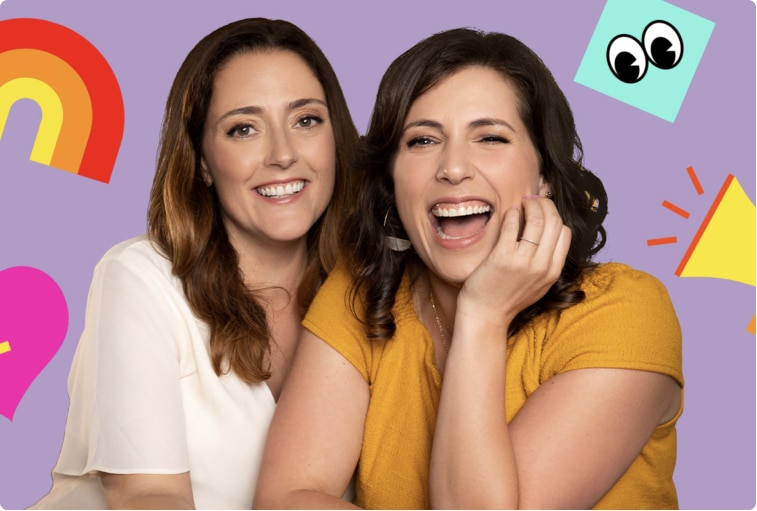
The first product Lemonada Media made was not really a podcast. It was an answer to a question that would not leave two women alone: what could have saved their brothers? Stephanie Wittels Wachs had lost Harris Wittels, the comedian and television writer, to an opioid overdose in 2015. Jessica Cordova Kramer lost her younger brother, Stefano, two years later. Kramer heard Wachs talking - and joking - about grief on another show, then got in touch. They call the meeting “the saddest meet-cute that ever existed.”
Established audio shops including American Public Media and WNYC heard the pitch for Last Day, their proposed investigation of the opioid crisis. Replies moved slowly. The founders did not. In 2019 they put in their own money, took a small advance from a sales-support network, and made the show themselves. The emotional cost is audible in the first episodes.
The show worked. The format did not scale.
Last Day was reported, edited and scored like a serious documentary. It won awards and gave the network its voice: rigorous about systems, frank about pain, allergic to solemnity for solemnity's sake. It was also slow and expensive to reproduce. Kramer later put the problem plainly: intensively reported narrative seasons are not very scalable. Lemonada made only a few during the next two years.
This is the first useful correction to the founding myth. Nothing “failed” in the conventional sense. The launch earned attention, listeners and a mission. What failed first was the assumption that the format which created the brand could also become the production line. Great media companies often need one thing to establish taste and another to establish cadence.
The pandemic sharpened that distinction. Commutes disappeared, and the market moved toward companionable, repeatable conversation. Lemonada responded with timely health programming such as In the Bubble and broadened into comedy, advice, parenting and culture. It did not throw out difficult subjects. It changed the container. Even Last Day eventually moved from seasonal investigations of epidemics to weekly conversations about the moments that permanently change a person.
A famous host is not a format
Lemonada's breakout illustrates the difference. Wiser Than Me is hosted by Julia Louis-Dreyfus, but celebrity is only the wrapper. The premise is the product: Louis-Dreyfus interviews accomplished women, usually over 70, whose experience popular culture routinely ignores. Each conversation ends with the host calling her own mother to compare notes. It is a clean engine for wisdom, intimacy and comedy - recognizable after one episode, roomy enough for dozens.
The show spent 29 consecutive days at No. 1 overall on Apple Podcasts and became Apple's 2023 Show of the Year. It later won the Webby Podcast of the Year. Other launches reached No. 1, including Blind Plea and The Letter. BEING Studios attempted a different piece of format design, borrowing reality television's ensemble casting and scene-building for “audio reality.” Some bets are cultural, some commercial, but each can be explained in a sentence.
The editorial point: let premium narrative establish trust, then add repeatable shows and distribution partners that keep inventory moving.
By late 2025 the publisher had more than 80 shows, from David Duchovny and Sarah Silverman to Steve Burns, Lori Gottlieb and Gretchen Rubin. Distribution-only and partner shows expanded the shelf without requiring Lemonada to originate every title. Originals kept the taste. Partners created reach. A subscription layer offered ad-free listening and bonus material. Books and a free audiobook club pushed the relationship beyond the feed.
The unsexy center: an ad team
Lemonada's customers are not only listeners. They are also creators who need development and distribution, and brands or foundations that want to borrow a host's credibility. In 2021 the company took sales in-house. It sold dynamic spots and baked-in reads, but also presenting sponsorships, custom segments, newsletters, social extensions and branded series.
Former CEO Kramer said in a 2024 industry interview that Lemonada's cost per thousand impressions sat in the high $30s to low $40s, with fill rates around 80 percent. Those are company claims, not audited results, but the mechanism is more interesting than the numbers. Hosts work with the message. Producers make the read fit the show. Salespeople stay close when a campaign goes sideways. The ad is treated as a small piece of content instead of a file dropped into available inventory.
A CVS Health sponsorship of In the Bubble included every episode, plus newsletters, social posts, show notes, editorial input and executive guests. Lemonada says it delivered more than 16 million host-read impressions. A chest-binder company, gc2b, received custom segments and a bonus episode around BEING Trans. Foundations have supported shows on child care, financial health and mental well-being. The offer is context, not merely ears.
What the buyer saw
Venture investors paid for the expansion. Blue Collective led a $1.5 million seed round in 2020. BDMI, Bertelsmann's venture arm, led an $8 million Series A in 2022 alongside Greycroft, Madison Wells and others. Lemonada said revenue tripled in 2021. Public reports put total outside funding before acquisition at about $10.5 million.
In May 2025, Swedish podcast group PodX bought a majority stake, its first acquisition of a United States network. Bloomberg reported a price of roughly $30 million; Lemonada declined to confirm it, and the figure should not be confused with a disclosed valuation. PodX bought a catalog, a United States sales operation, talent relationships, production capability and a brand elastic enough to hold grief, comedy, health and celebrity without becoming mush.
The acquisition also changed the founder configuration. Cordova Kramer stepped down as CEO at the end of 2025 and remained on the board. Wittels Wachs, previously chief creative officer, became CEO. The original creative premise now sits in the chief executive's chair, while PodX offers international distribution and sister studios. That arrangement will be judged on whether Lemonada's intimacy survives a larger machine.
The part worth stealing
A broad mission becomes credible through one problem the founders understand unusually well. Last Day earned permission for everything after it.
Your defining project need not be your weekly template. Keep the standard; change the production burden.
A show pitch should reveal what episode 30 looks like. The premise must produce guests, tension and a familiar ending without becoming mechanical.
Know the audience, involve the host, and bundle the feed with useful extensions. Premium advertising requires premium service.
A small creator can copy this without raising $10.5 million. Pick a subject where lived experience improves the questions. Produce one flagship that proves taste. Build a cheaper, regular format around the same emotional job. Capture email, not just follows. Sell two or three bespoke partnerships before spraying programmatic ads across every episode. Keep rights where possible so a useful idea can travel into video, events or a book.
The mission also needs to function as a commissioning rule. “Make life suck less” is cheeky, but it tells Lemonada what to reject: cruelty without insight, pain without utility, celebrity without a human question. A mission earns its keep when it saves a team from making the wrong show.
When this playbook breaks
- It will not work if vulnerability is merely a growth costume. Audiences notice extraction, especially around grief, health and identity.
- Host-read premiums disappear when the host treats the copy like litter, or when sales cannot provide white-glove service.
- A conversation format without a sharp premise becomes another famous person talking to friends. Recognition may launch it; structure keeps it.
- Mission-led work still needs a commercially valuable audience. Affinity cannot excuse weak retention, erratic publishing or fuzzy measurement.
Lemonada fits between celebrity podcast studio, mission-driven publisher and full-service network. Wondery and iHeart can offer scale; Crooked Media has a sharper political identity; Dear Media specializes in lifestyle personalities; independent producers offer intimacy with less infrastructure. Lemonada's difference is the combination: difficult first-person subjects, a broad female-forward talent bench, in-house production through ad sales, and enough humor to stop “important” from becoming medicinal.
The company's next test is familiar to any founder who sells control: can the system grow without sanding away the taste that made it valuable? The hopeful evidence is Last Day itself. In August 2026, the original podcast became a 288-page book by Wittels Wachs through Gallery/Lemonada Books. Seven years after two women refused to wait for permission, their least scalable idea is still producing new forms.