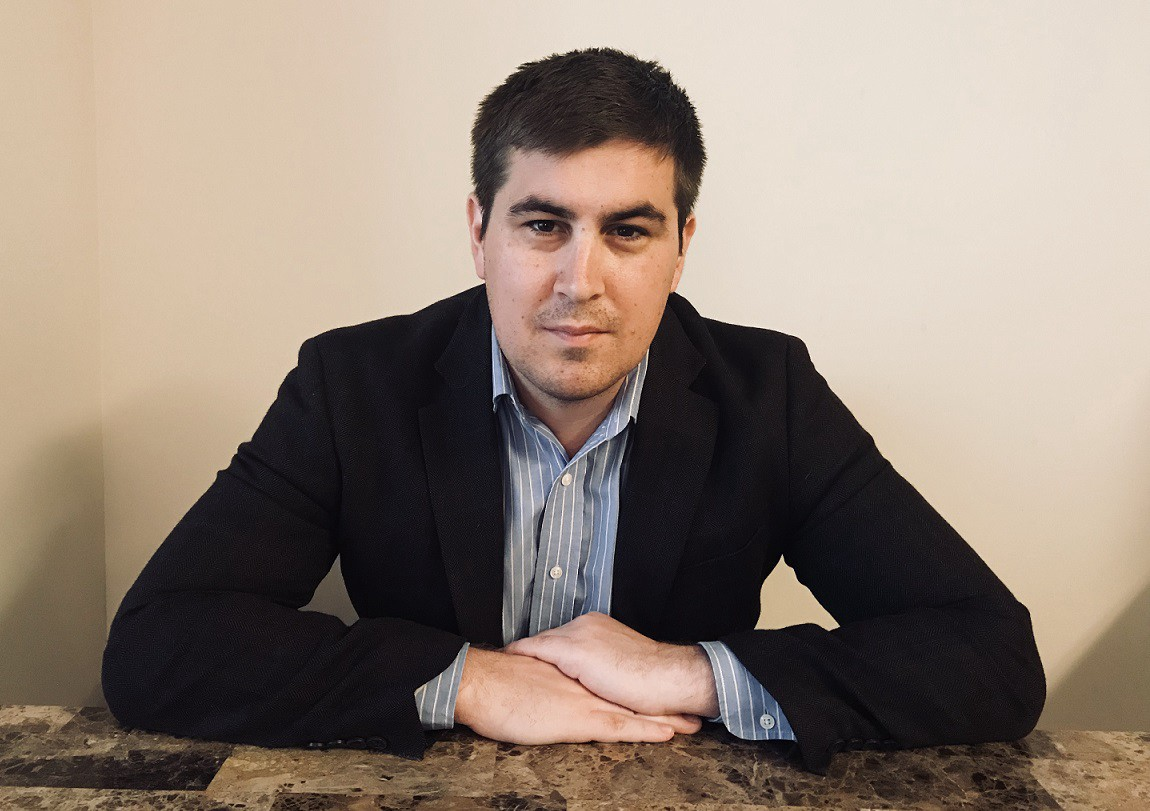
Who He Is
The Reporter Who Turned Media's Crisis Into His Biggest Story
Simon Owens covers media businesses the way a forensic accountant covers a crime scene - with relentless precision, zero sentimentality, and a refusal to accept "it's complicated" as an answer. His newsletter, Simon Owens's Media Newsletter, lands in the inboxes of editors, executives, and creators at virtually every major media company in America. Not because they have to read it. Because they want to.
His beat is deceptively simple: how do publishers make money, and will it work? In an industry full of hand-wringing about the death of journalism, Owens instead catalogs who is thriving and why. He interviews the creators building profitable solo newsletters. He dissects the subscription models quietly keeping local news alive. He traces the pivot-to-video trend with more skepticism than most trade reporters dare to show. The result is something rare - media coverage that is genuinely useful to people inside the media.
Based in Washington, DC, Owens has been at this since 2003, when he started a blog called Bloggasm interviewing other bloggers. It was not glamorous. But it was early, and it was smart, and it planted the seed of what would become a two-decade obsession: understanding how internet publishing actually works as a business, not just as a craft.
His path was not a straight line. He reported for local newspapers in Virginia, covered government for a regional paper, joined PBS MediaShift as an associate editor, and spent about two years at US News & World Report helping them figure out what social media was. He ran consulting engagements for clients including Google, Comcast, Forbes, ESPN, C-SPAN, and Nike. Then he decided to practice what he preached and built an independent media business of his own. He has not looked back.
1,000+
Entrepreneur Interviews
38K+
Substack Followers
558
Pages in His Ebook
174K
Monthly Impressions
40%
Year-over-Year Growth
The Origin Story
From Sixth-Grade Fiction to 558-Page Ebook
He wanted to write fiction in sixth grade. Sixth grade has produced stranger ambitions. What it actually produced was a kid who liked language, which turned into a teenager who liked the internet, which turned into a college graduate in 2006 with an English degree and a press pass.
Bloggasm, his early blog, is worth pausing on. In 2003, the idea of interviewing bloggers about how they built their audiences was not just unconventional - it was considered mildly eccentric. Bloggers were not yet regarded as media figures worth profiling. Owens disagreed. He sat down - digitally, at least - with the people building these early internet publishing businesses and asked them how they actually worked. That instinct, to take the mechanisms of media seriously as a subject of journalism, has defined every job he has had since.
When he moved to DC and joined US News & World Report around 2009, he was not hired to write about media. He was hired because legacy publications needed someone who understood social media, a then-murky discipline that most masthead editors regarded with the enthusiasm of someone being asked to learn a new filing system. He built it from scratch. He did not delegate the unglamorous parts.
"There's so much competition for content distribution, and you can't rely on high-quality content to find an audience."
- Simon Owens
The consulting years came next - a period that gave him a perspective most media journalists never develop. When you have helped both a Fortune 100 company and a scrappy startup think through content strategy, you develop a respect for what works over what sounds right. ESPN and Nike do not hire people who merely have opinions. They hire people who can move numbers. Owens learned to care about numbers.
By 2017, when he launched The Business of Content as a podcast and newsletter, he was not experimenting. He was applying everything he had learned. The concept was practical to the point of being almost blunt: talk to media entrepreneurs, find out exactly how they built and monetized their publications, and write it up so others could learn from it. One thousand interviews later, he has assembled what may be the most comprehensive informal database of creator-economy business models in existence.
The Business of the Newsletter
A Newsletter About Media That Is Itself a Case Study in Media
There is an irony that Owens acknowledges without much embarrassment: his newsletter about how to build sustainable media businesses is itself a case study in building a sustainable media business. His Substack sits at 38,000+ total followers, growing at roughly 40% per year. His average open rate of 36.7% is well above industry averages, which hover around 20-25% for most newsletters. His monthly impressions exceed 174,000.
More telling is who is reading. His audience runs toward the practitioner side: 66% are creator-entrepreneurs or owner-operators. Another 20% are VP or manager-level professionals. Nine percent are C-suite. His readers include people at Netflix, Google, Amazon, Disney, Apple, HBO, NBC, WarnerMedia, the New York Times, the Washington Post, NPR, CBS, Bloomberg, Politico, and McKinsey. This is not a list assembled for a media kit. This is the actual subscriber base of a newsletter that people inside the industry find genuinely useful enough to forward to colleagues.
He also runs The Long Story with Simon Owens, a second Substack publication focused on curating the best longform journalism he reads each week. It has run as a podcast for more than 225 episodes. The curation instinct - finding what is worth reading in a world that produces far more content than any one person can consume - runs through everything he does.
Who Reads Simon Owens's Newsletter
Creator-Entrepreneurs / Owner-Operators66%
"Now you need little more than a smartphone to become a publisher. The barrier to entry is so low."
- Simon Owens
What He Covers
The Beats That Define His Work
Owens has carved out a distinctive position in media criticism by focusing relentlessly on the economic infrastructure of publishing rather than its cultural product. He is less interested in whether a given article is well-written than in whether the publication that ran it has a business model that can survive the next three years. This is not cynicism. It is the recognition that good journalism requires solvent journalism.
His recent coverage has ranged across some of the most contested terrain in digital media: the post-advertising future, the Substack ecosystem's evolution, the local news crisis, AI's role in content production, and the persistent allure of video pivots. He takes positions. He argued that local newspapers have "lost the plot." He tracked Medium's long pivot toward profitability. He questioned whether the OpenAI acquisition of TBPN made any strategic sense. He does not write to reassure his readers that things are fine. He writes to help them understand what is actually happening.
Post-advertising media models
Substack & newsletter economy
Local news sustainability
Creator economy business models
AI in media production
Video pivot strategies
Subscription monetization
Media company acquisitions
Platform dependency risks
Solo media entrepreneurship
The Ebook
In 2020, Owens compiled 97 media entrepreneur case studies drawn from his interviews into a single ebook. It ran to 558 pages and exceeded 200,000 words. Most airport business books run 60,000 words and call it comprehensive. His is three times longer and built entirely from primary research. It is not for sale. It came with paid newsletter subscriptions.
What Makes Him Different
The Practitioner-Reporter Who Walks the Talk
Media journalism has no shortage of critics. Observers who write about the industry from a safe distance, tracking its failures with the detached tone of someone watching a slow shipwreck. Owens is something rarer: a reporter who writes about how independent media businesses work, while running one himself. Every piece of advice implied in his coverage is advice he is implicitly taking.
His LinkedIn following of 61,000+ is unusual for an independent newsletter writer - most of whom, even the successful ones, struggle to break through on a platform dominated by corporate content. His ability to grow a professional network on LinkedIn suggests he understands distribution at a strategic level, not just an instinctive one. His newsletter is his distribution vehicle. His social presence amplifies it. His podcast archive acts as a searchable interview database. The whole thing is engineered, not accidental.
He is also, notably, community-oriented. He actively solicits nominations for interview subjects. He publishes an open call for media entrepreneurs to pitch themselves for coverage. He responds to reader questions. This is not just good newsletter strategy - it reflects a genuine orientation toward the community he covers. He is not a distant authority dispensing wisdom. He is someone who is genuinely curious about how the next creator found their first thousand subscribers.
His contrarian streak is disciplined rather than reflexive. He does not argue that media is doomed (a popular position that requires no evidence). He does not argue that everything is fine (equally popular, equally dishonest). He finds the specific businesses that are working, asks why, and writes it up in enough detail to be useful. That, it turns out, is a format with a large and loyal audience.