The phone belonged to the intern. In 2007, according to Stitcher co-founder Noah Shanok’s later account, his team had spent months building a podcast discovery service for commuters. It synchronized with iTunes so people could carry their selections on an iPod. There were users, a plan, and the reassuring appearance of progress. Then Apple introduced the iPhone. Stitcher borrowed one from an intern named Colin and reconsidered what, exactly, it was building.
- A smartphone bet replaced an iPod-centered plan.
- Production and ad sales made Stitcher bigger than its player.
- The app closed in 2023; Stitcher Studios remains inside SiriusXM.
The phone belonged to the intern
Shanok recalled unreliable mobile streaming and a device that did not yet permit third-party apps. Nevertheless, he chose to redirect the company toward it. The immediate cost was discarded engineering effort and a frustrated team. “We abandoned months of engineering work,” he wrote. His calculation was that the existing route offered limited growth, while the new device might enlarge the market itself.
That is a useful distinction. Improving a product assumes tomorrow’s customer will arrive through roughly the same door. Stitcher’s founders - Shanok, Mike Ghaffary and Peter deVroede - were confronting the possibility that the door was moving. The phone would put internet audio where commuters already were. The opportunity was to remove preparation from a habit that still required rather too much of it.
“We abandoned months of engineering work.”
Noah Shanok, recalling the iPhone pivot
A radio station without the timetable
Early Stitcher joined audio sources into continuous streams, making talk programming behave more like a personal radio station. The name described the operation. Listeners could assemble their interests instead of accepting a broadcaster’s schedule. News, comedy and interviews could travel together, without the listener managing every transition.
Its distribution strategy followed that practical logic. By Deezer’s 2014 acquisition, Stitcher was integrated into more than 50 vehicle models and had been a launch partner for Apple CarPlay and Android Auto. The car mattered because listening already belonged there. Stitcher was giving an established behavior a larger menu.
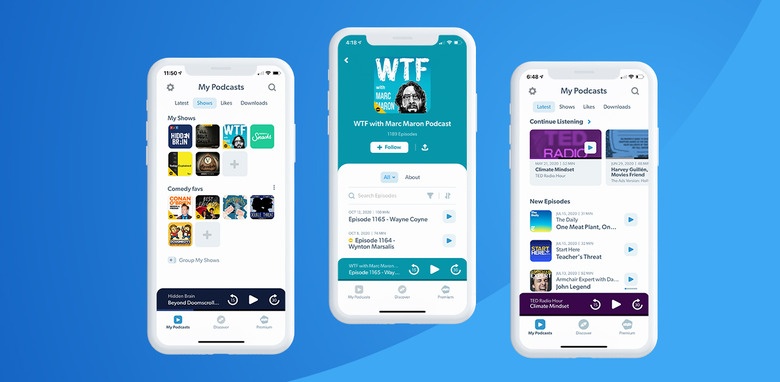
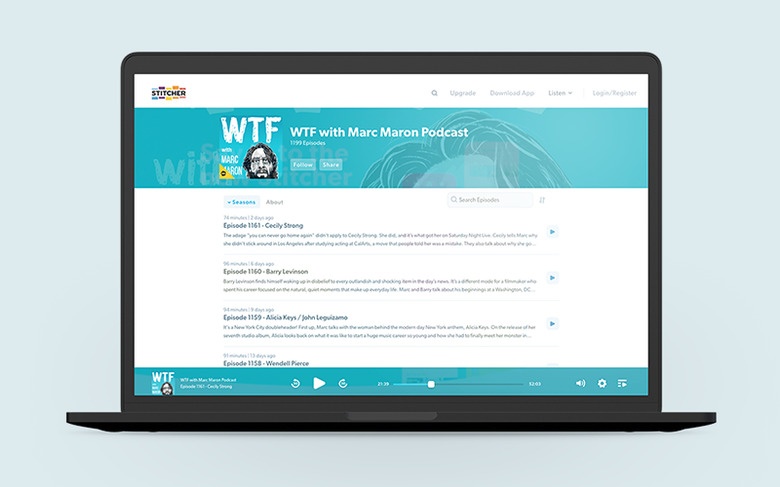
The software kept acquiring finer manners. A 2020 overhaul emphasized curated discovery, continuity between web and mobile, and rebuilt Alexa and Sonos integrations. The accompanying announcement described changes to button placement, icons, spacing and type size for accessibility. These were modest, consequential details: a listening service earns its place by making the next episode easy to find and the current one easy to resume.
The business behind the player
There were, however, several customers hiding behind that single play button. Listeners wanted a convenient player. Producers wanted audiences and commercial support. Advertisers wanted access to those audiences. Under Scripps, Stitcher became part of a larger arrangement involving Midroll’s advertising network and Earwolf’s comedy programming. The consumer app was now one entrance to a business with several rooms.
Stitcher Premium, introduced in 2017, added another transaction: listeners could pay for selected ad-free programming and exclusives. Its launch prices were $4.99 a month or $34.99 a year. The free app reduced the effort of listening; the subscription sold particular content and benefits. Advertising supplied a different source of money, tied to audiences rather than a listener’s willingness to subscribe.
This also changed the competitive map. Apple Podcasts and Spotify were alternatives for listening. A studio and advertising network had another task: help shows earn money wherever people pressed play. Stitcher’s distinction was its combination of those functions. Owning a listening destination and earning from distributed programming were related businesses, but their fortunes did not have to move together.
Two prices, two different purchases
The acquisition numbers invite a little financial theatre. Scripps paid Deezer $4.5 million for Stitcher in June 2016. In July 2020, SiriusXM announced a deal worth up to $325 million. Put those figures side by side and a remarkable return seems to explain itself. It does not. The later transaction included the expanded podcast business, not simply the player acquired four years earlier.
Scripps adds Stitcher to its existing Midroll business.
$265m upfront + up to $60m contingent on performance.
Stitcher generated about $72.5 million in revenue in 2019. Scripps told investors it had explored strategic options because it believed the operation would grow better within a larger audio-focused company. SiriusXM’s acquisition pitch connected programming and ad sales with its hosting, analytics and advertising technology. The deal’s logic was the assembled operation. The app was part of the purchase, without being the whole explanation.
The last episode was an app
On August 29, 2023, Stitcher’s app, web listening service and Premium subscription closed. SiriusXM’s executive memo emphasized incorporating podcasts into its flagship subscription business and described the Stitcher team as already integrated. It also praised broad distribution as a contributor to advertising sales. The standalone listening product ended while the inherited production and commercial capabilities continued elsewhere.
The shutdown does not establish that podcast demand failed, or that every part of Stitcher failed first. It establishes which product SiriusXM chose to retire. Current SiriusXM Media pages still list Stitcher Studios, including production support for its Listen Next initiative. In 2024, the parent also introduced the separate Podcasts+ subscription through Apple Podcasts. That service did not reopen Stitcher Premium.
What to borrow from a borrowed phone
A reader can copy the discipline behind the early decision: watch where a customer’s routine is going, count the work a pivot will discard, and distinguish the product people recognize from the activity that pays. The decision is harder when distribution, production and advertising demand different priorities. A better player alone cannot guarantee that a parent company will keep funding it.
Nor does the mobile bet supply a universal recipe. If customers are staying put, abandoning useful software can destroy value. If shows cannot attract repeat listening, distribution cannot conjure an audience. Stitcher’s history offers a narrower, more usable observation: sometimes the company follows the listener so successfully that its original doorway becomes expendable. Colin’s phone opened one door. The business eventually learned to use others.