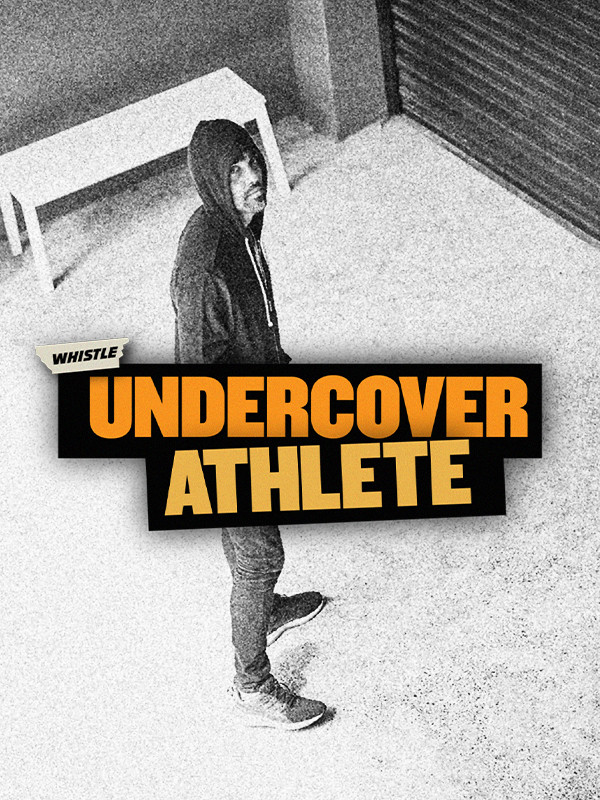
In April 2024, Brandon Aiyuk went to work at Applebee’s. The San Francisco 49ers receiver appeared in Team Whistle’s Undercover Athlete, taking a restaurant job and meeting unsuspecting diners. Applebee’s had a burger to promote. Aiyuk had a face customers might recognize. Whistle had a format that could make the encounter worth watching. The advertisement arrived wearing an apron.
Consider what the camera needed. No touchdown. No disputed call. No broadcast booth explaining a defensive scheme. The entertainment came from moving a familiar person into an unfamiliar role. That small displacement is a useful introduction to Team Whistle, a sports and entertainment publisher whose commercial territory extends well beyond the playing surface.
- Repeatable athlete shows.
- Sponsors with a natural role.
- Views and results measured separately.
It produces original shows, works with creators and distributes video through social and streaming channels. Its internal agency, MAGNET, helps brands, leagues and media companies do the same. Fans get personalities and stories. Customers buy production, strategy and access to audiences.
The audience had already left the sofa
The original ambition was an ESPN for kids. John West assembled a founding team with former Gatorade marketer Jeff Urban and television producer Kit Laybourne in 2009. By 2011, the proposed Whistle network included cable television, a website and mobile applications. But contemporary reporting identified an awkward practical obstacle: television distribution agreements were still unsigned.
West’s observation was more durable than the cable plan. His children liked sport without necessarily wanting to sit through lengthy broadcasts. “Kids are not watching television in the traditional way,” he said in 2012. Cheaper production and interactive distribution offered another route. That year, he described a planned $20 million launch across six platforms. It was a projection, not a final bill.
The Whistle Sports multichannel network launched in 2014. The shift in emphasis is instructive: gathering creators and distributing their work could follow viewing habits across devices. The company’s early problem was securing a place to appear. Its later proposition was knowing the places where an audience already spent time.
“Kids are not watching television in the traditional way.”
John West / 2012
A sponsor with something to do
Whistle’s recurring titles make its editorial choices unusually legible. No Days Off follows effort and preparation. Days Off looks at life away from competition. Home Team brings relationships into the picture. Undercover Athlete supplies a comic premise. Together, these are different doors into the same subject: athletes as people with routines, appetites and interests.
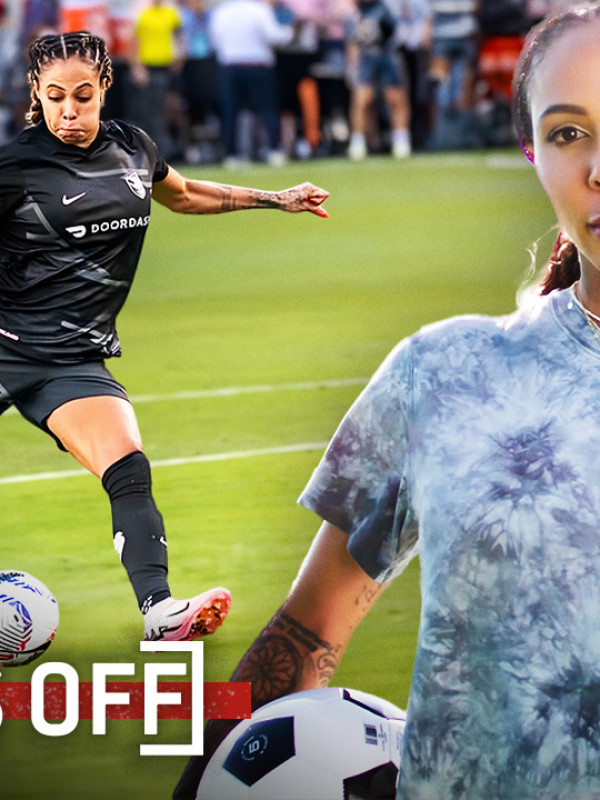
The sponsor can enter through the appropriate door. In 2024, Serta partnered on a No Days Off episode with soccer player Sydney Leroux, connecting sleep to performance. GNC appeared alongside North Carolina basketball player Armando Bacot and his post-workout routine. The connections are easy to understand. A mattress belongs in a recovery story; nutrition belongs near training.
This is also a service business. MAGNET advertises creative development, production, analytics, strategy, channel management and influencer amplification. A client can commission content or seek help running its own channels. Whistle’s proposition combines the instincts of a publisher with the capabilities of an agency. An independent creator offers a particular voice; a conventional production shop offers a finished film. Whistle also offers formats and distribution relationships.
That combination puts it among social sports publishers and creator-led studios competing for attention and advertising budgets. Its useful distinction is the connection between recurring entertainment and client services. The commercial question becomes less about hiring a famous face once, and more about building a setting that can accommodate another episode.
Five billion is a network number
The scale sounds extravagant until its unit is made clear. When DAZN completed its acquisition in February 2023, it described Whistle’s network as generating five billion monthly views across channels with more than 700 million followers. These are aggregated network figures. They include partner distribution and overlapping audiences. Five billion views do not mean five billion people.
The company’s website currently repeats the five-billion-view claim and describes more than 50 original shows. Those statements tell us about its stated distribution scale and programming breadth. They do not tell us how many viewers bought a sponsor’s product. For an advertiser, the distinction between attention and conversion deserves a chair at the briefing table.
Building that operation took outside capital. In June 2018, Whistle announced a Series D of more than $28 million, led by Aser with investors including Liberty Media, Emil Capital and WndrCo. It reported nearly $100 million raised overall. The stated uses included original programming and international expansion. ELEVEN acquired Whistle in 2021; DAZN subsequently bought the ELEVEN businesses and Whistle.
DAZN’s acquisition announcement explained the fit: Whistle could use the group’s rights and talent to build social audiences and direct fans toward paid services. Live events provide appointments. Athlete and creator stories provide something to watch between them. Bringing both under one owner gives the social operation a clear role in the wider sports business.
Monthly video views across the network
DAZN / February 2023. Aggregate views, not unique viewers.The tournament spills into town
The 2026 World Cup slate makes that role tangible. Boots Across America, presented with JD Sports, sends soccer creator OussiFooty through host cities. Supporters Section, partnered with Lowe’s and Snickers, turns fan conversation into a vodcast. Homegrown: Investing in Family, presented by Robinhood, follows DeAndre Yedlin and his family experiencing the tournament from the fan side.
These productions follow neighborhoods, personalities and family. Their distribution includes Whistle’s YouTube and social platforms and the DAZN app. A tournament supplies a common occasion; several formats give different audiences ways into it. The sponsor, meanwhile, gets a more specific association than appearing beside a generic football clip.
Boots Across America
OussiFooty × JD SportsSupporters Section
Lowe’s + SnickersHomegrown: Investing in Family
DeAndre Yedlin × RobinhoodGive the product a part
For a marketer, the copyable practice is to begin with a recurring situation people might watch voluntarily. Find the product’s plausible contribution to it, then choose the person and platform. Whistle’s examples make that sequence visible. The burger provides the restaurant encounter. The mattress provides the recovery conversation. The format gives the production a shape before the campaign arrives.
The approach depends on access to compelling people, competent production and repeat distribution. A sponsor also needs a credible relationship to the activity. When the product has nothing to contribute, the premise starts carrying dead weight. And a widely watched episode still needs separate measurement if the objective is sales. Whistle’s lesson is practical: give the audience a reason to stay, and the advertiser something useful to do while they are there.