William Utomo was in Los Angeles when his older brother called with an idea. Winston had started a website for young Indonesians. William had been studying in the United States and was beginning a career in finance. One brother had a new publication; the other had a plausible professional future. Between them lay a question that would become rather larger than a website.
The date was June 8, 2014. Winston had built the first version of IDN Times in a small Singapore apartment while working at Google. That evening, he called William. The younger brother believed the project could matter and decided to return to Indonesia. There was no sprawling entertainment group to join. The substantial asset was a conviction that an audience had been overlooked.
Both brothers grew up in Surabaya, away from Jakarta, where so much of the country’s media and business attention gathered. Their founding concern had two parts: younger people needed media that understood them, and opportunity should reach beyond the capital. Geography was part of the problem. A national audience deserved something broader than a view through Jakarta’s window.
William’s background helps explain the division of labour. He had studied at the University of Southern California. In 2013 and 2014, he helped manage its undergraduate student investment fund. Finance offered a familiar professional route; IDN offered the less predictable task of helping build a company. He became its co-founder and chief operating officer, while Winston became chief executive.
In the early period, William handled operations in Surabaya while Winston remained at Google in Singapore. His brother’s salary helped support the fledgling business. The arrangement was practical, slightly awkward, and useful: one person could work on the company while the other kept earning. A founding story tends to sound cleaner once somebody has removed the household arithmetic.
- 2014Co-founds IDN with Winston
- 2017Forbes Asia 30 Under 30
- 2024Joint EY Indonesia award
- 2026IMGR 2027 presentation
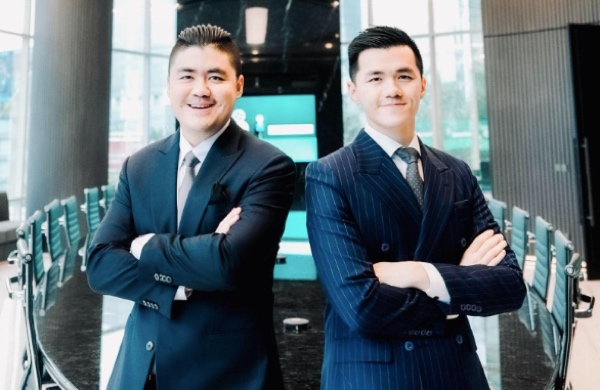
Brothers, with office hours
A family partnership comes with an unusually extensive reference check. William and Winston had known each other long before either possessed an executive title. That history gave them trust and an understanding of each other’s strengths. It also created a problem familiar to anyone who has tried to settle a work disagreement with someone who remembers them as a child.
William described a straightforward boundary in a 2023 interview: work belonged to their professional relationship, while personal matters stayed outside it. They also made time together away from the company. The arrangement sounds modest. Its significance is that the relationship required maintenance even when the business gave them plenty of reasons to see each other.
The brothers described complementary skills and shared goals. William’s position sits at the point where those goals become decisions about people, products, and execution. The title COO does not deliver much theatrical material. There is no applause for a process that works on Tuesday. Yet a company serving different audiences through different businesses needs precisely that kind of work.
Their partnership is therefore central to William’s story without swallowing it. Winston is often the public narrator of the original idea. William made a separate choice to return and build it. The distinction matters: an idea can be explained in an evening, while an operating business must survive the morning after, and several thousand mornings beyond that.
“We have a rule that when we're at work, we're colleagues, not brothers.”
William Utomo, 2023
A publication acquires a wider vocabulary
By April 2017, Forbes included the brothers in its Asia 30 Under 30 coverage. Its contemporary profile described IDN Media as attracting 13 million monthly visitors and 60 million monthly page views. It also recorded a commercial reality: the company said advertising clients supplied 70 percent of revenue. Those were figures about a particular business at a particular moment, before the later expansion.
The early group already combined publishing, video production, and a digital agency. That mixture helps explain why William’s work cannot be reduced to running a newsroom. Readers and advertisers were both part of the operating equation. Editorial relevance created attention; commercial relationships helped pay for the organisation that produced and distributed the work.
Popbela, Yummy, and Popmama widened the company’s range into different interests and stages of life. Later additions included film production, creator services, and live experiences. By its tenth anniversary in June 2024, IDN Media had shortened its name to IDN. Three letters had to accommodate considerably more activity than the original news site.
The shorter name also carried a larger ambition. IDN stands for Indonesia. At the anniversary, William emphasised collective effort with employees and communities, describing collaboration as part of how the group had developed. A company can announce a new identity in an afternoon. Making its different businesses useful to one another is the longer assignment.
The publishing model itself allowed people outside the newsroom to participate. In a 2023 presentation, Winston said about 40 percent of IDN Times content came from users and passed through human editors before publication. Readers could contribute as well as consume. The proportion belongs to that presentation, but the design choice explains something durable about the company’s approach to participation.
ICE, its creator business, extended that approach commercially by connecting brands with influencers. In the same presentation, Winston described a self-service model for buying creator campaigns. For an operator, such a business brings another set of relationships to manage. A creator needs an audience, a brand needs a useful partnership, and someone must make the transaction work.
IDN’s reported reach across its ecosystem. A group-wide measure, distinct from the visitor figures for its earlier publishing business.
Four connected businesses in IDN’s current description
When the audience walks into the room
William’s public appearances offer a more concrete view of those relationships. At BeautyFest Asia in 2018, he discussed demand for the event and said the initial ticket-sales target had been 6,000. Beauty coverage had become a reason for people to turn up in person. A reader could close a browser tab; an event attendee required a ticket and a place to stand.
That change in format introduces a different kind of accountability. Digital attention can be fleeting. An event has a date, a venue, and people arriving with expectations. The attraction may begin with content, but its delivery involves coordination. The company’s move into physical experiences made the operating role more visible, even when audiences came to see somebody else.
In October 2022, William appeared at the Asia Pacific Media Forum in Bali alongside JKT48’s Ryo Kenjo and Melody Laksani. Their session concerned fandom and community. William explained that IDN wanted to connect fans and the group’s members. His subject was the relationship around a performance, the part that continues after the song ends.
The distinction is useful. Fans return, recognise one another, and care about access to the people they follow. Publishing, creator campaigns, and entertainment may look like separate business categories, but each depends on some form of connection. William’s public work repeatedly places those connections inside the business discussion, rather than treating them as decorative enthusiasm.
The breadth of IDN now makes that discussion unavoidable. Tatler’s profile of William brings digital publishing, short-form drama, live experiences, and the creator economy into the same account of his work. A young person’s interests do not arrive neatly sorted into a corporate organisation chart. The operating challenge is to serve those interests without losing the thread between them.
An award, followed by a thank-you
In November 2024, William and Winston won EY Entrepreneur Of The Year Indonesia. The ceremony took place in Jakarta, a decade after the original launch. EY’s judging framework considered entrepreneurial spirit, growth, purpose, and impact. The recognition placed the two brothers together, just as the company’s founding story had done.
William’s response on LinkedIn directed attention toward the team, known internally as Timmy, and thanked customers, partners, and shareholders. He described the mission as building an ecosystem for Indonesia’s young generation, with a horizon stretching across the next century. The wording reveals what he chose to foreground when the occasion could easily have become a personal victory lap.
IDN calls its culture Timmyness and sets out ten core values. Its public description emphasises inclusion and a growth mindset. Such principles are commitments that a company has to keep demonstrating. In William’s account of the award, however, the employees appeared as participants in the achievement, with their work placed at the centre of the explanation.
Further recognition followed. In February 2025, William was announced as Indonesia’s 106th Endeavor Entrepreneur. The selection opened access to the organisation’s international network of mentors, investors, and other resources. His response again shared the credit with the IDN team and tied the achievement to opportunities for younger Indonesians.
The brothers were also Indonesia’s finalists at EY World Entrepreneur Of The Year 2025. That year’s profile quoted William on artificial intelligence and storytelling. In November, he appeared at Endeavor Japan’s summit on a panel about moving from local vision to global impact. His Indonesian audience remained the starting point, while the conversations around the business increasingly crossed borders.
“AI is a powerful force that has the potential to redefine our industry and inspire entirely new ways of storytelling.”
William Utomo, EY finalist profile, 2025
The customer has changed the question
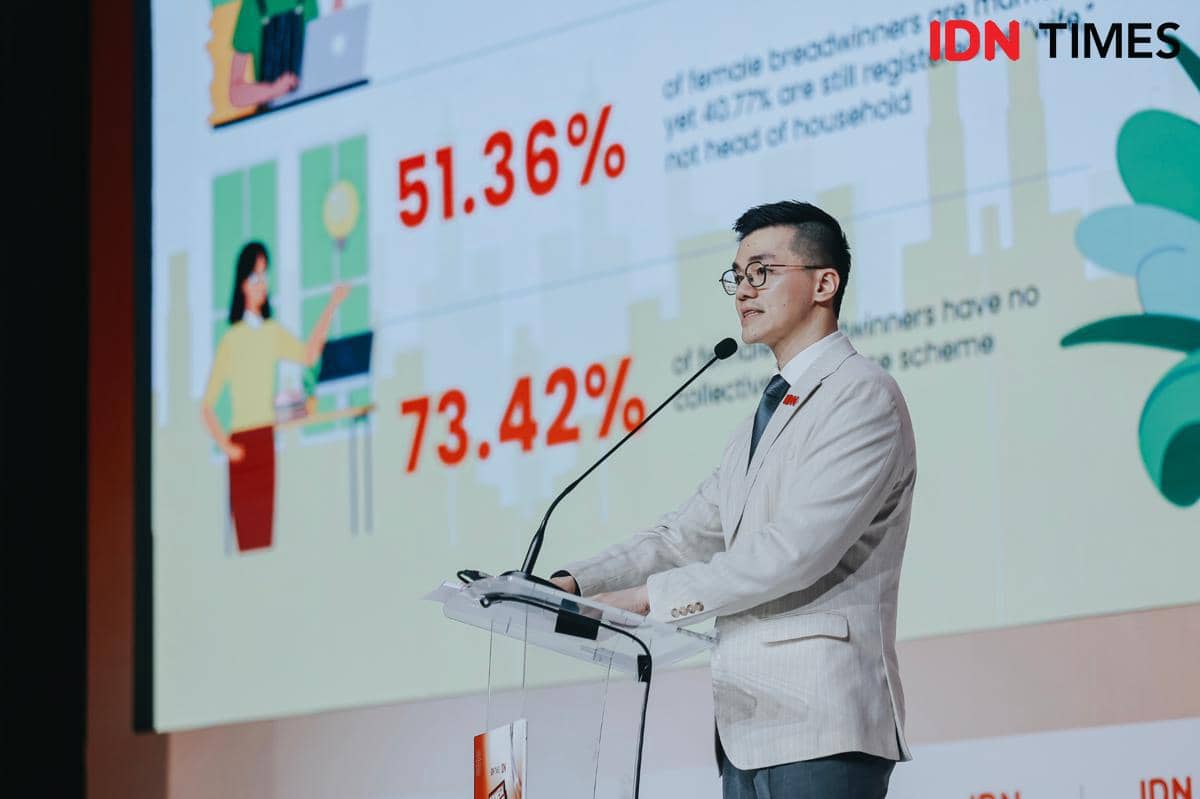
By June 2026, William was discussing a different set of audience needs at Indonesia Summit in Jakarta. Presenting the Indonesia Millennials and Gen Z Report 2027, he described younger consumers becoming more selective and more concerned with usefulness. The report’s future-facing title accompanied a presentation in the present. These were customers making decisions now.
His account connected changing definitions of success with flexibility, additional income, skills, and financial security. He also discussed AI as a tool for independent learning, while emphasising the need to use it critically. The interest in technology sat alongside an older concern: understanding what people actually want to do with the opportunities available to them.
For William, that makes relevance a continuing assignment. The audience that justified IDN’s founding cannot be frozen at the moment of the launch. Its preferences move. Its ambitions change. A business built around younger people has to keep listening as their lives become more complicated than the demographic label on a presentation slide.
The call from Los Angeles belongs to the beginning of this story. The 2026 presentation shows why the work continues. William returned to help create something for people whose needs had been overlooked. He now helps run a business that must keep discovering those needs afresh. Twelve years later, the operating question still arrives before the answer.
Keep the conversation going
Explore William’s public work and the conversations around it.
- IDN: the company and its founding story ↗
- William on LinkedIn ↗
- William on Instagram ↗
- Watch: The Entrepreneur Diaries with Prita Kemal Gani ↗
- Read: the brothers on their working relationship ↗
- Read: William’s June 2026 audience presentation ↗
- Read: EY’s 2025 finalist profile ↗
- Read: Uni Lubis on the first Indonesia Millennial Summit ↗