The first clue that Hometalk had misunderstood its own audience was a homeowner who did not want a contractor. In 2011 the company was built around a sensible exchange: people with projects would meet people who knew how to do them. Yaron Ben Shaul already ran Networx, a contractor lead business, and Hometalk began as a place where homeowners and professionals could trade ideas and information. Yet the people arriving at the site kept doing something slightly inconvenient for that plan. They showed one another how to do the work themselves.
- Hometalk shifted from a homeowner-contractor premise to tutorials, project sharing and practical Q&A.
- Readers get DIY ideas and advice; creators get distribution and rewards; brands buy advertising and campaigns.
- In 2019 it reported 17 million registered users and more than 140,000 tutorials. VerticalScope acquired it in 2021.
Co-founder Miriam Illions told Google that within about 18 months, the team saw a sharp rise in people interested in doing projects themselves. That is a better pivot story than the usual tale of a founder waking up with a new vision. Hometalk's users supplied the vision. The company changed its marketing and rebuilt around them. The original proposition had not vanished because contractors had become useless; it had met a larger, more eager audience with a different question: Can I do this?

The room that answered back
The difference between a decorating picture and a useful tutorial is what happens when the reader asks, “How did you attach that?” Pinterest is excellent at finding a look. YouTube is full of demonstrations. Houzz can connect a homeowner to design ideas and professionals. Hometalk occupies the muddier middle: pictures, written steps, videos and a community willing to answer the follow-up question when the first attempt goes crooked.
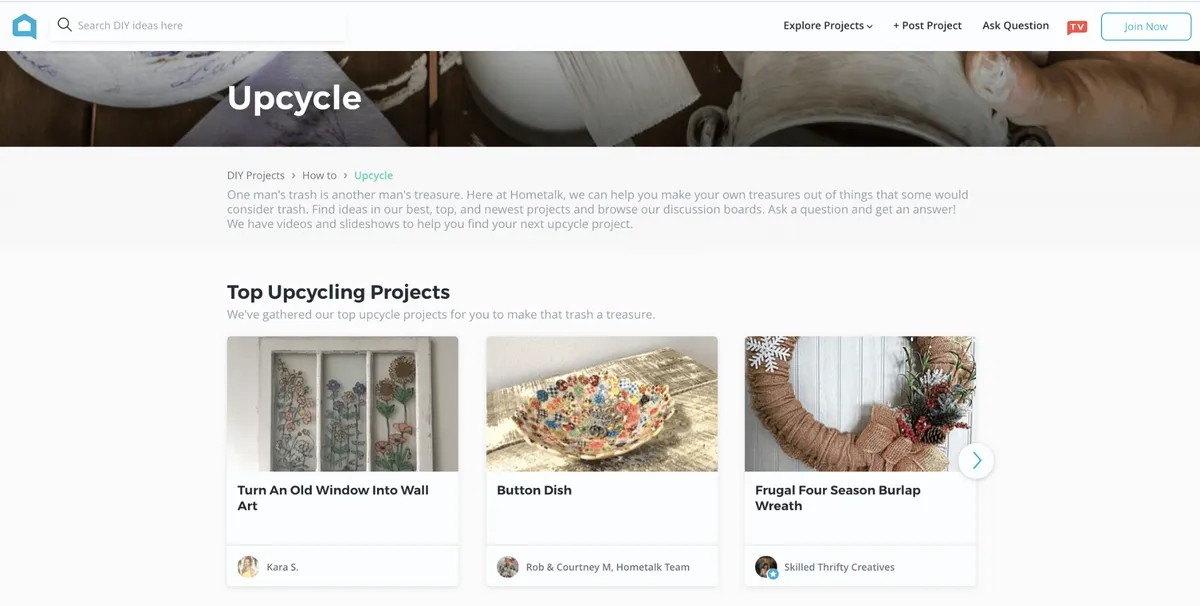
A visitor can browse projects by room or task, search for an idea, post a project, or ask the community for help. The subject matter ranges from a modest paint fix to a garden bed or a furniture makeover. Its discussion boards are full of the small domestic uncertainties that rarely make glossy magazines: whether an ugly sink can be painted, how to remove a stubborn finish, what to do with the narrow space beside a house. For homeowners and renters with more curiosity than cash, the answer may be a repair, a craft or simply the nerve to begin.
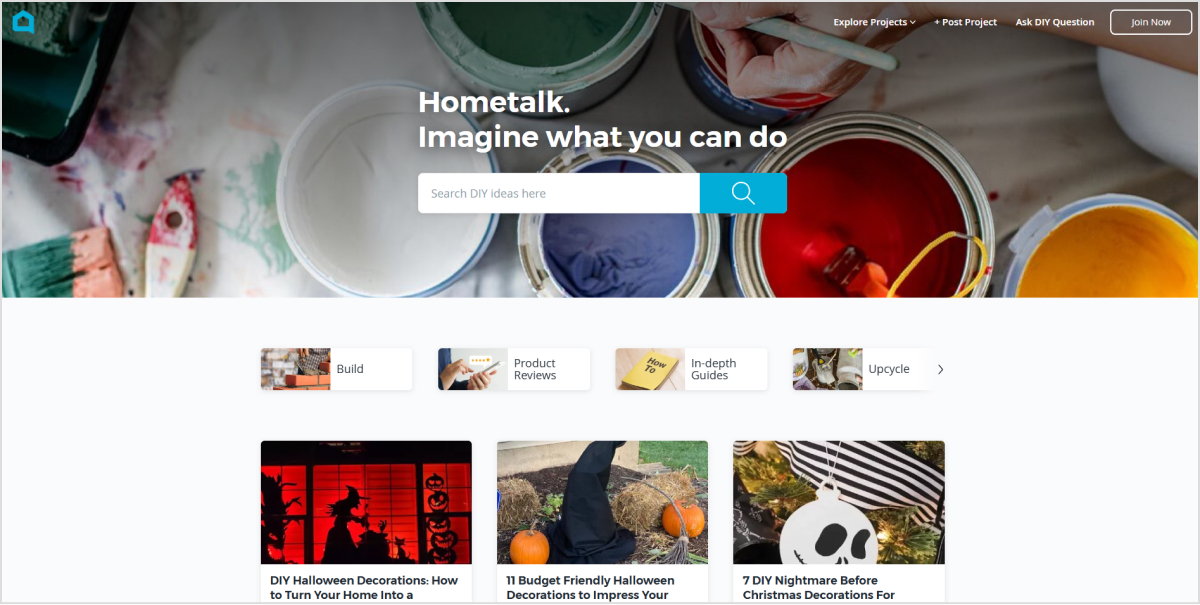
That mixture of instruction and conversation is also a distribution machine. A person searching for a way to refinish a cabinet may find a tutorial written years earlier. If it helps, they may save it, share it, ask a question or post their own result. The company gets a growing library; the contributor gets an audience; the next reader gets a less mysterious cabinet. Not every project will be good advice, of course. The model depends on capable contributors, usable pictures and a community willing to correct mistakes. Electrical work, structural changes and other hazardous jobs still need qualified help.
The quiet cost of a good idea
User-generated content sounds free until someone must sand the dresser, stop to photograph the sanding, explain which grit they used, and show the result in daylight. Hometalk's Creator Rewards Program puts a price, and a checklist, on that labor. Its published offer is a $50 gift card for two qualifying tutorials in a calendar month. Each tutorial must concern home or garden, contain at least 180 words and four separate photographs, show the work in progress, and include a before and an after image. Duplicate projects do not qualify.
Fifty dollars is hardly a carpenter's wage. It is a nudge toward the kind of post that another person can actually use. The before photo establishes the problem; process images reduce guesswork; the after photo supplies proof. Hometalk also offers bloggers traffic incentives and affiliate terms, while its creator hub discusses brand work. Those arrangements make more sense for people who already like to teach, document and build an audience than for someone trying to fund an expensive renovation with gift cards.
Photograph the problem, the steps and the result.
Write enough detail for a stranger to try it.
Search, email, video and social feeds carry the idea onward.
“DIYers flocked to the platform and started sharing their own ideas.”Miriam Illions, recalling Hometalk’s early users
The bargain has a commercial side. Hometalk's partner site sells shoppable tutorials, product reviews, social and video campaigns, and newsletter placements. A brand selling paint or garden supplies can appear beside a project whose reader may need exactly those materials. The company has also earned money from programmatic advertising and commerce-related links. This is where the editorial work matters most: a tutorial that feels like an advertisement disguised as a solution will weaken the trust that makes the audience valuable in the first place.
From a side project to a portfolio
The business was largely bootstrapped through its first years. In 2017 Ben Shaul described advertising as its chief revenue source and discussed adding sponsored content and commerce. Two years later, Hometalk raised a $15 million growth round led by NFX, with Altair Capital and Adam Neumann participating. At the time, it reported 17 million registered members, more than 140,000 tutorials and more than 21 million monthly visits. Those are 2019 figures, a snapshot of the audience that made expansion plausible, rather than a live count.
In November 2021, VerticalScope USA acquired Hometalk and its Israeli development subsidiary. VerticalScope's financial statements record $43,340,087 in cash consideration for that deal. The number is distinct from the company's funding: money paid to buy the business is not money raised to run it. By then Hometalk also operated Foodtalk and Upstyle, applying its creator-and-tutorial machinery to recipes and fashion. The corporate site now lists further lifestyle properties, including Redesign, WellNow, Simplify and Savvy Explorers. The house had acquired several new rooms.
There is a lesson here for anyone building a community, though it is not a promise that every niche site can repeat the outcome. Hometalk watched what people did before deciding what to sell them. It made the useful behavior easier: post the steps, show the evidence, ask a question, answer one. Then it built distribution and commercial products around that habit. This works where people have repeatable problems, visible results and enough generosity to explain their methods. A gallery of beautiful final rooms alone would have missed the messy, instructive middle.
The company calls its mission “to empower people to create.” That can sound airy until a stranger tells you exactly how to fix the paint on a thrift-store table. Hometalk's original plan assumed the expert would arrive at your door. Its enduring product lets the expert arrive in your browser, perhaps with a photo of their own botched first attempt. There are worse ways to learn how a house gets made.