160M+ monthly viewers across YouTube & socialTop 10 CTV entertainment property at 2026 NewFrontsComscore ranks UPROXX #1 YouTube partner channelIndependent again since April 2024 with will.i.am64% of audience unique vs. NetflixNow selling Warner Music's entire U.S. YouTube inventory160M+ monthly viewers across YouTube & socialTop 10 CTV entertainment property at 2026 NewFrontsComscore ranks UPROXX #1 YouTube partner channelIndependent again since April 2024 with will.i.am64% of audience unique vs. NetflixNow selling Warner Music's entire U.S. YouTube inventory
Company File / Music & Culture Media
UPROXX
The blog that grew up into a television network.
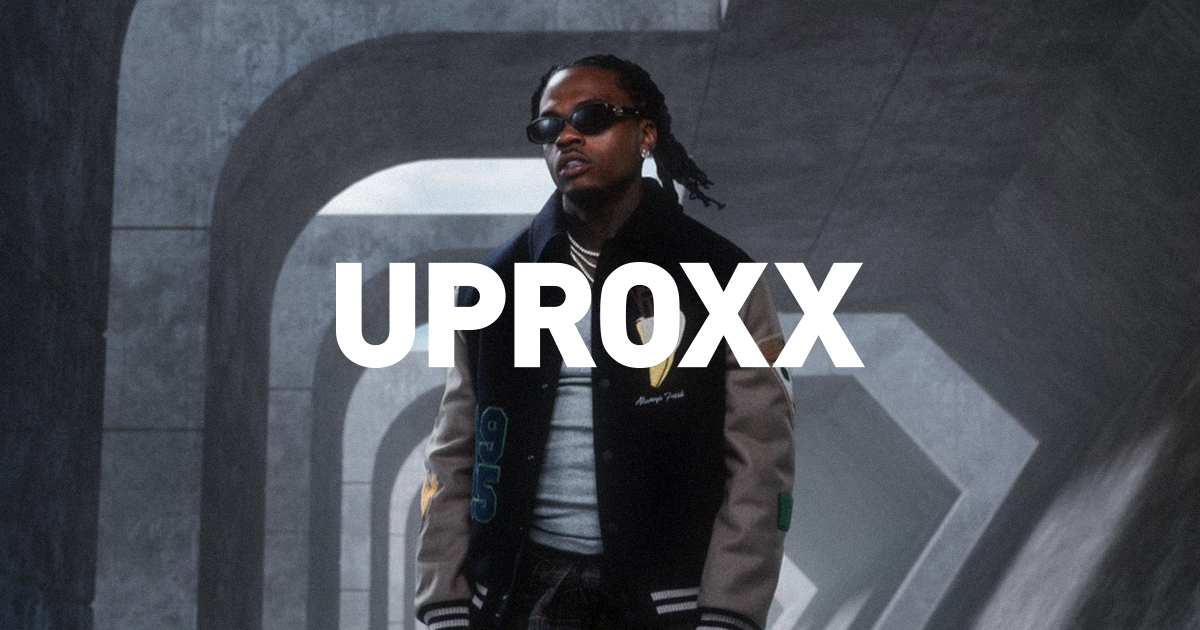
Above: the UPROXX wordmark, parked in front of the kind of set it now builds for a living. Twenty years ago this was a logo on a webpage. Today it's a channel on your living-room TV.
2008Founded
160M+Monthly Viewers
3Owned Brands
LAHeadquarters
01 / Right Now
A media company that stopped behaving like a website
It is March 2026, and UPROXX is standing on a NewFronts stage doing something a music blog from 2008 was never supposed to do: selling television. Not metaphorically. Comscore has it ranked seventh among the top 25 connected-TV entertainment properties in America - ahead of Vevo, ahead of Fox, ahead of Warner Bros. More than 160 million people watch UPROXX every month, and over half of them are watching on an actual TV screen.
The pitch to advertisers is blunt. Music programming on YouTube, UPROXX argues, is premium inventory - as worth paying for as anything on cable. The room, for once, is nodding along. This is a company that has spent eighteen years being underestimated, and it has developed a taste for the moment right before everyone realizes they were wrong.
More than half of UPROXX's 160 million monthly viewers are watching on a TV screen.
- Comscore measurement, March 2026
What UPROXX is, today, is a music-and-culture network that lives wherever attention does: YouTube, social feeds, and connected TV. It owns three brands - UPROXX, HipHopDX, Dime Magazine - runs a content studio that makes the ads as well as the shows, and sells media for itself and for Warner Music. It is independent, profitable enough to keep going, and run by the same person who started it. That last part is rarer than it sounds.
02 / The Problem
Music television died. Nobody told the audience.
Here is the tension UPROXX exists inside. For two decades, the place where young people watched music and culture kept moving, and the businesses built to serve them kept dying in the old spot. MTV stopped showing music. Magazines folded. The 2010s digital-media boom - the listicles, the pivot-to-video, the venture money - mostly ended in layoffs and quiet acquisitions. The audience never left. The companies serving it did.
The audience for music and culture never went away. The businesses built to reach it kept dying in the wrong place.
- The central problem UPROXX was built around
The skeptic's question writes itself: why would a brand that started as a humble entertainment site outlast Vice, outlast most of Complex's imitators, and end up ranked next to Hollywood studios on a CTV chart? The honest answer is that UPROXX kept asking one unfashionable question while everyone else chased the platform of the month - where is the audience actually watching, and can we get paid to be there?
03 / The Founders' Bet
Two record-label guys who already knew the music was the point
UPROXX was founded in 2008 by Jarret Myer and Brian Brater. Before the website, the two ran Rawkus Records, the 1990s hip-hop label that helped launch a generation of artists. That detail matters more than a normal founder bio, because it explains the bet. Myer and Brater did not come from advertising or from Silicon Valley. They came from music - which meant they treated the culture as the asset and the platform as a rental.
They treated the culture as the asset and the platform as a rental. Everyone else did it the other way around.
- On the founders' Rawkus Records instinct
The ownership history reads like a company that refused to sit still - or, depending on your mood, like a company that could not decide whose it was. Acquired by ad network Woven Digital in 2014. Woven raised $18 million that December, poured it into video, and eventually renamed itself Uproxx Media Group. It bought Dime Magazine for basketball, HitFix for film and TV. Then in 2018, Warner Music Group bought the whole thing - youth media as a way to "influence culture," as the press releases put it - and Myer stayed on as publisher.
The bet's final move came in April 2024. Myer, joined by Complex founder Rich Antoniello and by will.i.am, bought UPROXX, HipHopDX and Dime back out of Warner Music to form an independent UPROXX Studios. will.i.am took the title Chief Visionary Officer - which is either the most Los Angeles job title ever printed, or a sign that the company intends to fold AI and music into the same building. Both can be true.
Milestones / 2008 - 2026
Eighteen years, four owners, one founder
2008
The site goes live
Jarret Myer and Brian Brater - veterans of hip-hop label Rawkus Records - launch UPROXX as a music and pop-culture website.
2014
Acquired by Woven Digital
Ad network Woven Digital buys UPROXX, then raises $18M in Series A and pours it into original video.
2015 - 2016
Building the portfolio
Adds Dime Magazine for basketball culture and HitFix to expand film and TV coverage. Woven rebrands as Uproxx Media Group.
2018
Warner Music Group buys in
WMG acquires UPROXX to "influence culture." Myer remains as publisher; estimated ~$43M had been raised across the company's life.
2024
Independence, take two
Myer, Rich Antoniello and will.i.am buy UPROXX, HipHopDX and Dime back from WMG to form independent UPROXX Studios - plus a deal to sell Warner's U.S. YouTube inventory.
2026
A top-10 TV network
UPROXX TV reports 160M monthly viewers and debuts at the NewFronts as a top-10 CTV entertainment property.
04 / The Product
Three brands, one studio, and the channel underneath it all
What UPROXX actually sells is range. The flagship UPROXX brand covers music, movies, sports, food and the broad sprawl of pop culture - and increasingly does it as video, not text. HipHopDX is one of the longest-running hip-hop publications on the internet. Dime Magazine handles the NBA and the sneaker-and-style world orbiting it. Underneath all three sits UPROXX TV, the connected-TV and social-video layer that turns articles and interviews into something you watch from the couch.
UPROXX
The flagship - music, film, TV, sports, food and culture, built increasingly as original and social video.
UPROXX TV
The connected-TV and social-video network. A top-10 CTV entertainment property as of the 2026 NewFronts.
HipHopDX
One of the longest-running hip-hop news, reviews and rankings publications anywhere online.
Dime Magazine
Basketball, sneakers and the lifestyle around the NBA game.
Content Studio
Branded-content and production arm that makes the campaign, not just the coverage of it.
AI StoryLabs
In-house unit using will.i.am's FYI conversational-AI tech to reshape brand storytelling.
The content studio doesn't just cover the campaign. It produces it.
- On the UPROXX business model
The cleverest part is the media-sales engine. UPROXX sells advertising across its own channels and, since the 2024 split, holds the exclusive right to represent Warner Music's YouTube inventory across the United States. So a company with 83-odd employees gets to broker some of the most-watched music video on the planet. That is leverage that a much larger payroll usually buys.
05 / The Proof
The numbers advertisers actually bought
Reach is easy to claim and hard to verify, so UPROXX leans on Comscore - the third-party measurement everyone in the room trusts more than a self-reported deck. The most persuasive figure is not the 160 million. It is the overlap, or rather the lack of it.
Audience that's unique to UPROXX
% of UPROXX viewers NOT reached by the comparison service - Comscore
vs. Netflix64%
64%
vs. ESPN63%
63%
Watching on a TV screen~50%+
50%+
Why it matters: an advertiser already buying Netflix or ESPN reaches roughly two-thirds new people by adding UPROXX. That "unique reach" is the entire sales argument - and it's measured by Comscore, not by UPROXX.
64% of UPROXX's audience doesn't overlap with Netflix. That's not a vanity stat - it's the whole pitch.
- Comscore audience-overlap data
The rankings back it up. Comscore placed UPROXX as the top YouTube partner channel, ahead of music heavyweights SonyBMG, The Orchard and Studio71, and seventh among the 25 largest CTV entertainment properties. For a brand most people still file mentally under "website," sitting on a chart between broadcast networks is the proof that the bet paid out.
UPROXX is pitching music programming on YouTube as premium inventory.
- Jarret Myer, CEO, to Axios ahead of the 2026 NewFronts
06 / The Mission
Own the culture, rent the platform, repeat
Strip away the deck language and UPROXX's mission is consistent with where it started: make music, sports and culture programming, and put it where young audiences actually are. The platforms change - blog, then video, then social, now CTV - but the thesis does not. The culture is the durable asset. Everything else is distribution you can swap out when it stops working.
The platforms keep changing. The thesis - own the culture, rent the platform - has not.
- The throughline from 2008 to 2026
The 2024 independence move sharpened it. Bringing in will.i.am and his FYI AI technology, and standing up AI StoryLabs, signals that UPROXX wants to make and monetize content faster than a traditional studio - using conversational AI in production and brand work. Whether that becomes a real advantage or a press-release flourish is the open question. The company has earned enough benefit of the doubt to be worth watching either way.
Scrapbook / Marginalia
Five things that don't fit the org chart
Label roots. Founders Myer and Brater ran Rawkus Records, the 1990s hip-hop label, before they ran a website.
Four names, one company. Uproxx → Woven Digital → Uproxx Media Group → a Warner subsidiary → independent UPROXX Studios.
will.i.am's title is real. He is officially the Chief Visionary Officer - and an investor.
A poll worth saving. UPROXX runs a Music Critics Poll modeled on the late Village Voice Pazz & Jop.
"Digital" is misleading. Most of its viewing now happens on living-room TV screens, not phones.
07 / Tomorrow
Back on the NewFronts stage
Return to that 2026 stage. The company selling television used to be a logo on a webpage - the same wordmark sitting on the image at the top of this profile, once parked in front of nothing but a browser, now parked in front of a music-video set it built itself. The audience in the seats is the same one that watched MTV, then watched YouTube, and now watches both on the same screen. The difference is that this time the company serving them is still standing, still independent, and still run by the guy who started it.
Music television didn't die. UPROXX just rebuilt it where people were already looking.
- The closing argument
That is the thing worth taking seriously about UPROXX. Not the viewer count, which will change. The discipline behind it - follow the audience, own the culture, get paid to be there - is what let a 2008 startup end up on a chart between Fox and Warner Bros. The platform of the moment is connected TV. The next one is already being built. UPROXX, if its own history is any guide, plans to be standing in front of it.