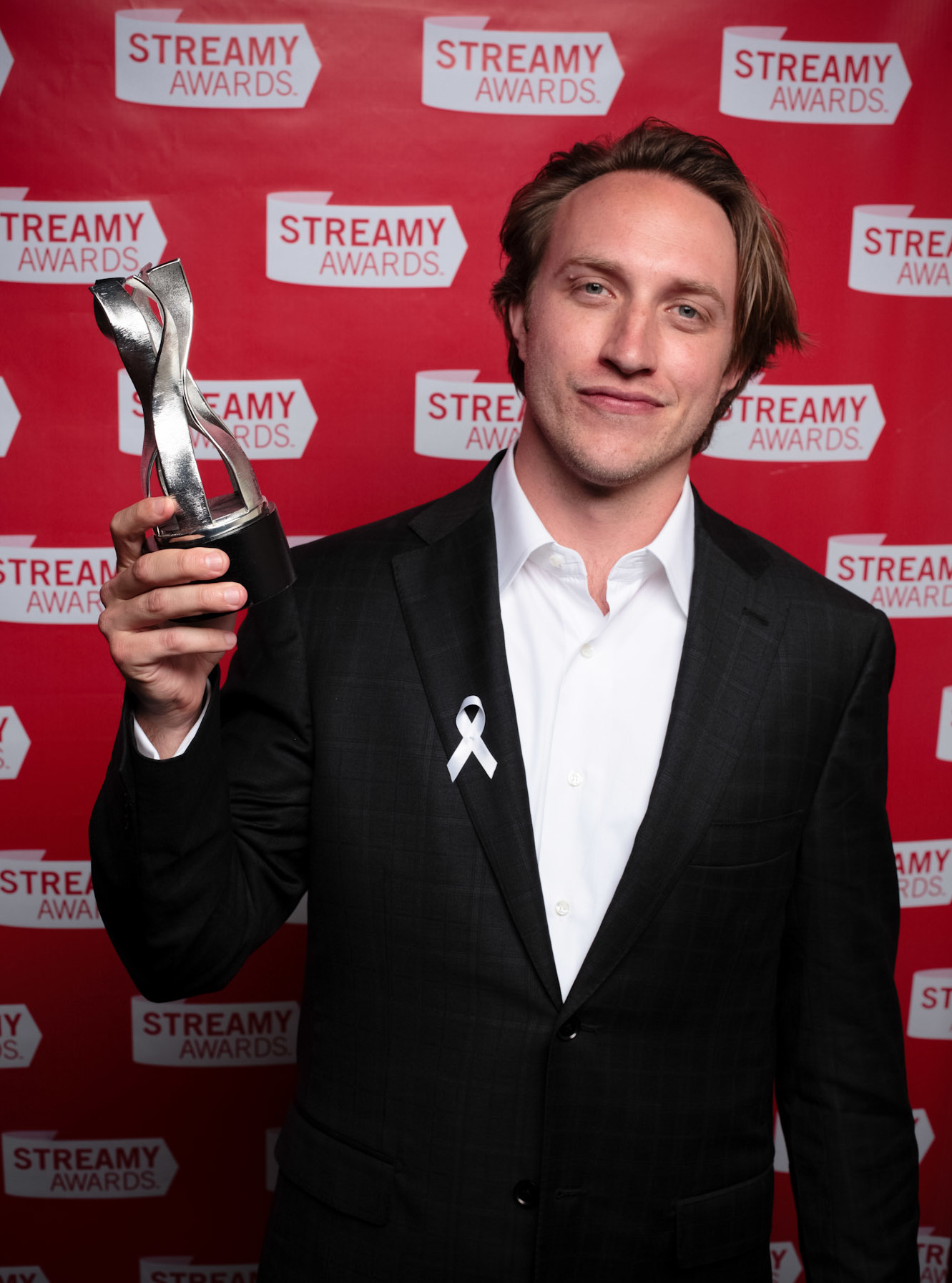
Birdsboro, Pennsylvania is a borough of about 4,000 people in Berks County, an hour outside Philadelphia. It is not the kind of place that produces many tech billionaires. Chad Hurley grew up there anyway, selling his own artwork on the sidewalk in front of his house, running cross-country competitively enough to win two state championships, and taking apart his toys not to break them but to understand exactly how they worked.
The cross-country habit matters more than it sounds. His team at Twin Valley High School won PIAA State titles in 1992 and 1994. He later said that running taught him to manage failure - that every race is a data point, not a verdict. That particular mindset, absorbed on Pennsylvania trails before the internet era, would prove indispensable in the years ahead.
At Indiana University of Pennsylvania, he studied Fine Art with a focus on graphic design and interface. He was not learning to program. He was learning to see - how visual hierarchy works, why some interfaces feel inevitable and others feel hostile, how design can either reveal or obscure intention. That vocabulary was exactly what a certain payments startup in Silicon Valley needed in 1999.
PayPal hired him as their first UI designer. During the interview, they handed him a design test. He passed it by producing what became the company's logo - the same one PayPal used for the next decade. He was 22. There he met Steve Chen and Jawed Karim, two engineers with whom he would later build something considerably larger.
The YouTube origin story has become folklore, but the details repay attention. In January 2005, after a dinner party at Chen's San Francisco apartment, Hurley and Chen realized they had shot video they couldn't share. The files were too large to email. Uploading to a web server was technically laborious and required expertise neither of their dinner guests possessed. The gap between "I have a video" and "other people can see it" was, in 2005, a genuine chasm.
They decided to fill it. Karim joined shortly after. The domain was registered on February 14, 2005 - Valentine's Day, a nod to the original concept of a video dating site called "Tune In, Hook Up." That concept quietly evaporated when they realized people wanted to share everything, not just romantic overtures. The first video, Karim's 19-second clip at the San Diego Zoo, went up on April 23, 2005. It now has over 280 million views.
By the end of 2005, YouTube was handling 100 million video views per day and receiving 65,000 new uploads daily. By October 2006, Google had seen enough. The $1.65 billion acquisition was finalized when YouTube was not quite two years old. Hurley's personal stake translated to roughly $345 million in Google stock.
He served as CEO until 2010, when he stepped aside and transitioned to an advisor role. The next chapter - AVOS Systems, MixBit, GreenPark Sports, EyeTell, a portfolio of sports investments spanning the NBA, MLS, Premier League, and a Formula One team that sadly never raced - has been quieter but no less deliberate. In 2019, he and Chen received a Lifetime Achievement Emmy from the National Academy of Television Arts and Sciences. The honor arrived thirteen years after the Google deal, a measure of how thoroughly YouTube had rewired television itself.
In June 2025, marking YouTube's 20th anniversary, Hurley posted that the platform's global impact means more to him than the acquisition. The statement reads as genuine rather than promotional. He built a tool that gave billions of people a stage. The price tag, however large, was always secondary to that fact.