Denise Thomas had customers, a business idea and a house full of marketing people. What she lacked was a name. At a holiday gathering in her home, she had given the assembled minds a brief: nobody was leaving until they had found one. Eventually, she brought out an apple pie. The answer, apparently, had been in the kitchen.
The guests suggested naming the company after dessert. Thomas liked the friendliness of ApplePie; adding Capital supplied the necessary financial gravity. A name could invite people in and still suggest that somebody was keeping the books. It was an appropriate beginning for a business concerned with making an intimidating transaction easier to approach.
ApplePie Capital, which Thomas co-founded in 2014, would concentrate on franchise financing. Its customers were entrepreneurs trying to open or expand businesses with recognizable signs above the door. Thomas had arrived at that opportunity by a less obvious route: helping investors and owners navigate markets for companies whose shares were still private.
A market before the storefront
At SharesPost, where she served as chief marketing officer and executive vice president, Thomas worked in the world of pre-IPO shares. A person holding stock wanted liquidity. Somewhere else, an investor wanted access. Bringing them together required a way to find one another and agree on a price before a public stock exchange could do the introductions.
She recalled her firm conducting forty auctions involving Facebook shares before its public offering, alongside activity involving LinkedIn and other companies. The attraction was the act of constructing a market: identify two groups with complementary needs, then build a workable meeting place. By the time she considered small-business lending, she had already spent years with that problem.
There was a family precedent for seeing opportunity in the arrangements around commerce. Her father, a serial entrepreneur, used drive-in theaters during the day for used-car markets, with a service to help value the cars. An idle site became somewhere buyers and sellers could meet. The setting was different from a financial platform. The organizing instinct is recognizable.
Thomas also had reasons to take franchising seriously. She had invested in Supercuts equity, and her brother-in-law had owned a Mail Boxes Etc. franchise territory. Familiarity gave her somewhere to begin investigating. A franchise could offer repeated examples of a business model, rather than leaving a lender to judge every proposed shop as an entirely separate experiment.
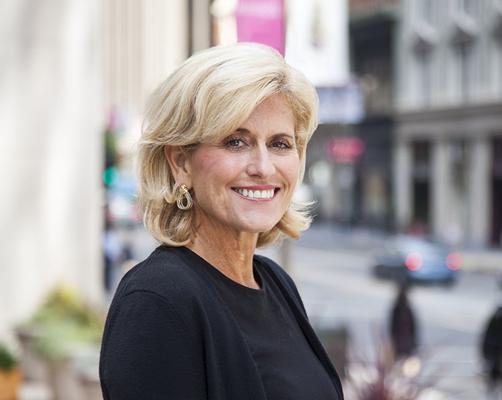
That distinction mattered because small business is an enormous category and a difficult place to start a specialized lending company. A restaurant, a retail shop and a local service business do not become comparable merely because each needs money. Franchising offered a narrower set of questions. What had the model cost elsewhere? How had locations performed? What did the brand do for its operators?
Thomas’s career already included technology and service businesses, with roles at OffRoad Capital, LesConcierges, Post Communications and others. She enjoyed the stage when an idea still needed to become an organization. Repetition could be less attractive than construction. Explaining her appetite for founding companies, she reached for an unusually candid job description: “serial masochist.”
The bagel shop that made it real
In January 2015, ApplePie began lending. Its first loan, for $465,000, financed a new Einstein Bros. Bagels location in San Diego. The borrower, Marty Mares of Trei Inc., had found traditional banking difficult and worried about tying up collateral needed for future stores. The financing question already extended beyond getting a single door open.
For Thomas, that was a useful illustration of the customer. A franchisee might want to become a repeat operator, carrying experience from one location into the next. Financing arranged for the first project could affect the possibilities for the second. A lender serving that person needed to understand the sequence as well as the immediate request.
An Einstein Bros. Bagels location in San Diego.
One loan, with future stores already in view.
The company’s early method began with the brand. ApplePie studied operating histories, closures and the support available to franchisees. A location closing at the end of a lease could mean something different from a location failing. The sign over the entrance gave the lender a starting point; the details underneath it still needed examination.
The borrower then faced an individual assessment. A repeatable model does not remove differences in experience, resources or execution. Thomas’s proposition depended on using both levels of information. A familiar logo is convenient for a customer choosing lunch. A credit decision requires a considerably longer conversation.
By late 2015, she could describe another concrete transaction: a $250,000 loan for a new Marco’s Pizza outside Salt Lake City. Ten investors took fractional shares. The operator had already opened two locations and considered using his own cash flow for the next one. The brand’s introduction helped bring him to ApplePie.
That introduction was part of the design. A relationship with a franchise brand could lead to conversations with multiple owners, including owners who would borrow again. It gave ApplePie a route to customers with a shared operating context. Thomas was building a business around understanding that context well enough to make it useful to both borrowers and investors.
and franchise support
and the proposed location
willing funding partners
Two kinds of money
A lending platform has to solve an awkward opening puzzle. Borrowers want evidence that money is available. Investors want evidence that the company can find and assess borrowers. Each side would understandably prefer the other to arrive first. Thomas’s early business needed to persuade both to make the acquaintance.
The first marketplace brought individual investors and family offices into loans through fractional participation. Institutional relationships later created another route. For a growing lender, those arrangements could provide a more predictable supply of capital to finance customer demand. They also required the company to explain franchise debt to buyers who needed a reason to trust its judgment.
In December 2016, ApplePie announced a $180 million loan purchase agreement with TowerBrook, covering a two-year period. Alongside it came a $16.5 million Series B, co-led by QED Investors and Fifth Third Capital. The two figures did different jobs: one concerned purchases of franchise loans; the other financed the company building the lending business.
The distinction helps explain Thomas’s position between two markets. She needed capital for ApplePie’s own development and capital that could reach franchise borrowers. A funding headline might collapse those needs into a single impression of growth. Running the company required keeping the purposes separate and the relationships working together.
A later bank relationship carried an unusually long backstory. Thomas recalled an earlier financial platform helping fund a $4 million round for David Becker’s First Internet Bank roughly two decades before their ApplePie partnership. In 2021, the bank announced an agreement to purchase $100 million of ApplePie Core loans. An old connection had found a new application.
She also described calling BHG’s leadership after learning about the company and seeing potential common ground. That conversation led to diligence on an equity investment and a lending relationship. In her telling, the first step was straightforward: she thought they might like ApplePie, so she contacted them. The work began before there was any certainty about its destination.
By January 2022, Thomas reported cumulative ApplePie lending above $1.3 billion, approaching $1.4 billion. The scale had changed since the first bagel-shop loan. The underlying task remained recognizable: find business owners with plans, assess those plans and assemble funding relationships that could support them.
The people who stay in the picture
Thomas’s professional relationships have sometimes changed direction. Her ApplePie co-founder, Stephen Pelletier, had previously been her CEO and mentor, roughly twenty years earlier. She later spoke about the reversal with appreciation. Someone who had once helped make room for her development could become a colleague in a company she led.
That experience informed her account of leadership. She valued people who believed in colleagues, put them in suitable roles and allowed them room to succeed. She also spoke about mentoring women and starting a women’s leadership group. Opportunity had arrived through other people during her career; she wanted to extend it through her own work.
“When things get to be routine they become less interesting to me.”
Denise Thomas · 2017
The industry did not always welcome her on equal terms. In a 2022 interview, Thomas recalled feedback from a venture investor who favored men, particularly younger men, as fintech founders. Her response included a practical request for more men to mentor women. The work of widening opportunity could not rest solely with the relatively small number of women already leading companies.
Her public record since then includes continued industry conversations. In February 2023, she discussed franchise ownership with Miguel Armaza, including her view that technology layoffs could bring experienced people into business ownership. ApplePie later announced her participation in a December 2024 specialty-finance forum. The work involves explaining the category as well as financing its participants.
ApplePie appeared at No. 3,508 on the 2025 Inc. 5000, following appearances in 2019 and each year from 2021 through 2024. Thomas remains listed as founder and CEO. The company now describes a range of financing options for franchise owners, including growth capital, SBA and conventional loans, and equipment financing.
There is an appealing circularity to the story. Her father found a market in a drive-in theater’s unused hours. Thomas found one behind the familiar storefront. Both required looking at an existing arrangement and asking who could make better use of it. After the naming party, of course, her own arrangement came with a small advantage: everybody already knew what apple pie was.