The Rails Nobody Built
Somewhere between managing the online stores of Jay-Z and Jillian Michaels at Live Nation and later running Snap Kitchen as CEO, Jon Carter kept noticing the same broken thing: food that could function as medicine had nowhere to go. The prescription existed. The food existed. The money - $170 billion in pre-tax HSA and FSA accounts - existed. What was missing was the plumbing.
So Carter built it.
Prado is the platform that wires physicians, food operators, and healthcare spending accounts together. A doctor prescribes a weekly meal plan for a patient managing type 2 diabetes. Prado generates a Letter of Medical Necessity, maps ICD-10 codes for audit compliance, spins up a HIPAA-compliant branded portal for the practice, and coordinates with a local food partner for preparation and delivery. The patient pays with HSA or FSA dollars. The food operator gets a new customer channel. The physician gets a new tool. Nobody touches a fax machine.
That description makes it sound logical. It wasn't obvious. Most people looking at the food-delivery landscape in 2020 saw a commoditized, margin-compressed, VC-incinerated category. Carter saw something different: a healthcare access problem disguised as a logistics problem, sitting on top of a payment infrastructure problem that nobody had solved because it sat awkwardly between healthcare and food-service verticals that didn't talk to each other.
"I realized there's a ton of friction in the market preventing food from operating as a form of health care."
- Jon Carter, CEO & Founder, PradoThe Education of an Operator
Carter grew up in a food desert. His neighborhood had fast food on every corner and fresh produce as a special trip. Approximately 19 million Americans share that geography. He was one of them.
He studied economics at UC Berkeley, then took an MBA at UCLA Anderson. Neither degree pointed him toward food. His first serious job was VP of Product at UBOC.COM, the eCommerce division of Union Bank of California, a $97 billion bank. He learned how digital infrastructure scales inside regulated industries. He learned how payment rails work and, more importantly, how they break.
Then came Live Nation.
From 2007 to 2013, Carter rose to SVP and General Manager of eCommerce, running product, design, engineering, online marketing, and fulfillment for the direct-to-consumer businesses of over 600 brands. Sesame Street. Jay-Z. Shakira. U2. Madonna. Deadmau5. KISS. NASCAR. Jillian Michaels. He ran subscription management and fan club operations for artists whose audiences numbered in the millions. He understood what it took to handle perishable inventory - in this case, tour merchandise with hard deadlines - at scale.
Nobody at the intersection of food-as-medicine and HSA/FSA payments had that operator training. Carter just needed to find the right problem to point it at.
"Losing my father to diabetes was a transformational moment for me where I wanted to tie my professional endeavor to something personal and apply technology transformation at scale to something worthy itself."
- Jon CarterSnap Kitchen and the Gap in the Market
In 2015, Carter joined Snap Kitchen - an Austin-based prepared meal company - first as CTO, then eventually as CEO. He built the MVP prototype, developed the mobile web app for online ordering and delivery, and integrated the platform with POS systems. He ran the company's omni-channel digital strategy. Snap Kitchen is now distributed through Whole Foods.
But running a food brand gave him something more valuable than a resume line. It gave him a clear view of where the infrastructure ended. Carter saw the market from the inside of a food operator: the subscription management complexity, the order fulfillment coordination, the inability to tap healthcare spending accounts despite the obvious connection between nutrition and chronic disease management. He wasn't guessing at a gap. He'd lived in it.
His father died in his mid-50s from type 2 diabetes. Carter has cited this as the moment that made the mission personal - the force that converted professional frustration into founding energy. The loss created an urgency that pure market analysis can't manufacture.
He founded Prado in 2020.
What Prado Actually Does
The company operates as a three-sided platform. Healthcare providers get a HIPAA-compliant branded website and admin dashboard - "Prado Pay" - that a medical practice can set up in minutes. Physicians select from meal plans mapped to specific conditions: obesity, type 2 diabetes, cardiovascular disease. Prado automatically generates the Letter of Medical Necessity with ICD-10 code mapping required for HSA/FSA payment qualification and audit readiness.
Food operators get white-labeled storefronts, subscription management, inventory tracking for perishables, integrated SMS and email marketing automation (via Twilio, Klaviyo, Iterable), loyalty and referral programs, analytics dashboards, and fulfillment integrations with FedEx, USPS, UPS, DoorDash, and Uber. No POS changes. No new packaging. The operator plugs in and gets a new customer channel.
Patients select from roughly 120 physician-certified meals, pay with HSA or FSA pre-tax funds, and manage their weekly subscriptions. The effective cost runs to approximately $7 per day - comparable to a fast food meal - once the tax advantage is factored in.
Prado earns a percentage of gross sales. No upfront integration fees. The bet is volume: as food-as-medicine partnerships expand and chronic disease management shifts toward preventive nutrition, every meal sold through the platform generates a revenue event.
Partners include Trifecta, FitLife Foods, Epicured, Resilient Meals, Everytable, and Healthy Thyme Meals. The platform has supported over 25 million healthy meals.
"Access to healthy foods is a key social determinant of one's overall health, and it has a direct correlation to the management of chronic conditions."
- Jon CarterThe Numbers Behind the Bet
Carter frames Prado in the language of healthcare economics, not food delivery. Chronic diseases account for 90% of the United States' $4.5 trillion annual healthcare spend. Diabetes alone costs $412.9 billion per year. A Tufts University study projects that implementing medically-tailored meals nationally could prevent over 2.6 million hospitalizations annually and generate $23 billion in healthcare savings in the first year alone.
Meanwhile, 65 to 70 million Americans hold HSA or FSA accounts, and the total pre-tax dollars available in those accounts exceeds $170 billion. Most of it goes unspent on healthcare because the eligible expense categories are narrow and the purchase experience is fragmented. Prado is building the category expansion - foods prescribed by physicians, coded to medical conditions, and purchasable with the tax-advantaged dollars that already exist in patients' accounts.
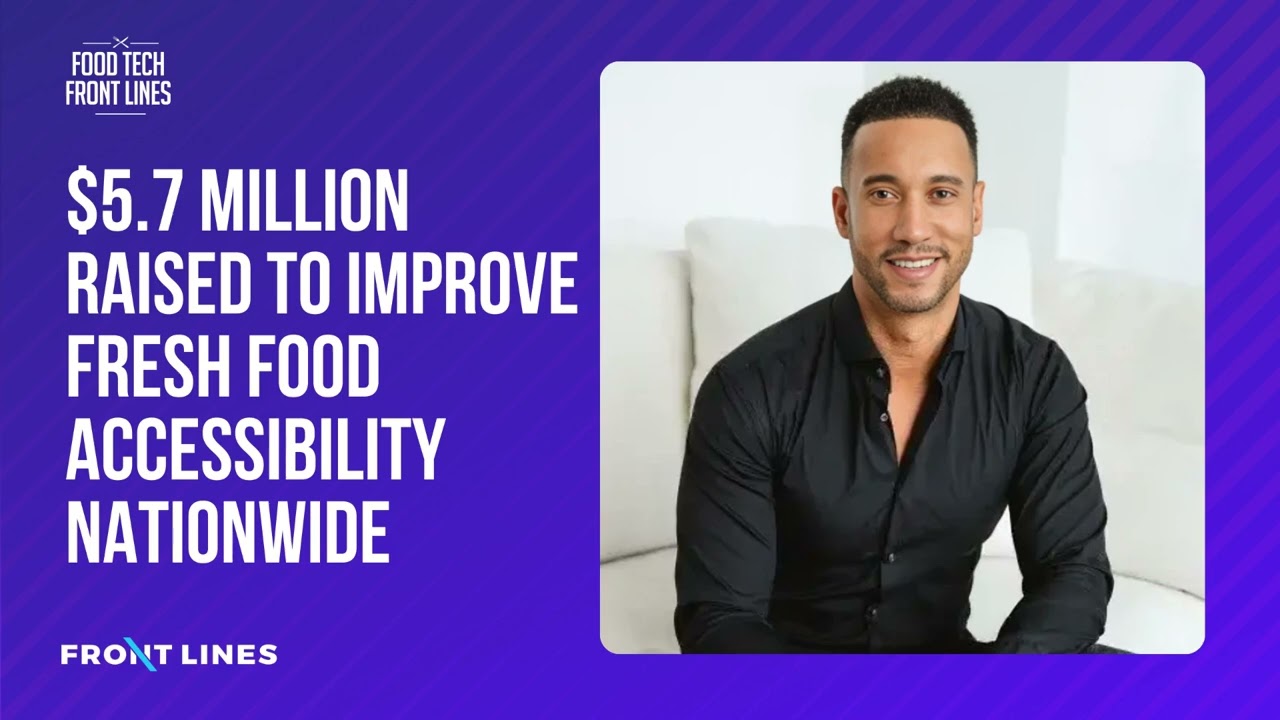
In November 2022, Carter raised a $5.75 million seed round. Bonfire Ventures led. Co-investors included Slauson and Co., January Ventures, Alumni Ventures, Bridge Investment Group, Supply Change Capital, Alpha Edison, Trajectory Ventures, ResilienceVC, Zeal Capital, JFF Ventures, Navigate Ventures, and DragonX Capital. The investor list spans impact investing, healthcare, food systems, and BIPOC-focused venture - a deliberate coalition that reflects both the problem space and the community it affects.
At the time of the raise, Prado's ARR had nearly tripled since January of that year.
Community, Mentorship, and the Long Game
Carter has been a mentor at MuckerLab, the Los Angeles startup accelerator operated by Mucker Capital, since approximately 2012 - years before he founded Prado. He teaches at General Assembly. He has angel-invested in Self Financial (a fintech credit-building company), VitaBowl, and Prep to Your Door. He serves as an advisor to Everytable, a company working to make nutritious food affordable in underserved communities.
In June 2022, he was recognized by Black to Business as a #BlackManWhoLeads - a designation that speaks to both his professional trajectory and the community context his work exists within. The capital he raised came in part from BIPOC-led and woman-led funds specifically because the communities bearing the highest chronic disease burden are also the communities least represented at the table where food and healthcare policy gets decided.
Carter is building infrastructure. Infrastructure is slow. It requires patience that consumer apps don't demand. But infrastructure, once built, doesn't go away easily. The rails that Prado is laying - physician portals, HSA/FSA payment processing, perishable logistics integrations, medical coding frameworks - are not features. They are the plumbing for a category that doesn't fully exist yet.
That's the bet. Food as medicine, not as metaphor. Pre-tax dollars flowing to physicians who prescribe weekly meal plans like they prescribe medications. A network of food operators who gain healthcare distribution without touching a fax machine or rewriting their POS software. And at the center of it: a founder from a food desert who watched his father die from a disease that can be managed by food, who spent twenty years learning how digital platforms scale, and who built the thing that was missing.
From Union Bank to Food as Medicine
VP of Product at UBOC.COM, eCommerce arm of Union Bank of California ($97B in assets). Learns digital product in regulated finance.
Joins Live Nation / Ticketmaster as VP of Product.
Rises to SVP and GM of eCommerce at Live Nation - running storefronts for 600+ brands including Jay-Z, Madonna, U2, Shakira, NASCAR, and Jillian Michaels.
Becomes Principal at Greenbush Capital; begins mentoring at MuckerLab accelerator in Los Angeles.
Joins Snap Kitchen as Chief Digital Officer and CTO. Builds the MVP, mobile app, and POS integrations for the Austin-based prepared meal company.
Becomes CEO of Snap Kitchen. Leads omni-channel digital strategy. Company later distributes through Whole Foods.
Founds Prado in Austin, TX. Mission: make food function as medicine at national scale through HSA/FSA payment infrastructure.
Raises $5.75M seed round led by Bonfire Ventures. 12+ co-investors. ARR had nearly tripled since January of that year. Recognized as #BlackManWhoLeads.
Angel invests in VitaBowl. Prado scales to new food operator partnerships including Trifecta, FitLife Foods, and Epicured.
Prado surpasses 25 million healthy meals supported. Trifecta partnership announced, making protein-focused meal plans HSA/FSA eligible.