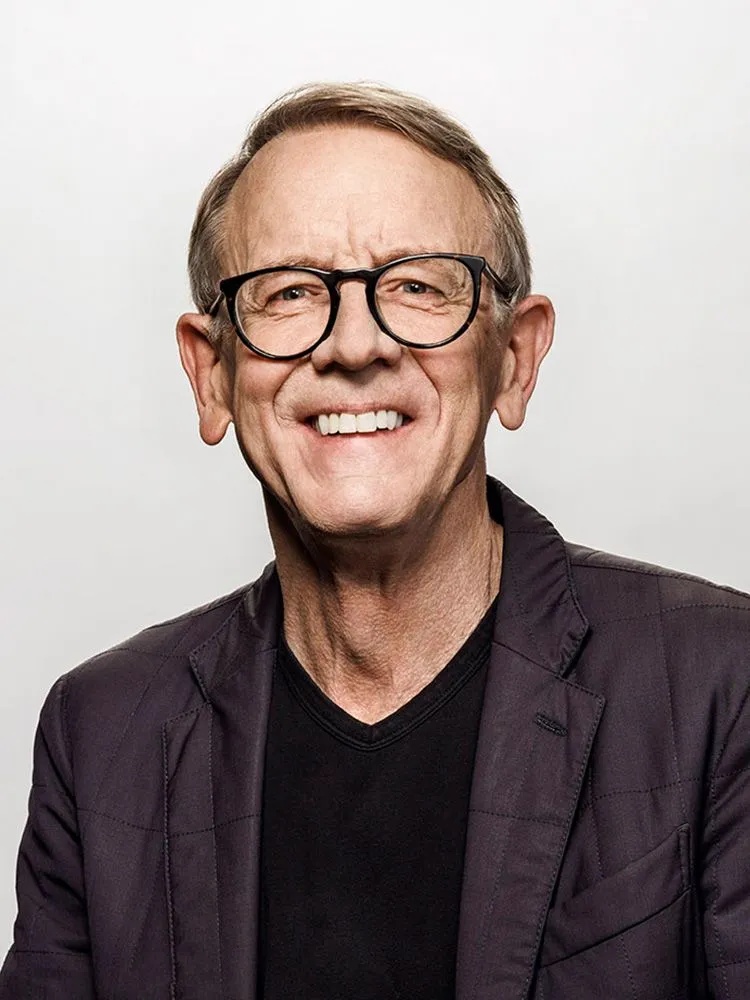
The $55 Garage That Started Everything
He landed in Silicon Valley in 1974 with no job, no local contacts, and a half-garage apartment near Stanford for $55 a month. His boss at Intel - Andy Grove, the man who practically invented modern management - told him leaving for venture capital was "not a real job." John Doerr ignored him. Then he went on to fund Google, Amazon, Netscape, Intuit, Genentech, and a few dozen other companies that rebuilt the global economy. Not bad for someone with no real job.
The story of John Doerr resists the usual VC mythology. He didn't just write checks - he showed up, recruited executives, connected founders with mentors, and handed early-stage companies a management framework that he'd learned from a whiteboard session at Intel. He called the framework OKRs. Most of the tech industry calls it their operating system.
Ideas are easy. Execution is everything. It takes a team to win.
- John DoerrThe OKR Origin Story
In 1975, a young Intel engineer named John Doerr sat in a room while Andy Grove ran a session on what he called "iMBOs" - Intel Management by Objectives. The concept was clean: set an Objective (what you want), pair it with Key Results (how you'll know you've achieved it), and measure everything. Doerr filed the framework away. Twenty-four years later, he walked into a Menlo Park office where two Stanford PhD students were building a search engine. He handed them a presentation deck about the idea and called it OKRs. Larry Page and Sergey Brin adopted it the same day. Google still uses it.
The OKR Framework
What you want to achieve. Inspirational, qualitative, directional. The "why" that gets people out of bed.
How you know you got there. Measurable, time-bound, binary. No partial credit. No vague progress.
Doerr didn't invent OKRs - Grove did. But Doerr did something arguably more consequential: he weaponized them for startup culture and then wrote the book. "Measure What Matters" landed in 2018 with a foreword by Larry Page and hit the #1 spot on the New York Times bestseller list. Bill Gates called it "a must-read for anyone interested in building a results-oriented culture." The companies that adopted OKRs - Google, Amazon, LinkedIn, Adobe, Twitter, Spotify - now read like a roll call of the modern economy.
The Portfolio That Built the Internet
When people talk about "the best VC investment ever made," they usually land on Doerr's $11.8 million check to Google in 1999. He co-led the round with Sequoia's Mike Moritz. When he asked the founders how big Google would eventually be, Page and Brin said "$10 billion in revenue." Kleiner Perkins wrote its largest check ever. It wasn't even close to how big Google got.
Co-led Series A with Sequoia. Introduced OKRs to Page and Brin. Now Alphabet board member. The bet that defined a generation.
Flew to meet Bezos two days after introduction. Helped recruit Joy Covey, Rick Dalzell, Dave Risher. His connection to Bing Gordon helped spark Amazon Prime.
Backed the browser that put the internet in everyone's hands. Joined the board. The graphic web starts here.
One of biotech's founding companies. KP's early $200K investment helped invent the entire industry.
DOJ blocked Microsoft from buying it. Intuit became one of the most enduring software businesses ever built.
Solid oxide fuel cell technology. One of Doerr's first bets on the clean energy future he'd spend his career fighting for.
Missionaries vs. Mercenaries
Doerr has a theory of founder psychology that he repeats so often it's become doctrine: there are missionaries and there are mercenaries. Mercenaries build companies to make money. Missionaries build companies to change the world - and happen to make money doing it. He backs missionaries. Page and Brin weren't building a company; they were organizing the world's information. Bezos wasn't selling books; he was building the world's most customer-centric company. The framing sounds simple. The filter is surprisingly sharp.
"If the reason you're taking on a mission is for the money you'll make, I believe you'll fail," he said. It's a bold claim from a man worth $13 billion. But his track record gives the claim some weight: the missionary founders he backed turned out to be the ones who actually changed things.
"If you set a crazy, ambitious goal and miss it, you'll still achieve something remarkable."
"Leaders must get across the why as well as the what. Their people are thirsting for meaning."
"Bad companies are destroyed by crisis. Good companies survive them. Great companies are improved by them."
"Entrepreneurs do more than anyone thinks possible, with less than anyone thinks possible."
The Daughter's Remark That Redirected $1.1 Billion
In 2007, Doerr gave a TED Talk about the emerging greentech opportunity in Silicon Valley. He was optimistic, evangelizing, the usual Doerr. But mid-speech, he choked up. He described sitting at dinner with his teenage daughter Mary, who looked across the table and said: "Dad, I'm afraid. Your generation created this problem. You better fix it." He barely got through the sentence.
The remark didn't just make for a memorable TED moment - it recalibrated his philanthropy, his investment thesis, and eventually his writing. In 2021, he published "Speed & Scale: An Action Plan for Solving Our Climate Crisis Now" with co-author Ryan Panchadsaram. The book applied the OKR framework to climate change - ten objectives, all measurable, tracked publicly on a free online dashboard. One year later, he and his wife Ann gave $1.1 billion to Stanford to establish the Doerr School of Sustainability. It was the largest single gift in Stanford's history and the second-largest to any American university, behind only Michael Bloomberg's donation to Johns Hopkins.
Speed & Scale: The Climate OKRs
In April 2026, Doerr released the updated Speed & Scale Tracker with what he called an "urgent call to build." Three forces are now converging, he argued: soaring electricity demand from AI data centers, EVs, and the developing world; a geopolitical competition for clean technology leadership; and market forces that have made clean energy cheaper than fossil fuels in most regions. The window for action, in his telling, is open - but it won't stay open forever.
The Career Arc Nobody Predicted
Rice University, 1974. An electrical engineering graduate who wrote his master's thesis on memory devices. Intel hired him as an engineer, then discovered he could sell. He became one of the company's top-ranked salespeople, held multiple patents, and sat in on Andy Grove's legendary management courses. When Harvard Business School accepted him, he spent two years in Cambridge, then headed back west.
Intel president Grove was not enthusiastic about the exit. "Venture capital, that's not a real job" - the line is documented, and Doerr still tells it. He walked into Kleiner Perkins in 1980 as a general partner. Forty-five years later, he's the chairman, and Kleiner Perkins has backed companies that have created more than 150,000 jobs and generated trillions in market value. Grove's comment has aged badly.
The Man Behind the Methodology
What makes Doerr unusual among investors of his stature is how operational he remains. When Google's founders resisted bringing in a professional manager, Doerr didn't push them toward an org chart. He arranged meetings - personally - with Scott Cook, Bill Gates, Andy Grove, and Steve Jobs, letting them make the case. The founders agreed to hire Eric Schmidt. Schmidt ran the company for a decade.
With Amazon, the story is similar. Two days after being introduced to Bezos, Doerr was in Seattle. He didn't just write the check - he helped recruit Dave Risher, Rick Dalzell, and Joy Covey, the executives who scaled Amazon's operations. And his introduction of Bing Gordon to Bezos's team helped spark a concept that eventually became Amazon Prime, arguably the most successful retail loyalty program in history.
Green-tech could be the largest economic opportunity of the 21st Century.
- John Doerr, 2007 - when almost nobody agreedHis wife Ann - also an electrical engineer from Rice, currently chair of Khan Academy - describes him as someone who genuinely believes the founders he backs will change the world. The missionary framing isn't marketing. He applies it to himself, too: the $1.1 billion Stanford gift, the Giving Pledge he signed in 2010, the $50 million to Rice University's Doerr Institute for New Leaders, the public climate tracker he maintains at speedandscale.com. These aren't PR moves. They're logged key results.
Still Betting, Still Building
In November 2025, Doerr backed Hippocratic AI's Series C - an AI company focused on healthcare applications. In February 2026, he was elected to the National Academy of Engineering. In April 2026, he issued what he called an "urgent call to build" on clean energy, releasing data showing the three converging forces that make the next five years critical. He cited AI-driven electricity demand as an unexpected accelerant - data centers need clean power, and that demand is creating the market conditions that could finally tip the energy transition.
He is 74 years old. He is not slowing down. The word "urgent" appears in almost everything he publishes now. If Andy Grove's OKR lesson from 1975 gave him a framework for achieving objectives, his daughter's remark from 2007 gave him the most important objective he's ever had. He's still measuring. The key results aren't where he wants them yet.
Key Connections
- Larry Page & Sergey Brin - Google founders; Doerr introduced them to OKRs
- Jeff Bezos - Amazon founder; Doerr flew to Seattle within 48 hours to back him
- Andy Grove - Intel mentor; taught Doerr OKRs in 1975
- Bill Campbell - "Trillion Dollar Coach"; connected Doerr to Amazon
- Bono - ONE.org collaboration; featured in Measure What Matters
- Barack Obama - Economic Recovery Advisory Board; Obama Foundation board
- Eric Schmidt - Doerr arranged his introduction to Google's founders
- Ann Doerr - spouse, co-philanthropist, Chair of Khan Academy