The paint was still wet. Johannes Quodt and Chris Wichert had shoes to sell, a New York pop-up to open and a freshly painted space that refused to cooperate. It was February 2015. The cold had prevented the paint from drying overnight. Their solution was a trip to Ikea for rugs. Before Koio could offer anyone a more approachable version of luxury, its founders had to provide somewhere to stand.
Quodt remembers the day because people came, bought shoes and gave them encouragement. The rugs belong in the story, too. He had left management consulting and gone to business school; now a Swedish furniture shop was helping him launch an Italian footwear brand in America. Entrepreneurship had acquired a pleasingly literal floor plan.
Over the next decade, his working life would range from factory visits to pastry-inspired sneakers, from creative collaborations to the difficult business of cutting back. Koio eventually sold, with both founders retaining shares. The route there says something about Quodt: a fascination with how things look, sustained by a willingness to investigate how they work.
The boy who paid attention to the advertisements
Quodt was born in Munich and grew up near the Bavarian Alps. His early world included parents who loved travel and a countryside where lakes and mountains were part of ordinary life. His mother had been a flight attendant before he was born. Trips abroad encouraged his desire to live elsewhere, with the United States holding a particular attraction.
There was another education happening on the page and screen. As a teenager, he bought the German edition of GQ and studied the advertisements. A Prada sneaker associated with the Luna Rossa sailing team caught his attention. He saved for months to buy it. The purchase mattered enough that he could still describe it years later.
He also remembers enjoying television commercials more than the programmes around them. That preference is unusually useful background for a founder who would later ask a sneaker to carry a collaborator’s story. Long before he had a marketing budget, he was a willing audience for the miniature worlds that brands constructed.
“I love brands.”
Johannes Quodt, on his early fascination with advertising
A very respectable route to an unfamiliar trade
His formal credentials pointed towards an entirely respectable business career. At the University of St. Gallen, he earned degrees in economics and business administration. An MSc in accounting and finance at the London School of Economics followed. He worked at McKinsey in Zurich, on strategy, marketing and sales projects. Then came Wharton, where he completed his MBA as a Palmer Scholar.
At Wharton he met Wichert, another German with an appetite for leather sneakers and a background in finance. They recognised a shared irritation: the shoes they admired were expensive, while the shopping experience could feel remote from their own lives. They wanted the materials and construction without quite so much ceremony at the till.
The idea took shape in 2014. Koio dates its beginnings to that year; its first sales followed in 2015. Direct selling gave the pair a practical mechanism for their ambition. By reaching customers themselves, they hoped to offer Italian craftsmanship at prices below established designer labels. A business model, however, could only take them as far as the factory door.

Italy did not come with office hours
The two students used a summer to develop the business in New York rather than take conventional internships. Learning to make footwear required a different set of teachers. They sought advice from people at FIT and Parsons, worked on sketches and prototypes, and began building a network around the trade they hoped to enter.
Then they went to Italy. In his early account, Quodt put the search at 34 factories over a month. The eventual partner was a family-run manufacturer in Civitanova that had made shoes for Chanel. He was struck by the care involved, including hand-painted leather edges. Finding someone willing to manufacture their designs gave the fledgling business a tangible foundation.
A month in Italy before finding the manufacturing partner, in Quodt’s 2017 account.
The detail is revealing because the promise on a website was easy to write. The founders needed someone who could fulfil it repeatedly, pair after pair. Their previous careers had taught them to handle demanding workloads; shoemaking supplied particulars that could not be mastered by an attractive presentation. Leather had opinions. So did the people who knew how to cut it.
Breakfast, tattoos and a place to try things on
Early customers supplied a few surprises. Koio began with men’s sizes, then discovered women were buying the smaller pairs. The founders expanded the sizing. Here was a useful lesson in observation: customers could disclose an opportunity simply by taking the stock home.
The shops served another purpose. Footwear is a tactile purchase, and an unknown online label asks buyers to make a considerable leap. A pop-up allowed someone to touch the leather and try the fit. The founders’ New York spaces also became places for events and introductions, giving a young brand a social life beyond its checkout page.
Quodt’s collaborations extended that instinct. With tattoo artist JonBoy, Koio made a shoe incorporating motifs from his work, then brought tattooing into the store. A customer could leave with a new pair and a more permanent souvenir. It was an efficient answer to the question of what people might remember after a shopping trip.
Other partnerships explored different personalities. Surfer Quincy Davis’s design used washed denim, rose-gold details and a bird motif linked to her nickname. Pastry chef Dominique Ansel’s collaboration took its cues from croissants, with textures and colours recalling ingredients. Pancake mix accompanied the sneakers. Few business-school case studies allow the customer to eat part of the marketing.
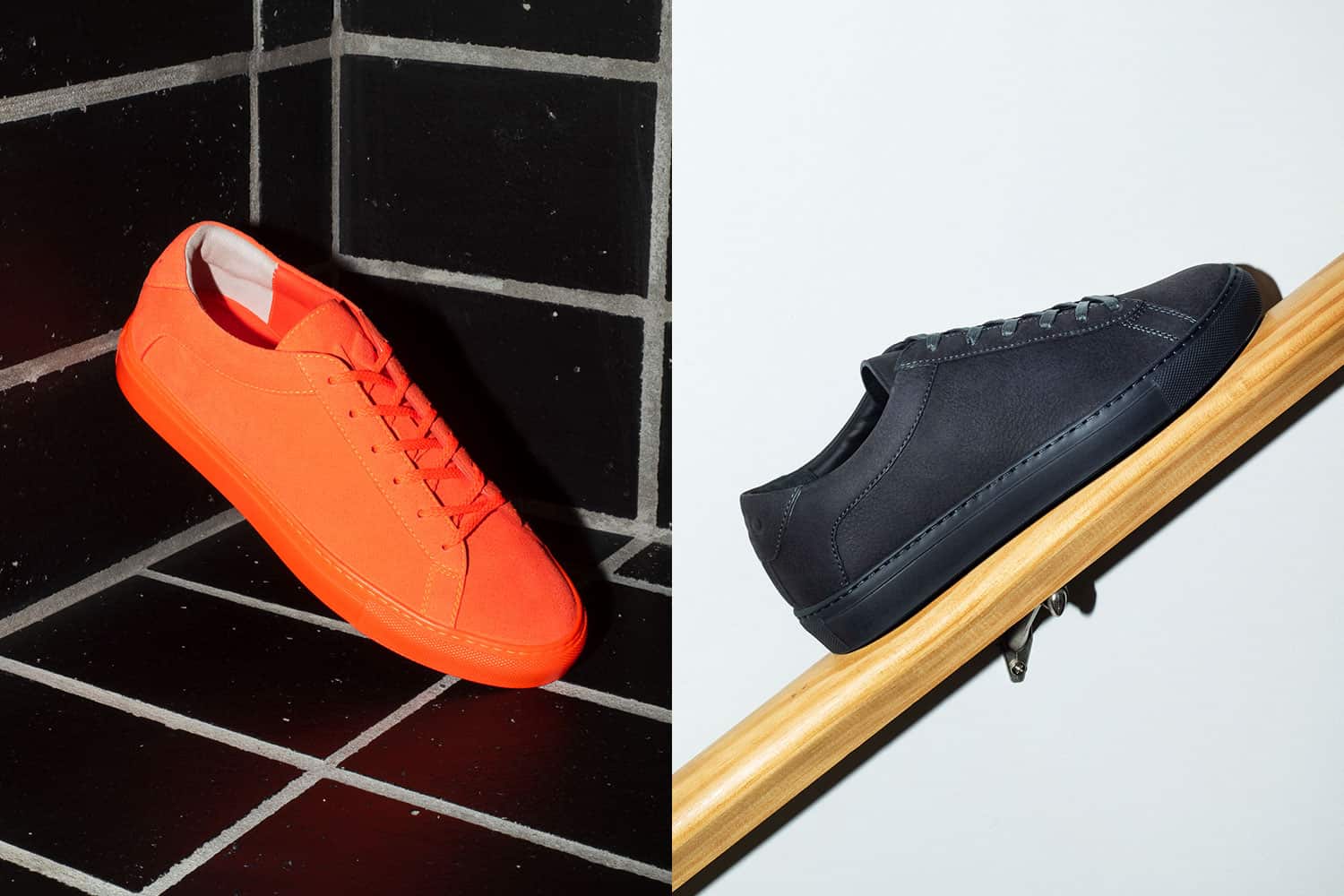
Those projects make Quodt’s creative interests easier to understand. The everyday shoe could remain restrained while a collaboration became playful. He resisted describing the whole company as minimalist, even though the Capri fitted that description. A simple product shape left room for rather different lives to appear around it.
The ambition inside the shoebox
By 2019, there was money for a larger operation. An additional $6 million brought Koio’s announced Series A total to $9 million. Quodt described plans to enlarge the team, develop products and invest in fit and comfort. Expansion into categories such as Chelsea boots was on the agenda. The company was giving its original idea more places to go.
His responsibilities crossed the usual boundary between making a product and presenting it. Creative direction, design, marketing and manufacturing all sat within his remit. Wichert concentrated on retail and finance, with operations and business development shared. The division helps explain why Quodt’s interviews move comfortably from a shoe’s proportions to the story surrounding its launch.
He also became increasingly interested in the supply chain. In a 2022 conversation about regenerative agriculture, he explored an ambition to make footwear biodegradable and questioned how luxury companies sourced their materials. That line of inquiry reached well beyond whether a finished sneaker looked expensive. It asked what a premium product required of the businesses behind it.
The resulting material experiments included regenerative leather and alternatives to conventional sole materials. These were specific development projects, with the practical difficulties that implies. Bringing a new material into a shoe means considering its relationship with the other components. For someone drawn to stories, production supplied a plot with plenty of complications.
When the customer got a speaking part
In early 2023, Quodt later recalled, sales stagnated while the company carried costs built for a larger business. The range had spread across customers, styles and occasions. Koio needed a clearer understanding of who relied on it and why. A board member suggested interviewing loyal buyers about the job the shoes performed in their lives.
The answer was surprisingly close to the original proposition. Professional men wanted sneakers for meetings, dates and travel. Quodt and Wichert refocused around those customers. The wider restructuring included reducing marketing spending, closing unprofitable stores and the office, renegotiating contracts and making staff cuts. A smaller catalogue was only one part of a painful operating change.
“Our conversations had given us direction and confidence.”
Johannes Quodt, reflecting on the customer interviews
It was an uncomfortable reversal for a business built on possibility. Each additional category once represented a chance to reach someone new. Concentrating required accepting that a useful answer for one customer could matter more than an enticing answer for many. The founder accustomed to telling the story had to make room for people who had already bought the shoes.
- 2014The idea takes shape
- 2015The first shoes sell
- 2023Customers help reset the focus
- 2025The business is sold
A familiar pair on an unfamiliar street
Quodt says losses fell sharply within a year and the business was profitable after two. The founders sold Koio in August 2025 and retained shareholdings. By February 2026, he was reflecting publicly on a brand that could continue under new ownership. The achievement included having built something that could exist beyond its founders’ daily attention.
Outside work, his interests have included guitar and flying a Cessna 182. There is something agreeable about those particulars beside the formal degrees and manufacturing discussions: a person with pursuits that require practice, attention and occasional correction. They sit comfortably alongside a career spent acquiring knowledge that his previous job did not demand.
His farewell reflection returned to a smaller pleasure. He expected to keep looking at people’s shoes and feeling a quick thrill when he recognised Koios on the street. After the factories, the rugs, the collaborations and the restructuring, the encounter still mattered: someone he might never meet had chosen an object he helped bring into existence. A decade’s work, briefly visible beneath a stranger’s trousers.
More from Quodt’s world
- Koio - the company
- Johannes Quodt on LinkedIn
- Quodt’s reflection on Koio’s sale
- The Journey: storytelling interview
- The factory search and early pop-ups
- A conversation about materials
- OMR conversation with both founders
- Koio videos on YouTube
- Primo Bianco film on Vimeo
- Koio’s 2019 plans and collaborations