In 2013, Joel Lieginger met Mark McCombe on a group bicycle ride in Hong Kong. Lieginger was working at AIA; McCombe was running BlackRock in Asia. They became friends. Years later, McCombe would invest in Lieginger’s startup and suggest its name: Paceline. An introduction made on the road had become part of a company’s foundations. For a founder with a career in financial institutions, it was a pleasingly informal beginning. No conference lanyard required.
The name describes cyclists working together, taking turns at the front. It also offers a way into Lieginger’s story. Across financial management, international strategy, corporate partnerships and entrepreneurship, his work has repeatedly involved getting different parties to see a reason to move in the same direction. The scenery has changed considerably. The problem of cooperation has remained.
Before the startup, the institutions
Lieginger began his career as a financial manager at Lincoln Financial Group. He went on to AIG, where his work included international strategy and marketing and distribution in Japan. At AIA in Hong Kong, his responsibilities ranged across marketing, investor relations, corporate development and group partnerships. His education includes a Bachelor of Arts from Boston College.
At AIA, he helped lead corporate strategy following the company’s stock market listing and later ran its multibillion-dollar bancassurance relationship with Citibank. Bancassurance is the arrangement through which banks distribute insurance products. The word is ungainly; the underlying task is easy enough to recognize. Two large organizations have to make a shared business work.
That background gives his later decision a particular texture. He came to entrepreneurship after working inside the institutions that many financial startups want to change. He had dealt with distribution and partnerships, as well as the way a company explains its plans to investors. Those are useful concerns to bring to a new product: who will offer it, who will support it, and who will pay for it?
There is an unromantic appeal to this kind of apprenticeship. Strategy has to survive operations. A partnership has to mean something after the announcement. A founder can draw a handsome diagram connecting several businesses; somebody still has to persuade each business to participate. Lieginger’s earlier roles put those questions close to his desk.
A family move, with a business attached
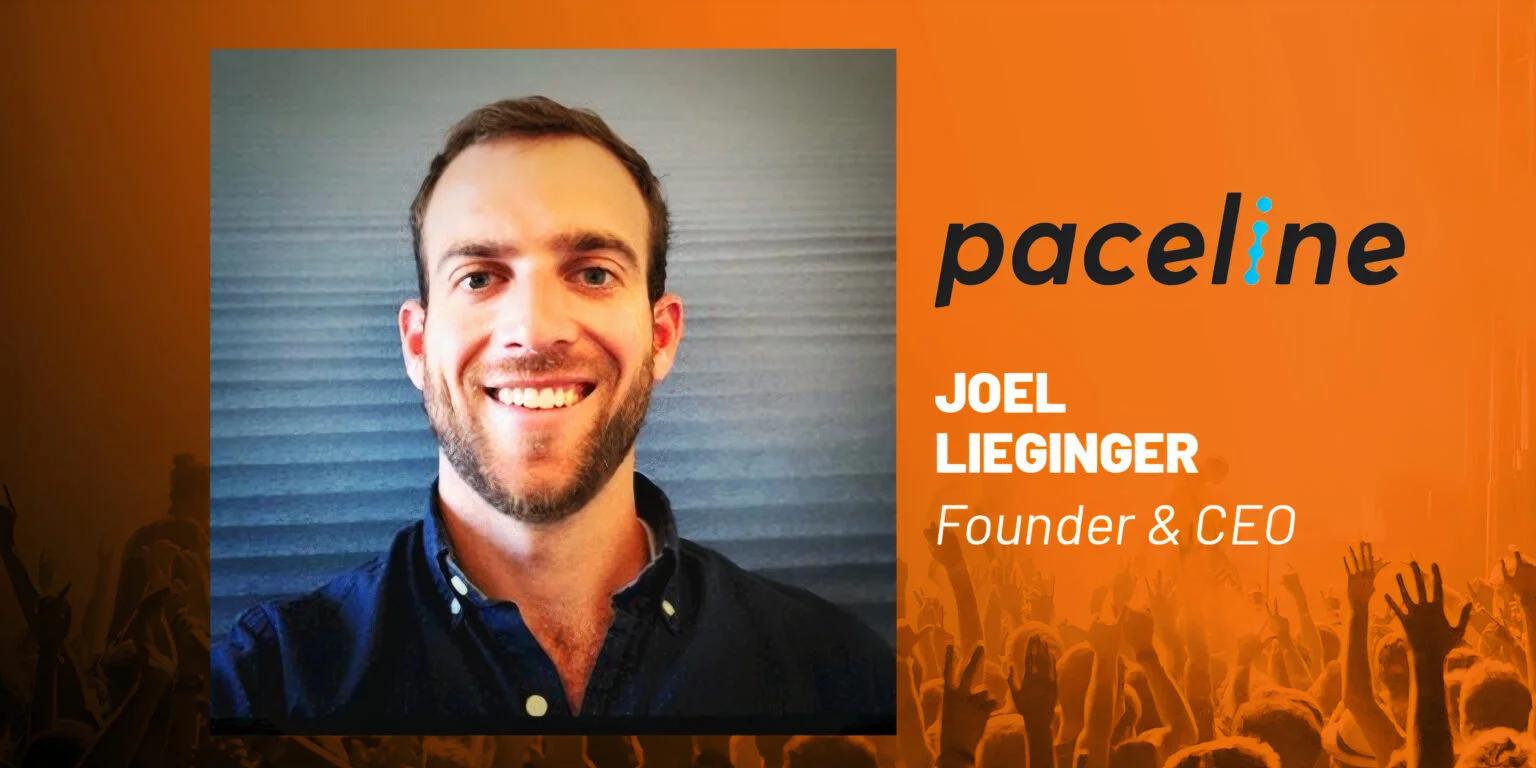
In 2019, Lieginger left his corporate career and founded Paceline. He moved his family across the world to the San Francisco Bay Area. His own account emphasizes the distinction between a business driven primarily by technology and one built from financial services experience, with technology enabling the product.
It is a revealing preference. His starting point was the structure of a business and the incentives within it. The software would have to make that structure useful to a customer. In that approach, the app is where a larger commercial arrangement becomes legible: a person opens a screen and should be able to understand what they get.
By July 2022, he described life in the Bay Area with his wife, three children and two dogs. Those details belong alongside the founding date. Moving countries to start a company rearranges a household as well as a résumé. The familiar shorthand of leaving a corporate job leaves out quite a lot of luggage.
The customer gets a seat at the table
In a 2020 interview, Lieginger put one part of his argument plainly: “People should be paid for the data they provide.” Paceline was starting with a free rewards offering and working toward financial products. He described the sequence as building a financial services company backwards. The relationship with the customer would begin before the larger product range arrived.
That order matters. In an ordinary product launch, the transaction is often the beginning of the relationship. A free offering reverses the sequence: a company first has to give someone a reason to return. Later products must earn their place within an experience the person already understands. The commercial ambition may be large, but the first encounter still has to work on a small screen.
His position also asks an uncomfortable question of the data economy: what should the person supplying the information receive? A business can call data valuable while leaving its owner with very little to show for it. Lieginger’s stated ambition puts a tangible return inside the bargain. Whether a particular product delivers that return is a question for its actual terms and operation, rather than its slogan.
“People should be paid for the data they provide.”
Joel Lieginger, 2020
A Californian company, an Asian address book
The move to the United States did not supply a ready-made network of American investors. Much of Lieginger’s career had been spent in Asia. When Paceline raised its seed round in 2020, he was building new investor relationships through introductions from a small circle of people he trusted. The team booked roughly 110 meetings in ten weeks. It assembled the investment syndicate without an in-person meeting before receiving a term sheet.
There is a practical distinction between having experience and being known in a particular market. A substantial career can establish competence without making the next introduction automatic. The figures from that fundraising effort give the transition some scale. One hundred and ten meetings is a considerable amount of explaining yourself.
The round brought $5 million into Paceline, co-led by Montage Ventures and Propel Venture Partners. Northwestern Mutual participated, and McCombe invested personally. The group connected different areas of financial and consumer business. A founder who had spent years managing partnerships was now assembling a set of partners around his own company.
November 2020
June 2021
What the next cheque changed
On June 24, 2021, Paceline announced a $29.5 million Series A led by Acrew Capital, with participation from Mubadala Capital and existing investors. The stated uses included expanding the team and developing the company’s financial platform. McCombe joined the board. The cycling acquaintance had become an investor and, now, a director.
Acrew’s explanation of its investment focused on how closely the consumer application and the proposed financial products belonged together. Its argument was that adding finance should enhance the existing customer experience. This was a particular view of product design: a financial feature needs a reason to be present beyond the company’s desire to offer one.
For Lieginger, the financing enabled further work. He would later describe raising money as a necessary part of pursuing the company’s ambitions. The amount makes an arresting callout, but the next task remains stubbornly ordinary: hire people, build a product, coordinate partners and give customers enough value to stay. Capital pays for the attempt. It does not perform it.
The machinery behind the screen
Paceline’s early card project depended on outside infrastructure. It used Railsbank’s finance platform and credit card services. Railsbank handled functions including payments, operations, risk management and compliance, allowing Paceline to concentrate on its customer experience and brand. Lieginger wanted the card integrated into the existing app.
The arrangement makes his partnership background relevant again. A customer sees a single product, while several organizations may be responsible for making it function. The apparent simplicity at the front depends on coordination behind it. Choosing what to build internally and what to obtain from a partner is therefore part of the product itself.
That dependence became consequential. The original card stopped working in February 2023. Paceline’s message to customers attributed the separation to its program manager, RailsTech. The card had been issued by Evolve Bank & Trust. A promised experience had met the limits of the arrangement supporting it.
The episode deserves a place in a founder’s story alongside the fundraising. It illustrates the exposure that comes with assembling a consumer product from several businesses. Customers encounter the interruption at the front door, however many contracts sit behind it. The institutionally experienced founder still has to face the fragility of an institutional partnership.
- Lincoln FinancialFinancial management
- AIG · JapanStrategy & distribution
- AIA · Hong KongCorporate development & partnerships
- Paceline · 2019Founder & CEO · California
A phone comparison, and a pair of trousers
When explaining his preference for building directly for consumers, Lieginger has used the contrast between BlackBerry and the iPhone. His point concerned the intended buyer: a product designed to satisfy an organization can develop differently from one designed to win over the person using it. He wanted Paceline to start with the latter.
It is a useful clue to how he presents his ideas. The insurance executive reaches for a familiar object rather than leaving the discussion inside a specialized vocabulary. Anyone who has carried a phone can enter the argument. They may disagree with the comparison, but they can see what he is trying to build toward.
Another explanation comes from his family. Lieginger recalls advice from his maternal grandfather, who served as mayor of Sacramento during Ronald Reagan’s governorship: “everyone puts their pants on one leg at a time.” He connects the saying to treating people equally and remembering where he came from. It is an unusually serviceable piece of advice for a career spent around titles.
Read together, the phone and the trousers bring the story back to a human scale. A company can involve international finance, venture capital and a substantial stack of agreements. It still has to make sense to an individual. Lieginger’s route to Paceline began inside large organizations, crossed an ocean with his family, and carried a friendship from a Hong Kong ride into a California boardroom. Taking turns turned out to be a name with some history behind it.