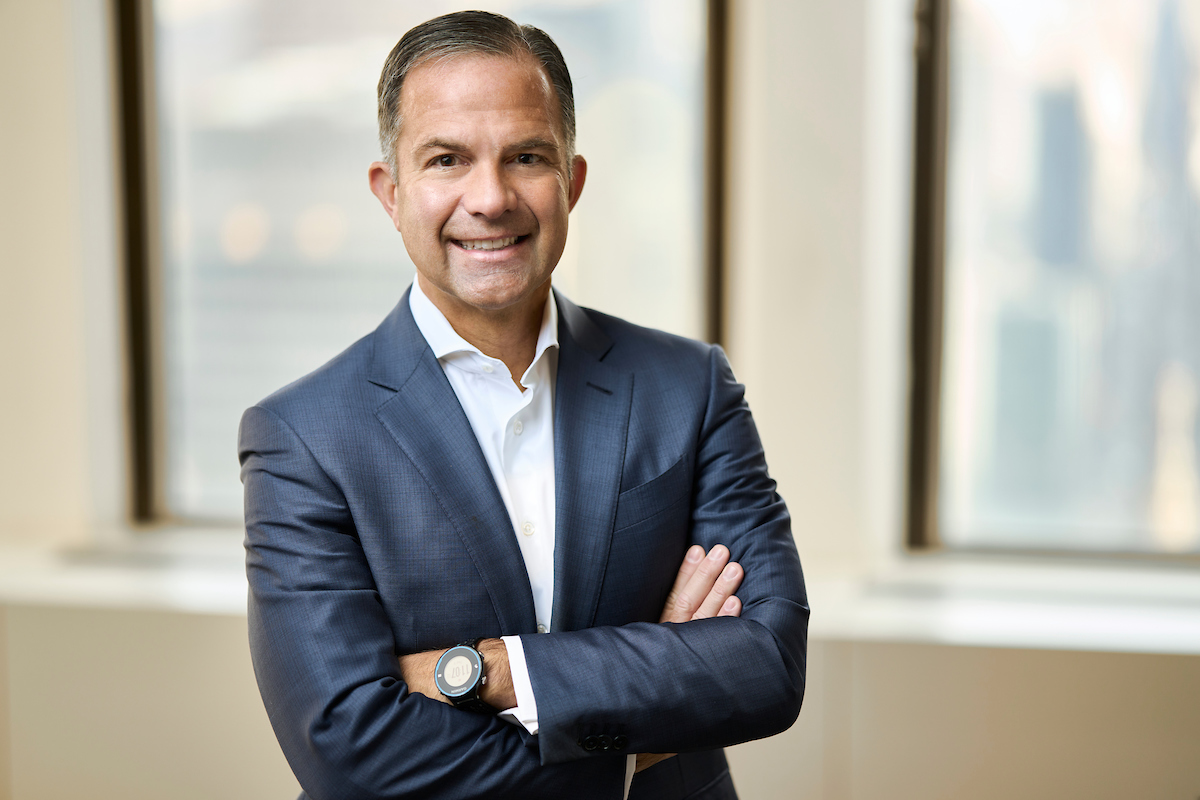
Joe Benavides has a rather industrial metaphor for a business that deals in billions: a conveyor belt. A company comes onto it with its own history, strengths and unfinished work. The owner helps put the foundations in order. Growth follows. It is a modest image for an occupation fond of grand language, and a useful place to begin with the founder of OceanSound Partners.
An acquisition announcement tells you that money has moved. Benavides’s metaphor asks what happens inside the business afterward. Who runs it? What do its systems tell its managers? Can it absorb another company without losing track of the one it already owns? The questions have little glamour. Their answers can determine whether the glamour survives.
He has had to answer a version of those questions about his own firm. Before OceanSound could become an owner of other businesses, it needed to become a functioning business itself. That gives his story its particular tension: an experienced financier taking on the overlapping responsibilities of a founder.
Starting again, with experience
Benavides’s early life began far from the institutional world in which he now works. He has recalled moving from Puerto Rico to the U.S. mainland at ten and starting work young. “English is not my first language,” he said. He described a childhood without a financial safety net. It is a spare account, but it explains why the later career cannot be reduced to a procession of prestigious employers.
His education took him to Georgia Institute of Technology for a bachelor’s degree in economics and to the University of Pennsylvania’s Wharton School for an MBA. Economics and business training gave him formal preparation for finance. His professional route then supplied another kind of education: working inside institutions with different histories, cultures and approaches to investing.
Earlier roles included Donaldson, Lufkin & Jenrette and Credit Suisse First Boston. He went on to become a managing director at Blackstone and a partner at Veritas Capital. Government and regulated markets became a recurring part of that professional experience. OceanSound’s focus would draw on territory its founders already understood.
In 2018, he established the firm with Ted Coons and Jeff Kelly. Their careers overlapped at Veritas and Blackstone. A new firm could therefore begin with accumulated experience and working relationships. It still required an organization of its own. A résumé may get a meeting; it cannot chair every meeting afterward.
Three jobs, all due at once
OceanSound began marketing its debut fund in the summer of 2019. Benavides later described the startup task as several jobs running together: build the firm and its processes, persuade institutions to invest, and execute investments. Established managers already have much of their organizational machinery in place. A new manager has to assemble it while the rest of the work continues.
His account of fundraising makes the institutional investor’s hesitation understandable. A first-time commitment asks an institution to evaluate both an investment strategy and a young organization. The people may be familiar. The firm is new. Different investors also bring different diligence processes, which have to be coordinated into something resembling a timetable.
Anchor commitments allowed OceanSound to start investing in 2020. Smartronix and Trident Technologies were early transactions, putting its focus on technology services for government customers into practice. Smartronix worked in cloud and information technology; Trident supplied information technology, engineering and related services to the federal government. The strategy acquired businesses readers could point to.
The debut fund closed with $780 million in commitments in February 2022. The significance for Benavides was more personal than a tidy number on a fundraising chart. He had built a team while the fundraising process was still unfinished. In his retrospective account, he credited that team’s persistence. “Our team never quit,” he said.
All three responsibilities overlapped during OceanSound’s debut.
The conveyor belt has a first station
By December 2024, Benavides was describing an ownership process whose most intensive work occupied the first three years. Talent, organizational structure, and business and financial systems came early. These are the parts of a company that determine how decisions travel and whether anyone can see what happened after a decision was made.
He made a distinction between approaching a business as an investor and approaching it as an owner. In the latter case, he said, “you behave differently.” The phrase puts responsibility close to the action. Ownership requires attention to how the business operates, including the parts that are unlikely to appear in a celebratory transaction headline.
“You behave differently.”
Joe Benavides, on approaching a business as its owner
OceanSound sets out a framework of building corporate infrastructure, improving operations and growing through internal investment and acquisitions. Its stated approach includes working with management teams on plans tailored to each business. The order is revealing. A company needs the capacity to carry more responsibility before growth hands it more responsibility.
Consider the ordinary consequences of getting that order wrong. More customers mean more promises to keep. More employees mean more decisions to coordinate. Another acquisition adds another set of habits and systems. The arithmetic may be straightforward; the organization rarely is. In this reading of Benavides’s approach, the foundation work is what makes a growth plan usable.
- BUILDGive the company capacity.
Talent · Organization · Systems
- IMPROVEMake the operation work better.
Business model · Execution
- GROWExpand what it can do.
Internal investment · Acquisitions
A bigger engineering business, with a reason
Gannett Fleming gives the argument a physical setting. Founded in 1915, the engineering business works across infrastructure markets, including transportation, water and power. OceanSound invested in 2023. In August 2024, it combined Gannett Fleming with TranSystems, another engineering company. The announced combination had roughly 5,000 employees and $1.3 billion in revenue.
Benavides explained the strategic case in practical terms: broader geographic coverage, more transportation capabilities, and opportunities to offer other infrastructure services. Size had a job to do. A company with a wider footprint and complementary qualifications could offer customers a different combination of services.
The distinction matters because a merger can make an organization larger without making its purpose clearer. Here, Benavides’s explanation tied the transaction to a roadmap developed with management at the beginning of the investment. The larger business was intended to serve that plan. The numbers described the combination; the capabilities explained why it was worth combining.
There is an almost literal version of his foundation-first thinking in an engineering portfolio. Infrastructure clients need work to connect across specialties and locations. The owner’s challenge is to make the organization capable of delivering that coordination. The deal supplies a new scale. The operation must make something useful of it.
The firm needs foundations, too
OceanSound’s own organization continued to develop in 2026. In March, it hired Laura Noisten as a principal to lead capital markets and leveraged finance activities. Benavides described centralizing those capabilities as part of the firm’s evolution. The appointment brought an internal function into clearer focus as the portfolio expanded.
In June, Kenneth Wolff joined as partner and chief legal officer from Skadden, where he had spent 27 years. Benavides said they had worked with him as an advisor for more than fifteen years. A long-standing professional relationship became a role inside the firm, covering transactions, portfolio companies and governance.
These appointments echo the questions the firm asks of its investments. As an organization grows, responsibilities need people and a place to live. Capital markets and legal work become part of the infrastructure supporting the investment team. The owner is, in this respect, another growing business with its own coordination problem.
More capital. More to organize.
The April 2026 fundraising announcement put commitments to Fund III at $3.0 billion, or $3.4 billion including related co-investment vehicles. The firm’s earlier second fund had closed at $1.49 billion. Those distinctions keep the scale intelligible: a fund, capital invested alongside it, and the business managing that money are related but different things.
Radar, radio waves and the next job
The recent portfolio news makes Benavides’s investment focus tangible. On October 5, 2026, IMSAR announced a strategic investment from OceanSound. Based in Springville, Utah, the company develops compact synthetic aperture radar and mission software. Founder and CEO Ryan Smith would continue leading it and retain significant ownership alongside management.
The announced plans included product development, manufacturing and commercial infrastructure. An established technology business was getting support for the next stage of serving its market. The continuing role of its founder also matters: the person who built the company would remain involved in directing what came next.
Three days later, OceanSound-backed Antenna Research Associates announced a merger with Empower RF Systems. ARA brought antenna expertise; Empower brought high-power amplifier technology. The combination joined engineering capabilities within radio frequency systems. Once again, the growth story had a specific technical purpose, rather than relying entirely on a larger total at the bottom of a spreadsheet.
Benavides has also looked across the Atlantic. In September 2025, he discussed interest in European defense technology while pointing to country-specific barriers. That combination of interest and constraint fits a career spent around government customers and regulated markets. An opportunity must be understood in the setting where a business will actually have to operate.
The conveyor belt is an unfashionable image, but it earns its place. It leaves room for sequence, maintenance and people responsible for each stage. Benavides’s career has brought him from established financial institutions to running an institution of his own. The recurring question is practical enough to survive every change in the numbers: what work must happen before the next stage of growth can hold?