In October 2010, Anthony Dowd appeared on a visitor list alongside Paul Volcker. The meeting was with Gary Gensler, then chairman of the Commodity Futures Trading Commission. The subject was the Volcker Rule. A former Army officer and private equity investor had found himself helping a former Federal Reserve chairman turn an argument about banking into something regulators could implement. It was a career detour with a rather substantial paperwork requirement.
Dowd had been recruited by Volcker during the global financial crisis to serve as his chief of staff for the President’s Economic Recovery Advisory Board. The assignment put him close to the effort to restrict banks’ proprietary trading and certain investments in hedge funds and private equity. For someone with a career in investing, the distinction between capital serving businesses and capital creating risks was no abstract classroom exercise.
Today he is chief executive of Fairfield-Maxwell, the New York enterprise owned by the Sugahara family. Its interests have ranged across shipping, seismic services, construction services and business services. The change of setting is considerable. Yet his career offers an interesting way to examine a less glamorous question than who wins the next deal: who takes responsibility for what happens afterward?
Engineering first, finance afterward
Dowd graduated with distinction from the United States Military Academy at West Point in 1981, earning a bachelor of science in engineering. He served as a U.S. Army officer, then received his MBA from the Wharton School of the University of Pennsylvania in 1988. Those are the concrete starting points of his professional story: engineering, military service and business education, in that order.
Each field has its own relationship with consequences. Engineers must consider whether a design works. Officers carry responsibility inside an organization. Investors decide where resources go. It would be too neat to claim that one inevitably produced the next. Still, the sequence helps explain the breadth of the jobs on Dowd’s résumé. He entered finance with experience outside finance, and later stepped into public service with experience inside it.
His private equity work included leading Charter Oak Capital Partners as managing partner and working with Mill Point Capital. The Volcker Alliance also records an operating partner role at Linx Partners. By the time he joined Fairfield in 2017, he had accumulated more than 25 years in private equity. His board service included Hostess Brands and Future Pipe Industries, the Dubai-based manufacturer of fiberglass pipe systems.
That combination puts recognizable consumer products beside industrial infrastructure. A snack brand and a pipe manufacturer make unusual neighbors in a biography. Both, however, require more than an attractive financial model: people have to make things, deliver them and keep customers. Dowd’s record crosses the boundary between investing in a business and participating in its governance.
Engineering degree
MBA
Director and first treasurer
Chief executive
A seat beside Volcker
The financial crisis gave that career an unexpected assignment. Volcker recruited Dowd as chief of staff for his work chairing the President’s Economic Recovery Advisory Board. Volcker’s proposal for banking restrictions became part of the Dodd-Frank Act in 2010. Dowd’s involvement placed a finance professional within an effort to change the conditions under which financial institutions operated.
The October 21, 2010 meeting with Gensler is a useful small detail. It locates him in the continuing work around the rule after the legislation had been enacted. A law can establish a direction; implementing it requires further decisions. The visitor list gives Dowd a place in that process without requiring a grand claim that he personally designed the entire reform.
His connection with Volcker continued beyond the recovery board. When Volcker founded the Volcker Alliance in 2013, Dowd became a director and its first treasurer. He served as interim president in 2015-16. The organization’s purpose extended beyond banking: it focused on the execution of public policy and rebuilding trust in government. That is a wider ambition than changing the wording of a financial rule.
In the preface to the Alliance’s 2015 report on restructuring financial regulation, Volcker specifically recognized contributions from Dowd and fellow board member Michael Bradfield, alongside the leadership of financial regulation director Gaurav Vasisht. The report addressed fragmentation, overlaps and gaps in regulatory authority. Its underlying concern was organizational: good intentions become difficult to deliver when responsibility is scattered.
By January 2025, Dowd was looking back on the crisis in an oral-history interview. His account became part of the Yale Program on Financial Stability’s Lessons Learned collection. It adds a retrospective chapter to a career that did not remain in Washington. The experience followed him back into business, while his directorship at the Alliance maintained a connection to public service.
The people who appoint the people
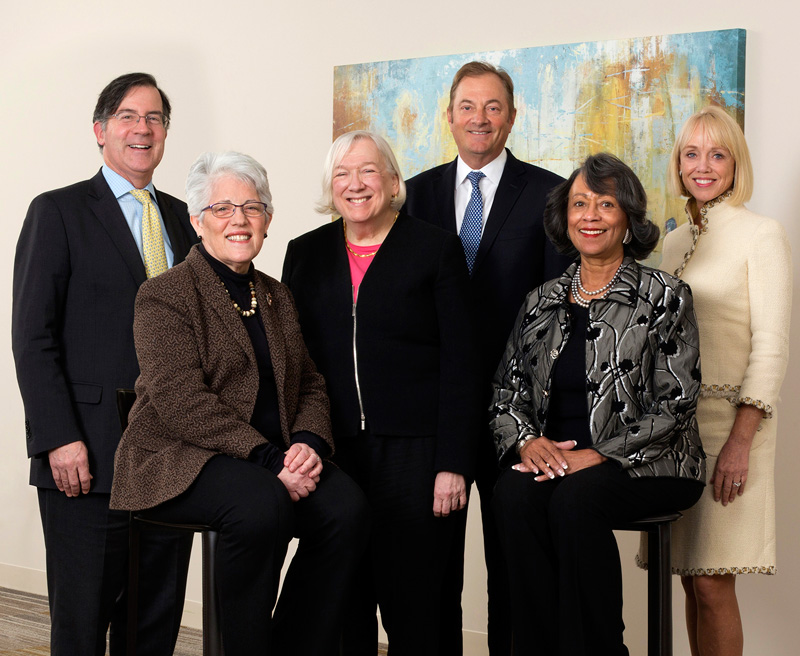
Another of Dowd’s roles sat one level behind the financial statements investors read. He served as a trustee of the Financial Accounting Foundation and chaired its Appointments Committee. The foundation oversees the Financial Accounting Standards Board and the Governmental Accounting Standards Board. Its work concerns the institutions behind accounting standards, including the people entrusted with setting them.
There is little theatrical appeal in an appointments committee. It lacks the satisfying clang of a stock exchange bell. Yet selecting stewards of accounting standards has consequences for how businesses and public bodies explain their finances. Dowd’s service belongs to the quieter part of his story: participating in the machinery through which other people can judge performance.
His industrial governance work also continued. From 2020 to 2022, he was a director of Magseis-Fairfield and chaired its Compensation and Talent Committee. Accounting appointments and employee incentives sound like different subjects. Both involve decisions about people whose judgment shapes an institution. The recurring detail is a responsibility for how organizations are staffed and governed, alongside the money invested in them.
A family’s capital, a manager’s responsibility
Dowd became Fairfield’s chief executive in January 2017 and serves on its board. The company was founded in 1957 and is a third-generation family-owned enterprise. He therefore leads an institution with a history that began decades before his arrival. The Sugahara family supplies that continuity; the executive team carries responsibility for the business in its present form.
Fairfield describes a permanent capital base and a long-term approach to growing its portfolio. It supplies management and operational expertise while the managers of portfolio businesses continue to make day-to-day operating decisions. That division matters. The parent company contributes resources, but a business still depends on the people who understand its customers, equipment and daily work.
Christopher Sugahara, a third-generation family member, is Fairfield’s president and chief investment officer. His responsibilities include group investment activity, subsidiary financing and treasury management. The leadership arrangement makes the family’s continuing involvement visible alongside Dowd’s chief executive role. Calling Fairfield simply an investment firm misses the relationship between ownership, operating companies and professional management.
The company’s stated investment horizon is indefinite. That leaves room for growth through business cycles and partnerships that do not begin with a fixed departure date. It also raises a practical question: how does an owner decide when another owner can provide the next stage of development? Fairfield’s shipping activity offers a concrete answer to examine.
Resources at the parent company. Daily operating decisions within the businesses.
The scaffolding behind the landmark
Fairfield’s investment in Universal Builders Supply established a partnership with the O’Callaghan family. UBS, founded in 1931, provides hoisting, scaffolding, access and safety services. Its projects have included work on the Statue of Liberty, the Washington Monument and Saint Patrick’s Cathedral. Visitors admire the landmark; someone still has to work out how people reach the stonework.
Dowd’s comments announcing the partnership emphasized engineering, technology and operating capabilities. He named the O’Callaghan family and the UBS team led by Chris Evans as the people Fairfield would work with. The transaction illustrates the company’s strategy of diversifying through partnerships with other family-owned businesses, rather than treating an operating company as a collection of assets without a history.
For Dowd, it also brings the engineering strand of his biography back into view. His role concerns the resources and relationships around the specialists who do the work. Investment decisions acquire a physical consequence here: access systems must get people where they need to go.
Selling a fleet, returning to Japan
In September 2023, Fairfield announced an agreement for MOL Chemical Tankers to acquire Fairfield Chemical Carriers. The announced cash consideration was about $400 million, subject to adjustments. At that point, Fairfield Chemical Carriers had 36 chemical tankers. Dowd said joining MOL would give the business resources for continued growth. The decision sits comfortably beside a long-term outlook when the question is the business’s next stage.
“Merging with MOL Chemical Tankers would give this business the resources to continue to succeed and grow.”Anthony Dowd, September 2023
Then came another shipping chapter. On September 2, 2025, Fairfield announced Fairfield Maritime Japan and a Tokyo office focused on ship construction, ownership, investment and leasing. The planned vessel range included chemical tankers, medium-range tankers and gas carriers. Selling an established carrier had left room to pursue another form of participation in the industry.
The new leadership team included Ryuichi Osonoe as president and Mitsuhiro Okamoto as vice president and chief financial officer. Dowd emphasized their experience, performance records and reputations for ethics. It is a revealing choice of criteria in an announcement about ships: the vessels matter, but so do the people trusted to build the next business around them.
Dowd’s career has moved through military service, investing, regulatory work and the leadership of a family enterprise. The common thread is responsibility inside organizations that outlast an individual assignment. At Fairfield, the next chapter is already taking shape across an ocean. A long investment horizon still needs people to decide what to do on Monday morning.