A private equity fund asks its investors to do something unfashionable: wait. Money goes in, companies are acquired, businesses develop, and eventually someone sells them or takes them public. The calendar can stretch across a decade. Michael Granoff found a career in the interval between the opening commitment and the final exit. There are people who would like to leave before the performance ends. He has spent more than thirty years considering whether to buy their seats.
The appeal is easy to describe and difficult to execute. A buyer of an existing fund interest can inspect companies already in the portfolio. Some of the early uncertainty has passed. The price may reflect a seller’s need for cash. An investment that felt inconvenient to one owner can suit another with a different timetable. Arriving late, in this particular business, can mean arriving with more information.
Granoff co-founded Pomona Capital in 1994 with Fran Janis. The name has a smaller, more personal geography than the firm’s international business suggests: Pomona was the street where he grew up in Worcester, Massachusetts. A childhood address became the name on a New York investment firm. Finance has a talent for making ordinary words sound expensive; this one began on the way home.
His explanation of secondaries starts with the fund’s life cycle rather than a market forecast. That choice matters. The opportunity exists because an investor’s circumstances can change while the companies inside a fund continue their own journeys. The buyer has to understand both stories. A willing seller supplies a beginning to the conversation, rather than an answer about value.
01Before the funds, the appropriations
Granoff’s route into investing passed through Washington. Before his business career, he worked as the chairman’s representative on the staff of the House Appropriations Subcommittee on Foreign Operations. The committee’s remit included economic and military assistance abroad. In 1992, he was part of the presidential transition team for the Treasury Department. His education paired a bachelor’s degree at the University of Pennsylvania with a law degree at Georgetown.
Those facts put his later work in a useful frame. Public budgets and investment portfolios both involve allocating money, but their obligations differ. A legislature considers public purposes. An investment manager answers to investors. Granoff’s career has included institutions on each side of that distinction, sometimes with an ocean between them.
Before Pomona, he was already working with partnerships buying secondary interests in venture capital and leveraged buyout funds. His earlier positions included Golodetz Ventures and TEI Industries, alongside directorships at private companies. The 1994 launch gave an established area of his experience a firm of its own. He came to secondaries through transactions, rather than discovering them as a fashionable new asset class.
02A small first fund, a long calendar
Pomona’s first flagship fund gathered $42 million in commitments. The company opened in London in 1998 and Hong Kong in 2007. In between, in 2000, it established the strategic relationship with the business then known as ING Investment Management, now Voya. Geography and institutional backing widened the firm’s reach while its original problem remained recognizable: how to buy existing interests on terms that made sense.
The later fundraisings give a measure of the business Granoff helped build. Pomona Capital IX closed at $1.8 billion in September 2018. Its investors included pensions, sovereign wealth funds, endowments and family offices from nearly twenty countries. In August 2022, Pomona announced a $2.6 billion close for Fund X, against a $2 billion target. Those are commitments to distinct funds, rather than a scorecard of investment returns.
A fundraising announcement records what investors are willing to entrust to a manager. The difficult part follows it. Committed money has to become a portfolio, and a portfolio eventually has to produce actual proceeds. Granoff’s public explanations repeatedly return to the conditions of purchase. Growth gives a firm more choices, but also more money to place. The discipline has to survive the larger cheque book.
The commitments got larger.
03The price of saying yes
In a 2023 interview, Granoff said Pomona typically completed transactions on about one percent of the dealflow it reviewed. The figure was his description of the firm’s selectivity at that time. It captures a profession in which most of the work can end without a purchase. An investor may admire a company and still decline the price. The spreadsheet is allowed to spoil the romance.
“We are not in the prediction business, but we can prepare.”
Michael Granoff · 2023
His formulation leaves room for several possible futures. It also makes a demanding promise about the present: buy with enough allowance for things to go differently. A discount offers little comfort if the underlying businesses are weak or the valuation being discounted is unreliable.
The tactics have changed. In 2019, he described more customized sourcing, greater analysis of underlying companies, currency hedging and sales of older holdings. He also described the discomfort of challenging the firm’s own assumptions. Keeping a strategy recognizable does not require keeping every procedure fixed. A buyer of secondhand interests still needs new information.
By late 2024, his account of the market included both limited partners selling fund interests and general partners arranging transactions. The seller population had broadened since Pomona’s beginnings. That creates more routes to a deal, along with more reasons to examine its structure. Granoff’s recurring test is the quality of what is being acquired and the price required to acquire it.
of reviewed dealflow resulted in transactions, in Granoff’s account of Pomona’s process.
04An exit loses its embarrassment
Granoff remembered the early market as a place where limited partners could be embarrassed to admit they wanted to sell. In his December 2025 interview, selling had become an accepted way to manage a private equity portfolio. A transfer of ownership could reflect a cash requirement, a balance sheet limit or a change in priorities. The fund’s businesses need not have become less appealing.
That observation is the human hinge of secondaries. Two investors can assess the same holdings and make different, reasonable decisions because they face different obligations. One needs liquidity now; another can hold on. A market connects their timetables. It does not eliminate the uncertainties attached to the companies they own.
In July 2026, Pomona shared a podcast on the boom in limited-partner-led secondaries, with Granoff among the participants. The subject remained close to the firm’s beginnings even as the market around it expanded. Three decades into the business, the question of why an owner wants to sell still deserves its own answer.
05Opening another door
Pomona Investment Fund launched in 2015 to bring a registered private equity vehicle focused on secondaries to individual investors. In May 2023, it passed $1 billion in assets under management. The vehicle added another audience to a business long associated with institutional investors. A product can widen access while leaving the underlying investments complicated.
Granoff has acknowledged the practical difficulty. In 2019, he discussed the mismatch between private equity’s long holding periods and individuals’ expectations about getting their money back. Mature holdings can help shorten the remaining journey. They cannot make every private investment available for immediate withdrawal. The attraction of access has to coexist with the mechanics of liquidity.
That tension makes the retail project an extension of his original problem. Pomona began by connecting an owner who wanted to leave with a buyer prepared to stay. An individual-investor vehicle adds another set of expectations to that arrangement. The engineering of the fund matters as much as the invitation to enter it.
06The other investment horizon: Albania
President Bill Clinton appointed Granoff to the board of the Albanian-American Enterprise Fund. He chairs that fund and the Albanian-American Development Foundation. The enterprise fund began in 1995 with a $30 million USAID grant to support Albania’s private sector. The foundation, established in 2009 as its legacy organization, works in education, entrepreneurship, leadership and cultural tourism.
The two institutions make his biography wider than a sequence of New York fund closings. At Pomona, liquidity is an investment problem. In Albania, the work includes what people can learn, which institutions they can trust and how an economy creates opportunities. The connection is an editorial reading of his career: both require attention to what capital does after it has been committed.
In October 2024, Granoff described the foundation’s fifteen-year journey in an interview in Tirana. He emphasized principles, adapting as Albania changed and carrying projects through to execution. He said more than $125 million had been committed across over eighty projects. These were the foundation’s commitments, not his personal giving.
Albania has recognized him with the Order of Skanderbeg, the Order of Mother Teresa and the Medal of Public Gratitude. His international commitments also include chairing the international board of trustees at Israel’s Institute for National Security Studies. The record places investing alongside a continuing interest in public institutions and international affairs.
07A room for the next arrivals
The Albanian work becomes more concrete at Tirana’s Pyramid. In 2023, TUMO Tirana opened there as a free digital learning center. Granoff returned in May 2024 for an evening with students and staff, talking about the building as a community space as well as a technology hub. A place can have an economic purpose and still need to be somewhere people enjoy spending time.
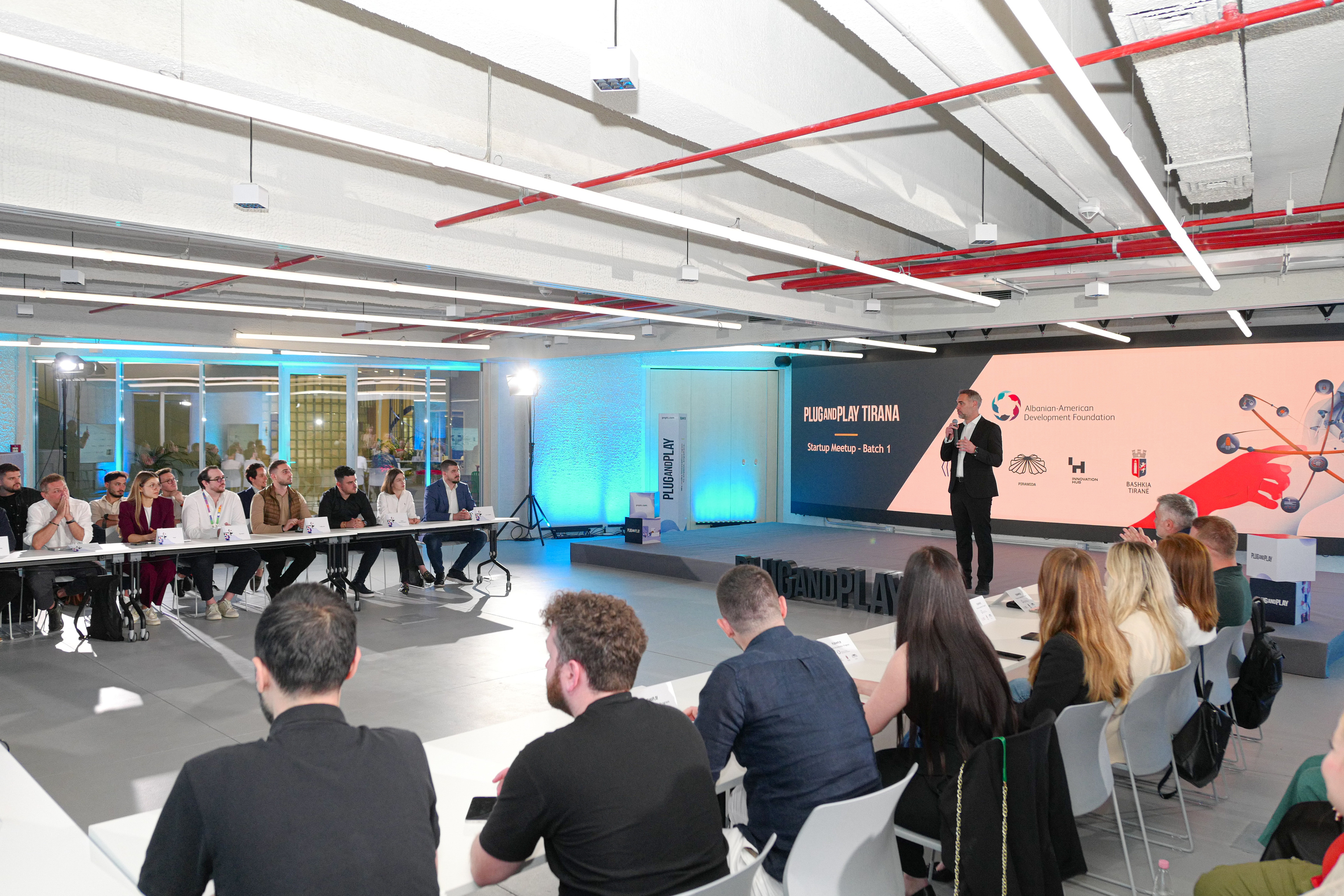
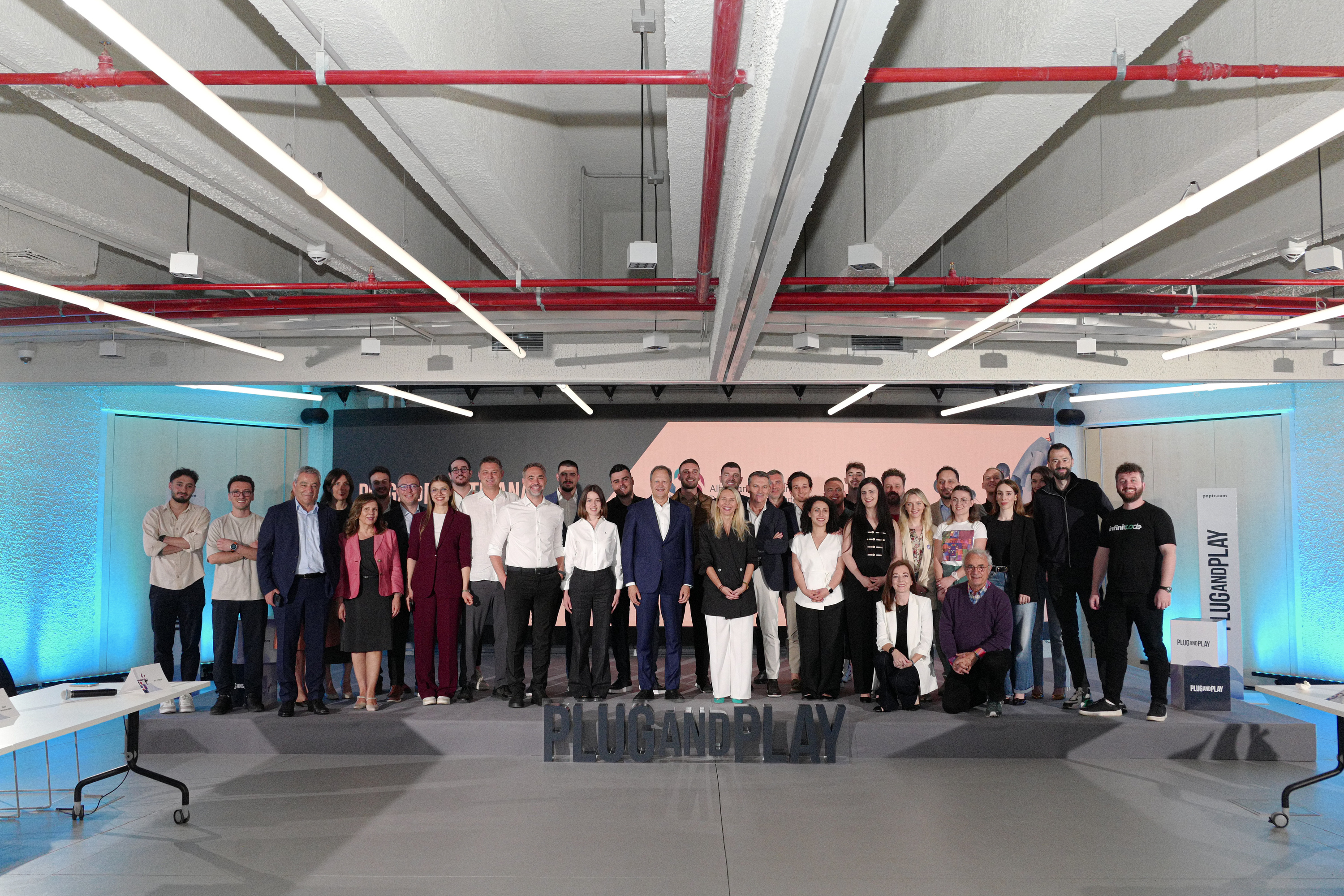
In May 2025, he met founders from the first Plug and Play accelerator cohort at the Innovation Hub. They presented their startups and discussed international expansion and partnerships. The photograph of the gathering offers a different scale from a fund announcement: a group of people in a room, each bringing a business that still needs to find its way.
During the same month, he visited the newly built 42 Tirana coding campus and met prospective students. Its tuition-free model uses peer learning. He also attended the launch of an AADF scholarship program covering selected degree programs in Albania and postgraduate study in the United States. These are separate routes into education, with different audiences and different demands.
The institutional work continued in May 2026. Granoff attended the signing of an agreement between AADF and Albania’s education ministry to strengthen national education services. His remarks emphasized reliable institutions, standards and trust. The next day brought a presentation of the revised concept for an interactive exhibition at the Pyramid, connecting the building’s history with its public future.
The child from Pomona Street built a business around entering investments after they had begun. In Tirana, his foundation work helps people prepare for beginnings of their own. The timelines differ, but the question keeps returning: what has to be in place for the next stage to work? After the commitments, the announcements and the group photographs, someone still has to do the patient work.