Jody Grant retired from Electronic Data Systems and started a bank. There are quieter ways to leave a corporate job. His involved raising $80 million, acquiring a small existing institution and persuading Texas business owners that a new name on the door could offer something the familiar names had lost. He was approaching 60. The word retirement was doing an unreasonable amount of work.
He had already run a bank that failed. Texas American Bancshares, which he led during the late-1980s Texas banking collapse, had disappeared along with much of the state’s independent banking establishment. That experience could have supplied a perfectly respectable reason to stay away. Grant wrote a book about it, worked in technology, and eventually returned with a different banking proposition.
Years later, he and his wife, Sheila, helped pursue another proposition that required people to look past what was in front of them: a park above Woodall Rodgers Freeway. The road separated downtown Dallas from Uptown. They wanted a place where the city could meet. The connection between the two enterprises is practical. Each began with a gap, followed by the awkward business of finding people willing to pay to close it.
A scholarship before a balance sheet
Grant was born in San Antonio in 1938. His mother ran a private dining club, and the family lived there. She encouraged him to set goals and work toward them. Swimming gave that advice a measurable form. A clock is a useful companion for an ambitious teenager: it has very little interest in excuses.
He graduated from Alamo Heights High School in 1956, having set two national Junior Olympic swimming records. A swimming scholarship took him to Southern Methodist University. There he earned four individual Southwest Conference championships and All-America recognition. The finance career came later; first, there was the daily obligation to get into the water.
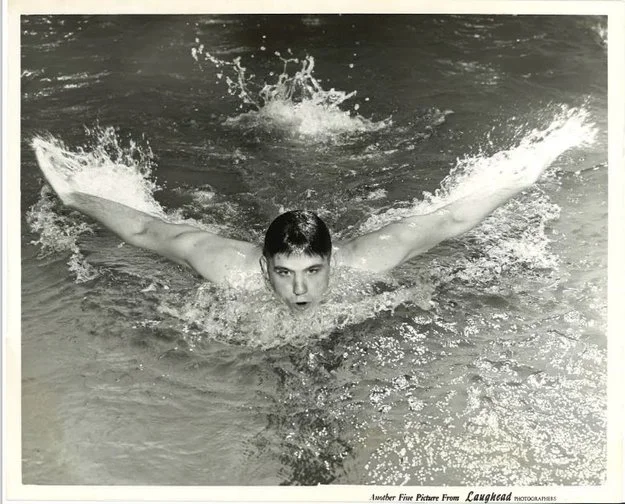
There was coaching, too. After SMU, he coached the San Antonio Aquatic Club during the summer of 1960, taking the team to a state championship. At the University of Texas at Austin, he assisted swimming coach Hank Chapman while pursuing his MBA. The athlete was already learning to be responsible for other people’s results.
At SMU he also met Sheila. He graduated with a finance degree in 1960, then earned his MBA at UT. In 1961 he entered Citibank’s executive training program in New York. Five years later he returned to Austin for doctoral study. By 1970 he had a Ph.D. in finance and economics and a job as an economist at Texas Commerce Bank.
The bank that did not survive
At Texas Commerce, Grant worked on the expansion strategy that helped assemble a larger banking company. The work placed him inside the machinery of growth: markets, acquisitions, and the question of where an institution should go next. In 1975 he moved to Texas American’s Fort Worth bank, eventually becoming chief executive of the holding company in 1986.
The timing was punishing. Texas was entering a banking crisis that would sweep away nine of its ten largest banking organizations. Texas American was among them. A career spent learning how to build institutions now included the experience of watching one cease to exist.
Grant later published The Great Texas Banking Crash: An Insider’s Account in 1996. Its subject was an episode in which he had been a participant, with all the discomfort that implies. A professional biography can hurry over a failed institution on the way to the next appointment. A book requires staying with it for considerably longer.
His next appointment came in 1990, as chief financial officer of EDS. In 1996 he helped lead the company’s separation from General Motors. It was a substantial corporate undertaking and, for Grant, a difficult act to follow. Once that transaction was finished, he wanted work with more room for his own decisions.
An $80 million retirement project
In October 1997, Grant began circulating a proposal for a new bank. He left EDS in March 1998 to pursue it. Fundraising did not proceed politely: that summer’s market downturn cost the venture commitments, and he had to keep looking for capital. By December, the group had assembled approximately $80 million.
“It’s my ranch, my beach, my fun thing to do.”Jody Grant, on founding a bank as retirement
His fellow principal founders included George Jones and Keith Cargill, colleagues from the earlier Texas banking world. Their proposition depended on a particular customer. Privately owned and family-owned companies needed a bank that could understand their businesses and make meaningful loans. A branch on every corner was an expensive way to reach that market.
The founders believed the institutions left after the crash were missing an opening between small community banks and large banks headquartered elsewhere. Texas Capital would be based and managed in Texas, with enough money behind it to serve companies that a thinly capitalized newcomer could not accommodate. The bank began operating under its new name in December 1998.
Capital gave the new bank room to serve larger business borrowers from the start.
Cargill later explained the arithmetic: that initial funding allowed a legal lending limit of $10 million, compared with the $1 million or $2 million typical of a new bank. This was a specific answer to a specific constraint. Ambition was useful, but so was having permission to write a sufficiently large loan.
Texas Capital went public in 2003. Grant had been named Community Banker of the Year by American Banker in 2001. He also understood that the business needed a clear explanation. Discussing its public offering, he emphasized knowing the bank’s mission and market. A novel institution still had to make itself intelligible to customers and shareholders.
BankCap Partners extended his interest in the model beyond Texas. The firm began in 2005 after Grant approached investment banker Brian Jones about backing similar banking businesses elsewhere; Scott Reed joined the effort. Grant moved to chairman emeritus at Texas Capital in May 2008. He had another long project underway by then.
A different view from the office
In 2004, Tom Leppert asked Grant to look at ways the Dallas chamber could help downtown. From his Texas Capital office, Grant could see the freeway’s effect on the area. Sheila saw an opportunity to give the Arts District a common outdoor gathering place. Their interests met above a rather inconvenient stretch of traffic.
The early financing had three parts. The Real Estate Council had committed $1 million. The Grants offered another $1 million, and Texas Capital another $1 million, making $3 million for feasibility work. A proposal to put a park in the air needed more than an attractive drawing; someone had to establish that it could actually stand up.
The couple also brought different kinds of experience. Jody’s work involved organizing support and raising money. Sheila’s involvement in the arts helped shape a park where cultural performances and public gatherings could belong. Their partnership gave the proposed space both an economic argument and a reason for people to spend an afternoon there.
Klyde Warren Park opened in October 2012. Visitors could cross the space, stay for a program, or simply sit down. The achievement had required years of meetings, fundraising and construction. Its public reward was the freedom to enjoy the place without having to think about any of those meetings.
The return trip to the pool
Swimming remained part of Grant’s life. After moving to Dallas in 1990, he swam with Dallas Aquatic Masters. In 1995 he placed second in the 200 individual medley and third in the 400 individual medley at Masters Nationals. Decades after his scholarship years, there were still race results to record.
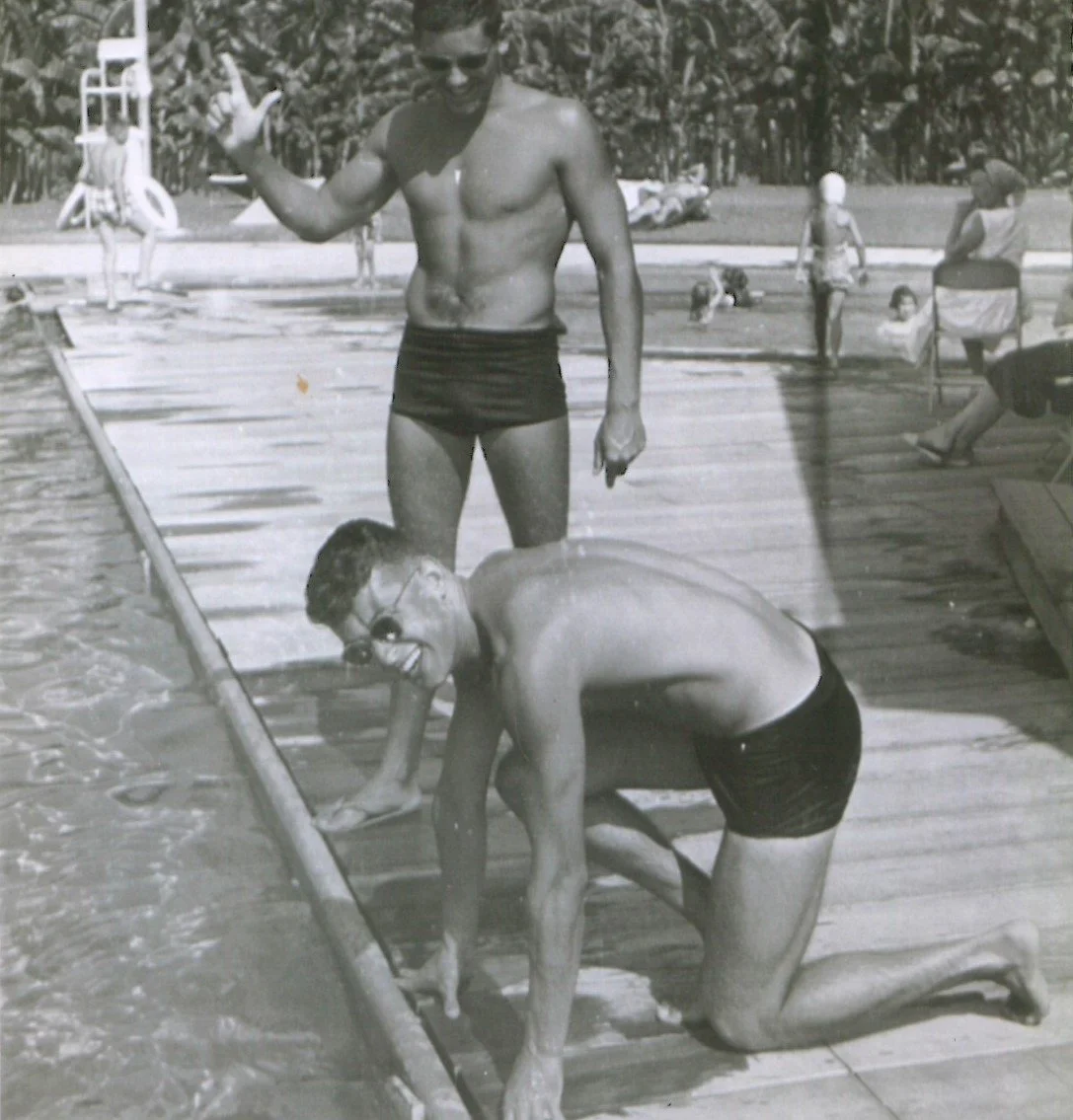
In 2017, he and Sheila pledged $1.5 million toward SMU’s new Robson & Lindley Aquatics Center. Their challenge encouraged others to contribute the remaining $1.5 million needed to reach its funding goal. The form was familiar: put money behind an idea and invite more people to help finish it.
The gift returned him to the program that had helped make college possible. By then he had received SMU’s Distinguished Alumni Award and entered the Texas Business Hall of Fame, both in 2013. A new swimming facility offered a more physical way to repay the university: somewhere for the next student to start another lap.
The park keeps asking for more
The children’s area reopened in November 2022 with 6,000 additional square feet, bringing it to 18,000. It was named the Sheila and Jody Grant Children’s Park in recognition of their commitment. A $5 million Perot family gift helped make the work possible, alongside other donors. The new equipment included a climbing tower and slide.
Grant’s current public work still includes chairing the Woodall Rodgers Park Foundation. In June 2026 the park announced that Archer Western had won the contract for its next deck expansion. Construction was expected to begin before year’s end and take about 24 months. The proposed additions include a pavilion, rooftop terrace and festival lawn.
These remain plans and construction expectations. Grant was still discussing the separate task of raising money for the improvements above the deck in a June interview. Even after a park has opened, earned affection and acquired a place on the city map, someone has to go back to asking for money.
For Grant, that work has become personal. He described the park journey as “the joy of my life.” The banker who chose a new bank for retirement has spent another chapter helping create a place where other people can take their leisure. Dallas gets the lawn. He gets another project to finish.
Keep reading, watching & listening
- Klyde Warren Park: leadership and current work
- Expansion announcement, June 2026
- Listen: Grant on the park’s next chapter, June 2026
- Watch: Horatio Alger video profile on YouTube
- Watch: PBS CEO interview, 2015
- Read: the Grants on creating the park, 2012
- Texas Capital’s founding prospectus
- Keith Cargill on the founding team
- Grant on retirement and starting a bank
- The swimming years and archival photographs
- SMU’s 2017 aquatics center gift announcement
- SMU Distinguished Alumni profile
- Texas Business Hall of Fame biography
- The children’s park reopening, 2022
- BankCap Partners and the model beyond Texas
- Texas Capital: company profile