The question arrived early in the conversation. In February 2016, Ron Baldwin, who ran CrossFirst Bank, was speaking by telephone with George Jones, the retired Texas Capital executive. A mutual friend had introduced them. Baldwin wanted to know: “Do you have one more in you?” Jones needed a moment to understand the proposition. Another banking venture. Another beginning. “Yeah. Yeah, I probably do,” he replied.
He had retired at the end of 2013. By the following spring, his old bank had a successor in charge and a history he had helped make. Now a Kansas-based institution wanted a Dallas presence. Jones knew the city, the work and the people. The invitation gave those connections a new purpose.
There was a pleasing geographical detail to this return. From CrossFirst’s Dallas operation, Jones could look across McKinney Avenue toward Texas Capital’s headquarters. His second act came with a view of the first. Most people have to open a photograph album for that sort of arrangement.
A second start, paid by the hour
Jones had already experienced a consequential change of direction. Born and raised in Dallas, he transferred to the University of North Texas in 1965 after an unfocused start to college. Faculty took an interest in him. He found a sense of purpose and a place in banking, working as a teller near campus.
His education had a practical schedule: commute, attend classes and work at least 30 hours a week. He graduated in 1967 with a business administration degree. Years later, he credited the university with helping him develop the interest that became his career. The classroom and the bank counter were close enough to belong to the same education.
Professional titles would eventually crowd his biography. Early on, the arithmetic was more domestic. After college, Mercantile Bank paid him $490 a month. To supplement that income, he worked in the men’s clothing department at Sanger-Harris in Preston Center. He learned alterations. Decades later, discussing his secret talent, he offered: “I can still alter your clothes if you’d like me to.”
The joke suits a career whose public record can otherwise read like a succession of board appointments. Before Jones was helping companies arrange capital, he was making a family budget work and acquiring a useful skill on the side. A commercial loan and a trouser hem demand different expertise. Both become more interesting when the customer is standing in front of you.
Building a bank with people he knew
Jones’s route through Dallas banking included leadership at Texas American Bank and NorthPark National Bank, along with work at Mercantile and Comerica. He also helped establish Resource Bank and Mack Financial Group. By the time Texas Capital began, he had experience inside established institutions and in the work of creating new ones.
Texas Capital opened in 1998. Jones was a founding executive alongside colleagues including Jody Grant and Keith Cargill. Those relationships had a history: the three had worked together at Fort Worth National and Texas American. They brought shared experience to a new institution and a particular interest in serving business customers.
That continuity mattered when leadership changed later. In 2013, Cargill became CEO of the bank as Jones prepared to retire from the parent company at year-end. The next chief executive came from the founding group. A business built around relationships had an internal relationship to draw on when responsibility passed from one person to another.
The original capital commitment was $80 million. Before Texas Capital went public in 2003, private fundraising had reached $125 million, with Jones playing a part in the effort. By 2012, the bank had $8.6 billion in assets, more than 700 employees and operations in Austin, Dallas, Fort Worth, Houston and San Antonio. A local premise had acquired a substantial balance sheet.
The banker was part of the product
The intended customer was specific. In 2007, Texas Capital focused on privately held small and middle-market businesses seeking roughly $2 million to $20 million in capital, alongside private clients needing individual attention. Jones recruited experienced local bankers who already understood the communities where they worked.
He called them relationship managers. Candidates could spend years in conversation with the bank before joining. Once hired, they developed detailed plans for their own business portfolios; successful managers could recruit teams. Equity offered another connection between an employee’s work and the company’s future. The operating model gave people room to build, together with expectations about what they would produce.
“Our money is all the same color.”
George Jones, 2007
That observation located the competition in the service surrounding a loan. Jones wanted bankers visiting customers and prospects. The person delivering the service needed to know the client well enough to offer useful advice. An office full of occupied desks could be less encouraging than a corridor whose bankers were out seeing people.
His 2009 shareholder letter returned to recruitment and the relationships experienced bankers brought with them. Organic growth remained central to the argument. For investors, that meant paying attention to the people joining the institution as well as the assets appearing on its balance sheet. Hiring was one of the mechanisms by which the growth plan became daily work.
Two points in a growing business
Historical bank assets around Jones’s holding-company leadership period. Bars share a zero baseline; these are two observations, not a year-by-year series.
A larger desk, a familiar preference
Jones succeeded Grant as Texas Capital Bancshares CEO in 2008, taking responsibility for the parent company during a punishing period for banking. At the bank level, assets rose from about $4.65 billion in mid-2008 to $11.7 billion by his retirement in late 2013. The figures describe the scale of the institution he helped run, rather than a solitary achievement.
His public explanation of the business stayed close to execution. Appearing on Jim Cramer’s program in 2013, he emphasized finding capable people and having them carry out the plan. He also pointed to the business environment in Texas. The account gave both the team and the surrounding market a place in the result.
Outside the company, Jones was elected to the Federal Reserve Bank of Dallas board in November 2009. He also served Dallas civic organizations, including the Better Business Bureau and the Salesmanship Club Foundation. Banking had made him a company executive; his responsibilities extended into institutions whose work reached beyond his own customers.
Inside the company, he advocated involving employees in decisions. His succinct instruction was “Use the talent that you’ve attracted.” The chief executive’s job could move him farther from the customer conversations he enjoyed. Giving other people responsibility offered a way to keep those conversations at the center of a growing organization.
The view across McKinney Avenue
CrossFirst’s Dallas assignment brought Jones back to the practical business of establishment. When he joined in 2016, the work included assembling a shareholder base, a local advisory board and a banking team, as well as finding premises. The company already had an operating structure. Jones could concentrate on building its place in a market he knew.
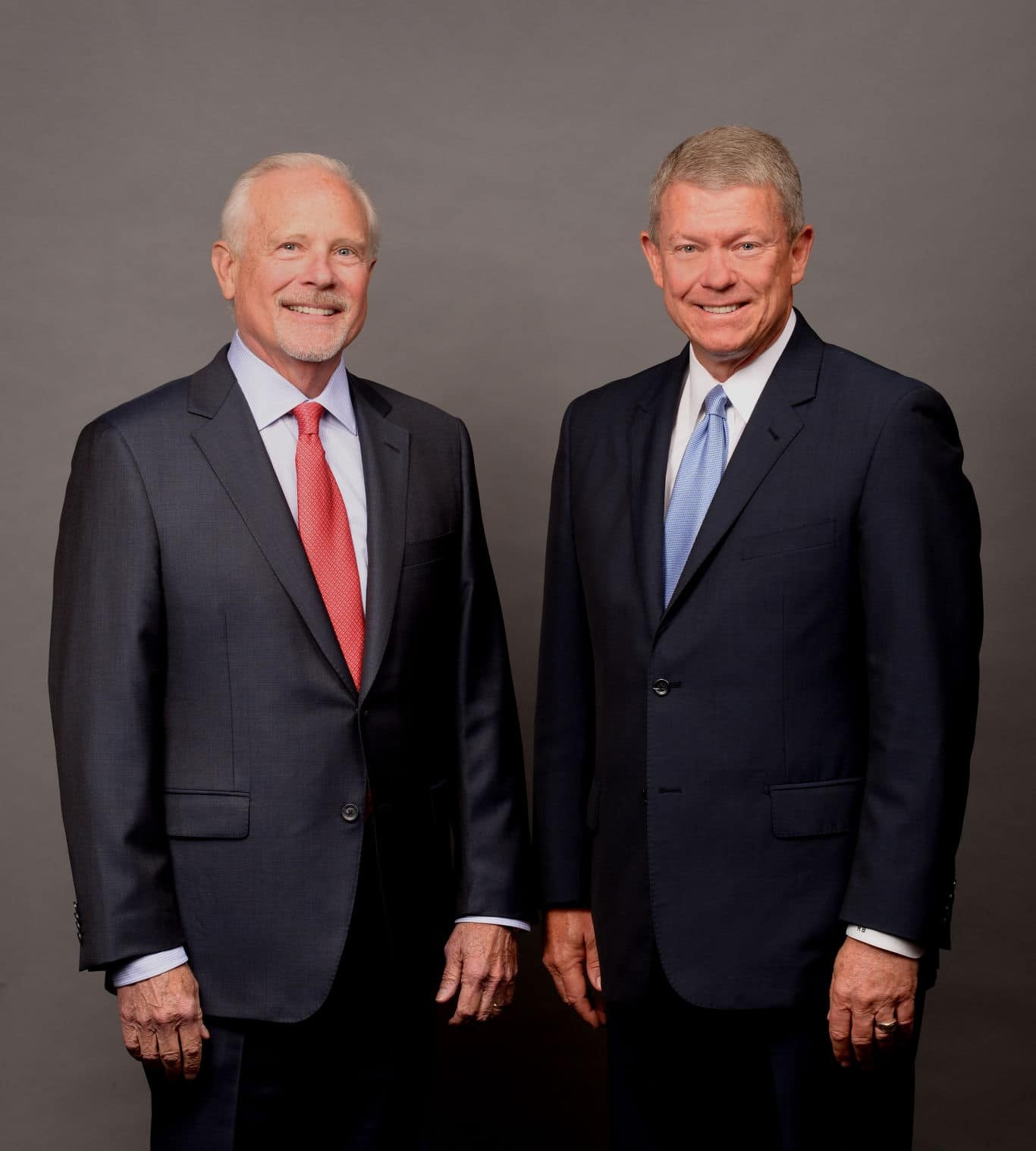
The physical commitment was conspicuous: CrossFirst leased the eighth floor at McKinney & Olive, about 26,000 square feet. It initially operated from temporary space on Ross Avenue. An expansion announcement became an address, then a workplace with capacity for a larger team. Jones’s return had the unromantic essentials of a new operation: rooms, desks and people to occupy them.
By 2017, the Dallas effort included about 30 staff. Jones worked with Dallas president David Williams on recruiting and investor relationships. The fundraising brought in $100 million, roughly half from the Metroplex. Jones also spoke of an ambition to build a $30 billion bank through the region and further Texas expansion. That figure was a goal he set, rather than a result he had already delivered.
The job after the job
In May 2018, Jones became president and CEO of CrossFirst Bankshares. He led the company through its 2019 transition to public markets. The sequence had a familiar outline: help develop a banking business, then take on the responsibilities that come with public ownership. A retirement interrupted had become another substantial executive chapter.
On June 1, 2020, Mike Maddox succeeded him as holding-company CEO. Jones returned to vice chairman and remained involved with the board and Dallas market. The company described a planned succession process. Responsibility changed hands while Jones continued contributing in a different role.
He died on May 21, 2021, aged 77. CrossFirst remembered his mentoring and advice as well as his leadership. Its later tribute also recorded that he had taught at SMU’s graduate banking school. Teaching belongs naturally in this story: a career spent recruiting people also produced experience worth passing along.
The record includes a co-founder, two holding-company CEO appointments and two public-market journeys. It also includes a commuter student, a teller and a banker who could still offer to fix a suit. The scale changed. Jones kept finding work in which knowing a person, recognizing an ability and making another introduction could become the beginning of something.