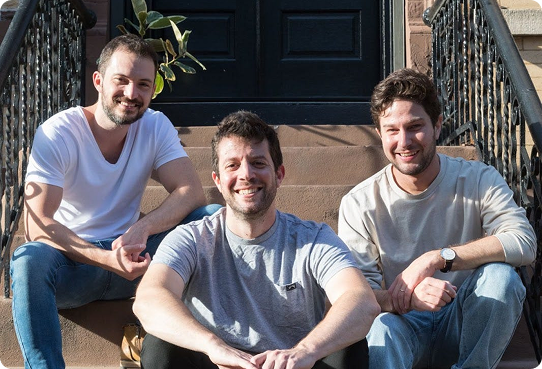
Shahar Brukner thought finding funders for his nonprofit would take three months. It took eighteen. The question sounded simple: “who actually funds this kind of work?” The answer arrived through borrowed names, introductions, and manual research. The money eventually came together. The method was the problem.
Brukner was building BrainGain: Israel, a scholarship nonprofit. What interested him afterward was how familiar his frustration sounded. Nonprofits struggled to prioritize prospects. Foundations lacked a clear view of the fields they supported. Advisors assembled the same maps for different clients. When a senior Bridgespan leader told him people would pay for that infrastructure, an exhausting fundraising exercise began to look like a software business.
- Find funders by looking at who already supports your peers.
- Map the people connecting your organization to a foundation.
- Study a whole funding ecosystem, or check one grantee’s health.
01The filing cabinet becomes a map
Impala collects, cleans, and connects philanthropic data, including IRS Form 990 filings, organizational updates, grants, financials, staff, and trustees. Its advertised coverage includes more than two million nonprofits, 250,000 foundations, and 25 million grants. Those are company-reported database counts, rather than a count of customers.
The useful unit is the connection. A fundraiser can examine organizations doing similar work, discover who supports them, and look for a route to the people making decisions. Funder Prospecting ranks possibilities using mission, capacity, and relationships, with guidance on ask size. A promising name becomes a researchable proposition.
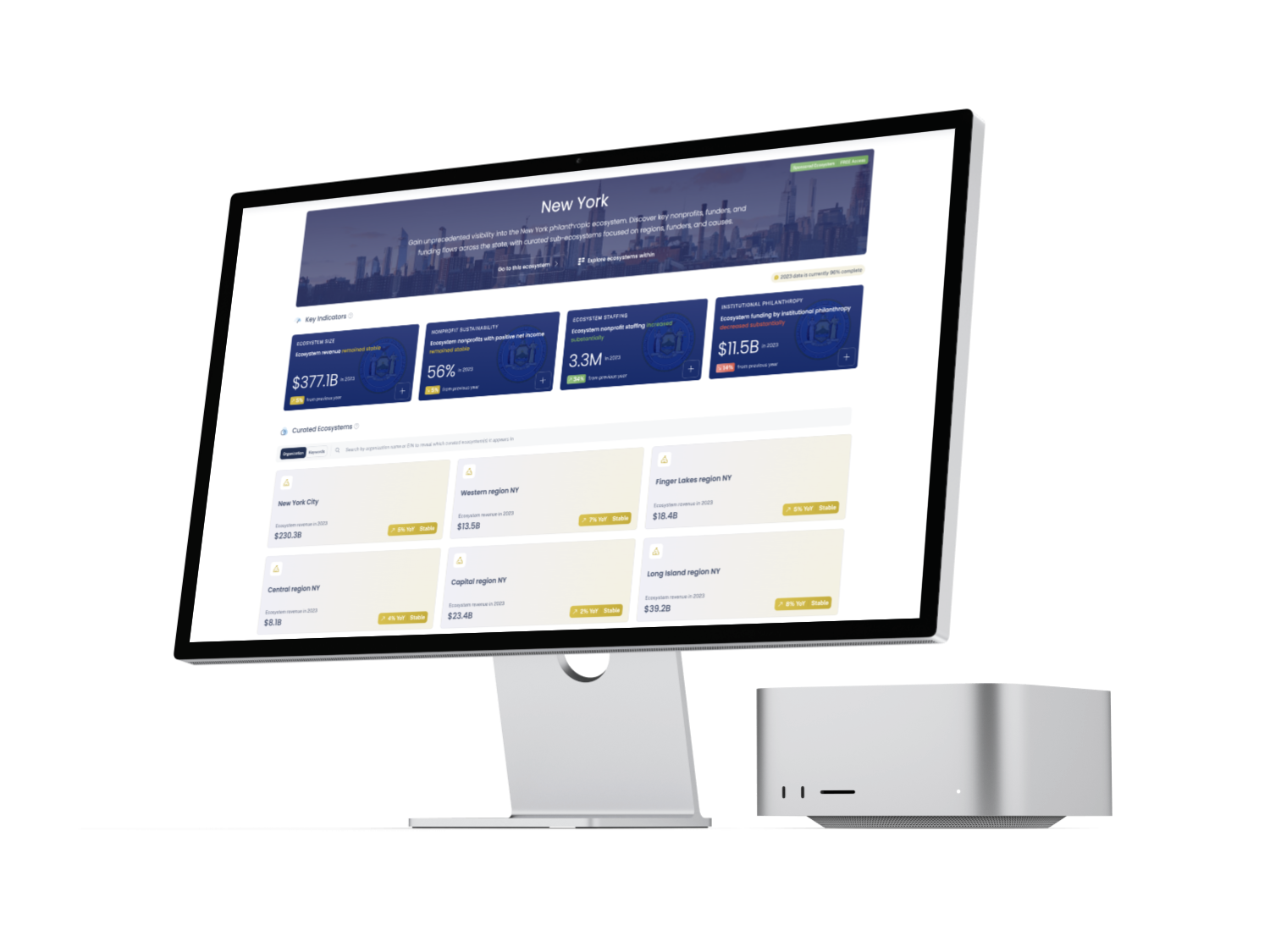
For grantmakers, Due Diligence assembles financial and eligibility signals into reports. Portfolio Analysis follows grantee health across a group of organizations. Ecosystem Research moves outward again, mapping a cause or geography. Nonprofit development teams, foundation program officers, networks, and consultants are buying different views of the same connected records.
02First, agree on what counts
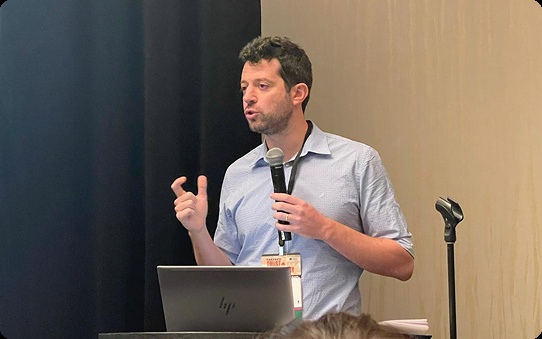
The U.S. Democracy Hub exposes the hard part. Built with Democracy Funders Network and Third Plateau, it launched in September 2024 with more than 4,200 nonprofits organized into nine sub-ecosystems. In November 2025, the project earned Silver and Community Voice recognition at the Anthem Awards.
Impala later described an unexpected obstacle. The team assumed cleaning records and building connections would be the hardest work. Instead, democracy itself needed a usable definition. Did journalism belong? Civic education? Government transparency? The partners had to build a shared taxonomy with people working in the field.
That detail matters more than another dashboard screenshot. A clean database can still mislead if its categories miss the work people actually do. Impala’s expertise combines engineering with this less glamorous task: deciding, alongside practitioners, which organizations belong together. The definition shapes the apparent gaps, overlaps, and opportunities.
A clean database can still mislead if its categories miss the work people actually do.
03Somebody still pays for free
Access is part of the design. In 2022, Philanthropy Massachusetts partnered with Impala to offer Massachusetts nonprofits 24 months of premium access, supported by Barr Foundation and the Boston Foundation. The pattern reappears in regional hubs: a network can make shared intelligence available across its community.
For an organization buying directly, the current published premium database price is $1,440 annually for the first user. Funder Prospecting adds $2,000; Ecosystem Research adds $3,250. The bundled fundraising package costs $5,000 annually. Basic access remains free, and Impala advertises discounts for early-stage organizations with operating budgets below $1 million.
The early business had outside backing, too. A January 2022 founder interview disclosed a $1.05 million pre-seed round led by Zack Rinat, with investors including Oren Zeev and Koa Labs. That financed the company’s development; it tells a different story from the subscription bill a fundraiser must justify.
04The spreadsheet has competition
Impala sits beside Candid’s nonprofit and funder research products and grant workflow platforms such as Instrumentl. Its pitch centers on connected ecosystems, relationships, and analysis across organizations. Buyers should compare the job they need done: researching a field, finding a funder, and managing a live grant application involve different work.
The most concrete example is Jewish Federation Bay Area. In Impala’s published case study, the Federation describes bringing nonprofit intelligence into Salesforce and its donor portal, applying its own philanthropic taxonomy, and giving more than 1,500 fund holders access to richer information. It reports achieving its goal of doubling the return on its platform investment in year one.
That is a customer account, rather than a controlled experiment. Still, the mechanism is intelligible: fewer disconnected lookups, less manual validation, and more research inside an existing workflow. The lesson a reader can copy is to connect information to a specific recurring decision before buying another database.
05The next tab might disappear
The same listening habit showed up inside the software. In its spring 2026 update, Impala said users had complained that their homepage emphasized features they could not access. It redesigned the experience around their actual subscriptions and sponsored access. That is a useful product correction: a free account should help someone do available work, rather than greet them with a display of locked doors.
Impala’s August 2026 MCP launch takes that workflow argument further. The connection makes its data available inside Claude and ChatGPT, letting users ask questions about funders, grantees, and ecosystems in natural language. Access follows the existing Impala plan; the connector carries no additional Impala fee. Custom application-building services are also offered.
The company’s October 13 announcement named former chief product officer Marisa Sires CEO, succeeding Guy Miasnik, who became executive chairman. It also reported more than 150 paying customers and 60% growth in annual recurring revenue during Miasnik’s tenure. Those figures describe a growing paid business; they do not establish how much any one nonprofit will raise.
There are practical limits. Historical giving does not prove a foundation is accepting proposals today. A mapped relationship does not guarantee an introduction. IRS-derived data can lag events. In April 2026, Impala said it had strengthened reinstatement logic after finding more than 27,000 organizations incorrectly appearing revoked in IRS records despite reinstatement evidence elsewhere.
The strongest fit is a team repeatedly researching US nonprofits and institutional funders. An organization seeking only current application deadlines, or information about charities outside the US dataset, should test whether the available coverage answers its questions before committing to a paid research package.
For a reader trying the approach, start with peer organizations, inspect their funders, verify current guidelines, and ask whether an actual relationship exists. Then choose a realistic request. Impala can shorten the search and show the neighborhood. Someone still has to knock on the door.