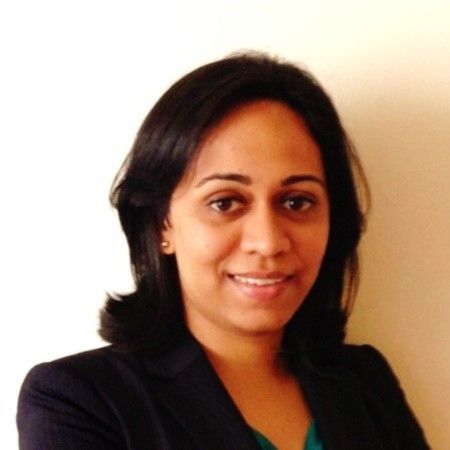
Monel Amin runs a fintech company from a building on Sixth Avenue in New York. The company is called DiligenceVault. It sells software to investment managers, allocators, and consultants - the people whose job is to ask other people careful questions before handing them large sums of money. Before Amin built DiligenceVault, this job was mostly done in email, with attached PDFs, and a spreadsheet used as a database, on a laptop that was probably a Dell. The industry did not want a startup to fix this. Amin started a company to fix it anyway, in 2014, and eleven years later she is still the CEO.
The elevator description of DiligenceVault is that it is a digital diligence platform. What that means, in practice, is that when an insurance company wants to allocate to a hedge fund, or a pension wants to review a private equity manager, or an asset manager wants to answer a consultant's fifty-page questionnaire, the questions and answers and follow-ups no longer travel by attachment. They travel through DiligenceVault. Managers store their standing responses. Allocators reuse their templates. Everybody sees the same thing at the same time. The unglamorous version of this is that Amin has turned a certain kind of institutional paperwork into a network.
The network is the point. Amin has said it directly: "The network effect was always the thesis. AI just made it a bigger moat." This is a slightly contrarian thing for a fintech CEO to say in 2026. Most founders in 2026 say AI dissolves moats. Amin, who was writing software in 2000 before she was writing risk memos in 2010, seems to believe the opposite.
"I lived the problem - running diligence at Citi on PDF, Excel, and email, watching good analysts spend their best hours on administration."
The Setup
Before all of this Amin was an electrical engineering student in Vallabh Vidyanagar, at Birla Vishwakarma Mahavidyalaya, which is not a school that produces a lot of Wall Street fintech CEOs, and then a software engineer at Sprint, which was a phone company in Kansas that no longer exists in the form it did when she worked there. She wrote code from 2000 to 2003. Then she went to Carnegie Mellon for an MBA at Tepper. From there she went to Citi.
At Citi she worked in three arms of a very large bank: global wealth management, capital markets, and asset management. She worked in New York and in Hong Kong. Her last title inside the bank was, roughly, Head of Liquid Investments, Alternative Assets, and Investment Risks - which is the sort of title that makes sense if you already know what it means and reads like alphabet soup if you do not. The short version: she was responsible for risk oversight across the fund businesses that Citi's clients invested in. Hedge funds. Pensions. Insurance. Fund of funds.
Running that oversight, she learned that the actual bottleneck was not risk models or data or judgement. It was that the pipes were made of email. Analysts spent their best hours filing, retyping, checking, chasing. She left Citi in 2013. She spent 2014 talking to the industry. DiligenceVault, the company, incorporated in 2014. The product, the platform, went live in 2016.
The Compounding
Goldman Sachs's Growth Equity team led DiligenceVault's Series A in October 2019, a round reported at $5.97 million. This is not, by 2019 fintech standards, a giant round. It is a check written by careful people to a careful business. In the venture capital narrative arc, the next scene is usually another round eighteen months later, at a higher valuation, and then another one, and so on until either an IPO or a shipwreck. DiligenceVault has not done that. As of this profile there is no publicly reported follow-on. The company has instead spent the last six years doing the thing that gets less press: keeping customers and hiring incrementally.
Then 2020 happened, and the pandemic did the thing pandemics do to fintech, which is to say it made the digital thing suddenly non-optional. DiligenceVault's user base more than doubled that year. When Amin wrote her tenth anniversary post on LinkedIn in the summer of 2024, the number that was most flattering to her patience was the eleven digits on the calendar.
Milestone Density
The Actual Product
DiligenceVault does a lot of things - due diligence questionnaires, RFP management, ODD (that's operational due diligence), ESG reporting, subadvisory oversight, third-party risk. The product surface is broad because the workflow is broad. Somewhere between "help me evaluate this manager" and "help me monitor this manager after I've hired them" is a fifty-tab spreadsheet that Amin's software replaces. In the marketing materials this is called an "operating system for due diligence." In practice, on any given Tuesday, it is the thing that saves an analyst three hours by pre-filling a form.
The technology stack under the hood is the usual grown-up fintech mix: Python, React, Angular, PostgreSQL, Microsoft Azure. There is AI in the product - there has to be, in 2026 - but the AI is layered on top of a decade of structured data. This is the thing Amin keeps pointing at. The moat is not the model. The moat is that eleven years of standardised questionnaires and answers already live in her database.
"The network effect was always the thesis. AI just made it a bigger moat."
Timeline
Voice
"I lived the problem - running diligence at Citi on PDF, Excel, and email, watching good analysts spend their best hours on administration."
"The network effect was always the thesis. AI just made it a bigger moat."
"Making diligence possible for all."
"Happy 10th birthday DiligenceVault."
A Note On Style
Amin is not a very online founder. She does not do the loud CEO thing. She posts on LinkedIn, occasionally, in short, functional sentences that read like memos to her team. When she talks about her company, she is measured, and she uses the words "network" and "workflow" more often than "revolutionary" or "disruptive." She has been called an engineer-founder, which is fair, and a risk-manager-founder, which is also fair. Both descriptions get at the same thing: she treats her company the way she treated positions on a trading book - slow accumulation, small drawdowns, long horizons.
She is the sort of CEO who names her tenth anniversary post before her latest round. There has not been a latest round, at least not one made public, since 2019. That is either a sign of confidence or a sign of discipline. Probably both.
What She Is Doing Now
Publicly, in 2025 and into 2026, Amin has been writing more about AI. Not the marketing-AI, but the practical AI that sits on top of structured data. Her framing is consistent: the AI is only as good as the schema underneath it, and DiligenceVault has spent eleven years building the schema. She has also been talking about "AI-native analysts" - a category that shows up in DiligenceVault's own keyword list - and about turning the platform into the layer where asset managers, allocators, and consultants meet, exchange, and monitor.
DiligenceVault is not the loudest fintech story of the decade. It is one of the more durable ones. Amin is the reason. She is a founder who left a big-bank job in 2013 to solve a very specific institutional annoyance, and has spent the twelve years since then still solving it. There is a version of this profile that is a heroic origin story with a montage. There is another version, closer to the truth, in which somebody watched their colleagues waste their afternoons on the wrong thing and decided to start a company about it. That is the version that describes Monel Amin.