The customer wanted hands. Jensen Wu had a company making AI videos, and sellers had a question for him: “Can Topview avatars hold my product to demonstrate it?” A digital presenter could talk about an object. The seller wanted the object in the picture, being handled. It was the sort of request that sounds obvious once somebody has made it. Before that, it is the missing feature.
Wu recounted the question as he introduced Topview’s product-holding avatars in January 2025. Upload a product image, choose a presenter, add a voiceover in another language. The intended customer could be selling across borders without arranging another shoot. In the vocabulary of artificial intelligence, this involved avatars and generation. In the vocabulary of a shopkeeper, it meant showing someone what was for sale.
That small exchange offers a useful way into Wu’s career. The Singapore-based co-founder and CEO of Topview AI spent more than 13 years at Alibaba before starting the company with Albert Chen in June 2022. His public explanations tend to follow the work a customer needs to finish. As Topview has moved from commerce videos toward shared creative workspaces and filmmaking, the unfinished work has become more complicated.
Thirteen years on the other side of the counter
Wu’s education included an engineering degree, completed in 2007, at the institution his LinkedIn profile names as Army Logistics Academy. His early career included product management at Tencent. He joined Alibaba in 2009 and stayed until 2022. Those dates put a substantial stretch of commerce software between his graduation and his own company. The founder arrived with years of product work behind him.
At Alibaba, Wu worked on Taobao Marketplace. He has described seeing AI change commerce from inside the platform. This background supplies a more specific context for Topview than a general enthusiasm for new technology: merchants need material that explains their products, and producing that material takes work. A model’s ability to make an image matters differently when somebody has a catalogue waiting.
Wu eventually expressed his marketing approach through four familiar words: people, product, place and promotion. In his version, digital humans present the goods; generated settings provide context; the product remains central; videos resembling creator-made content carry the message. His stated aspiration was to “empower every brand to become its own creator.” The phrasing is expansive. The starting point, a seller needing a demonstration, is refreshingly concrete.
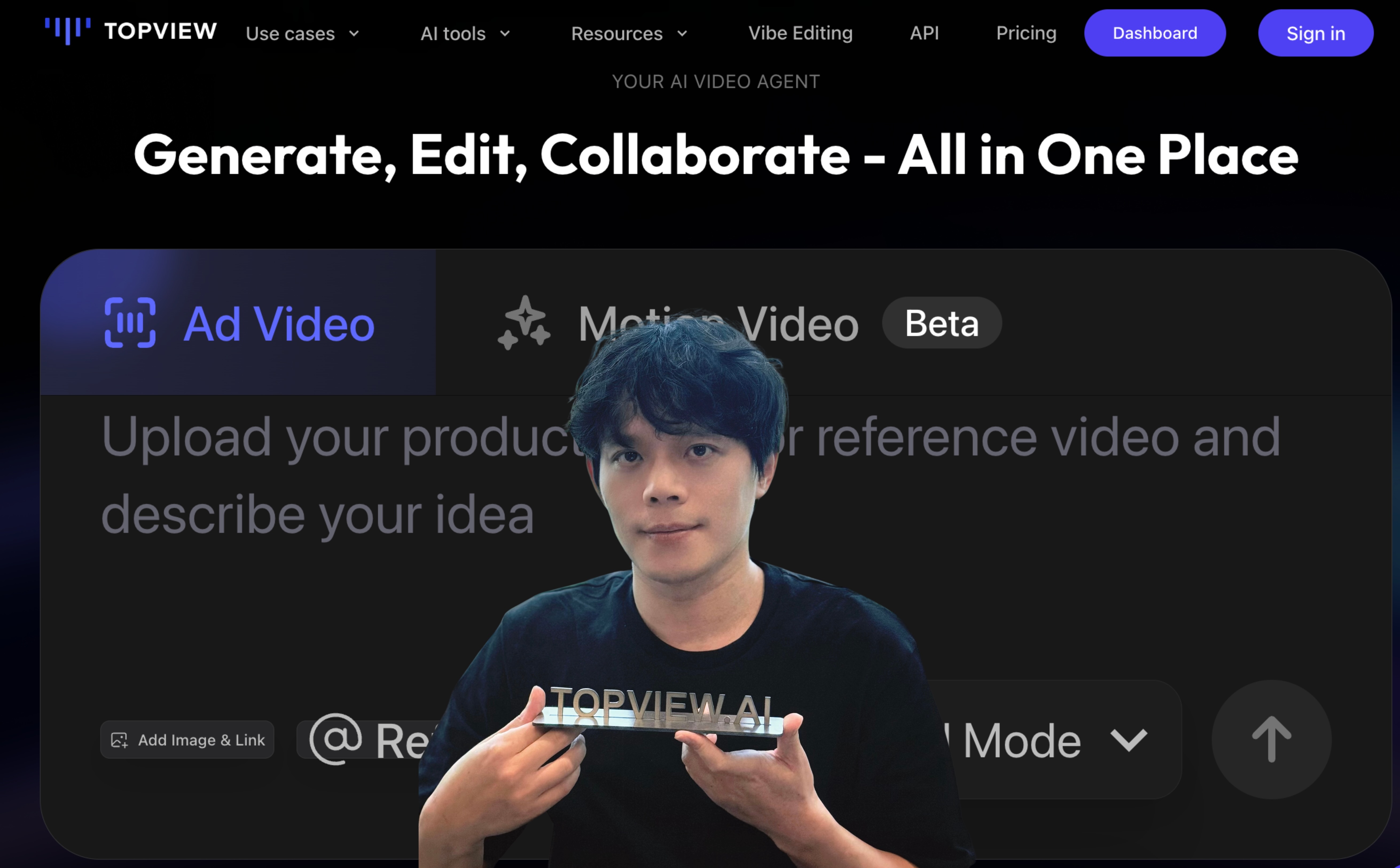
The hand is part of the sales pitch
Product demonstrations ask more of an avatar than a speech does. A presenter has to relate to an object. The object has to look like the thing a customer might buy. Wu’s launch description focused on a seller uploading a product image and having an avatar showcase it. The attraction was practical: a demonstration without the usual arrangements for models and filming.
Later, Wu described requests for presenters who reflected audiences in different parts of the world. Users wanted East Asian, South Asian, Middle Eastern and African American avatars, among others. That is a reminder that international distribution involves more than changing a voiceover. The person appearing on screen is part of how a brand addresses its audience. Wu’s account ties the product’s direction to what customers were asking to see.
His team’s avatar offerings included scripted presenters, avatars that showcase products and custom versions using a customer’s own face or team. Each answers a slightly different production brief. Together they show how quickly the original task branches out. Make a presenter believable. Give the presenter something to demonstrate. Let a business decide who should appear. A neat technical category turns into a rather busy casting office.
- 01A product imageThe item to show
- 02A presenter + scriptThe person and the pitch
- 03A demonstrationThe product in the frame
A simplified view of the product-avatar process Wu described at launch.
The founder becomes the demonstration
At Christmas, Wu supplied his own face. Before a Christmas Eve meeting, he made a seasonal video using Topview’s tools and described the process publicly. An image tool added a Christmas hat and a cosy decorated setting to his photograph. Avatar 4 supplied the video. His voice was cloned from a recording of a past interview. He said the job took five minutes.
It is an agreeably literal example of using your own product. The founder appears in the demonstration, the demonstration is the greeting, and there is still a meeting to attend. Wu’s post itemised the ingredients, including his own contribution as model and voice. The humour came from the arrangement itself: he had found a way to send his seasonal self ahead while the working day continued.
Another public anecdote required less software. During a virtual interview with a candidate, Wu was showing the view from his office when a rainbow appeared. He shared the moment while mentioning that the company was hiring across the region. Even a business devoted to generating scenes occasionally gets one delivered through the window. His New Year message for 2026 ended with a wish for more cups of coffee.
The useful people around the product
Wu co-founded Topview with Albert Chen, its CTO and a fellow former Alibaba executive. Their product and technical backgrounds gave the venture a connection to the commerce businesses it hoped to serve. Starting in June 2022 also put the company’s beginnings a few months before ChatGPT’s public arrival, a point Wu has highlighted when discussing the timing of the business.
Singapore became its base, with support from Kamet Capital. The relationship extended beyond an investment cheque: Kamet helped with office space, establishing the headquarters and introductions across Southeast Asia. Wu has publicly thanked Kerry Goh and the team for their support. In a young company, a location and a network are practical assets. Both help turn an intention to expand into conversations with actual people.
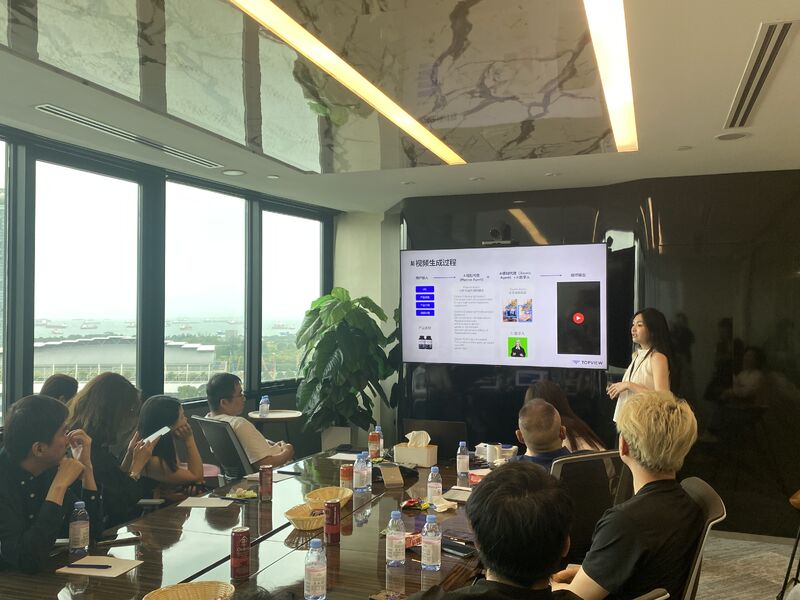
The company’s Japanese partnerships make that expansion tangible. Allied Architects announced a collaboration in July 2025 involving AI video and TikTok Shop support. GMO Pepabo followed with an October partnership to bring product-image-based promotional video generation to users of its commerce services. For Wu, international growth involved working with businesses already connected to local sellers. The product travelled with partners who knew the market.
Five tools, one campaign
By February 2026, Wu was talking about another customer irritation. He described people’s frustration at stitching several tools together for a campaign. Topview 4.0 introduced a collaborative workspace for creative production. The company also announced another $5.5 million in funding, bringing its Series A total to $14 million, led by Kamet Capital.
“People are tired of stitching together five different tools just to ship one campaign.”
Jensen Wu, February 2026
Wu’s own launch post described bringing image, video, avatar and audio generation under one roof. He also wrote about late nights, weekends and repeated iterations by the team, with the release arriving before a festive break. It is a familiar software-company calendar: a public launch date supported by a private collection of unfinished evenings. The shared board was the visible result.
In a March interview, Wu described a shift in who used Topview. Agencies had become a substantial part of the customer base, alongside brands, creators and sellers. His emphasis was on letting an agent coordinate the work and allowing users to refine results conversationally. He also discussed prioritising the United States and Japan. The original seller’s problem was acquiring more colleagues, more markets and more stages of approval.
Wu and Albert Chen co-found Topview in June.
Product avatars answer the request to hold and demonstrate an item.
A collaborative workspace arrives, followed by Film Studio.
A bigger canvas, a familiar problem
Wu has been candid about the moving ground beneath an AI application company. In a 2025 conversation, he described evaluating different model providers as their performance and costs changed. Switching providers could be followed almost immediately by another release worth reconsidering. His account makes the job sound less like choosing an engine once than continually checking what belongs under the bonnet.
The expanding capabilities also widened the possible audience. Topview launched Film Studio in July 2026. By October, the company was describing tools for planning shots, refining scenes and adjusting camera movement and lighting. Drama Studio addressed episodic work and continuity. The company reported five million registered users across its platform. That figure covers the broader business, rather than a count of filmmakers alone.
For Wu, the filmmaking question concerns directing the technology across a complete story. A clip is only one piece of the job. Characters, visual choices and successive scenes need to hold together. The same practical instinct runs back through the company’s public history: a seller needed an avatar to handle an object; a team needed its tools together; a filmmaker needs decisions to survive the next shot. The request keeps getting larger. It still begins with someone trying to finish the work.