BREAKING Hypotenuse AI crosses 500,000 users worldwide FOUNDER Joshua Wong started coding in C++ at age 11 STATUS Y Combinator alum, Forbes 30 Under 30 VERTICAL AI for ecommerce - Fortune 500 brands inside QUOTE "Create marketing content using AI" - the five-word job description WATCH The Cambridge computer scientist humanising the machine
Profile / Founder

Joshua Wong

He learned C++ from hackers before he learned algebra. Today the Cambridge computer scientist runs Hypotenuse AI, a generative engine that writes product copy for Fortune 500 ecommerce brands while you finish your coffee.

Co-Founder & CEO Hypotenuse AI YC Alum Singapore - San Francisco
Joshua Wong, founder of Hypotenuse AI
EXHIBIT A - The founder, mid-thought, post-IPO-of-ideas.
The opener

Five words, one company

Ask Joshua Wong what he does and he gives you five words. Create marketing content using AI. No mission deck, no buzzword salad, no slide about synergy. The honesty is disarming, because the thing behind those five words is a Y Combinator-backed platform serving over half a million users, including some of the largest ecommerce companies in the world.

Hypotenuse AI - named after the longest side of a right triangle, the shortest distance between two ambitions - writes product descriptions, edits product images, enriches product attributes, and ships SEO-ready copy in dozens of languages. It is the soft, unglamorous plumbing of modern online retail. Wong likes plumbing. He likes things that compound.

He founded the company in 2020 with a thesis sharpened during his time at Amazon: somebody had to write all those product descriptions, and that somebody was being asked to write too many, too fast, for too many catalogues. He saw the bottleneck up close. He decided to dissolve it.

What followed was the kind of arc that looks tidy in retrospect and chaotic in the living. A YC batch. A seed round backed by January Capital and senior operators from Amazon, ShopBack, and Carousell. A Forbes 30 Under 30 nod. A Peak Singapore cover interview about whether machines can mimic empathy. And, quietly, the kind of revenue that makes investors stop asking about growth and start asking about defensibility.
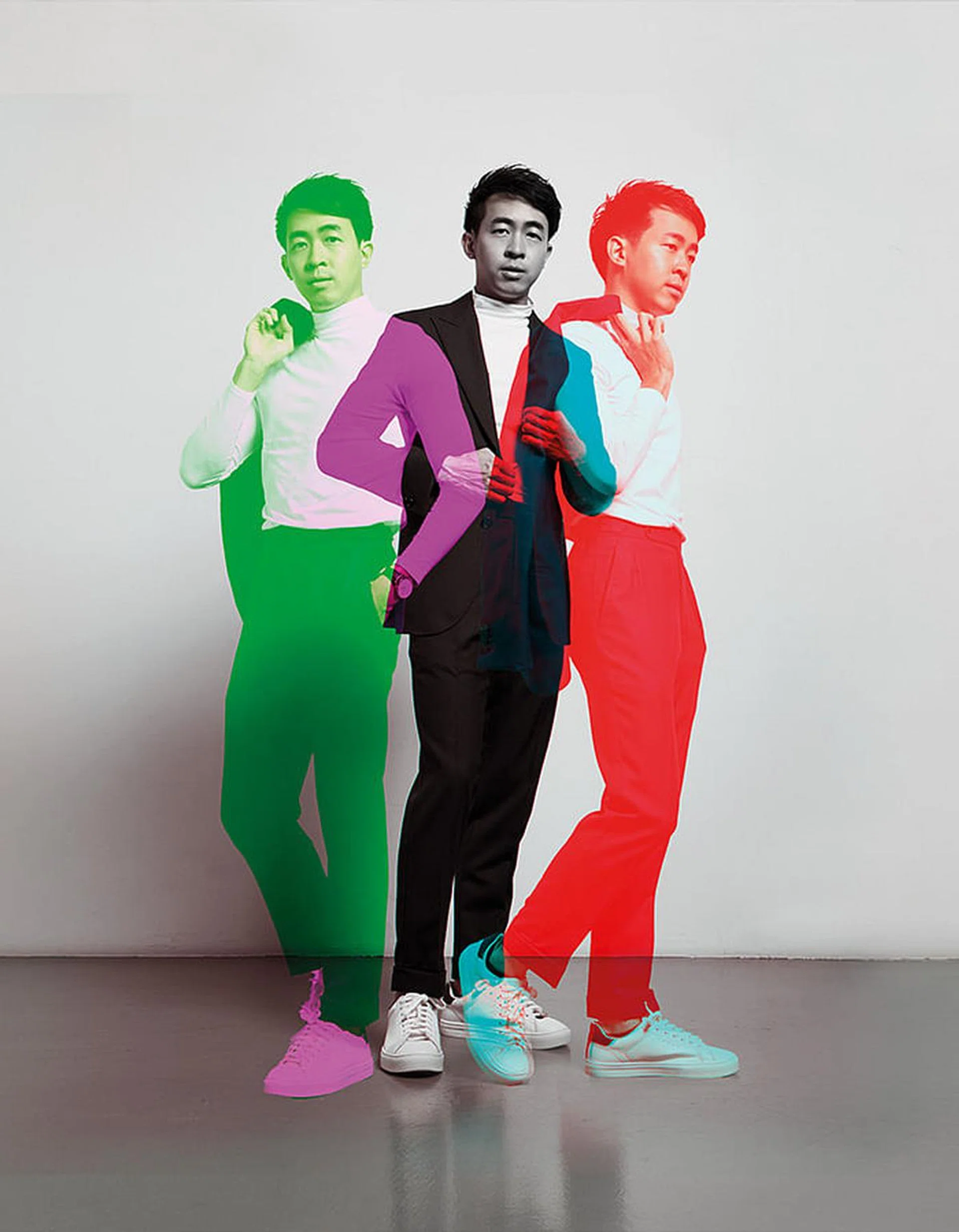
"Teaching AI to mimic ethical, empathetic, and compassionate behaviour is possible. Whether it truly understands them is a philosophical debate." - Joshua Wong, in The Peak Singapore
The numbers

By the count

500K+Users worldwide
2020Year founded
11Age he started coding
17Employees (and counting)
The arc

A timeline, slightly nonlinear

~2006 - AGE 11
Picks up C++ from online hacker forums. Builds tiny games. Builds tinier malware. Mostly out of curiosity, occasionally out of mischief.
TEENS
A noisier chapter. Gangs, failed exams, the kind of stretch parents try to forget and biographies later dramatize. He pivots hard.
2016
AI clicks. He goes deep into visual question answering, the corner of machine learning that asks a model to read an image and answer questions about it.
CAMBRIDGE
Computer Science Tripos at the University of Cambridge. Also a stint supervising undergraduates, because teaching forces you to admit what you do and do not understand.
PRE-2020
Applied Research Scientist at Amazon, US and UK. Works on Alexa and shopping. Watches teams drown in product copy. Files the observation away.
2020
Co-founds Hypotenuse AI. The thesis: language models are about to make product content trivially cheap to produce - and the brands that learn first will own the SERP.
2021
Y Combinator. Sam Altman cameo. The standard origin myth, except it actually happened.
2022
Seed round. January Capital leads alongside operators from Amazon, ShopBack, and Carousell.
2024
IMDA Singapore profiles him as a tech innovator with global impact. The Peak runs a long interview about humanising AI.
2025
Hypotenuse AI crosses 500,000 users. Fortune 500 ecommerce brands inside. The "AI-native operating system for enterprise ecommerce" framing takes hold.
The product

What Hypotenuse actually does

Writes the copy

Product descriptions, blog posts, social captions, ad copy, meta tags, SEO content - generated at scale, customised to brand voice, edited in workflows that look like Google Docs and behave like Photoshop.

Edits the images

Background removal, scene placement, batch resizing, sharpening, variation generation. The unglamorous parts of running a 50,000-SKU catalogue, automated.

Enriches the data

Auto-tagging, attribute extraction, categorisation, PIM integration. The plumbing that makes a marketplace listing show up when a customer searches for "linen midi dress, navy, under $80."

Speaks every language

Multi-language content generation and localisation, because the customer in Lisbon and the customer in Lagos do not click the same English-only PDP.

Integrates with Shopify

Native integrations into the stack ecommerce teams already use. Plus APIs for developers who would rather build than click.

Keeps a human in the loop

Review queues, brand-voice tuning, feedback systems, real-time content analysis. Wong is allergic to the idea of AI that quietly publishes garbage at scale.

A graphic

Where the company spends its energy

Hypotenuse AI - feature surface, estimated weight

Product copy
Image editing
Data enrichment
Localisation
SEO & meta
Integrations

Illustrative emphasis based on public product surface. Not financial guidance.

"People who don't adapt to change will be replaced by those who do." - Joshua Wong, on the future of work
In his own words

Quotes worth a screenshot

"Create marketing content using AI."- His five-word job description
"AI truly has the power to change society for the better."- On optimism
"Stick as close to the frontiers of this technology as possible."- His advice to anyone worried about staying relevant
"The value of a story lies in its ability to effectively communicate a message, evoke emotions, and engage audiences."- On why product copy still matters
The detail

A philosophy, sketched in a sentence

Wong's belief, expressed in interviews and on a Spotify podcast called You Make It Look Easy, is that AI is being humanised in real time through training techniques like Reinforcement Learning from Human Feedback. The models learn to be useful by watching humans reward useful answers. He thinks this is mostly good. He thinks the jobs displaced will be replaced by new ones - AI model trainers, output editors, prompt engineers, the kind of titles that did not exist when he was learning C++ from a hacker forum at age 11.

He does not think AI feels anything. He thinks it can be taught to act as if it does. The distinction matters to him in a way that suggests he has spent some time with the philosophy section of the library, even if the rest of the time he was writing CUDA kernels.

Quirks

Four things you probably didn't know

01

Hackers were his first teachers

He picked up C++ at 11 by hanging around online forums where the line between curious kid and small-time malware author was thin and porous.

02

The teenage detour was real

Gangs, failed exams, the works. He has talked about it openly on podcasts - which is rare for a founder profile and probably the reason it lands.

03

The company name is a math joke

Hypotenuse - the longest side of a right triangle, the shortest path between two non-collinear points. A company about getting from idea to shipped copy in the fewest possible steps.

04

He met Sam Altman at YC

The kind of footnote that ages well. He brings it up sparingly, which makes it more interesting when he does.

The thesis

What he is actually building

Public framing aside, Hypotenuse AI is converging on something more ambitious than a writing tool. The current pitch - "AI-native operating system for enterprise ecommerce" - is unglamorous on purpose. Operating systems are infrastructure. Infrastructure is sticky. Sticky is what you want when the underlying models are commoditising under your feet and your moat has to come from workflow, data, and trust.

Wong's bet, decoded, is this: the brands selling things online will not run one AI app, they will run dozens. Someone has to be the layer that holds product data, brand voice, image standards, localisation rules, and review workflows in one place and pipes them into whichever model is best this quarter. He would like that someone to be him.

It is a long game disguised as a content tool. Long games suit founders who started coding at 11.

The work, continued

What's next

Hypotenuse AI keeps shipping. Newer surfaces include ad creative generation, social media content automation, email campaign generation, brand voice consistency tuning, and the kind of customer segmentation features that look small in a release note and large on a balance sheet. The team is hiring across engineering and applied AI. Wong, who lives between Singapore and the Bay Area, continues to oscillate between code review and customer calls.

If you want the long version, watch the YouTube interview from the You Make It Look Easy podcast - linked here - where he covers Cambridge, Amazon, the YC batch, the teenage detour, and what he thinks the next two years of AI look like. The interview is unusually candid for the genre, which is to say: it sounds like a person, not a press release.

Links

Where to find him

Share this profile