Winter is an awkward business partner. It sends customers to the thermostat, then deposits snow on the roads that lead to their houses. Jeff Woosnam had both sides of that bargain to explain in May 2026. Star Group had sold slightly more heating oil and propane during its winter quarter. Severe weather had also made the work more expensive. The season that created demand had presented an invoice of its own.
Woosnam, Star’s president and chief executive, singled out another result: net customer attrition had stayed below 1 percent for the quarter. A small number, easily lost beside the financial totals, carried a practical meaning. Keeping customers mattered alongside selling gallons. His account of the winter moved between demand, expense, retention and the performance of the team. There was no weather forecast in the world that could do all four jobs for him.
He had spent much of his working life preparing for those conversations. In 1989, he entered his family’s heating-oil business. In 2019, he became CEO of Star Group. The interval was thirty years. The interesting part of his story is what filled them.
A family business changes hands
His starting point was Sinkler Incorporated, a third-generation family heating-oil company. Petroleum Heat and Power Company, known as Petro, acquired it in 1994. For Woosnam, a transaction that changed the ownership of the business became the beginning of a long career inside the acquiring organization.
That detail gives his subsequent work on acquisitions a particular context. He entered the larger business through the purchase of a family company. Years later, he would be the chief executive welcoming other companies’ customers and employees. The two positions sit at opposite ends of a deal, with a career between them.
From 1994 through 2006, he held a series of general management jobs at Petro. He became director of operations in 2006, vice president for Southern Operations in April 2007 and senior vice president for the same region in May 2014. The progression widened his responsibilities without removing him from the operating business.
Read those titles in sequence and an otherwise quiet career acquires its shape. General management came before the regional remit. The regional remit came before the company-wide job. His résumé contains long stretches in which the distinguishing event was an increase in responsibility. Corporate biographies tend to sprint through such stretches. In an operating career, they are much of the substance.
He also earned a BA in Business Management from Cabrini University in Pennsylvania, graduating magna cum laude. The degree sits alongside the practical education of successive management jobs. By the time he reached senior regional leadership, he had already spent two decades within the Petro organization.
- 1989Begins at Sinkler, the family business
- 1994Sinkler acquired by Petro
- 2007Vice president, Southern Operations
- 2014Senior vice president, Southern Operations
- 2019President and CEO of Star Group
The appointment came with colleagues
On March 18, 2019, Star named Woosnam president and chief executive. He also joined the board of Kestrel Heat, the partnership’s general partner. Interim CEO Dan Donovan stepped away from active management while remaining a director.
The announcement introduced a leadership group. Jeffrey Hammond became chief operating officer. Joseph McDonald became chief customer officer. Richard Ambury continued as executive vice president, chief financial officer and treasurer. Woosnam’s promotion was the central appointment in a broader decision to give experienced insiders more responsibility.
Chairman Paul Vermylen pointed to the organization’s “depth of home-grown talent.” The phrase explains the choice more economically than a catalogue of leadership adjectives. Star was putting people who already knew its operations in charge of its next phase. Familiarity was part of the qualification.
For Woosnam, the move meant responsibility for a public partnership whose common units trade on the New York Stock Exchange as SGU. A home-service business has several audiences at once: the customer waiting for work, the employees doing it, and the investors asking what the work earns. The CEO job places those conversations in the same room.
“depth of home-grown talent”
Paul Vermylen, on the 2019 leadership appointments
The arithmetic of keeping a customer
Star’s business combines fuel delivery with equipment installation and service. Its regional brands sell home heating oil and propane, work on heating and air-conditioning systems and provide other home-comfort services. The relationship can therefore extend beyond the next delivery. A customer has a building to maintain as well as a tank to fill.
That breadth helps explain why retention keeps appearing in Woosnam’s account of performance. An acquired customer list is a starting point. The continuing relationship has to survive ordinary decisions about price, service and whether to call the same company again. Acquisition and retention belong in the same conversation because each changes the customer base.
The winter quarter ending March 31, 2026 offered a compact example of the trade-offs. Fuel volumes rose 0.4 percent to 144.5 million gallons. Direct operating costs rose 5.9 percent. Cold weather helped demand, while storms and snowfall complicated the delivery of it. More winter did not translate neatly into more ease.
Woosnam praised the team’s performance while pointing to the sub-1-percent net attrition figure. The emphasis makes the operating problem tangible: serve customers through a difficult season while limiting the number who leave. The thermostat creates urgency. The organization still has to answer it.
Buying a business he already understands
On January 10, 2025, Star completed an acquisition costing approximately $68 million before working-capital adjustments. The home-energy distributor was already within Star’s operating footprint. Woosnam welcomed its employees and customers and said the operation was expected to strengthen the company’s competitive position.
The location matters to the story. This was an addition within territory the company already served. For a chief executive whose career had passed through general management and regional operations, the announcement described growth in familiar operational terms. The stated aim was a stronger position across the existing business.
There is a pleasing reversal here. Woosnam began in a family company that Petro bought. He later led a company buying other home-energy businesses. The continuity gives his acquisition work a biographical dimension: the experience of a company changing hands was part of his career long before he signed a welcome as CEO.
His challenge as CEO is to make the arithmetic extend past the purchase price. New customers and employees bring work into the organization. Keeping that work, providing service and earning an acceptable return continue after the announcement. The press release gets a date; the operating responsibility gets a calendar.
More work beyond the fuel tank
By the end of fiscal 2025, Woosnam was describing a combination of acquisitions, control of overhead and attention to margins. He also highlighted investment in installation and service offerings, whose revenue had grown nearly 10 percent over fiscal 2024. The company’s adjusted EBITDA rose 22.2 percent to $136.4 million. That is a non-GAAP operating measure, distinct from net income.
Those results reflected several influences, including colder temperatures. They also gave a concrete basis to his stated ambition to grow and diversify Star. His priorities included heating-oil and propane acquisitions, low net attrition and better installation and service profitability. The verbs were practical: acquire, retain, improve.
In August 2026, his update returned to preparation. Star was using the summer to improve and streamline operations before winter, while continuing to invest in service and installation. He said the company saw further room for growth there. The seasonal rhythm remained unmistakable: the quieter months were also months in which the next busy period had to be organized.
This is a useful way to understand the career. Thirty years of advancement did not release Woosnam from the underlying work. The responsibilities expanded around it. The business still involved households, equipment, employees, deliveries and the weather; the CEO had to bring their consequences into a company-wide account.
What a service visit can make possible
Another part of his work follows the same route to the customer’s door. Woosnam collaborated with Cetane Associates’ Barrett Conway, Tevis Energy’s Bruce Spiridonoff, Beyer Boys’ Pat Beyer and Safe House Project on anti-trafficking training for service professionals. The initiative was announced in January 2025.
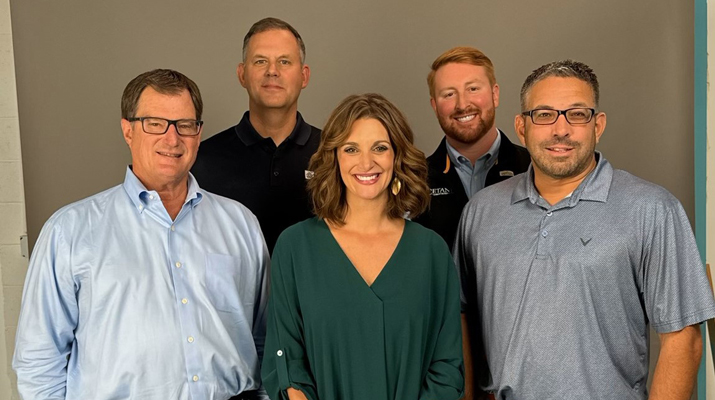
The connection to home services is specific. Employees entering homes and businesses may be able to notice situations that others do not see. Training gives that access a further purpose. The program uses videos and scenarios, with a certification quiz, to help participants recognize and respond to trafficking.
Woosnam’s community work also includes helping lead Star’s partnerships with Habitat for Humanity and Feeding America. In 2023, he was among the recipients of the NEFI Legends Award, alongside colleague Jeff Hammond. The recognition placed his long operating career within the industry that had supplied its setting.
The through-line is proximity. His career began inside a family business, grew through regional responsibility and reached a public-company boardroom. The work still ends close to someone’s home. For a chief executive, that is a demanding place to be judged: a customer can appreciate the strategy and still expect the heating to work.