Before Melissa Smith had a boardroom to navigate, she had a hay truck. On the working potato farm where she grew up in northern Maine, driving began when she could see over the steering wheel. Let the clutch out badly and the hay fell off. Then came the second part of the lesson: get out and pick it up. Accountability had a pleasingly literal form.
Years later, another small encounter with the ground supplied a less dignified lesson. Arriving for an early job interview in Portland, Smith caught a heel in the cobblestones. The shoe stayed put. She went down on her knees to retrieve it while people walked into the office. Even an ambitious career sometimes requires a brief appointment with the pavement.
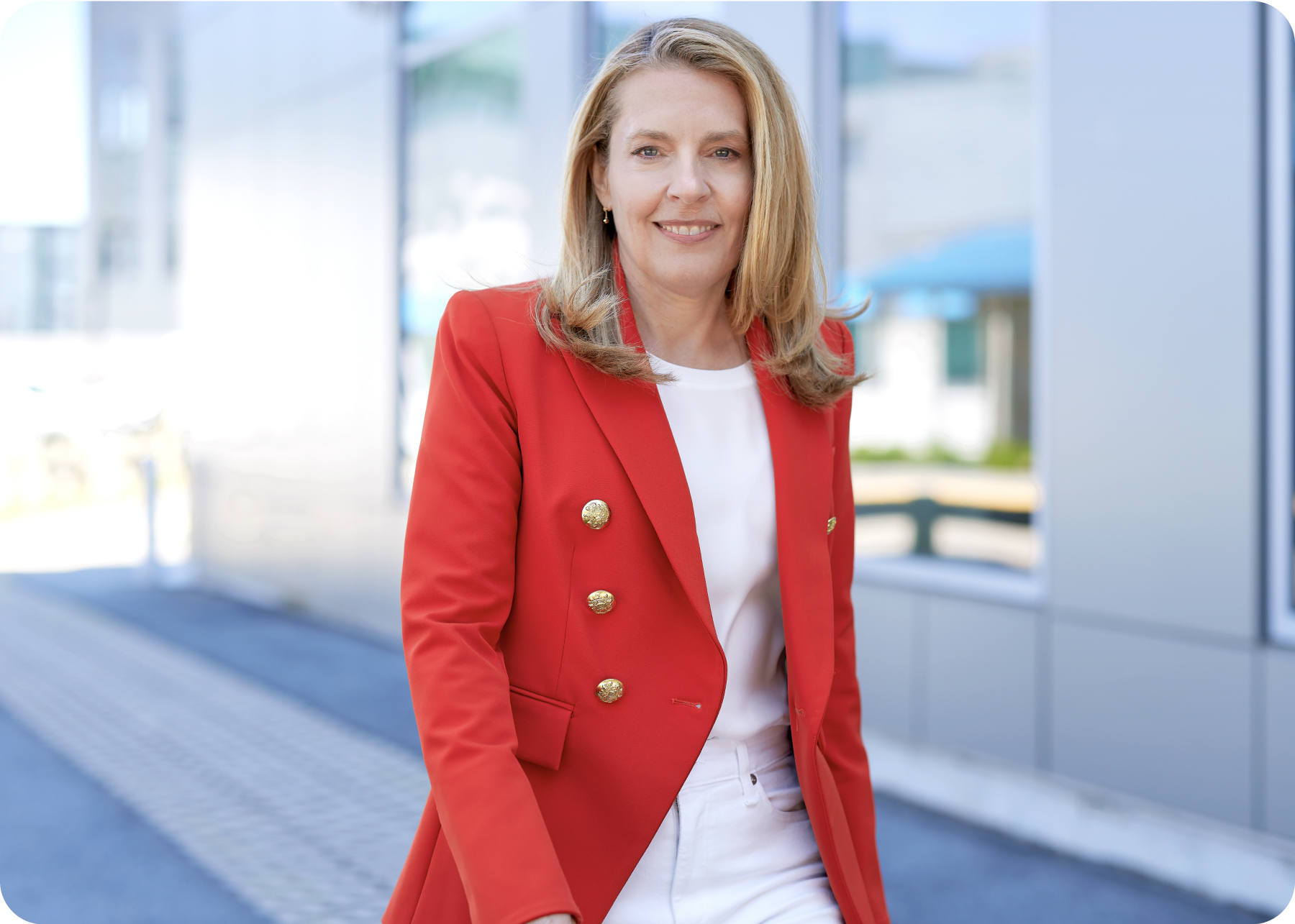
These are stories Smith tells about herself. They are useful introductions to a president and chief executive whose working life has unfolded largely inside one Maine company. She joined WEX in 1997, became its finance chief, helped take it public, and took over as CEO in January 2014. Her route has involved learning the machinery before assuming responsibility for the whole machine.
A small town with room for several ambitions
Smith grew up in a town of about 400 people. Her mother, who had a master’s degree in mathematics, wanted her three daughters to be economically independent. Education and a career were practical ways to give them choices. When a daughter produced an explanation for why something could not be done, her mother had a short response: “Why not?”
In a small community, Smith could try several versions of herself. She captained the math team and the cheerleading squad, and played soccer. She also had a rather specific early ambition: to become CEO of Gillette. That detail is more revealing than a tidy declaration that she always wanted to lead. An imagined future often borrows the name of a business a child happens to know.
Her eventual training was decidedly practical. She graduated from the University of Maine in 1991 with a business administration degree and an accounting major. An accounting professor had repeatedly suggested public accounting in notes on her tests. Smith initially thought the field sounded dull. He persisted. She listened, and began her career at Ernst & Young.
There is a useful wrinkle in that beginning. A woman known for encouraging people to question their own limits also let someone change her mind about what might interest her. Independence can include accepting good advice. The professor’s small intervention helped set up the financial apprenticeship that would occupy the next stage of her life.
Seventeen years before the corner office
At WEX, then known as Wright Express, Smith entered as a senior financial analyst. By September 2001 she was senior vice president of finance and chief financial officer. In 2005, she was CFO during the company’s initial public offering. The numbers were becoming a public conversation, with investors entitled to examine the work.
She later added responsibility for finance and operations, became president of the Americas in 2011, and company president in May 2013. The CEO appointment followed in 2014. The sequence matters: accounting, operations, a regional business, then the whole enterprise. It was a long preparation for a job that is often described as though it begins on appointment day.
Early in her time as CFO, an investor call supplied a reminder that knowing the business would not prevent other people from noticing her gender first. A portfolio manager thought the connection had ended. It had not. “The CFO is a chick,” he said. A colleague offered a peculiar defense: “Yes, but she’s a geek chick.”
Smith’s reading of the exchange was measured. The difference had drawn comment, but she did not believe it had changed the investment decision or the substance of what she had presented. The anecdote is funny in the uncomfortable way that an open microphone can be funny. It also shows how much interpretation a person may have to do while simply trying to discuss a balance sheet.
The business behind the business
WEX’s work is often several steps removed from the person making a purchase. Its payment technology serves commercial fleets and business transactions, including travel payments. The appeal is practical: businesses need to pay, track spending, and keep the information connected. A transaction that feels simple at the front can require considerable organization behind it.
Smith has described the range with examples that run from a local landscaper to large international companies. The underlying attraction is that a small customer can grow while continuing to use the technology. She has also emphasized long customer relationships. For this kind of business, being useful repeatedly matters more than making a memorable entrance.
During her tenure as CEO, annual revenue rose from $818 million in 2014 to $2.66 billion in 2025. Those endpoints amount to roughly 3.25 times the earlier revenue. They measure the company’s expansion across that period; they do not, by themselves, explain every acquisition, investment, market change, or decision that contributed to it.
The distinction matters when assessing Smith. A long tenure gives an executive time to build something substantial. It also gives shareholders a long record against which to judge the result. Growth in the business and satisfaction among its owners are related questions, and each deserves its own answer.
The awkward part of listening
Smith’s account of leadership makes room for disagreement. She wants people with different experiences to examine the same problem and challenge one another’s assumptions. That sounds agreeable until somebody challenges the chief executive in front of a room. She has described those moments too: an employee speaks up forcefully, and she has to pause and remember that hearing a different perspective is exactly what she wanted.
The distinction she draws is between debating an issue and making it personal. Once a decision is reached, the team must know what it has agreed to do. The practical difficulty lies in maintaining both conditions: enough freedom to argue before the decision, enough clarity to act afterward. A room full of comfortable silence would make the first part suspiciously easy.
“Be transparent and direct.”
Melissa Smith, on improving company culture
Her advice about culture has also been unusually ordinary in its particulars. Model the behavior you want. Explain what needs to change. Listen to junior employees. Recognize that different people respond to different kinds of recognition. These are small managerial choices, repeated often enough to become the working conditions of everyone else.
That emphasis extends beyond the office. In a 2018 discussion of WEX’s culture, she described employees taking part in United Way volunteering and receiving two volunteer days a year. The detail gives community involvement a place in the calendar. A company can express affection for its hometown very eloquently; allowing people time to contribute is a more concrete arrangement.
A running club with a different finish line
Smith’s public record includes another kind of organizing. In 2010, she co-founded sheJAMS, a women’s training club built around exercising together in a noncompetitive spirit. The purpose makes an interesting companion to her corporate responsibilities. Training with other people creates company, encouragement, and a reason to turn up, without requiring every outing to produce a winner.
She also co-founded the Executive Women’s Forum. In both settings, the recurring interest is in creating connections among women. Her own experience gave her ample reason to think about who gets heard in a professional setting. The clubs and networks give that concern a form outside her own job.
Recognition has followed at home as well as in business. The University of Maine awarded her an honorary Doctor of Humane Letters in 2021, three decades after her undergraduate degree. In 2023, the University of New England recognized her with a Deborah Morton Award. These honors place her career in a Maine story that includes education, enterprise, and participation in the community.
Then the shareholders asked their own questions
In 2026, WEX faced a challenge from activist investor Impactive Capital. The disagreement brought board composition and governance into public view. On May 4, the company announced a cooperation agreement and a revised slate that included Kurt Adams, Ellen Alemany, and Impactive co-founder Lauren Taylor Wolfe. The agreement also called for separating the chair and CEO roles.
On May 14, David Foss became independent board chair. Smith continued as president, chief executive, and a director. She had chaired the board since September 2019. The change is a consequential part of her current story: she remains responsible for running WEX, while another director now leads its board.
The next reported quarter gave the business another set of results to discuss. On July 22, WEX announced second-quarter revenue of $753.5 million, up 14.2% from a year earlier. Fuel prices contributed $63.8 million of favorable impact and foreign exchange another $2.1 million. Those details belong beside the headline growth rate; they help explain what moved it.
After nearly three decades at WEX, Smith’s story is still being written under scrutiny. The farm, the accounting classroom, the investor call, and the boardroom offer different tests of the same habit: examine the obstacle, make a decision, accept responsibility for what follows. Her mother’s question remains a useful beginning. The answer requires doing the work.