The fan was still working. That was the unsettling part. At Sutter Roseville Medical Center in California, patient rooms and surgical spaces depended on a single aging fan. Nothing had broken. Yet if its motor stopped, moving patients elsewhere could become part of the repair plan. An ordinary piece of building equipment had acquired an extraordinary amount of responsibility.
- Madison Air owns specialist brands including Nortek, AprilAire and Big Ass Fans.
- Its pitch connects air equipment to uptime, energy use and healthier buildings.
- A 2026 stock-market debut preceded an agreement to buy ebm-papst for $5.4 billion.
That hospital problem offers a useful entrance to Madison Air. The Chicago company brings together businesses that move, clean, cool and control air. Its customers include homeowners, manufacturers, hospitals and data center operators. The connecting idea is that an equipment specification can conceal a much larger operational decision.
The machine that could not stop
At Roseville, the answer was two FANWALL arrays, installed while the original fan remained in service. Nortek’s account describes a project largely completed in 2008, well before Madison Air assembled its portfolio. The engineers had to preserve airflow throughout the conversion. Reliability began with the installation plan.
“We felt this was unacceptable. We needed to eliminate this risk.”
Rick Barney, Sutter Roseville project supervisor
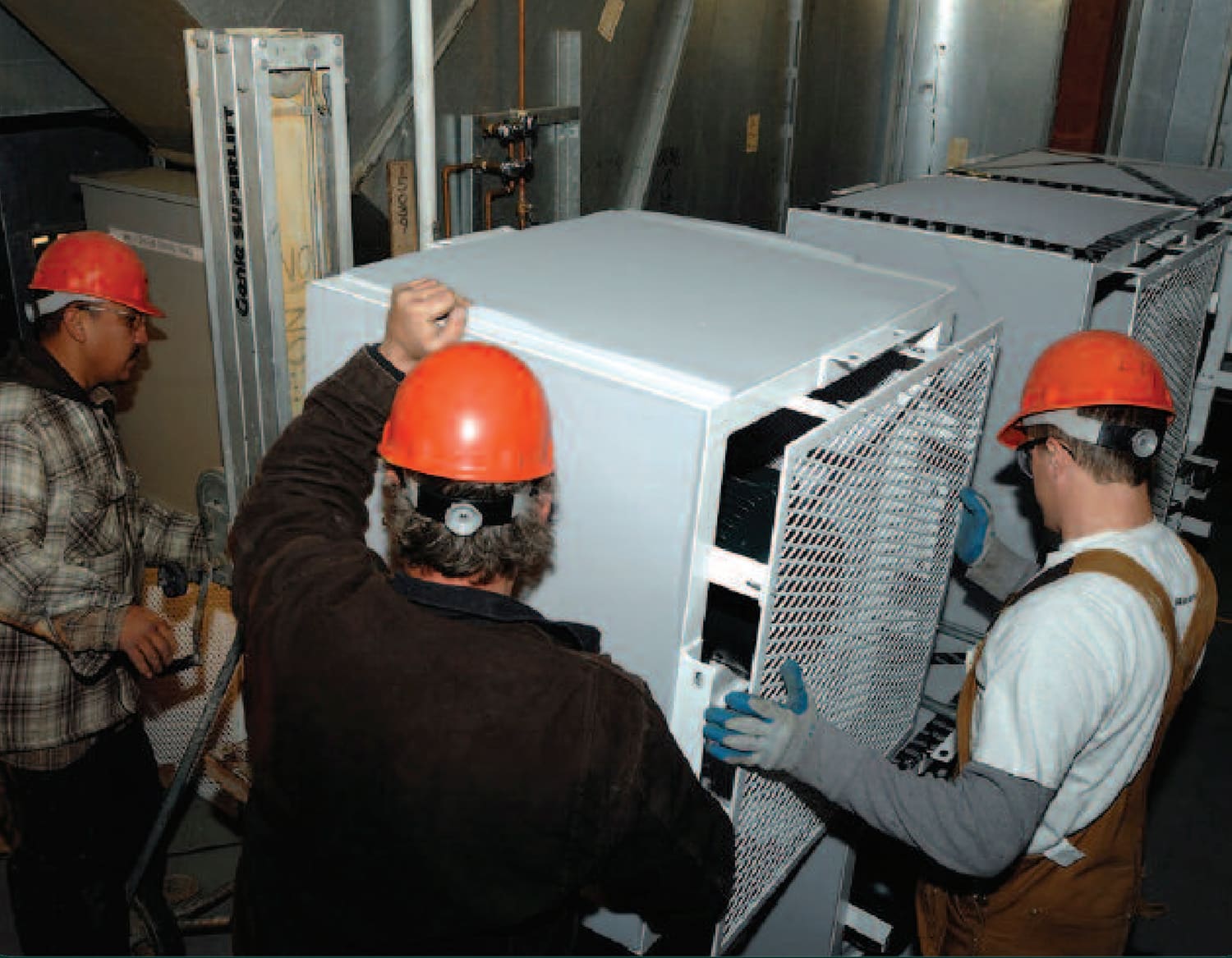
There is a practical detail worth lingering over: the replacement modules could pass through standard-width doorways. The new equipment needed a route into an existing building. Smaller components gave the team options that a second enormous fan would not have offered.
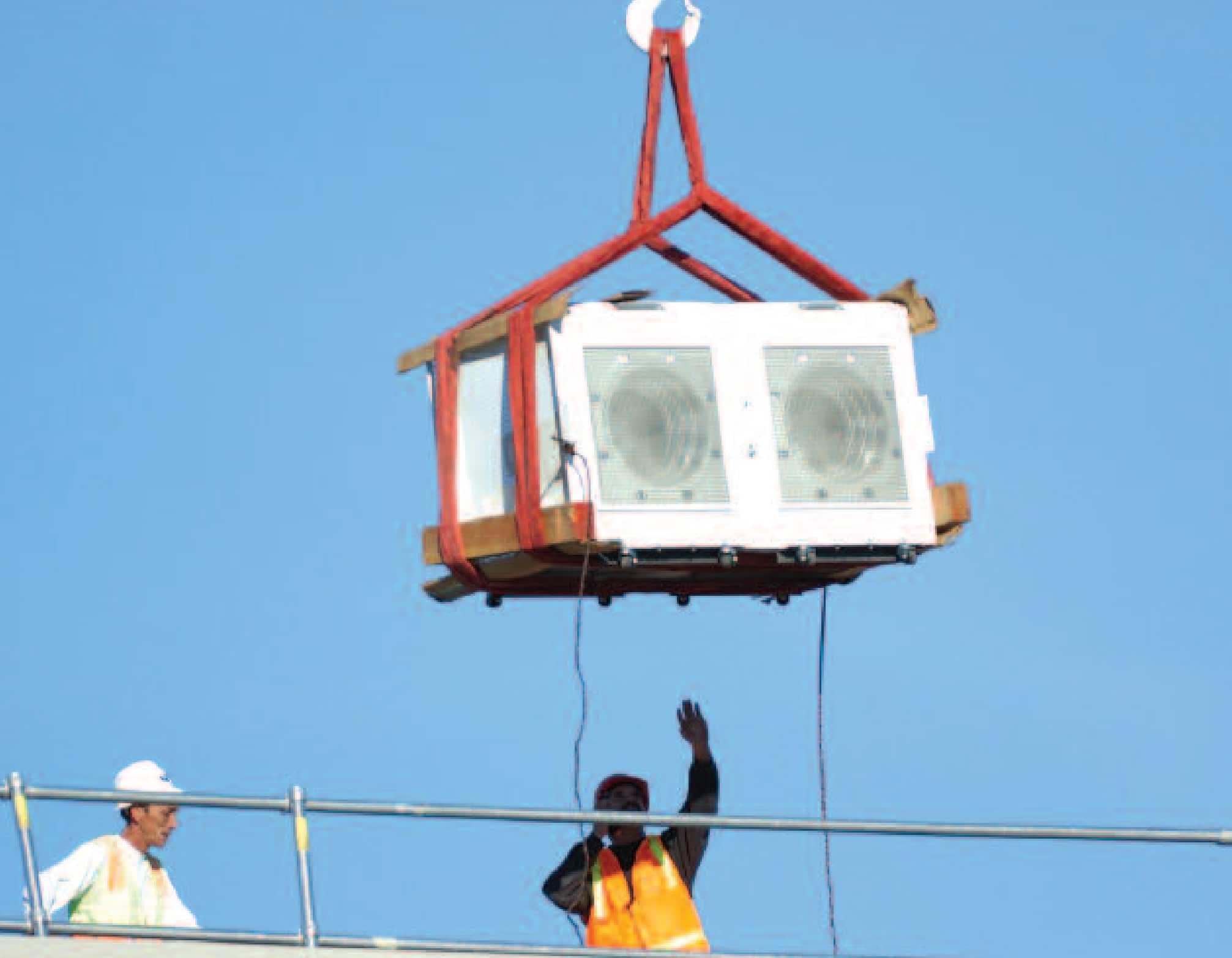
The reported result was a 43% reduction in fan-system energy use at the original airflow. That is a specific comparison, with a specific baseline. It does not describe the hospital’s total energy bill. It illustrates how a project justified by failure risk can also improve the daily arithmetic of running a building.
Indexed comparison: old system = 100. The case reports 43% lower energy use for the replacement.
A family resemblance you can feel
Madison Air’s portfolio can look eclectic. Big Ass Fans has a name that does some of its marketing before a salesperson enters the room. AprilAire addresses whole-home air quality. Nortek Air Solutions makes engineered air handlers and cleanroom systems. Nortek Data Center Cooling serves facilities whose computing equipment needs carefully managed temperatures.
These brands deal with different buyers and different consequences. A homeowner may want humidity control. A semiconductor manufacturer needs control over contamination. A warehouse operator needs useful air movement across a large space. Expertise means understanding the setting well enough to choose equipment that will perform there.
That gives Madison Air a particular position beside conventional heating and cooling suppliers. Its emphasis is on specialized applications and engineered solutions. The competitive field changes with the assignment: AAON and Trane in air handling, Greenheck in air movement, Vertiv and Munters in data center cooling. No single rival neatly mirrors the whole collection.
Buy the expertise. Keep the identity.
The company traces its formation to acquisitions beginning in 2017. Nortek and Big Ass Fans joined in 2021; Research Products Corporation, the business behind AprilAire, followed in May 2025. Founder Larry Gies supplied the acquisition-led ambition. Jill Wyant, president and CEO since June 2021, leads the operating company.
Madison Air describes a decentralized model. Specialist brands retain their identities, while the group brings purchasing scale and a common operating approach. Its stated culture emphasizes ownership and accountability. The organizational wager is straightforward: keep people close to their particular customers while giving them access to resources beyond a standalone manufacturer’s reach.
The business earns money from equipment, replacements, upgrades and aftermarket parts. Products reach buyers through representatives, distributors, retailers and direct relationships. That distribution matters. A technically suitable product still needs someone who can specify it, deliver it and support the installed system.
Consider the residential side. AprilAire’s offering covers purification, ventilation, humidification, dehumidification and controls. Those are related needs, but they require different interventions. Homeowners get a route to improving an existing system without treating every air problem as a reason to replace the furnace.
The practical purchase can start with an HVAC contractor assessing moisture, ventilation or filtration. In a commercial building, it may begin with a consulting engineer and an air-handling specification. Madison Air’s breadth gives it several entry points, but the work remains local to the problem: a filter and a fan cannot do each other’s jobs.
Now put a price on that ambition
On April 16, 2026, Madison Air began trading on the New York Stock Exchange as MAIR. Its completed IPO included about 95.1 million shares at $27 each, including the underwriters’ option. A concurrent private placement added $100 million. Net proceeds from both, together with cash, went toward repaying borrowings.
The next large move arrived in August: an agreement to acquire German fan and motor specialist ebm-papst for a roughly $5.4 billion enterprise purchase price. Madison Air quoted $5.0 billion after expected future tax savings. Those figures describe different calculations. The acquisition remained subject to approvals, with closing expected around year end.
The proposed combination has an unusually tangible logic. Madison Air was already an ebm-papst customer. Buying the supplier would bring integrated fan and motor technology closer to the applications that use it. The company subsequently announced a $2.25 billion private placement to fund the equity portion of the purchase.
There are limits to the acquisition argument. Keeping specialist businesses close to customers also leaves the parent with the task of coordinating them. In its transaction disclosures, Madison Air identifies inconsistent practices and decisions within a decentralized structure as a risk. The proposed supplier purchase adds another test: turning an engineering relationship into an ownership relationship while preserving the expertise that made the supplier attractive.
Start with the consequence
Madison Air calls its proposition “Return on Air.” For a buyer, the useful version is a set of questions: what must keep running, what does energy cost at the required output, and how will maintenance work? Roseville shows why those questions belong before the purchase order.
Copy the investigation carefully. A successful retrofit depends on airflow, pressure, controls, access and commissioning; another building will have another baseline. The number on an old case study cannot substitute for an engineer’s calculation. At that hospital, the achievement began with noticing a working fan and asking what would happen when it stopped.