Jean Madar goes to the office without wearing fragrance. For someone who has spent four decades selling it, this requires a little explanation. He wants to be ready to test the perfumes being developed. His own preferred scent would only get in the way. The working day begins with room for somebody else’s idea.
It is a practical habit with a certain comic elegance: the fragrance executive arrives unscented. It also puts him close to the product in a business where his name usually stays off the label. Customers encounter Donna Karan, GUESS or Ferragamo. Madar helps make the decisions that allow those names to take up residence on a dressing table.
As co-founder, chairman and CEO of Interparfums, Inc., he has built a career out of that discretion. The company passed $1 billion in annual sales in 2022. Its beginnings were considerably smaller, and involved the sort of assignment students accept before they know what their working lives will become.
The one reply that mattered
Madar met Philippe Benacin at ESSEC Business School. During their studies, the pair offered market research to companies. Benacin later recalled a mailing to roughly 300 businesses. One replied: a fashion label, Ray Marjory, interested in launching a perfume. A research project became an introduction to an industry.
They had little money and little experience. Benacin remembered the first decade as slow going. Their response was to meet the people who understood the trade and learn its workings. The eventual portfolio can make the early business look inevitable. At the time, there was a customer, a brief and quite a lot to find out.
Madar graduated in 1983. In 1985, he travelled from Paris to New York with a business plan for alternative designer fragrances and a few thousand dollars. There he established Jean Philippe Fragrances, the American predecessor of Interparfums. The business put Madar in New York while his partnership with Benacin continued across the Atlantic.
The American company went public in 1988, after the stock-market crash of October 1987. Madar served as its president until December 1993, became Director General of the French subsidiary in January 1994, and took the American CEO role in January 1997. The early apprentice in market research had acquired a rather different set of responsibilities.
business established
public listing
in January
pass $1 billion
A name on loan, a reputation at stake
The founders gave their partnership a geography. Madar developed the American side; Benacin concentrated on France and a team in Paris. Their friendship became a working arrangement spanning the Atlantic. Each had a territory in which to build, while the business they were building remained shared.
A fashion house brings recognition, history and an audience. Interparfums brings the work of developing and selling a fragrance. Madar looks for brands people desire and stories that can survive the journey from clothing or accessories into perfume. The relationship has to accommodate both the identity of the house and the practical demands of a launch.
His 2023 explanation of Graff made the pricing logic unusually clear. The jeweller sells objects costing many thousands of dollars. A fragrance costing $500 offered another way into its world. That is still an expensive bottle, but it gives a different customer a point of entry. The licensed name carries the introduction.
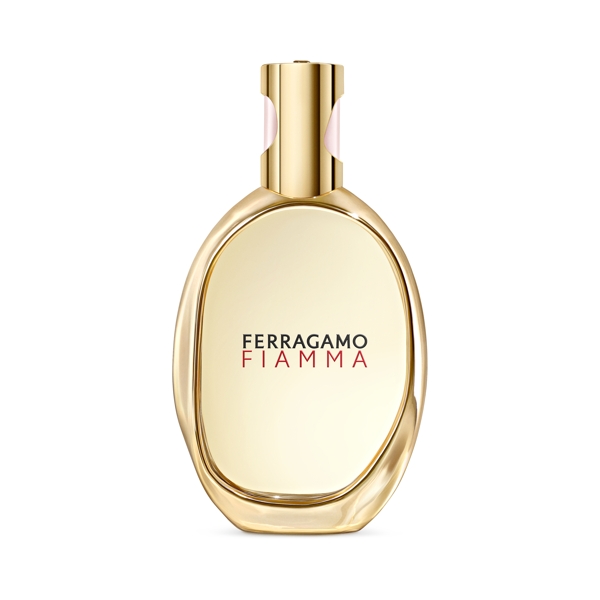
Ferragamo illustrates how a license can change the organization around it. After taking on the brand in 2021, Interparfums established IP Italia in Florence. That platform later became home to the Roberto Cavalli fragrance business. A new name in the portfolio could lead to a new base on the map.
There is exposure in building around names one does not permanently control. The Burberry relationship began in 1993 and ended in 2013, when it represented about half the French group’s sales. The founders went on adding other brands. Madar’s history includes the experience of watching a defining partnership end, then having to build the next chapter.
“Our bottles know how to tell a story.”
Jean Madar · Art of Packaging gala, 2016
The bottle gets the first word
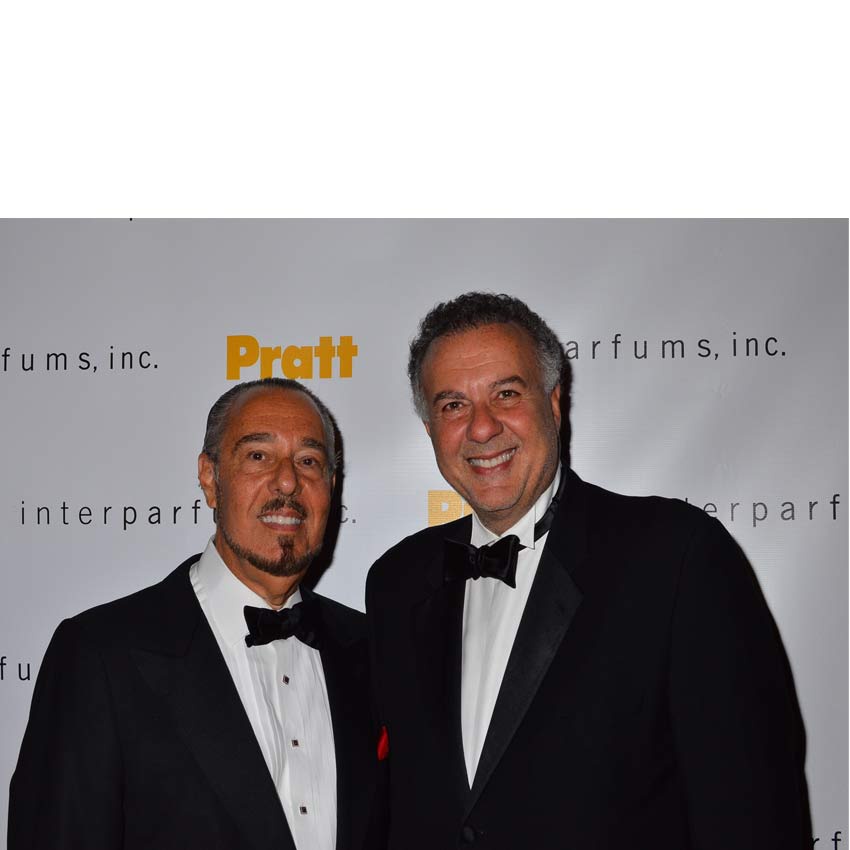
At the 2016 Art of Packaging gala in New York, Madar accepted Pratt Institute’s award for Interparfums. He spoke about the bottle’s ability to communicate. Fragrance has an awkward commercial problem: its central attraction is invisible. Packaging must make an introduction before the customer has experienced what is inside.
His example was Montblanc, a name with an intellectual identity that the team had to translate into a sensual product. A recognizable brand gives the work a starting point. It also gives the designers something to answer to. A handsome bottle that belongs to the wrong story still leaves a problem.
Madar supplied a more domestic detail that evening. His family teased him about thinking through holiday gift-set logistics during summer in Saint-Tropez. The calendar of perfume apparently travels with him. Somewhere between the summer holiday and the Christmas counter sits an executive still considering how the set will come together.
His interests extend beyond fragrance. Madar collects contemporary art and has worked in the family’s real-estate business with his siblings Alain and Odile. Choosing works, brands and places gives those activities a family resemblance. The objects differ; the need to decide what deserves attention keeps returning.
A company without a factory floor
Madar describes Interparfums as a business that can remain attentive to individual brands while handling an international launch. Its operating structure explains part of that ambition. The company outsources filling, buys components and works with outside fragrance houses. Internal teams develop the bottles, caps, pumps and packaging.
In his October 2024 conversation with Oliver Chen, Madar said the company could launch in 100 countries in the same week. He also described an organization that prefers quick decisions, accepting that some will prove imperfect. The ambition requires both a close working relationship with the brand and enough coordination to put the result in shops far apart.
- 01Agree the identityA brand and its fragrance team shape the brief.
- 02Develop the objectFragrance houses, designers and component suppliers contribute.
- 03Fill, launch, distributeOutside production and international retail bring it to customers.
There is a useful tension in that arrangement. The name promises a particular world. The machinery behind it must repeat the promise consistently, across a bottle, an advertisement and a counter. Madar’s summer preoccupation with gift sets begins to look less eccentric when placed inside that chain of decisions.
Buying a scent through a screen
In 2023, Madar discussed a change that would once have sounded like an obstacle: consumers were buying fragrance online without smelling it first. Perfume had become a way for fashion houses to introduce themselves to new customers. The screen was becoming another entrance to the same world, even though it could transmit everything except the smell.
By March 2026, his description of the American customer included social discovery, online purchasing and AI-assisted recommendations. European shoppers, he said, still put particular weight on testing fragrances in stores. He expected physical retail to retain its place. A customer’s journey might begin on a phone and continue at a counter; the story needed to make sense in both places.
There was a less glamorous subject in that conversation too: tariffs. Madar described pressure on the costs of oils, bottles, sprayers and packaging, and efforts to absorb it through efficiency, with selective price increases possible. The perfume business contains a good deal of glass, freight and arithmetic beneath its invitations to dream.
He also pays attention to what happens after a customer buys. His advice on layering starts with fragrances from the same family, then leaves room to experiment. He recommends allowing a combination time to develop. A dressing table can become a small collection of possibilities, with the wearer deciding which ones belong together.
When assessing a potential partner, he asks whether the brand can remain culturally relevant over time, whether it has a clear proposition for the fragrance customer, and whether its owners will commit to the category. Recognition alone cannot do all the work. The people lending their name have to care about what is being made under it.
In July 2026, Madar described a market moving into a more mature phase of growth. His priorities included closer retail relationships and storytelling adapted to individual platforms. He singled out younger male customers and formats such as body oils and hair mists. The opportunity, as he presented it, involved understanding how people discover and use fragrance, then giving them products suited to those habits.
The calendar runs to 2046
The results place those ambitions in proportion. Interparfums reported 2025 net sales of $1.489 billion, up 2% from $1.452 billion in 2024. Lacoste reached $108 million, while Roberto Cavalli grew 33%. A large portfolio produces different rhythms: established names, newer licenses and launches that need time to find their audience.
September 2026 brought two agreements with different horizons. On September 17, Interparfums and Marquee Brands extended the Roberto Cavalli and Just Cavalli fragrance partnership through December 2046. Madar pointed to the 2025 launch of Serpentine and the development of existing lines. Three years after taking on the license, the company had secured two more decades.
Five days later came PUMA. The worldwide agreement runs through 2037, with a signature lifestyle fragrance planned for 2027. Madar’s explanation centred on the brand’s connections across sport, fashion and popular culture. It was another version of the question that has followed him since the early research assignment: what can this name mean in a bottle?
The contracts stretch well into the future. The work returns to smaller decisions: a brief, a cap, a sample, a customer trying something unfamiliar. Madar has spent decades enlarging the business around those moments. At the office, he still leaves room to try the next scent.