John Gardner chose an interesting number when asked what made him proud. By June 2022, Kickoff had paid more than $5 million to its coaches. Here was a startup founder, invited to display a trophy, pointing to money that had left the business. The answer put the people delivering the service at the center of the picture. A platform could grow, and the people working through it could have something to show for their time.
That choice offers a useful introduction to Gardner, the co-founder and CEO who also goes by Jack. His career has taken him through consulting, a home improvement marketplace, and a coaching business originally called Kudos. Across those settings runs a practical question: what can software help people accomplish in the world beyond the screen?
It is an unfashionably physical question for a technology company. People have to do things. Someone has to follow through. A beautifully organized plan can sit untouched, enjoying an excellent retirement in an app. Gardner built a business around the possibility that another person’s attention could change what happened next.
A résumé with a practical question
Gardner’s academic background combines economics and American history at Columbia with an MBA from Dartmouth’s Tuck School of Business, where he graduated in 2013. Those subjects offer rather different accounts of human behavior: one supplies models, while the other supplies an inexhaustible collection of people declining to follow them. His subsequent career would bring him into direct contact with the difference between a neat explanation and an operating business.
After Tuck, he returned to Bain & Company in San Francisco, concentrating on technology clients. He then moved to BuildZoom, a marketplace for remodeling. In his account of that period, joining an early startup was deliberate preparation for founding one. He wanted experience close enough to the machinery to understand how something useful gets built.
A remodeling marketplace and a coaching platform might seem distant neighbors. Both have to make an exchange work between people with different needs. A customer wants confidence and a result. A provider needs enough productive work to justify the effort. The interface sits between them, but the real transaction continues after the screen has done its part.
That is a useful lens for Gardner’s next move. He had spent time advising companies and time helping run one. He then took a smaller, more direct step: becoming a certified personal trainer. Alongside the MBA sat a qualification tied to the service itself. The combination gave him ways to look at both the business and the work a customer would actually receive.
- ColumbiaEconomics + American history
- 2013 · TuckMBA, then Bain in San Francisco
- BuildZoomInside a remodeling marketplace
- October 2017Founded Kudos
- January 2019Kickoff’s launch
The experiment before the platform
The first customers included friends and colleagues. Gardner briefly tried coaching in a gym, then moved his experiments to video calls and text messages. This was a manageable way to investigate a large proposition. Before building an organization around remote attention, he could test what happened when attention became remote.
There is a pleasing lack of ceremony to that beginning. An acquaintance agrees to try something. The founder does the work. The experience produces another question. It is the sort of start that gives a company very little to photograph and quite a lot to learn. No launch party can tell you precisely why someone failed to return your message.
Gardner dates the founding of Kudos to October 2017. By the following year, its service combined a human coach with SMS, video chat, and an app. The early design already contained the central bargain: use familiar technology to make contact easier, while keeping a person responsible for the relationship. Kickoff’s public launch followed in January 2019.
His own biography also credits an experience helping his mother get into shape. That origin gives the business a particular scale. A family member is a demanding test of any elegant theory. She knows you before the pitch deck, and a change of company name will do little to improve your authority.
In his account of Kickoff’s beginnings, Gardner separated knowing what to do from actually doing it. He drew on behavioral economics to think about the distance between intention and action. The product had to occupy that distance, where a plan meets the rest of somebody’s day.
For a company built around that problem, convenience has to mean more than a short sign-up form. It includes whether a conversation can fit between other obligations, whether a question gets answered, and whether the next step feels possible. The challenge is familiar to anyone who has made an ambitious list on Sunday and met Monday.
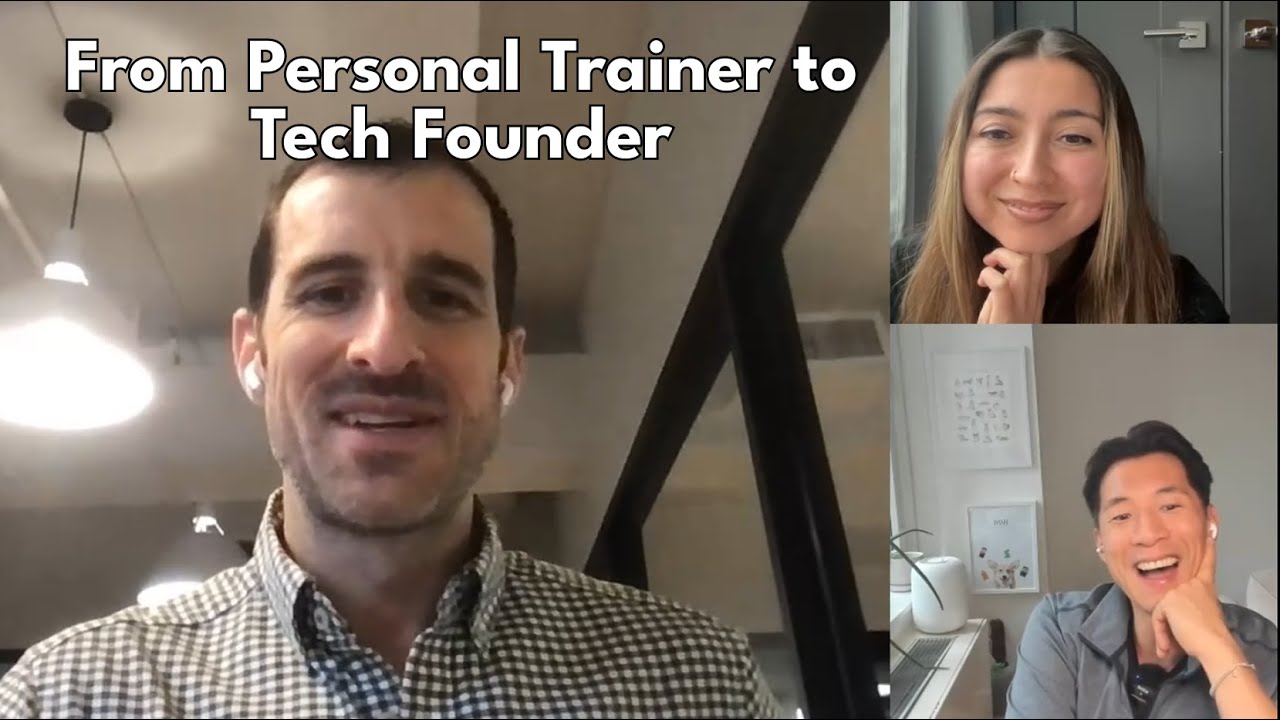
The money that went to the coaches
Kickoff also had to make sense from the other end of the conversation. Gardner co-founded the company with Connor Stauffer. Its software supports coaches in running virtual businesses, bringing programming, client communication, and operations into one place. For the person providing the service, these are working tools with consequences for how a day gets spent.
That part of the business can disappear behind the more visible customer experience. Someone still has to prepare, communicate, organize, and keep track. The time spent arranging work is time that cannot be spent doing it. A useful platform has to understand that arithmetic without making its providers feel like entries in an arithmetic exercise.
The investment case at 645 Ventures emphasized this opportunity to enable independent practitioners. Its portfolio identifies Gardner and Stauffer as founders and records an investment in 2022. Through that lens, Kickoff belongs to a broader category of businesses that provide the infrastructure for other people to earn a living.
The distinction helps explain Gardner’s chosen milestone. Payments to coaches connect the company’s activity with the economic lives of its providers. They also invite a harder question than a simple sign-up count: how much useful work is passing through the system, and what does that work mean for the person doing it?
reported June 2022
reported June 2022
The two figures describe different things. Joining a platform is an expression of interest; a payment records an exchange. Neither alone tells the whole business story. Together, they locate the company’s ambition on both sides of its market. Gardner also set improving coaches’ take-home earnings per hour among his immediate goals in 2022.
“We’ve paid out more than $5 million to extraordinary, hard-working coaches.”John Gardner · June 2022
A founder has to learn to let go
Growth changes the founder’s own work, too. In that same period, Gardner said recruiting occupied 40% of his time. He was looking for leaders across product, growth, design, and engineering, while investing in a process for setting and aligning goals. The experiments of the earliest days had become an organization that needed responsibilities to travel beyond its founder.
A founder can become very good at being the person who knows. That usefulness carries its own complication. If every decision needs the same person, the company inherits the limits of that person’s calendar. Hiring capable colleagues asks for a different kind of contribution: making room for decisions that someone else will own.
Gardner’s public search for a chief of staff reflected a similarly practical appetite for experience. He wanted someone who combined consulting or investment banking with time in a startup or scale-up, working with him on product and business operations. The description gave weight to the combination he had pursued in his own career: analytical preparation followed by operating work.
There is a modest lesson in that continuity. Careers are often presented as a row of brands and titles, as though the names explain the person. Gardner’s choices become more legible when treated as successive kinds of practice. Eventually, the person seeking experience becomes responsible for creating a place where others can get it.
The helmet by the door
In December 2025, Gardner described cycling around New York, keeping his helmet close, and making exceptions for pouring rain or snow. He also spoke about travel, unfamiliar cultures, and fitting exploration around a working day. These details bring the founder back to street level. A city has a way of turning grand plans into a question of how you will get across town.
He remained close to the product as well, describing himself as its “ultimate power user” and still coaching clients on the platform. That contact provides an unusually direct route back to the original question. Does the system help a person on either side of the exchange do what they came to do?
His advice to would-be founders has favored getting close to entrepreneurship and learning through participation. His own sequence gives that advice some texture: a classroom, consulting work, a marketplace, certification, early customers, and the gradual construction of a company. Each setting exposed a different part of the problem.
The result is a founder’s story organized around repeated contact with the work. The phone matters because a conversation can travel through it. The software matters because a coach has a business to run. And that old $5 million milestone still makes a useful closing image: thousands of transactions, ending with people being paid for showing up.