On his Y Combinator founder profile, Christophe Rimann introduces himself with two words: “Likes cooking.” The company description has a mission, investors, and a recruiting link. The founder has dinner. In a setting where a biography can resemble a funding application with shoes on, this is a welcome economy of language.
It is also a useful place to begin. Rimann is the co-founder and CEO of Camber, a New York company working on revenue infrastructure. He studied computer science at Columbia and Cornell, worked at McKinsey, and helped build a business once called Juniper. There is a substantial professional résumé here. There is also a life with skiing, cooking, and an enduring connection to the East Bay.
Follow that connection and another organization appears: Musaics of the Bay, where he serves on the board. It brings artists together through residencies, concerts, and recordings. The person working on the mechanics of payments also helps support an institution devoted to the making of music. Two different kinds of backstage work, each with somebody else’s performance in view.
The classmates who kept Berkeley in the picture
Rimann grew up in the East Bay. At College Preparatory School, he was in the class of 2013 with pianist Audrey Vardanega and Thomas Chen. Their paths later took them to New York for college or graduate school. The geography changed; the friendship survived it.
When Vardanega described starting Musaics, she named Rimann and Chen as former classmates who had become board members. She spoke of their affection for Berkeley and of bringing music to the community they knew. That gives the board appointment a particular texture. It sits inside a friendship that predates the professional titles.
Rimann’s LinkedIn dates his board service to January 2019. Musaics has since developed projects that connect different art forms, including a symposium commissioning music inspired by community-submitted artworks. The organization’s work belongs to its artists and directors. Rimann’s place in it is the supporting role of a board member.
There is something pleasing about that distinction. A company’s CEO occupies a position designed to draw attention. A nonprofit board member helps an institution continue. In one setting he is responsible for the enterprise; in the other, he supports a space where somebody else can make something. His Bay Area connection has an actual address in his working life, even while his professional base is New York.
Before the pitch, the program
At Columbia, Rimann completed a bachelor’s degree in computer science, graduating in 2018. He graduated magna cum laude and received a certificate of distinction for academic excellence in the subject. The next degree was a master of engineering at Cornell, completed in 2019, with a research focus on blockchain.
One surviving piece of the undergraduate years is WebLang, a 2017 programming-language project. Rimann worked alongside Ryan Bernstein, Jordan Vega, Brendan Burke, and Julian Serra. Their report assigns him project and memory management. The team used Haskell, C, and C++, with tools for version control, testing, continuous integration, and documentation.
The report also describes team members contributing beyond their initial assignments. It is a small detail, but an unusually concrete one: before the founder biography, there was a group project with divided responsibilities and shared work. A programming language needs its design, implementation, tests, and documentation to agree with one another. Anyone who has endured a university project knows that this agreement rarely arrives by magic.
His academic record includes Columbia’s Andrew P. Kosoresow Memorial Award, which recognizes teaching, teaching assistance, and departmental service. Cornell Tech awarded him a James H. and Marilyn H. Simons Graduate Fellowship. Those distinctions cover different parts of an education: technical accomplishment, help given to other students, and support for further study. They leave a fuller picture than the degree names alone.
A detour through the machinery of money
Rimann’s interest in financial infrastructure started early. In an April 2026 conversation about his career, he described entering crypto around 2012–2013 and building a crypto broker-dealer. Later, blockchain became the subject of his graduate research. The sequence puts financial systems alongside computer science well before Camber’s public launch.
McKinsey followed. The firm’s alumni records place Rimann, Nathan Lee, and Celina Qi in its San Francisco office during 2019–2020. All three would become co-founders of Juniper. Consulting gave this group a common professional setting before they shared a company.
An older Musaics biography identifies Rimann as a McKinsey business analyst in San Francisco. Read alongside the later company role, it marks the interval when graduate study had become professional work and a company was still ahead. The music board and the consulting job overlapped in the same period of his life.
It would be convenient to turn these experiences into a perfectly straight road. Careers tend to make better sense in retrospect than while somebody is living them. Here, the visible sequence is sufficient: an early financial venture, technical study, consulting, and then company building. The connection is the practical difficulty of getting a system to function when real people and real money depend on it.
When Juniper became Camber
By February 2025, Rimann was ready to introduce Camber publicly under its new name. Juniper had become Camber, and the company announced $50 million in total funding. Its supporters included Andreessen Horowitz, Craft Ventures, Y Combinator, and Manresa Ventures. The Series B accounted for $30 million of that total.
The announcement arrived with a decidedly personal opening: “Well, it’s finally time to let the cat out of the bag…” Rimann thanked Nathan, Celina, and Jade Chan, as well as the wider team and supporters. His account of the company’s progress made room for the people carrying it with him.
Recognition had come earlier. McKinsey’s January 2024 alumni roundup included Rimann, Qi, and Lee among founders selected for Forbes 30 Under 30. Columbia also recognized Rimann among its alumni featured on the list. The names appeared together, a reminder that this was a shared undertaking before it became an individual profile.
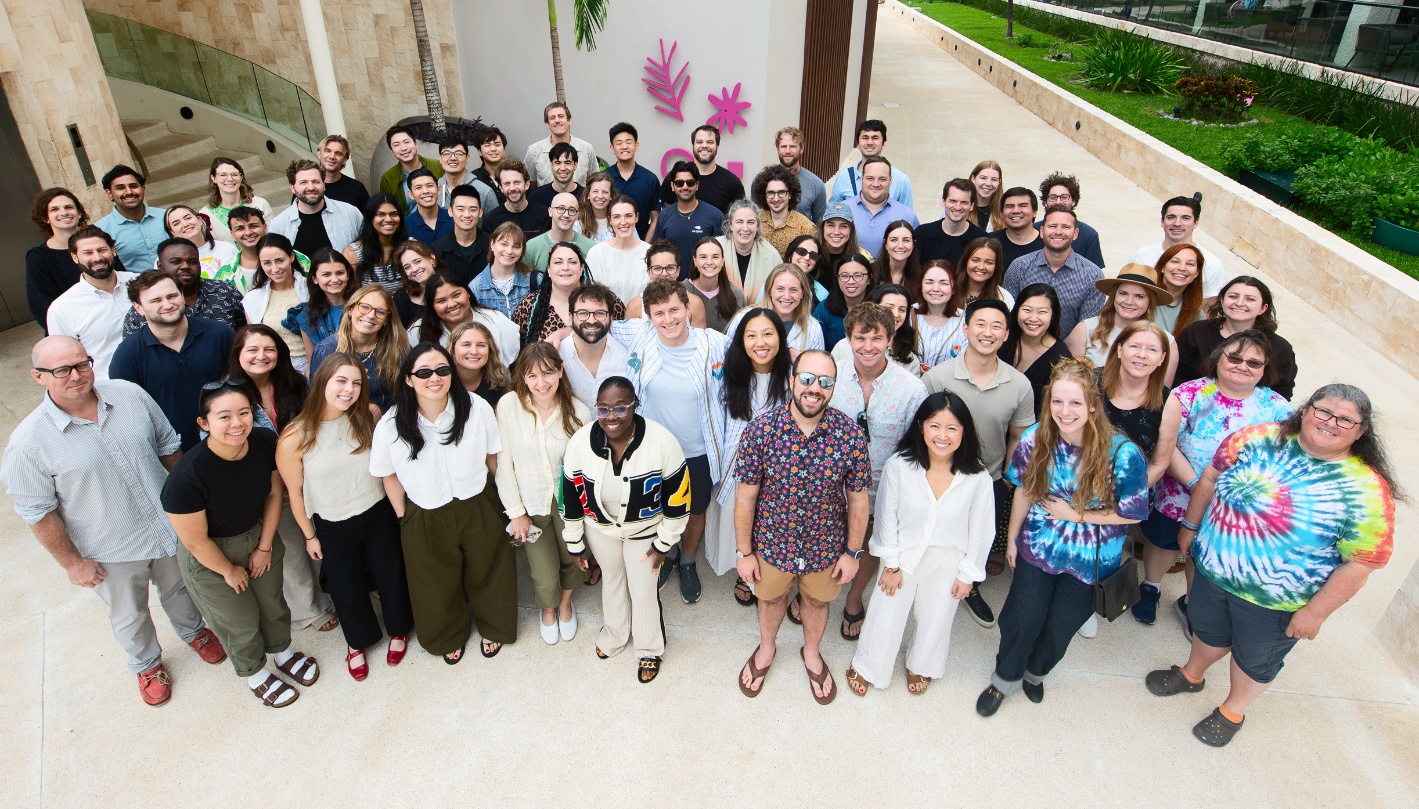
Funding is a milestone with a convenient number attached. Building a team is harder to condense. A photograph of the Camber group makes the difference visible: rows of people, several styles of shirt, and more personalities than any company description can accommodate. A founder can thank a team in a sentence. The picture restores the sentence to its proper scale.
The customer’s version of the story
In April 2026, Rimann explained a useful complication in Camber’s identity: customers could experience a software business as a service business. “Most of our providers think of us as a services company,” he said. The customer’s concern was the result delivered, with the underlying technology doing its work out of view.
He described initial engagements designed to establish a return before asking for a larger commitment. The conversation put the pilot-to-conversion cycle at around 60 days. Treat that as his description of the company’s sales approach at that moment, rather than a guarantee attached to every future customer.
The idea has an everyday logic. A buyer has a job to finish and a budget to defend. A system earns its place by helping with those obligations. The elegance of its architecture may interest its builders considerably more than the person signing the contract. Software has to survive that difference in enthusiasm.
Camber’s ambition places the company in the payments layer, working with the systems organizations already use. That choice gives Rimann’s earlier financial interests a contemporary setting. The business asks where money moves, where work accumulates around that movement, and which part of the process is worth rebuilding. Those are operating questions, with invoices attached.
“Most of our providers think of us as a services company.”Christophe Rimann · April 2026
People inside the machine
The company’s current operating principles give human judgment a defined place alongside automation. Experts handle exceptions; systems handle volume. Its founder’s note describes an ambition to build the platform the team wished had existed when they were doing the work themselves.
That is a specific account of why experience matters. A repetitive task can be mapped and automated. An exception asks for somebody who understands the consequences. A business has to decide which decisions belong in each category, and to keep revisiting the boundary as its work changes.
Rimann’s education included recognition for teaching and service. His company’s operating language includes a role for people whose expertise resolves awkward cases. These are separate facts, not proof of a private philosophy. Together they make the human work visible in a career frequently described through technology.
The image of a founder alone with a brilliant idea leaves rather a lot out: classmates, project partners, co-founders, colleagues, customers, and the people who know what happens when a tidy process encounters an untidy day. Rimann’s public career is populated by all of them. Even its technical achievements are social undertakings.
Two words, again
Return to cooking. It appears in both his brief Y Combinator profile and his longer Musaics biography, which also mentions skiing and entrepreneurship. Those interests do not need to be pressed into service as metaphors for leadership. Sometimes a person likes cooking because cooking is enjoyable. Dinner is entitled to an evening off from the business strategy.
The more interesting connection is between places and people. An East Bay school friendship continued into a music nonprofit. New York became a setting for study and later a base for company building. McKinsey colleagues became co-founders. The story advances through relationships as well as qualifications.
Rimann’s work now puts him at the front of Camber. His board service puts him behind an arts organization. Both roles have substance outside a biography: a company has to deliver, and an institution has to make room for artists to work. The titles are useful shorthand; the obligations occupy considerably more time.
That leaves a portrait with room to breathe. A computer scientist who received an award for teaching. A former consultant building with former colleagues. A New York executive still connected to Berkeley through friends and music. And, beneath the funding announcements and degree names, somebody who has chosen a notably modest answer to the question of what else he likes. Cooking will do.