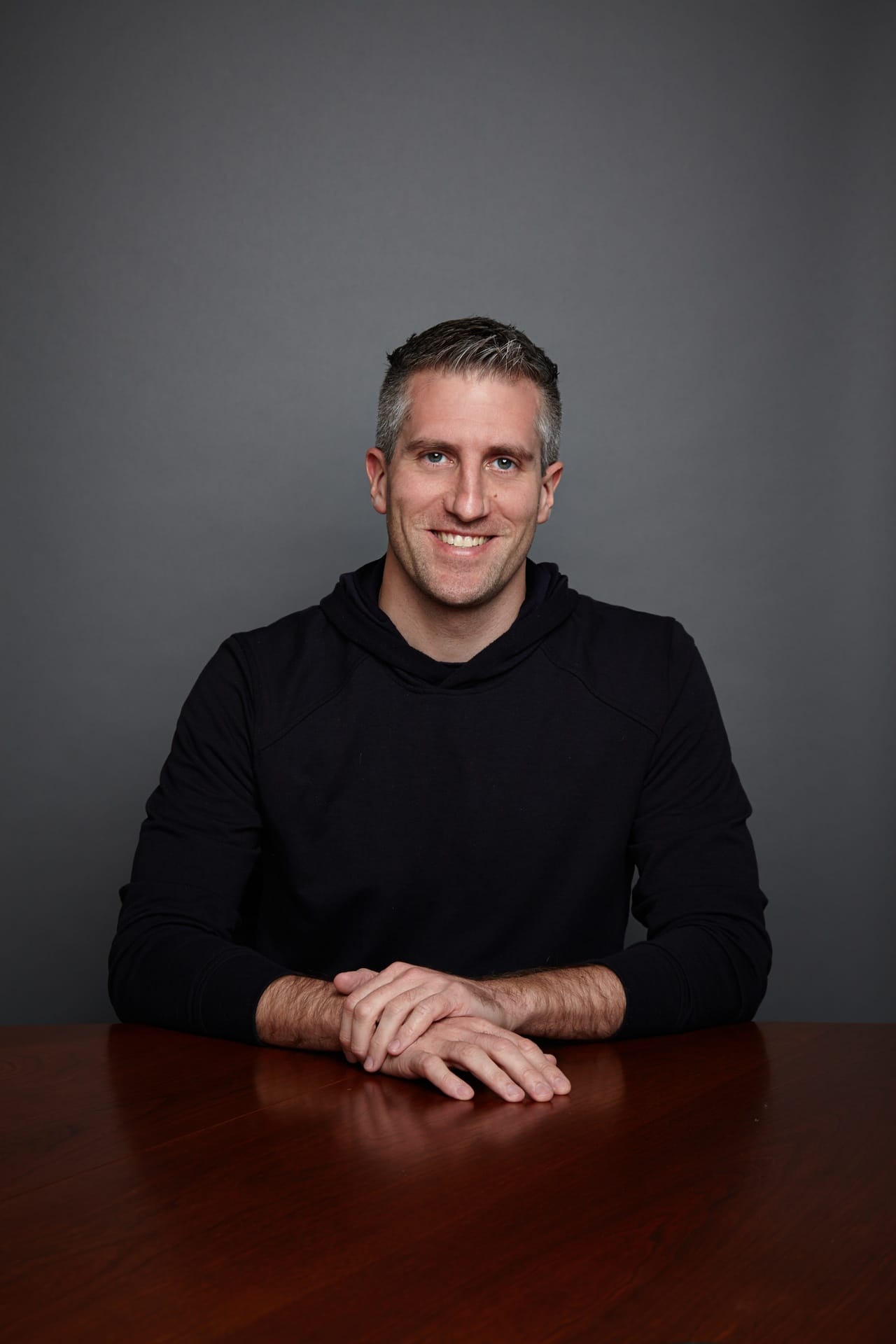
Somewhere between a Harvard Law degree and a Plaid org chart, Jean-Denis Greze figured out something most people spend entire careers missing: the most interesting problems aren't the ones everyone is already solving. Fintech infrastructure was a puzzle worth cracking. Then it got cracked. Tax, on the other hand? Still a disaster. Always has been. Probably a feature.
When Greze joined Plaid in 2017, the company had 20 engineers and a product that a handful of apps were quietly stitching into their backends. By the time he left, there were 350 engineers and a $13.4 billion valuation. He didn't just add headcount - he redesigned how an engineering organization thinks. He built what he calls "spiky" orgs: teams with distinct subcultures, some obsessed with business impact, others devoted to craft. The kind of architecture most companies don't get right until it's too late to matter.
Before Plaid, there was Dropbox, where he led growth, identity, payments, and Paper as Director of Engineering. Before that, a career that zigzagged through fintech in New York during the first internet boom, a detour through Harvard Law (a J.D., yes, actually practiced), and two degrees in computer science from Columbia. It's the kind of background that looks bizarre on paper until you realize it's exactly the right preparation for building a tax company: you need to understand regulation, engineering, and product at the same time.
Town, co-founded with Tony Vincent - former Google AI/ML Director - launched publicly in 2024. The pitch is precise: small businesses get a dedicated tax advisor, backed by AI that handles document collection, regulatory navigation, and year-round compliance monitoring. No more scrambling in April. No more paying for a CPA who sees you once a year. The AI does the grunt work. The human does the judgment calls.
In March 2025, First Round Capital led an $18M seed round. The company has 29 employees and a San Francisco headquarters at 222 Kearny St. The angel list reads like a fintech reunion: Adam D'Angelo (Quora, early Facebook CTO), William Hockey (Plaid co-founder), Immad Akhund (Mercury), Christina Cacioppo (Vanta), Soleio Cuervo, and Helen Min. When the people who built the last generation of fintech infrastructure back your company, it's not a coincidence. It's a thesis.
The thesis, as Greze puts it plainly: "Tax is the ultimate AI challenge." It's not a soundbite. Tax sits at the intersection of regulation, data, natural language, and judgment - exactly where large language models are simultaneously powerful and dangerous. Getting it right means building a system that is rigorous enough to hold up under an audit and intuitive enough that a restaurant owner who's running on four hours of sleep can actually use it.
Career Arc
The thread connecting all of it - law school, Dropbox, Plaid, Town - is a particular kind of ambition. Not the "move fast and break things" variety. More like: understand the system deeply enough to know which part to fix. At Plaid, that meant transforming engineering culture. At Town, it means taking on the one annual ritual that 33 million American small businesses dread more than anything else.
His engineering philosophy, shaped through years of leading at scale, comes back to one thing: hire well, and you won't need to manage performance. Build the right culture, and the organization manages itself. It's the kind of statement that sounds obvious and lands like a gut punch when you've tried to do it. He's done it twice at companies with legendary reputations. The third time is at a company he built from zero.
Greze is also a two-decade angel investor - roughly 17 bets across AI, fintech, and developer tools, including recent investments in Harmony Intelligence, Formal, Frigade, and Loops. He's a co-investor at ASDF Ventures. The pattern is consistent: technical founders solving structural problems in regulated or complex domains. Sound familiar?
Early Career
Worked in fintech in New York during the first internet boom; earned B.S. + M.S. in CS from Columbia University.
Detour: Law
Attended Harvard Law School; earned J.D. and practiced law briefly before returning to engineering - an unusual path that sharpened his understanding of financial regulation.
Dropbox
Director of Engineering at Dropbox, leading growth, identity, notifications, Paper, and payments teams.
2017
Joined Plaid as Head of Engineering / CTO when the company had 20 engineers.
2017-2021
Scaled Plaid's engineering from 20 to 350 people (17.5x). Helped grow the company to a $13.4B valuation. Built distinct engineering subcultures across teams.
2021+
Left Plaid. Began angel investing and advising; built portfolio of ~17 investments over nearly two decades across AI, fintech, and developer tools.
2024
Co-founded Town with Tony Vincent (former Google AI/ML Director) to build an AI-powered tax platform for small businesses.
Mar 2025
Town raises $18M seed round led by First Round Capital, with participation from Conviction, Alt Capital, Defy, Depth, Mischief, WndrCo, and a constellation of fintech angels.