BREAKING: Mercury receives OCC conditional approval for national bank charter - April 27, 2026 Mercury hits $650M annualized revenue, 300,000+ customers Immad Akhund launches $26M solo GP venture fund - 350+ investments formalized 1 in 3 U.S. startups now bank with Mercury - $3.5B valuation Mercury Series C: $300M raised, Sequoia leads - March 2025 Mercury Vault shipped in 72 hours during SVB crisis - 17,000 new customers in 4 months $248 billion in transaction volume processed - 59% year-over-year growth Cambridge CS grad. YC twice. 2 exits. 1 bank. Still answers DMs. - @immad BREAKING: Mercury receives OCC conditional approval for national bank charter - April 27, 2026 Mercury hits $650M annualized revenue, 300,000+ customers Immad Akhund launches $26M solo GP venture fund - 350+ investments formalized 1 in 3 U.S. startups now bank with Mercury - $3.5B valuation Mercury Series C: $300M raised, Sequoia leads - March 2025 Mercury Vault shipped in 72 hours during SVB crisis - 17,000 new customers in 4 months $248 billion in transaction volume processed - 59% year-over-year growth Cambridge CS grad. YC twice. 2 exits. 1 bank. Still answers DMs. - @immad
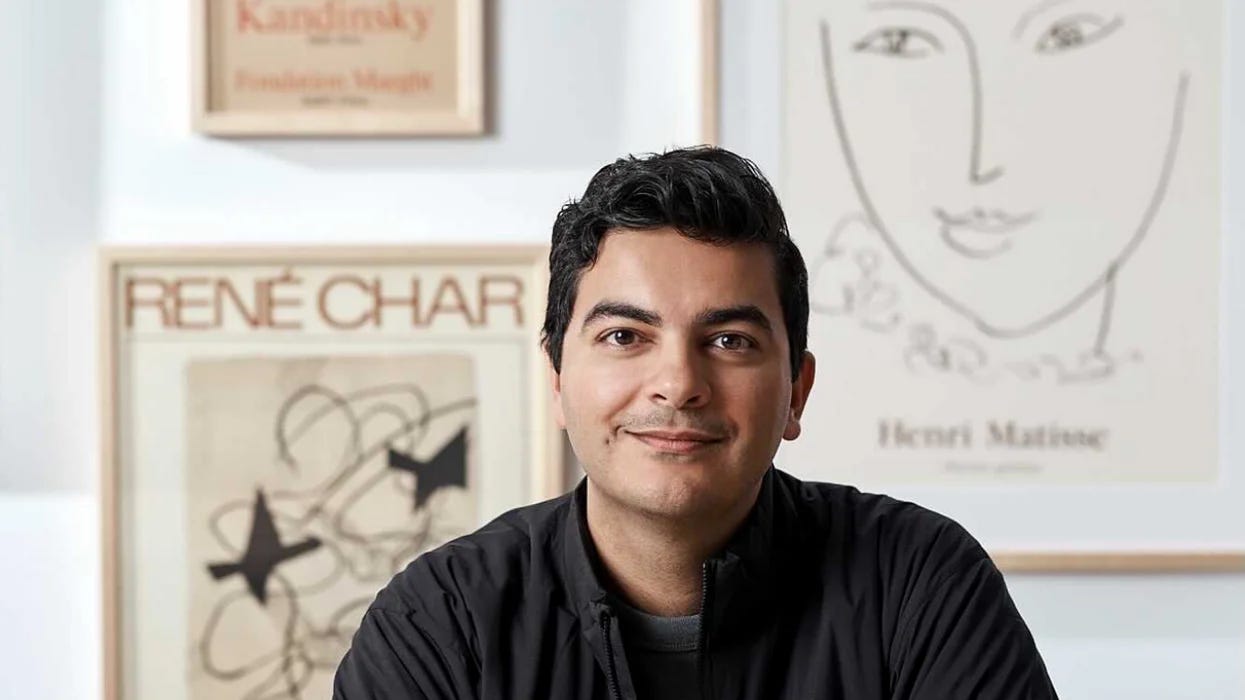
Immad Akhund, CEO of Mercury
YesPress Profile / Founder / Fintech

Immad Akhund Built the bank
founders actually
wanted

"Four days after launch, someone transferred $1 million without ever speaking to us. That's when I knew."

$3.5B Valuation
$650M ARR
300K+ Customers
Mercury CEO YC S07 + W09 350+ Angel Bets @immad
The Man, Mid-Stride

The Banker Founders Never Had

Right now, as of April 2026, Immad Akhund is fighting for a national bank charter, running a $3.5 billion company, managing a $26 million venture fund, co-hosting a podcast, raising two kids, and probably still answering DMs from strangers asking about their Mercury accounts. Not performing busy. Actually busy.

Mercury - the company he co-founded in 2017 with Jason Zhang and Max Tagher - is now the financial home for 1 in 3 U.S. startups. Three hundred thousand businesses, $248 billion in transaction volume, $650 million in annualized revenue. GAAP profitable for three to four consecutive years in an industry where "profitable fintech" sounds like a contradiction in terms.

And on April 27, 2026, Mercury received conditional OCC approval to establish Mercury Bank, N.A. - a full national bank charter. That's not a press release item. That's the moment a fintech stops renting infrastructure from someone else's bank and starts owning the rails.

We applied for this charter because the best founders in the country deserve a bank that was built for them.

- Immad Akhund

The thing about Immad is that he is not loud about any of this. He doesn't do the founder-as-celebrity circuit. His Twitter (@immad - five characters, the kind of handle that signals you've been on the internet since before it was cool) is a mix of startup observations, product thinking, and the occasional sharp take on banking. No motivational content. No "here's what I learned building a $3.5B company" threads structured like BuzzFeed articles.

He built the bank by being a founder first. He knew what founders hated about banking - the slow ACH, the intimidating physical branches, the customer service that treated a 10-person startup like a suspect rather than a customer - because he had lived all of it at Heyzap. Mercury is essentially his revenge, offered as a service.

By The Numbers

Mercury's Vital Signs

$467M Total Raised
$248B Transaction Volume 2025
10 Consecutive EBITDA+ Quarters
59% Transaction Volume Growth YoY
Funding Journey
Seed / Series A (2019) ~$20M
Series B (2021) - a16z, Coatue, CRV ~$120M
Series C (March 2025) - Sequoia lead $300M
Total Capital Raised ~$467M

Note: Revenue grew 4x YoY from May 2022 to May 2023 following the SVB collapse. Mercury has maintained GAAP profitability for 3-4 consecutive years.

Origin Story

Pakistan to Cambridge to San Francisco, Via YC - Twice

He was nine years old when his family left Pakistan for the UK. The reason was straightforward - better education, better opportunity. He landed at Clare College, Cambridge, one of the oldest colleges in the world, and studied computer science. He graduated in 2006 with an MA. Then Bloomberg, then entrepreneurship, then everything else.

What Y Combinator gave him wasn't just money or a network. It gave him a city. He moved to San Francisco in 2007 for Clickpass, an OpenID single-sign-on service in YC S07. Clickpass was acquired by Yola in 2008. He kept the city.

True Story

In 2007, a Pakistani-British kid flew to San Francisco for a batch of Y Combinator. His product was Clickpass - a single sign-on tool. It got acquired within a year. He didn't go home. He started another company.

Heyzap came next - YC W09 - co-founded with Jude Gomila. Mobile gaming tools, mobile advertising. For nearly a decade he built it, grew it, and in 2016 sold it to Fyber (RNTS Media) for $45 million. By then the idea for Mercury had already been forming. He'd been frustrated with banking the entire time he ran Heyzap. Every stupid wire transfer. Every time his startup was treated like a credit risk rather than a customer.

The Gap Year That Wasn't

In 2017, between exiting Heyzap and launching Mercury, he spent six months as a part-time partner at Y Combinator doing the Winter 2017 batch. Office hours with founders. He's said this was formative - not just giving advice but learning what the next generation of founders actually needed. He filed that away.

He co-founded Mercury in 2017. He did not launch immediately. He spent 18 months building, testing, talking to founders, getting the product right. Ignoring the "move fast and iterate in public" orthodoxy. When Mercury launched in April 2019, it was ready.

You can't take other people's lessons and make them your own. The answer is to understand the framework, understand what was the specific situation.

- Immad Akhund, on ignoring conventional startup advice

The Weekend That Changed Everything

On March 10, 2023, Silicon Valley Bank collapsed. The startup ecosystem was in genuine panic. Billions in deposits at risk. Founders watching in real time as their operating accounts became inaccessible.

Immad and his team shipped Mercury Vault - a feature extending FDIC insurance from $1 million to $5 million per account via sweep networks - between Saturday and Monday. One weekend. While running the company, while fielding thousands of inbound inquiries, while the industry was in crisis mode.

Mercury gained 17,000 new customers in the four months following SVB's collapse. Revenue grew 4x year-over-year from May 2022 to May 2023. "The craziest time was the first five days," he said later. He spent those days on constant calls, responding to DMs - personally - from founders who needed to know where to put their money.

That's product-market fit demonstrated in real time, under pressure, at scale.
The Long Game

A Career Built for Distance

2005-2006
Financial software developer at Bloomberg, London
2007
Clickpass - YC S07. Moved from UK to San Francisco. Acquired by Yola 2008.
2008-2016
Heyzap - YC W09. Mobile gaming + ad platform. Sold to Fyber for $45M.
2017
YC Part-Time Partner (W17 batch). Mercury co-founded.
April 2019
Mercury launches publicly after 18 months of stealth development.
2021
Series B: $120M. a16z, Coatue, CRV. Valuation hits ~$1.6B.
March 2023
SVB collapses. Mercury Vault shipped in 72 hours. 17,000 new customers gained.
March 2025
Series C: $300M, Sequoia-led. $3.5B valuation. $248B transaction volume.
May 2025
Launched $26M solo GP venture fund. 350+ angel investments formalized.
April 2026
OCC conditional approval to establish Mercury Bank, N.A. Jon Auxier named bank CEO/President.
The Other Job

350 Bets, One Fund

While building a $3.5 billion company, Immad has been running a parallel career as one of the more active angel investors in the startup ecosystem. Since 2016, he's made over 350 investments in early-stage startups. In May 2025, he formalized this into a $26 million solo GP fund - typical check sizes of $50K to $100K at the earliest stages.

The portfolio includes names you've heard of.

Airtable Rippling Substack Deel Rappi Applied Intuition ElevenLabs Gecko Robotics Linear Nurx Decagon + 340 more

Highlighted (dark) = known unicorns in portfolio

There's a logic to this beyond just financial return. He's building Mercury Raise - a platform connecting Mercury customers with investors. The angel portfolio gives him signal, relationships, and pattern recognition that feeds directly back into the product. The investor brain and the operator brain aren't competing. They're collaborating.

When you have product-market fit, it's really blazingly obvious. You wake up in the morning and you have more users and you don't know where they came from.

- Immad Akhund
The Person

What Makes Him Different

🕑
The Patient Builder
Mercury spent 18 months in stealth before launching. In a culture that worships speed, he deliberately slowed down. "Move fast" is a rule; "ship when it's right" is a principle.
💬
Still Answers DMs
During the SVB crisis, the CEO of a $3.5B company was personally responding to messages from founders. Not a PR team. Not a canned response. Him.
🌐
Pakistan to Cambridge to SF
Moved countries twice before 30. Arrived in the U.S. for a YC batch and never left. The immigrant founder archetype, but without the mythology - just relentless forward motion.
📚
Mongolian Empire Fan
In a December 2025 interview, he cited a fascination with the Mongolian Empire's organizational structures. If that's what he reads for fun, it explains the long-term thinking.
🎙
The Podcast Host
Co-hosts Founders in Arms with Rajat Suri of Presto/Lyft on Spotify, Apple, YouTube, and Substack. Because apparently running a bank isn't enough.
👪
Startup Dad
Father of two. Has been open about the tension between building a company and being present as a parent - including a guest appearance on the Startup Dad podcast discussing finding more energy, not just more time.
In His Own Words

What He Actually Says

"If you're actually a strong founder, you can sell anything. You'll get weak product-market fit almost out of any idea, and that's the problem."
On PMF Traps
"Competition doesn't matter. Just focus on customers, focus on product. You're going to learn it from your customers, not by watching competitors."
On Competition
"My goal is to build a company that lasts for 100 years - one that founders trust, not just because we have good features, but because we understand them."
On Mercury's Vision
What Comes Next

The 100-Year Bet

The OCC conditional approval is the inflection point. Once Mercury Bank, N.A. is fully chartered, Immad gets something he's never had before: real control. Zelle integration. Expanded lending products. Payment infrastructure Mercury owns rather than rents. Jon Auxier - former CFO of SoFi Bank - is named as the bank's CEO and President. The operator-investor hybrid becomes an actual bank operator.

He's been explicit about the 100-year ambition. Most founders talk in quarters or maybe years. Immad talks in generations. That's either hubris or strategic clarity. Given Mercury's trajectory, the latter seems more likely.

The $26 million fund gives him a formal vehicle for continuing to back the next wave of founders - the ones who will eventually need Mercury accounts, Mercury Raise introductions, and maybe Mercury lending products. The ecosystem play has always been there. Now it has legal structure.

What He Said About The Charter

"Our customers have been asking for Zelle, for expanded lending, for payment infrastructure we actually control. We couldn't give them those things without a bank charter."

There's a version of the next decade where Mercury becomes the actual financial infrastructure of the startup world - not just accounts and wires, but lending, equity management, payment rails, and financial operations. Immad has stated as much. He's building toward a world where the best founders never have to interact with a traditional bank at all.

The kid who moved from Pakistan to Britain to San Francisco via Cambridge and two YC batches is trying to build something that outlasts all of them. Whether he gets there is an open question. But the 17,000 founders who showed up during the SVB crisis suggest he's not the only one betting on it.

Find Him

Links & Sources

Share this profile
URL Copied!