Jason Lindstrom went looking for a ski club and came away with an early lesson in running an organization. At Simon Fraser University, he wanted to meet people. There was no team in place to run the club he hoped to join, so he started one. Within a couple of days, 200 people had signed up. Making friends was going rather well. Now somebody had to organize them.
He recruited people to help lead it and began charging membership fees. A personal wish had acquired the usual accessories of a small enterprise: customers, responsibilities, money. Lindstrom credits that experience with giving him the confidence to start a business with his friend Bart Wisniowski.
Today, the Vancouver-based co-founder and CEO of Bucketlist Rewards and Recognition works on another form of belonging. His software gives colleagues ways to acknowledge one another and employers ways to reward contributions. The connection is easy to see: he keeps building places where people have a reason to participate.
A partnership with some mileage on it
Lindstrom and Wisniowski's working history reaches back to 1997. It includes the decidedly unglamorous business of picking weeds for the Coquitlam School District. Their later ventures would require different tools, but there is something pleasing about a software partnership with actual dirt in its backstory. An origin story needn't involve a garage. Sometimes the weeds are already there.
The pair built Tidal Multimedia and Advisor Websites before Bucketlist became their main project. Their public conversations about partnership dwell on shared values, regular meetings, and speaking candidly with compassion. In a 2023 conversation, they discussed weekly partnership meetings and the prospect of growing old as both business partners and friends. Longevity, in that telling, has a place on the calendar.
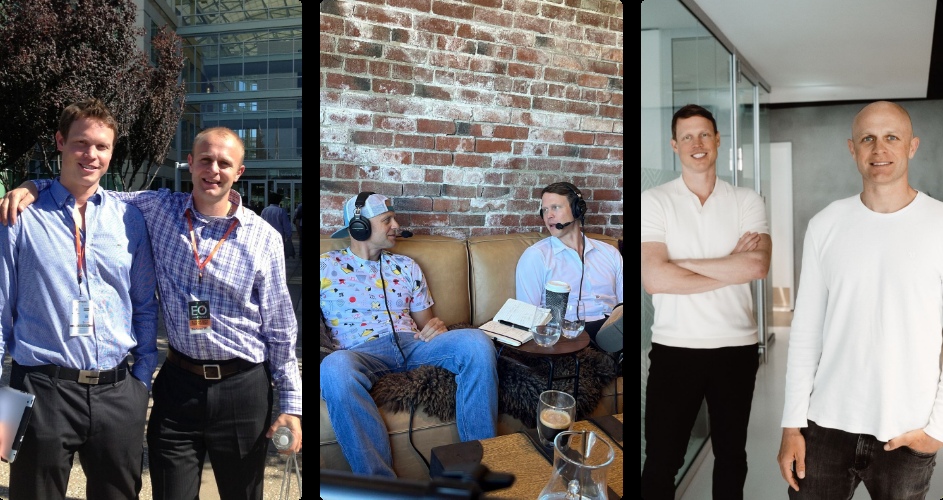
An early professional biography puts Lindstrom in digital media from 2000 onward. It records the sale of his first digital agency in 2012 and his role as managing partner at Advisor Websites. The latter focused on websites for financial advisers, a specific customer group with recurring digital needs. The work gave him experience serving businesses before he began selling them a way to say thank you.
By 2010, he was returning to Simon Fraser's orbit as a speaker. An event biography described him as Tidal's managing partner and director of interactive services, responsible for coordinating technical work. It also recorded his honours degree from the university. The student organizing a ski club had become someone students could ask about making a career in digital media.
His career also involved a change in how the work was sold. He has discussed the move from services to subscription businesses, alongside the acquisitions and exits that shaped his earlier ventures. A service project and a recurring software subscription ask different things of a founder. The first has a delivery date; the second keeps inviting the customer to decide whether to stay. That history gives his later interest in employee retention an interesting business backdrop.
The customers who changed the question
Bucketlist's consumer incarnation let people collect and share their ambitions. Lindstrom's older personal biography records acquiring Bucketlist.org with his partner in 2012. The current company history dates their exploration of employee rewards to 2015. These were different stages of an idea that found its commercial direction over time.
On the consumer site, users could borrow inspiration from one another's lists. Lindstrom has described its audience eventually exceeding a million users. Then businesses began contacting the team with a different request: could they use the product to reward employees with experiences that mattered to them?
One request might have been a diversion. Repeated requests became evidence. By roughly the tenth, Lindstrom says, the team was paying attention; 1-800-GOT-JUNK? was among the companies reaching out. The founders moved the product toward employee rewards and recognition. A tool for things people hoped to do had found customers willing to help people do them.
- 01Personal goalsCollect and share a bucket list
- 02Employer requestsHelp us reward our people
- 03A workplace productRecognize contributions, choose rewards
Lindstrom describes following that signal with market research. His experience in agencies and business software had taught him to ask how large a potential market was. The recognition category looked substantial, and the competition at the time looked manageable to him. Enthusiasm opened the conversation; investigation helped him decide to keep going. It is a useful detail in a story full of dreams: the dream still had to survive a commercial question.
Whale watching beats another guess
In 2022, Lindstrom described rewards ranging from a modest Amazon gift card to heli-skiing. He talked about people going whale watching and learning to fly. The catalogue mattered because employees wanted different things. One person's memorable afternoon could be another person's excellent reason to stay indoors.
Choice is central to his argument. An employer can know that someone has contributed without knowing what that person would enjoy. Personal rewards give the recipient some say in what appreciation looks like. The software has to accommodate both the ordinary purchase and the long-awaited experience, without demanding that everyone develop an interest in helicopters.
His ambition that year was to expand the platform to millions of users worldwide and help more employers develop cultures people wanted to join. He also offered two pieces of advice to his earlier self: raise money sooner, and remember to celebrate progress. The second is an especially pointed admission from someone selling recognition. Founders can need reminding, too.
“Also, take time to celebrate the victories.”
Jason Lindstrom, 2022
A thank-you needs a subject
Lindstrom's approach asks employers to be specific about the conduct they want to encourage. A company can announce its values at an all-hands meeting; the harder task is helping employees recognize those values in someone's ordinary working day. What did a colleague actually do? Which shared expectation did it fulfil? Why should anyone else care?
His advice is to define a recognition program's goals before launching it. Those goals might include introducing new values or helping departments work together. He warns against simply telling managers to start praising people after disappointing survey results. Some will do it well. Others will overlook contributions. The resulting unevenness can create its own problems.
He makes a practical case for colleagues recognizing colleagues: managers cannot witness everything. People working alongside one another often see the help that makes a day function. He also urges employers to ask how staff want to receive recognition. Public praise has an audience; that doesn't mean every recipient has requested a stage.
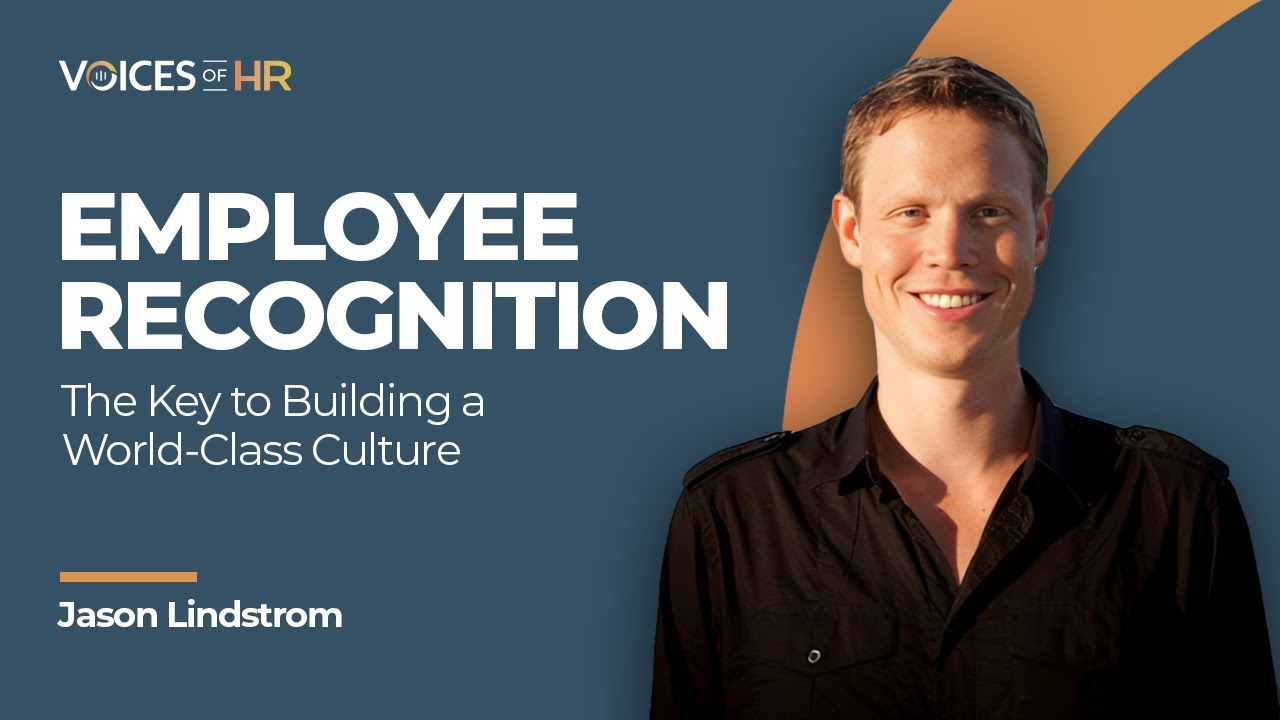 Watch the conversation ↗
In his own writing, he treats recognition as a program that needs maintenance. Ask employees what they value. Establish clear criteria. Explain how participation works. Involve leaders. Then check whether the results match the goals and make adjustments. The sequence is methodical, which is useful when the subject invites so many soft-focus promises.
Read together, those recommendations suggest a CEO concerned with the mechanics beneath a pleasant moment. Timing matters. Fairness matters. The communication tool matters. If appreciation requires people to navigate a cumbersome process, good intentions have been handed an unnecessary obstacle course.
Mentorship is another recurring part of Lindstrom's account of becoming a leader. He has spoken about learning through mistakes and through people with more experience, and about the usefulness of understanding where his own strengths lie. Robert Glazer is among the advisers he has turned to. The founder's job, as Lindstrom describes it, includes knowing when someone else can do the work better. Building teams has gradually become a way to account for his own limits as well as pursue his interests.
Beyond weather and weekend plans
Inside Bucketlist, Lindstrom has described offsite conversations designed to move beyond the safe topics colleagues usually share. The questions cover where people grew up, their families, experiences they found difficult, accomplishments they value, and personal or professional goals. There is room for the person who exists beyond the job description.
He says feedback from team members has made this deeper conversation a favourite offsite session. A published account of the customer success team's May 2022 gathering describes two days that included brainstorming and activities together. This is a concrete version of his broader interest in community: leave enough time for colleagues to become less abstract to one another.
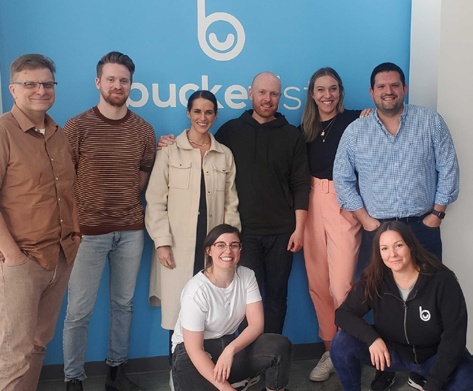
His reflections on school have a similar personal quality. Lindstrom has written about finding traditional classrooms difficult to fit into and later recognizing that his willingness to question familiar structures helped him build companies. He points to the ski club, digital agencies, and Bucketlist as examples. Looking back, he gives the awkward fit a different interpretation: it helped him notice possibilities outside the expected route.
The dream meets the payroll system
By December 2025, that route had taken him onto the ADP Marketplace Partner Advisory Board. The appointment brought him into discussions with ADP leaders and other partners about product priorities, integrations, and the work customers needed done. It is a less picturesque setting than a ski slope, but an instructive destination for this particular founder.
The priorities Bucketlist laid out included improving data synchronization, automating recognition tied to employee milestones, and making reporting and payroll handling smoother. A service anniversary still involves a human relationship. Someone also has to make sure the employee data is correct.
“Recognition works when it’s effortless and consistent.”
Jason Lindstrom, 2025
In September 2026, the Recognition Works conference agenda placed him in a keynote slot examining what recognition builds. The wider program included performance, retention, coaching, and measurement. His subject had travelled from a list of hoped-for experiences into the routines by which organizations manage work.
For Lindstrom, that leaves an appealingly practical assignment. People need reasons to gather, some room to choose what matters to them, and a way to see that their contribution counted. He started by organizing people who wanted to ski. He now spends his working life asking employers to pay closer attention to the people already beside them.