A cardboard box sits badly on a factory table. Its latch is stubborn, its contents deform when touched, and its position has drifted just enough to offend a conventional robot. This is the sort of scene Jagdeep Singh now thinks about: not the polite geometry of a laboratory, but the small insults reality delivers to a plan. At Rhoda AI, his seventh company, the object is to give robots enough visual experience to continue anyway.
Singh has spent nearly four decades choosing technical problems whose solutions were neither obvious nor quick. Wireless networking led to optical switches. Optical switches led to photonic chips. A Tesla Roadster led to solid-state battery chemistry. Now the distance between a robot demonstration and a useful shift on a factory floor has led him to video models. The industries change. The recurring question does not: can a scientific idea survive contact with the physical world?
“You can't really have a master plan for your life.”Jagdeep Singh
The sentence is a fine caption for his résumé, although “no master plan” should not be mistaken for no method. Singh has described a four-part filter for starting companies. The problem must be large and unsolved. The solution must be meaningfully different. The team must be able to carry the technical weight. Customers must care early enough to help shape the product. He prefers the customer who asks how to make the thing real, not the one who merely applauds the pitch.
The four-question founder filter
Is the unsolved problem large enough to justify years of attention?
Does the proposed solution depart from the comfortable consensus?
Can specialists own every serious technical and operating risk?
Will an early user help pull the product out of the laboratory?
Beginnerhood as a career strategy
Singh arrived at the University of Maryland at 15. He had seen Steve Jobs on the cover of Time and decided that building technology companies looked like a useful way to spend a life. At 19, with a degree in computer science and economics, he headed west. Hewlett-Packard and Sun Microsystems offered an introduction to Silicon Valley. Stanford offered graduate study. Halfway through his master's degree, an idea for improving communication over low-bandwidth, high-latency wireless networks offered something less orderly: AirSoft.
He took leave, built the company, sold it, and returned to finish the degree. A brief turn in venture capital confirmed that he preferred assembling companies to observing them. Singh has compared the entrepreneur to a film producer, the person who gathers the cast, the money, and the many specialized crafts required to get an improbable production made. It is an analogy that flatters neither lone-genius mythology nor tidy job descriptions.
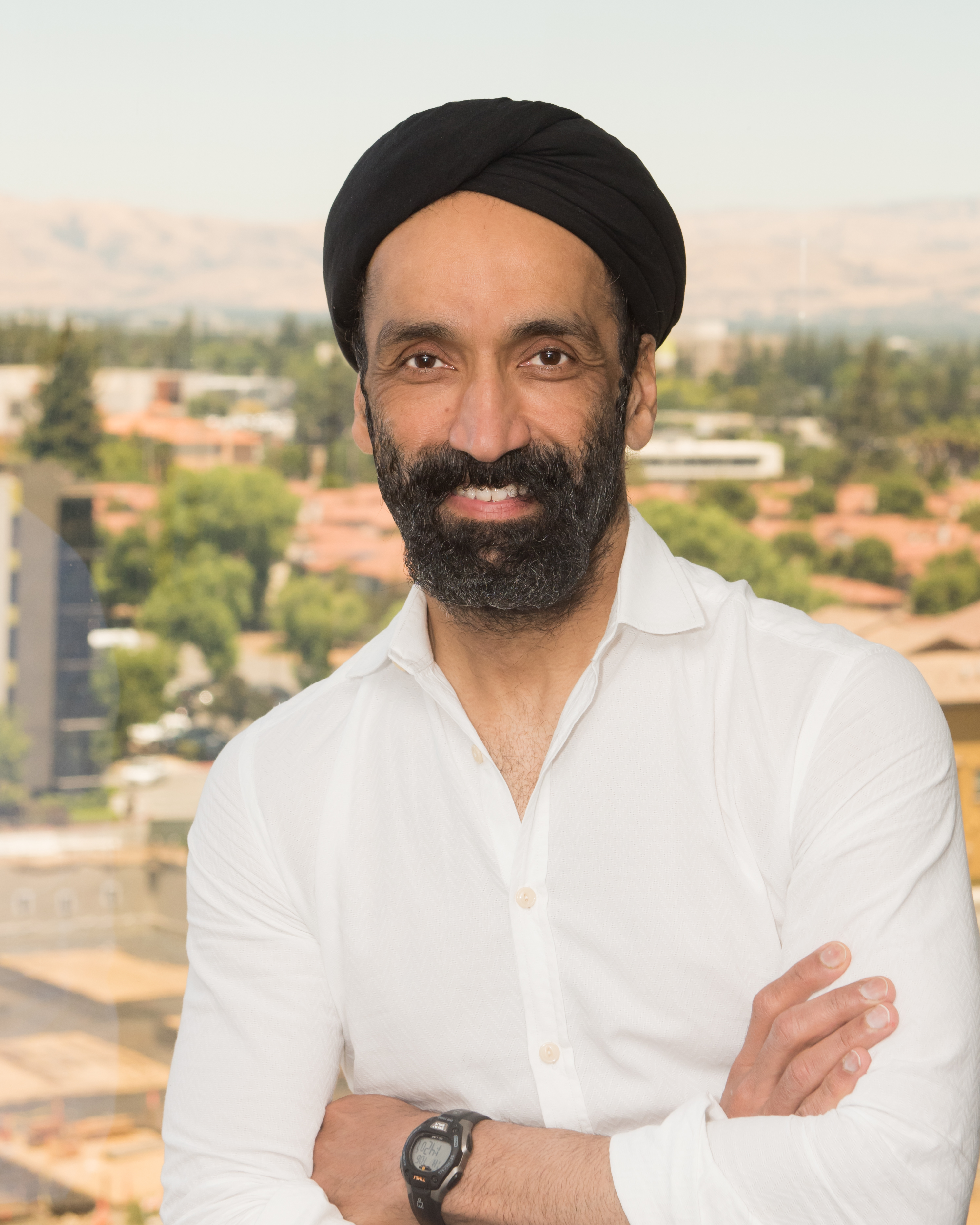
There is a wonderfully impractical detail in this early-prodigy story. As an adult, Singh decided to learn handstands. He had no gymnastics background. The movement was difficult, strange, and slow to arrive. Eventually he could hold one freestanding. His explanation was that growth occurs outside the comfort zone, where unfamiliar activity forces the brain to make new connections.
A handstand is also a compact diagram of his professional life. Turn the familiar orientation upside down. Accept that balance will become active work. Practice until the alarming position becomes a place from which you can think.
The long buildPhotons, batteries, and the patience tax
Lightera Networks put Singh into optical switching and was acquired by Ciena. OnFiber followed in optical communications. In 2001, he co-founded Infinera, which tried to integrate large optical systems onto photonic chips. It was an ambitious piece of hardware in an industry unkind to shortcuts. Infinera went public in 2007. Singh had learned that a deep-technology company can require a long private apprenticeship before outsiders see the result.
AirSoft
Wireless-network software, begun during graduate study at Stanford.
Lightera · OnFiber · Infinera
Optical switching, communications infrastructure, and photonic integration.
QuantumScape
A long wager on solid-state lithium-metal batteries, from research to public listing.
Rhoda AI
Video-trained robot intelligence aimed at variable industrial work.
Then a consumer product changed his field. Singh bought a Tesla Roadster and enjoyed the speed, the quiet, and the absence of exhaust. He also noticed the battery's limitations. Better energy storage could alter the shape of electric transport, but the work would be chemistry and materials science, far from the networking systems he knew. In 2010, he co-founded QuantumScape with Tim Holme and Stanford professor Fritz Prinz.
The company spent a decade in stealth. Volkswagen became an early strategic backer and partner. Bill Gates invested. QuantumScape disclosed its solid-state lithium-metal battery work and listed publicly in 2020. Singh remained CEO until February 2024, then chairman through the end of that year. There were triumphant data points and wake-up-in-the-night doubts. He spoke about both. The candor matters because deep tech often looks inevitable only after somebody has paid the patience tax.
“In some ways you can think of my job as CEO as the chief risk officer.”Jagdeep Singh
His management formulation is less glamorous than “visionary” and considerably more useful. The CEO worries about the ways a company can fail, then recruits someone who understands each risk more deeply. Once another person owns the problem with greater attention, the CEO can release it. The organization grows by converting a founder's anxiety into distributed expertise.
The robot watches before it moves
Artificial intelligence had become competent with words, pictures, and software, yet the physical equivalent still stumbled over variability. Industrial robots could repeat a programmed trajectory with admirable discipline. Newer learning systems performed richer tasks in controlled settings. Change the object, viewpoint, lighting, or sequence, however, and reliability weakened. Singh saw a consequential unsolved problem hiding inside all that disorder.
Rhoda AI began in 2024 and worked quietly for 18 months. Its technical wager is that internet video contains a sprawling education in motion: hands fold fabric, cups slide, waves break, doors resist, objects vanish behind other objects and appear again. Rhoda's Direct Video Action model treats robot control as video generation. It predicts future frames, maps those predictions to actions, looks again, and revises. The model does not receive a permanent exemption from surprise. It gets a rapid loop for responding to it.
Rhoda says its models can learn complex tasks with roughly ten hours of robot data after video pretraining, carry hundreds of frames of visual context, and follow a single human demonstration in context. Its published examples include sorting, drawing, container breakdown, and a shell game that tests whether the model can remember a hidden object's location through multiple shuffles. These are research results, not a declaration that general robotics is finished. The company names planning, self-improvement, mobile manipulation, and dexterous control among the work still ahead.
In March 2026, Rhoda emerged from stealth with a $450 million Series A and FutureVision as its public thesis. The team spans generative modeling, computer vision, robotics, and industrial deployment. Early demonstrations emphasize boxes, containers, and workflows whose appeal is commercial rather than cinematic. Singh has moved from the battery inside the machine to the intelligence directing its arms.
The through-lineA direction is enough
It would be tempting to arrange Singh's career as a neat escalation toward the current fashion. The chronology resists. Each venture arose from a problem visible at the time: constrained wireless links, bandwidth demand, battery limits, robots that lose their composure outside a lab. His coherence lies in the selection mechanism, not the market category.
There is another through-line in the Singh Sandbox, a 5,300-square-foot makerspace at his alma mater supported by a $1 million gift from Jagdeep and Roshni Singh. The room gives students access to laser cutters, mills, printers, electronics tools, sewing machines, and the permission to make something unrelated to class. It turns education into contact: idea meets material, and material gets a vote.
That is also where his companies want to live. Not in the slide that describes a future, but at the awkward moment when chemistry must scale, photons must travel, or a robot must decide what to do with the box that arrived crooked. Singh's appetite for large problems is paired with respect for all the little ways matter refuses a clean story.
The master plan remains unavailable. A direction is enough: keep learning, find the consequential constraint, gather people who can worry it into submission, and let reality review the work. On the factory table, the latch still sticks. The light still shifts. The next move has to be made anyway.