Sean Muller saw a television commercial and went looking for information about it. There was remarkably little to find. Who made it? Where else was it running? What happened after people watched? In 2012, he started iSpot with an apparently modest project: build a catalog of TV ads. The commercial, usually treated as an interruption, would become the organizing unit of a business.
That choice matters. A program rating describes an audience for a show. An advertiser needs to understand a particular message, delivered at a particular moment. Streaming makes the distinction unavoidable: two households can watch the same program and receive different commercials. Counting the show gets you only partway to counting the ad.
- Tests the message before the media money goes out.
- Measures overlapping audiences across TV and streaming.
- Connects ad exposure to business response and lift.
The audience wanted the spreadsheet
The early company explored social signals and the public appetite for finding commercials. But the business narrowed toward advertisers’ need to know where their own spots ran, where competitors appeared, and how viewers responded. In a 2019 account, investor Madrona described an early customer conversation with ESPN and a subsequent bet on a TV manufacturer’s data. The catalog had become useful infrastructure.
The first weakness was in television’s feedback loop. Muller has described brands waiting six weeks to learn where ads ran. Information arriving after a campaign is difficult to use during it. iSpot’s proposition was speed: verify delivery, compare performance, then make a decision while there is still money left to move.
Today, its customers include brands, agencies, networks, and streaming publishers. The company reports more than 750 customer organizations. Its public customer roster includes Molson Coors, Domino’s, and Zillow. These buyers have different incentives: advertisers want less waste; media sellers want evidence that their inventory deserves the budget.

One ad. Three different questions.
Start with the creative. Through its Ace products, iSpot tests whether people understand an ad, recognize the brand, or intend to buy. Survey comments help explain the scores. Pre-market testing can examine storyboards and near-final edits; the company advertises a 24-to-48-hour turnaround. A funny commercial that leaves viewers unable to name the advertiser has a problem worth discovering before airtime.
Next comes delivery. Automatic content recognition identifies what appears on participating smart-TV screens. Set-top-box data, panels, and other inputs help turn those observations into audience estimates. Unified Measurement compares reach and frequency across linear TV and streaming, including how much additional audience each publisher contributes. Buying three services does not necessarily mean reaching three different groups.
Finally comes response: website activity, purchases, store visits, or another relevant outcome. iSpot connects verified exposures with outcome signals and supplies attribution and lift analysis. Dashboards, APIs, and data feeds carry those findings into customers’ workflows. The practical use is straightforward: find an overexposed audience, an underperforming placement, or a better creative, then adjust the plan.
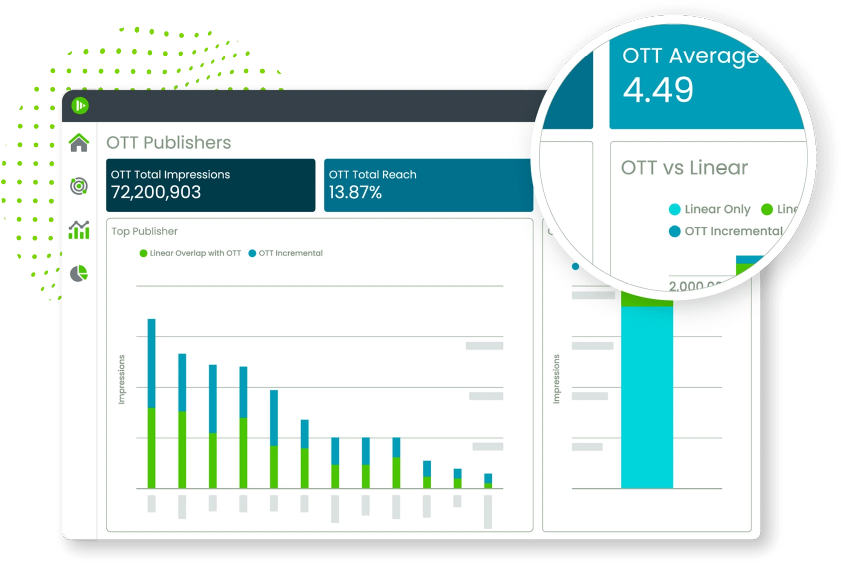
Buying the missing pieces
iSpot expanded that chain through acquisitions. Ace Metrix, acquired in January 2021, supplied consumer sentiment and creative assessment. DRMetrix followed that October, bringing expertise in direct-response advertising and changing calls to action. Tunity added out-of-home viewing measurement in 2022. Television in a public place presents a different counting problem from television in a living room.
The 2023 purchase of 605 broadened outcomes expertise and access to set-top-box data. Its capabilities included offline purchases and other categories that complemented iSpot’s digital-response strengths. Read together, these deals reveal a purchasing discipline: fill a specific measurement gap that an existing customer can use. An acquisition earns its place when it helps answer the next question.
The money behind the measurement
This is an enterprise software and data business. Customers license measurement capabilities, with dashboards, integrations, and analytical services supporting their use. In a 2024 interview, Muller said brand and advertiser software accounted for roughly 70% of revenue at that time. He also described measurement services sold to agencies on a cost-per-thousand-impressions basis.
Building the machinery required substantial capital. In April 2022, Goldman Sachs Asset Management announced a $325 million investment for a significant minority stake. iSpot said it had previously raised $58 million and exceeded $100 million in annual recurring revenue. Those are dated disclosures, not a current revenue estimate. The stated uses included engineering, product development, customer support, sales, and acquisitions.
Nielsen remains an alternative, alongside companies such as VideoAmp and Comscore. iSpot’s argument centers on the ad: creative, verified delivery, and outcomes in one chain. Credentials also have boundaries. Its 2023 Media Rating Council accreditation covered national TV ad occurrence reporting. That should not be read as blanket accreditation of every number in every product.
Goldman Sachs Asset Management
Significant minority stake · April 2022
A report that can change the next ad
In March 2025, iSpot launched Outcomes at Scale with Paramount as its first implementer. The product gives publishers a way to make campaign attribution available continuously. A collaboration with Circana extended the approach to packaged-goods sales measurement across Paramount’s linear and digital properties.
By January 2026, Roku was testing a further step: using iSpot’s attributed outcomes to optimize campaigns while they ran. Early SimpliSafe testing reported 23% more leads and 31% more website visits for an optimized group versus a control. These are results from a named test, not promised gains for every advertiser.
There is a useful distinction here, which Muller emphasized in a June 2026 interview. A purchase after an exposure is a signal. Estimating what the advertising caused requires credible comparisons, consistent audience measurement, and suitable outcome data. A television staying on does not establish that a person watched every second. A conversion count does not settle causality.
“There’s a big difference between outcome signals and outcome measurement.”
Sean Muller / June 2026
The catalog gets an AI colleague
February 2026 brought SAGE, iSpot’s agentic AI platform, developed with input from brands including General Motors and Airbnb. Its initial creative tools diagnose performance, compare themes, and assist planning. The advantage being sold is access to iSpot’s accumulated advertising and consumer-response data. In September, it demonstrated natural-language media analysis; October brought a measurement partnership with Hallmark Media.
For a marketer, the lesson is usable without buying anything: decide what success means, verify what ran, separate new reach from repeat exposure, and test whether the observed response exceeds a credible baseline. The approach becomes less useful when outcome data cannot be matched reliably, campaigns provide too little evidence, or teams cannot act on findings. iSpot began by making commercials easier to find. Its business now depends on making advertising decisions easier to defend.