Before Isan Chen had a company to build, he had classmates. Renata Pasqualini and Wadih Arap knew him at the University of São Paulo. Later, the three were colleagues in Houston. By the time they founded MBrace Therapeutics, they shared something a newly assembled team cannot put on an expense report: a history of knowing one another’s work.
It is an appealing place to begin a founder’s story. The familiar version starts with an idea, introduces a financing round, and lets the zeros do the character development. Chen’s story has the zeros, too. MBrace announced an $85 million Series B in November 2023. But the earlier introductions explain who was there when the company began, and why the names on its founding team belong together.
Classmates before co-founders
Chen’s route to that team crossed countries and institutions. His family immigrated to Brazil when he was six. He studied at the University of São Paulo, moved to New York, and completed further training at UC San Diego. The university connections would endure well beyond his years as a trainee.
Pasqualini and Arap became professors at Rutgers. Chen spent years in industry. Their paths had diverged, but the connection remained available for another chapter. MBrace, founded in June 2020, reunited people whose acquaintance preceded the business.
There is a useful distinction between meeting a possible collaborator and already having worked alongside one. A résumé records appointments. Shared work adds context to them. In Chen’s case, the founding relationship had both a classroom chapter and a professional one. The new company was a fresh undertaking among people who were already familiar.
A large company, then a smaller one
Chen worked at Pfizer before joining Aragon Pharmaceuticals, where he was chief medical officer. Moving between those organizations put him inside very different kinds of businesses: an established multinational and a privately held company that would soon attract a large buyer.
In June 2013, Johnson & Johnson announced its agreement to acquire Aragon. The terms were $650 million in upfront cash, with up to $350 million more contingent on specified milestones. Those two amounts explain the billion-dollar shorthand attached to the transaction. They also show why the fine print matters: the announced ceiling and the initial payment were different figures.
For Chen’s biography, the acquisition supplies a definite corporate turning point. Aragon’s story was entering a new ownership chapter. His next appointment followed that same year. The sequence puts a major transaction beside a change of employer without turning either into a claim that one executive alone made it happen.
A company transaction, with future payments tied to milestones.
Seven years behind the next beginning
Mirati Therapeutics announced Chen’s appointment on September 4, 2013. His position combined an executive vice presidency with responsibility for development. He reported to president and CEO Charles Baum and joined the executive management team.
The job’s scope is more revealing than its length on a business card. Operations, regulatory responsibilities, project management, and other development functions fell within his assignment. He and Baum were to establish his initial goals within thirty days of employment. The title arrived with a timetable and a substantial collection of responsibilities.
That gives the career a practical texture. An executive appointment can sound like a promotion in the abstract. Here, it meant becoming responsible for several kinds of work inside the same organization, with goals to be agreed at the outset. The paperwork makes the breadth unusually visible.
Chen remained at Mirati until 2020. Those years occupy much more space in his working life than a compact biography suggests. When he went on to co-found MBrace, he brought experience from a long executive assignment as well as the earlier chapters at Pfizer and Aragon.
- 2004–2010Pfizer · vice president
- 2010–2013Aragon · executive leadership
- 2013–2020Mirati · executive vice president
- 2020MBrace · co-founder
The company across two coasts
MBrace brought Chen’s industry experience into a venture connected to university research. Pasqualini and Arap continued their work at Rutgers. The company obtained an exclusive global license from the university and sponsored work in their laboratory.
The arrangement gave the founding team a continuing institutional relationship as well as a personal one. Rutgers’ commercialization staff helped facilitate the license. The university connection also helped MBrace lease laboratory space in Summit, New Jersey. Its headquarters were in San Diego.
That geography is part of the company’s early story. The headquarters and research facilities sat on opposite sides of the country, while the founders’ shared history reached back to Brazil and Texas. The venture connected those places through identifiable people, agreements, and working locations.
Rutgers described an initial $4 million raised during the pandemic and a Series A closed in November 2021. Those were steps in establishing and expanding the organization before the larger financing that later drew attention. A startup’s public arrival often comes after quite a bit of less visible institutional work.
The people around the funding table
The November 14, 2023 announcement gave MBrace a new financial scale. Its $85 million Series B brought reported funding to $110 million at that point. The date belongs beside the number; it describes that financing announcement rather than a running total for every subsequent year.
TPG led the round through its Life Sciences Innovations fund and The Rise Fund. Avidity Partners and Cowen Healthcare Investments joined existing investors Venrock and Alta Partners. The financing brought new participants into a company that already had an investor circle.
It also changed the board. Carolyn Ng of TPG and Monal Mehta of Avidity joined alongside independent director Christopher LeMasters. Existing directors included Bob More of Alta Partners and Racquel Bracken of Venrock. In practical terms, the announcement was about people taking seats as well as money entering the business.
Chen’s public response included thanks to the investors for their commitment and support. Read alongside the founding history, the round marks another expansion of the working group around him. Classmates and colleagues had become co-founders; investors and directors added further relationships to the company.
A founder makes room for other experience
In March 2024, MBrace announced Steve Alley as chief scientific officer. Alley came from a career of more than twenty years at Seagen, where he had held research and development leadership roles and led a team spanning different functions.
Chen’s comments on the appointment singled out Alley’s experience of “strategically prioritizing and advancing” work. That phrase gives the announcement a little more substance than a standard welcome. Prioritization is a choice about where an organization puts its people and time. Chen was pointing to an executive’s record of making those choices within a growing business.
Alley’s appointment also belongs in a wider view of Chen’s career. Chen had served as an advisor and director at Tyra Biosciences, and as a director at Treadwell Therapeutics. Alongside his operating roles, he had experience participating in other companies’ leadership and oversight.
MBrace’s current leadership arrangement adds another development. Chen is listed as co-founder, president, and head of research and development. Jay Stamatis is CEO. The founder remains in the leadership team with a defined assignment, while the chief executive role sits with someone else.
The human part of the work
One of Chen’s public LinkedIn comments offers a less formal glimpse of how he thinks about work. Discussing artificial intelligence in a corporate environment, he described improvements in technical efficiency. He then emphasized that human interaction remained a separate challenge.
“AI certainly made certain technical aspects of our work more efficient”
Isan Chen · LinkedIn comment
It is a measured observation from someone whose career has involved organizations with many different responsibilities and people. The distinction is easy to recognize in the story so far. Licenses, appointments, financing, and board membership can be recorded as transactions. Each also involves people agreeing to work together.
The comment does not need to become a theory of Chen’s personality. It supplies something more useful: his stated view on a current workplace question. Technical efficiency matters to him, and so does the harder business of interaction. A career built across several institutions gives that observation an apt setting.
A campus connection with a future
Outside the company, Chen and his wife, Grace Shiao, have kept a connection to UC San Diego. In 2013, they renewed their involvement during a campus walk. Their account places that walk exactly fifteen years after their first lunch date at the university. It is an unusually good anniversary souvenir: a decision to give back.
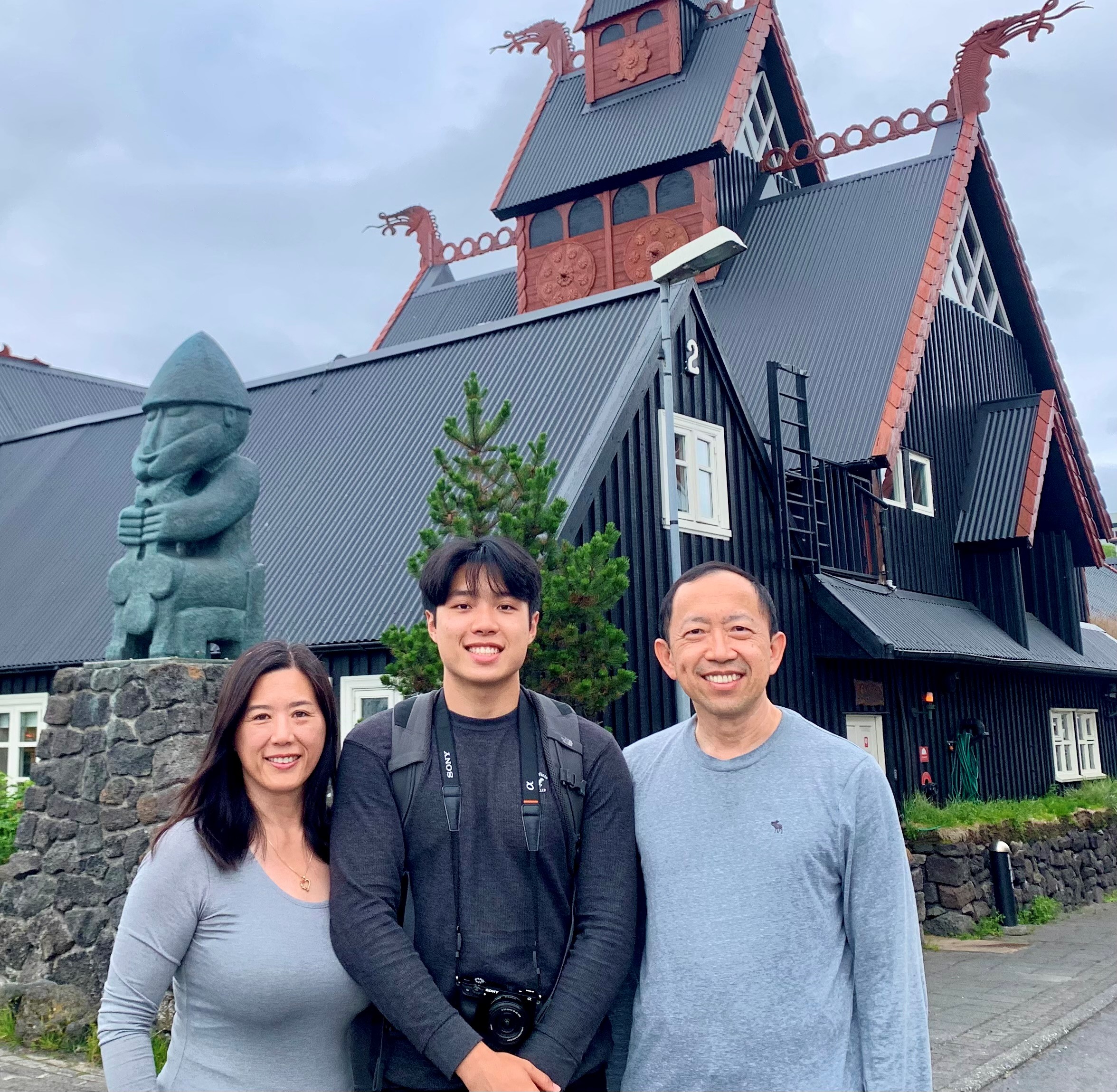
The couple support Chancellor’s Associates Scholarships and arranged a gift in their trust to establish a scholarship endowment. Grace’s own financial aid had helped her attend the university. Their commitment gives a past opportunity a future use.
Chen’s career contains several such returns: classmates becoming collaborators, university connections continuing into a company, and a family association becoming support for students. The dates and titles tell where he worked. The relationships tell how one chapter remained connected to the next.