The introduction came from their mothers. Before Trevor Bezdek and Doug Hirsch shared a chief executive title, their mothers knew each other in Los Angeles and thought their entrepreneurial sons might get along. It is a pleasantly domestic beginning for a company that would eventually have a Nasdaq ticker. Venture capital has many theories about finding the right co-founder. In this instance, the family network had already made its recommendation.
GoodRx was founded in 2011 by Bezdek, Hirsch and Scott Marlette. For years, Bezdek and Hirsch ran it together as co-CEOs. Later, Bezdek became chairman; today he shares the board’s leadership with Scott Wagner. The repeated appearance of the word “co” gives his career an interesting rhythm. The public milestones are familiar enough: an earlier company sale, a public offering, a change of executive leadership. The distinctive part is the succession of partnerships around them.
That makes Bezdek an instructive person to follow beyond the ceremonial photograph. Business biographies tend to tidy a crowded enterprise into one founder, one insight and one decisive afternoon. His career is easier to understand with several people left in the picture. The chair keeps changing, and so does the company beside it.
The introduction before the institution
The mothers’ introduction connected two people who already had careers in software. Hirsch had worked at Yahoo and Facebook. Bezdek had built businesses of his own. They arrived with different histories and enough common ground to begin a conversation. By the time GoodRx appeared, neither was being introduced to the basic idea that technology could become a business.
There is some affectionate comedy in the partnership’s public record. Bezdek once joked that Hirsch was “cheap.” It is the sort of small observation that makes an executive relationship sound inhabited. A colleague has habits, a friend has material for teasing, and a co-founder may be both. Their mothers had recommended a meeting; the sons supplied the years of work that followed.
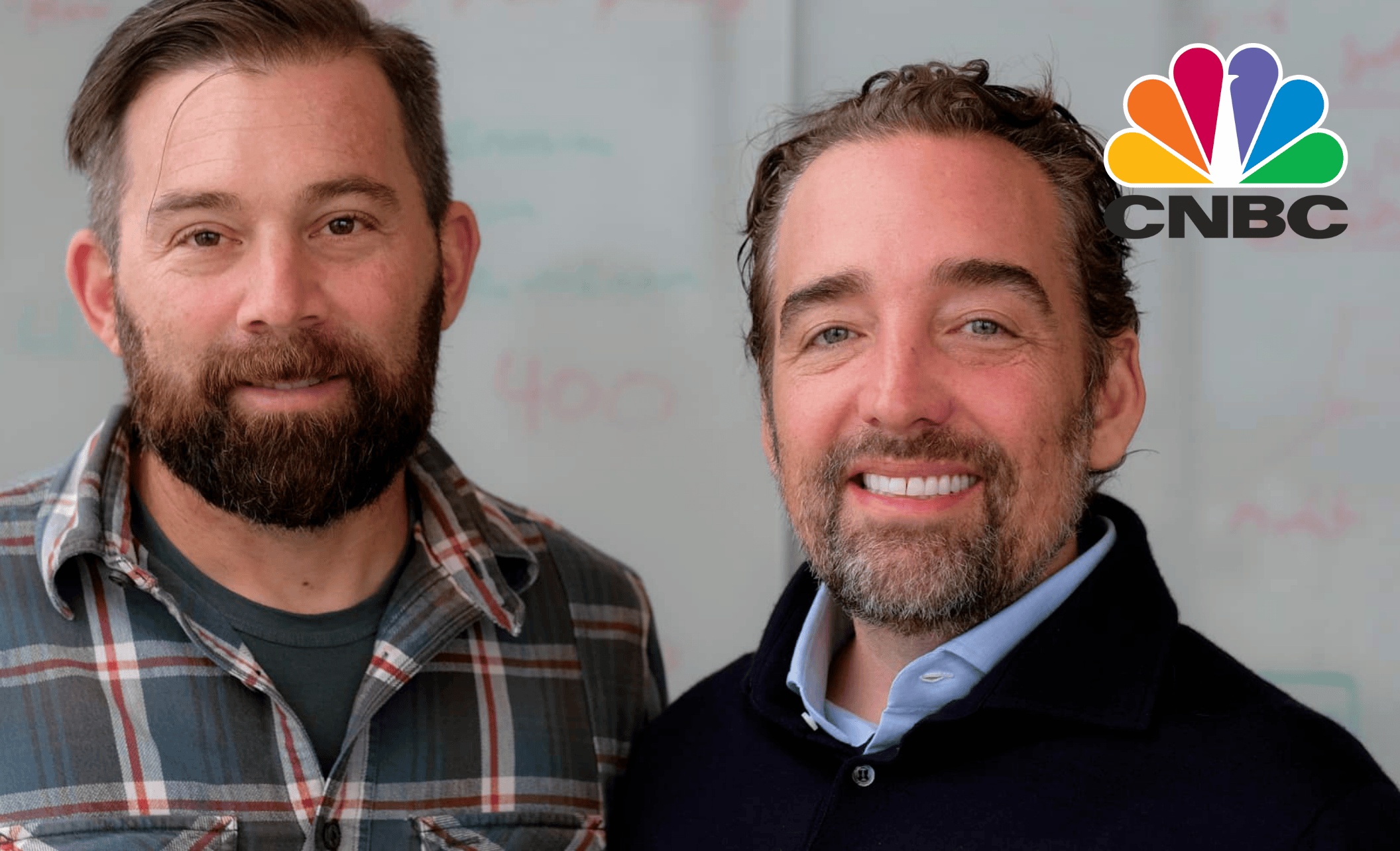
A shared title raises practical questions even when the arrangement looks companionable in a photograph. Decisions still have to be made. People need to know where responsibility sits. Different judgments must eventually become one course of action. The length of Bezdek and Hirsch’s co-CEO tenure gives the arrangement substance beyond its novelty. It was part of the company’s operating history, including the years surrounding its public offering.
The apprenticeship hidden in the résumé
Before the shared executive title came Stanford. Bezdek holds a bachelor’s degree in Biological Sciences; his later university symposium biography also records Computer Science and the Fox Award for undergraduate achievement in Biology. The pairing is an interesting starting point for a software entrepreneur: studying living systems while learning the means to build digital ones. Both fields ask you to pay attention to relationships between parts.
His early work included co-founding Biowire, a software provider and community for scientists. The description contains two ambitions in a small space: make something useful, and create somewhere for people to exchange knowledge. A software company can do either. Combining them requires attention to the people around the product as well as the product itself.
Tryarc followed. Bezdek served as managing partner of the information technology consulting firm from 2001 to 2007. Its work involved technology strategy and implementation, with clients including Toyota and Sony. In 2007, the business was sold to NTT DATA. GoodRx was still four years away. The recognizable name in his biography came after he had already experienced building and selling a company.
Consulting is an unglamorous education in a useful sense. A customer needs something to work. The specification may be awkward, the existing systems inconvenient and the deadline wholly uninterested in your aspirations. There is less room for the romance of the idea once another organization is waiting for delivery. That context gives Tryarc a place in the story beyond the acquisition line.
The earlier chapters also complicate the usual image of the first-time founder. Bezdek did not arrive at GoodRx with only an undergraduate education and a promising introduction. His résumé already contained a scientific community, a consulting company and an acquisition. The next venture would have a different scale and a different public life, but company-building was familiar work.
A bell is only one moment
GoodRx began trading on Nasdaq on September 23, 2020, under GDRX. Its initial offering was priced at $33 a share. The announcement described approximately 34.6 million shares, split between newly issued company shares and shares sold by existing shareholders. That distinction matters: the total size of an offering and the money received by the business are different figures.
The final transaction included the underwriters’ full option to buy additional shares. GoodRx reported net proceeds to the company of $886.9 million after underwriting discounts and other offering expenses. These are substantial numbers, but they describe a financing event. They do not settle the harder questions about what the company will become or how its leaders will handle the years ahead.
September 23, 2020: first trading day on Nasdaq.
The public offering is an obvious place to stop a founder profile. It provides a date, a number and a bell. It also risks making the whole enterprise resemble a journey whose destination was a stock exchange. The following years are part of Bezdek’s story because the work continued and his place within it changed. A ceremony lasts an afternoon. An institution keeps asking for decisions.
A question with a long afterlife
One unusually personal glimpse comes from novelist D. R. Roth, who worked under Bezdek after their companies became part of a larger organization. Roth remembers a younger boss asking a short question: “What do you do?” He describes it as an uncomfortable moment of reckoning about his own contribution. He subsequently left the corporate role and pursued writing, eventually publishing a novel.
“What do you do?”
A question recalled by D. R. Roth
Roth’s account belongs to Roth: the embarrassment, the interpretation and the gratitude are his. It is striking because a former employee made a difficult encounter into a thank-you. Bezdek appears in the recollection as someone direct enough to interrupt a comfortable explanation. The eventual meaning of that interruption was something the employee made for himself.
Elsewhere, a GoodRx employee described Bezdek and Hirsch as approachable leaders who celebrated milestones and put attention on employees. Set beside Roth’s memory, it offers another angle on the executive. A person can be demanding in one exchange and generous with recognition in another. Leadership has more texture when individual recollections remain individual, rather than being flattened into a personality slogan.
There is a useful caution here for anyone trying to make a founder legible in a few adjectives. “Direct” can conceal the effect on the person receiving the question. “Down-to-earth” can mean different things to different colleagues. These glimpses are worth keeping because they contain actual encounters, with other people present to give the story friction.
Changing the job, keeping the connection
In April 2023, Bezdek’s co-CEO tenure ended and he became chairman. Hirsch also changed roles, while Scott Wagner took over as interim CEO. The new arrangement separated the founders’ continuing involvement from the day-to-day executive job. For Bezdek, a company he had helped start became a company whose leadership he would support from a different position.
The transition has its own professional logic. Running an organization and chairing its board ask for different kinds of attention. An executive lives closer to the daily choices; a chair helps oversee the people making them. A founder brings institutional memory to either role, but memory becomes useful only when it leaves room for the present.
In January 2025, Wagner joined the board as co-chair alongside Bezdek. The shared-chair arrangement linked a founder with someone who had already led the company as interim CEO. Their knowledge came from different points in its history. The succession was therefore also a continuation: experience from the operating role moved into governance beside experience from the beginning.
Bezdek’s public response emphasized Wagner’s familiarity with the business and its next stage. The sentiment suits the structure. A founder can remain connected without retaining every earlier responsibility. The result is a less theatrical version of continuity, expressed through appointments and working relationships rather than a farewell scene.
Another kind of company
The next act includes Austere Moose, the venture studio Bezdek co-founded. The name introduces a little zoological mischief into an otherwise formal career. Its stated work is to co-found and build new companies. That puts him back near the beginning of the process, where an organization’s routines, people and responsibilities are still being assembled.
His institutional commitments extend beyond startups. He is also involved with Crossroads School for Arts & Sciences and the Stanford Institute for Economic Policy Research. These affiliations place education and research alongside business in his public life. They are concrete commitments to organizations with purposes and constituencies of their own.
Then there is the theatre. Jana and Trevor Bezdek were the gala chairs for Center Theatre Group’s March 29, 2026 celebration honoring Phylicia Rashad and Joel Grey. The programme invited disco attire and included dinner, a performance and a party. Corporate governance rarely gives you permission to wear platform shoes. A theatre gala is more accommodating.
Their support predates that evening: Jana and Trevor also contributed to Center Theatre Group in its 2021-22 and 2022-23 seasons. The gala supported the organization’s work, including education and community programmes. In this setting, the interesting connection is between a technology entrepreneur’s public career and the ongoing business of keeping a cultural institution alive.
That is where the portrait acquires some breadth. Bezdek has helped start companies, shared executive authority, changed his job inside an institution and supported organizations outside it. The pattern is visible without assigning him a private philosophy. His career leaves several people in the frame and several kinds of work on the programme. The mothers’ introduction was a beginning. He has kept finding company since.