David Fellows was retired when Chris Hollowood picked up the telephone. The two had worked together at Nightstar Therapeutics, where Fellows was chief executive and Hollowood was chairman. Now Hollowood needed a CEO again. A completed acquisition had created another assignment, and he wanted someone whose work he already knew. Fellows agreed to return. Retirement, it turns out, can have a surprisingly effective switchboard.
The call brought Fellows into the business that became Beacon Therapeutics. He took the CEO role following Syncona’s acquisition of AGTC in November 2022, then oversaw Beacon’s launch in June 2023. The invitation came with history. By then, Fellows had spent decades inside established international companies, led a smaller business onto Nasdaq, and helped take it through a sale to Biogen. His next chapter began with a familiar voice.
Fellows described his previous work with Hollowood as a significant reason for joining Beacon. It is an unusually plain explanation for an executive appointment. There is no elaborate account of destiny. Someone he had worked with called about a job. That earlier collaboration carried enough weight to get him back to work.
Twenty-five years before the opening bell
Fellows’s route into company leadership began well before a startup could put his name beside its logo. He earned a B.A. in Psychology at Butler University in Indianapolis. His public LinkedIn profile dates his time there to 1974-1978. The degree supplies a small surprise in a résumé otherwise dominated by corporate appointments. His academic starting point was the study of people.
At Allergan, he spent 25 years working principally in sales and marketing, moving through roles that included regional president, corporate vice president and senior vice president. His assignments spanned North America, Europe and Asia. Twenty-five years is a substantial stretch of a working life to spend inside one company. It allows a résumé to accumulate depth as well as lines.
That geography matters to the shape of his career. Fellows’s experience extended across markets rather than remaining inside a single office or national business. The titles changed; the work retained a commercial emphasis. Sales, marketing and regional management formed the early chapters, giving his later CEO appointments a background in the practical business of taking an organization beyond its original base.
In September 2005, he became a vice president in Johnson & Johnson’s Vision Care Franchise. His remit included global marketing, new products and licensing. He remained there through December 2014. After a quarter-century at Allergan, he spent roughly another nine years in a large corporate setting. The pace of this career would make a rather disappointing montage: years of work between the title cards.
Then, in January 2015, he became CEO of Nightstar. The move put an executive with a long corporate apprenticeship into a younger company. It also changed the scale of the job. Global responsibilities at an established business became responsibility for the whole of a smaller one, with its own financing requirements, board and future to organize.
A bell, then a buyer
On September 28, 2017, Fellows stood at Nasdaq’s MarketSite in Times Square to ring the closing bell. Nightstar was celebrating its initial public offering. The photograph shows him at the center of a crowded group, looking down toward the bell as colleagues applaud and confetti crosses the frame. Public-company status arrived with a stage, a camera and quite a lot of paper in the air.
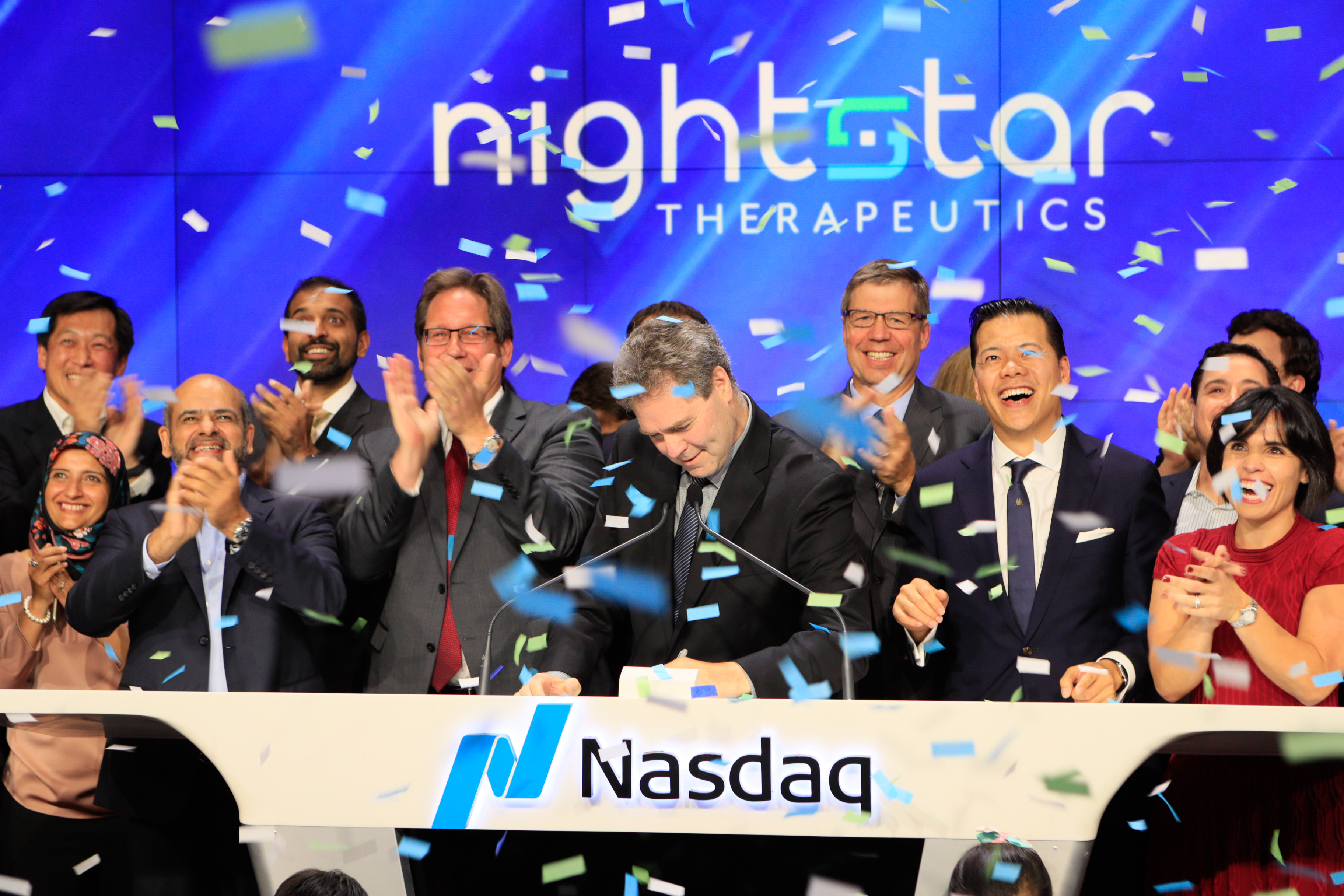
The offering closed on October 2. Nightstar sold 6,164,000 American depositary shares at $14 each, including the underwriters’ exercised option. It received approximately $77.4 million after underwriting discounts, commissions and other offering expenses. The ceremony was the photogenic part. The completed offering was the part that put capital into the company.
Less than two years later, Nightstar would have another owner. In March 2019, it announced an agreement to be acquired by Biogen. The acquisition completed on June 7. Biogen described the transaction value as approximately $800 million after taking account of expected transaction expenses and cash at closing. The agreed cash price was $25.50 per share.
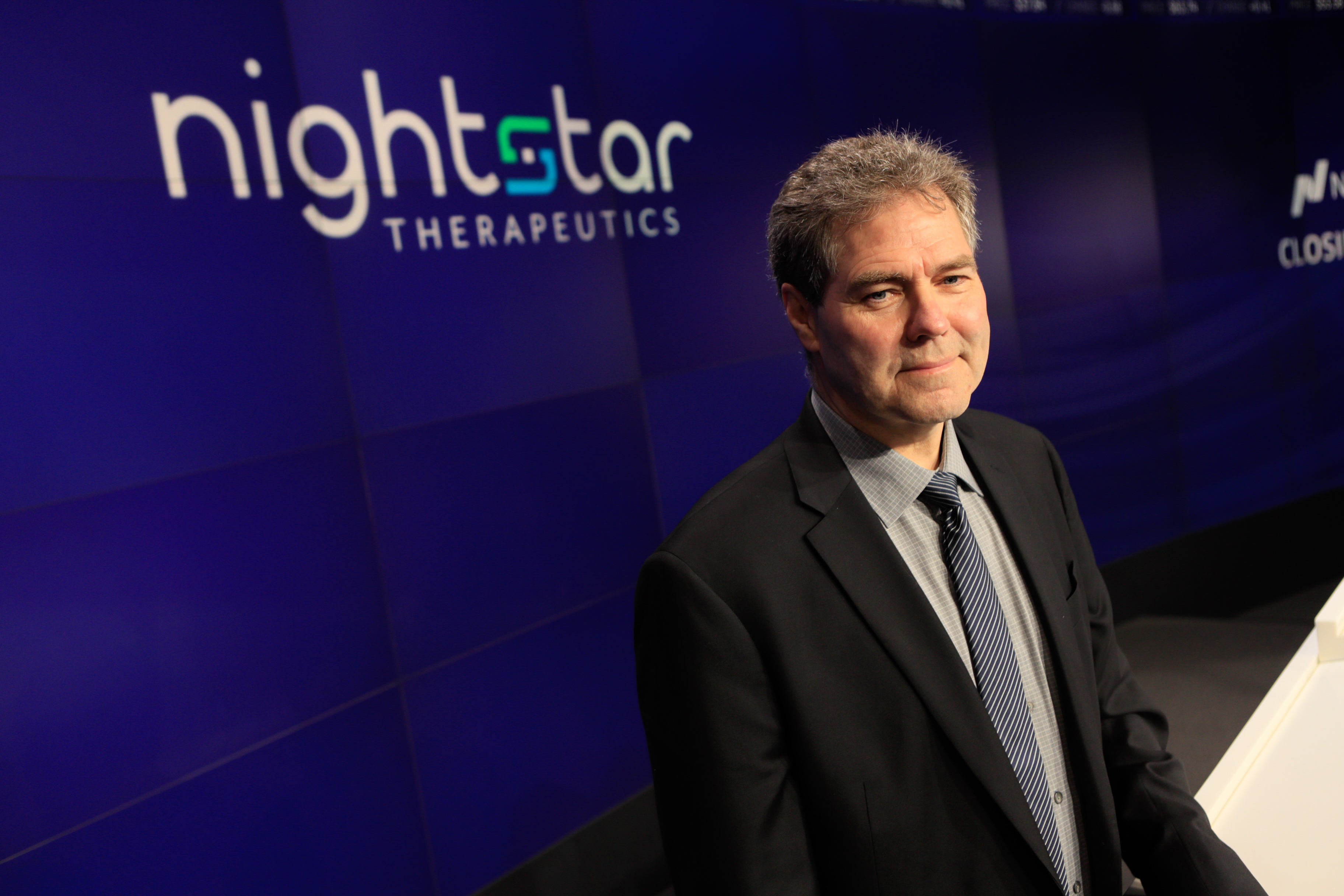
For Fellows, the journey through Nightstar included both entrance into the public market and departure from it. A listing and a sale are quite different corporate events. Together, they gave his CEO tenure a visible financial arc: a young company gained public investors, then became part of a larger business. The ticker symbol NITE had a relatively brief independent life.
The acquisition discussions also contain a glimpse of the work between announcements. In January and February 2019, Fellows participated in meetings with prospective counterparties and discussions about possible collaborations. The board considered alternatives as negotiations continued. These were collective decisions involving management, directors and advisers. A photograph can give a CEO center stage; a transaction needs rather more chairs around the table.
Different measures: financing proceeds and acquisition value describe separate events.
Fellows’s message to employees on March 4 addressed the sale in the language of a team. He thanked colleagues for their dedication and outlined opportunities inside the larger organization. An all-hands meeting was scheduled for 8:30 a.m. Eastern time and 1:30 p.m. in the UK, with a webcast for British colleagues. Beneath the size of the deal lay the ordinary necessity of getting everyone into the same conversation.
He signed the note “Dave.” That small choice gives the formal corporate record a less ceremonial ending. The chief executive whose full name appeared on filings was addressing the people who worked with him. The bell ceremony, the transaction announcement and the employee meeting belonged to the same job, though only one involved confetti.
The call that interrupted retirement
When Hollowood approached him again, the pair already had that Nightstar experience behind them. Hollowood described calling Fellows to get him to come out of retirement because the new business needed a good CEO. His explanation makes the connection concrete. A former chairman was recruiting a former chief executive with whom he had already built a working relationship.
Beacon launched on June 12, 2023, with £96 million in Series A financing, approximately $120 million at the time. Syncona backed the launch, with additional investors including Oxford Science Enterprises. The company combined the acquired AGTC business with further programs. Fellows’s task was to lead a new organization assembled from existing pieces, rather than begin with an entirely empty desk.
There is a useful distinction in the timing. Beacon’s public launch took place in June 2023; Fellows’s operating role began after the November 2022 acquisition. The announcement therefore marked a company already being put together. His founding CEO title describes leadership during that formation, with months of work preceding the public introduction.
“Chris was a big influence in me coming to Beacon”David Fellows, on joining Beacon
The return also reunited an executive and an investor across two separate businesses. Nightstar’s acquisition had ended one corporate arrangement without exhausting the usefulness of the relationship. That continuity helps explain why Fellows’s story is larger than a series of job changes. Experience travels with a person, and so do the colleagues who have watched that person use it.
A smaller public exchange offers another view of those continuing ties. On LinkedIn, Fellows responded to someone considering a new professional step and offered introductions to people he knew from Nightstar. He referred to the business as his old company, mentioned its sale to Biogen, and wished the person well. Years of corporate history were compressed into a practical offer of help.
“I am happy to provide you an introduction,” he wrote. The offer is modest, but specific. It shows a former CEO still able to connect someone with former colleagues. An acquisition changes ownership. In this exchange, the old address book remained useful.
A company built for the handover
On July 3, 2024, Beacon announced a $170 million Series B financing led by Forbion. Syncona participated alongside existing and new investors, including Oxford Science Enterprises, the University of Oxford, TCGX and Advent Life Sciences. The round brought Beacon’s disclosed financing to approximately $290 million. Fellows was still chief executive when it closed.
Later that month, the company announced the next leadership arrangement. Lance Baldo would become CEO on August 12, and Thomas Biancardi would become CFO on August 1. Fellows would assist with the transition and become non-executive chairman in January 2025. The succession followed the financing, placing a new management team inside a recently funded organization.
Today, Beacon lists Fellows as chairman. The title gives the latest chapter a different rhythm from his founding CEO assignment. His connection to the company continues through the board, while Baldo holds the operating leadership role. Fellows’s broader board work includes chairing Oxular; he has also served on the boards of Jaguar Gene Therapy and Terns Pharmaceuticals.
His public profile places him in Ponte Vedra Beach, Florida. His professional history ranges much farther: international roles, a London-linked company listed in New York, an acquisition by Biogen, and a return to build Beacon. Across that geography, the repeated thread is work with other people. A chairman called because he knew the executive. A former CEO offered introductions because he knew the colleagues.
The Nasdaq photograph catches Fellows surrounded by his team at a conspicuous moment. The later phone call belongs to a quieter kind of career event, one without a photographer or ticker symbol. Both have a place in his story. The bell announced a company’s new status. The call brought a familiar colleague back for another assignment.