Dennis Podlesak’s name appears twice near the end of Calixa’s December 2009 merger agreement. First, he signs for the company as president and chief executive. Then he signs as a member of the stockholders’ committee, alongside Eckard Weber. It is a small detail beneath a large transaction, but a useful place to begin. The same person is helping run the business and carrying a separate responsibility for its owners.
Business biographies tend to stack titles like luggage: founder, CEO, investor, chairman. Podlesak has carried all four. His career becomes easier to follow when the titles are unpacked. There is the executive who leaves a large organization to run a smaller one; the founder whose company finds a buyer; the investor who keeps returning to company creation; and the chairman whose tenure lasts longer than several of those chapters combined.
The temptation is to turn that sequence into a formula. Start, build, sell, repeat. It has the advantage of fitting on a coffee mug. It also leaves out the part that makes the sequence interesting: different responsibilities, different buyers, and colleagues who return years later. Podlesak’s working life offers a more specific story about what happens when experience moves from one company to the next.
Nine months at Peninsula
Before the company-building chapters, there were executive roles at SmithKline Beecham, Allergan, and Novartis. At Novartis, Podlesak was a senior vice president and head of a North American business unit. He also served on its executive committee and global leadership team. These were jobs inside established organizations, where an executive’s decisions sat within a much larger corporate structure.
In September 2004, he became president and CEO of Peninsula Pharmaceuticals, also joining its board. By June 2005, Peninsula had been sold to Johnson & Johnson. Nine months separate those dates. The interval is striking, though it should be read carefully: his arrival marks the start of his leadership tenure, rather than the beginning of the company itself. An executive can enter a story already well underway.
That distinction matters to a portrait of Podlesak. He was Peninsula’s chief executive. He would later be a founder and chief executive at Cerexa and Calixa. Those descriptions carry different histories. Joining a company means taking responsibility for an existing organization. Founding one adds responsibility for bringing the organization into being. His career contains both kinds of work, and treating them as interchangeable would flatten it.
Peninsula also put him alongside Weber, its chairman. The names would appear together again. For now, the immediate result was a company sale and a change of ownership. A résumé can make this sound like a tidy full stop. The next entry suggests a semicolon: Podlesak went on to lead Cerexa, which would have its own buyer and its own transaction.
- 2004President & CEO
Peninsula - 2007Partner
Domain Associates - 2008Chairman
Syndax - 2020Chairman at launch
Exalys
The signature beneath the number
Cerexa’s agreement with Forest Laboratories was announced in December 2006. The terms included $480 million in cash, the assumption of $13.6 million in transaction-related expenses and payments, and a possible additional $100 million linked to a sales milestone. Forest completed the acquisition on January 10, 2007. Podlesak had been Cerexa’s founder and CEO; he and Weber were also named as agents for its stockholders.
The terms deserve their separate lines. Cash paid for shares, expenses assumed, and money dependent on a future condition do different jobs. A headline that adds everything together can make the future look as settled as the present. The agreement keeps the distinction visible. In a career containing several acquisitions, those distinctions are part of understanding what actually happened.
Calixa followed with another arrangement. Cubist agreed to acquire it in December 2009, paying $92.5 million in cash at closing, subject to adjustments, with up to $310 million in additional milestone payments. Calixa became a wholly owned subsidiary. Podlesak had founded and led the company; the agreement records him signing both for Calixa and for the stockholders’ committee.
Here, the paperwork provides a glimpse of the overlap between operator and owner representative. It puts responsibilities on the page that a short title cannot convey. A transaction has a buyer and a seller, but it also has people acting for a corporation and people acting for those holding its shares. Podlesak’s two signatures make that structure unusually easy to see.
At Corthera, his role was executive chairman. Novartis announced its acquisition agreement in December 2009 and completed the purchase on February 3, 2010. The announced structure included $120 million initially and up to $500 million in conditional additional payments. For Podlesak, the corporate name had appeared earlier as an employer. Now it appeared as the buyer of a company he helped lead.
There is a pleasing circularity in that sequence, without any need to dress it up as destiny. Large companies were part of his managerial background and later part of his acquisition history. The record places him in different roles around organizations of different sizes. It shows a career crossing those boundaries; it does not require a single grand explanation for every crossing.
The people who turn up again
Podlesak joined Domain Associates as a partner in November 2007. His work there included investing, founding companies, and taking executive responsibilities within portfolio businesses. The investing chapter therefore ran alongside the operating chapter. The familiar picture of a financier watching from the far side of a desk is too simple for a record that repeatedly puts him in the chief executive’s chair.
One continuity was Weber. Another was Rick Orr. In July 2020, the launch of Exalys reunited Orr’s management team with Weber and Podlesak. The announcement described collaborations stretching across Peninsula, Cerexa, Calixa, and Corthera. Exalys launched with a $15 million Series A financing, and Podlesak was identified as its board chairman. The new company came with a history of working relationships.
“Eckard and I are delighted to be working with Rick and his team again,” Podlesak said. The word “again” does useful work. Company names change across this career; some collaborators recur. Their return gives the sequence a human scale. A financing announcement becomes a record of people deciding to work together for another chapter.
That is also a corrective to the solitary-founder version of business storytelling. Podlesak’s roles can be described precisely without turning the surrounding people into scenery. Weber appears in governance and transaction responsibilities. Orr leads a management team. Buyers have their own executives and boards. The company builder occupies a consequential position within that arrangement, alongside others with consequential jobs of their own.
“Eckard and I are delighted to be working with Rick and his team again”Dennis Podlesak · Exalys launch, July 2020
A chair that stays occupied
Acquisitions lend themselves to dates and numbers. A chairmanship has a slower rhythm. Podlesak has chaired Syndax since December 2008. His current committee responsibilities include audit and compensation, and he chairs the nominating and corporate governance committee. The work extends beyond the occasional announcement into the continuing machinery of a public company’s board.
In January 2017, he welcomed Pierre Legault to that board. In September 2018, he welcomed Jennifer Jarrett and William Meury as new directors. These appointments offer concrete examples of the board changing around a continuing chair. They also remind us that company building involves choices about who takes responsibility after the initial organization has been assembled.
His other board chapters include Avanir and RightCare Solutions, both acquired while he served as a director, and Tobira, which he chaired before its acquisition by Allergan in 2016. The roles differ from his CEO positions at Peninsula, Cerexa, and Calixa. Keeping that distinction preserves the shape of the career: he has participated in transactions through several kinds of responsibility.
The continuing work is visible in a February 26, 2026 registration statement signed by Podlesak as Syndax’s chairman. Alongside that role, he serves as chairman and CEO of Transposon, CEO and managing partner of Canaan Partners’ Axceliux, and an advisory partner at Domain. Even the present tense contains several different jobs.
A place for history
A different kind of long-term commitment appears in the family’s college involvement. After their son Justin graduated in 2019, Dennis and Gina Podlesak established a permanent endowment for the History Department at Hobart and William Smith Colleges. Announced in September 2020, the gift supported faculty and student research and development opportunities. The couple had previously chaired the Parents Executive Committee.
Dennis connected the value of Justin’s education to close work with professors and the development of reasoning, analysis, and writing. The intended support included Honors projects, research expenses, conference travel, and internships. It is a specific expression of what the family wanted to make available to future students: opportunities to pursue their work with faculty.
The detail adds another timescale to a career often described through transactions. An endowment is designed to continue. A board tenure can continue across changes in management. A collaborator can return in a later company. These forms of continuity sit beside the acquisition dates, giving the story something more substantial than a succession of exits.
Another beginning, in several roles
Podlesak’s own education includes a B.A. and an M.B.A. from Pepperdine University, followed by postgraduate studies at Wharton. His career then moves through corporate management, company leadership, venture investing, and governance. The sequence resists being reduced to one professional label. Depending on the chapter, the relevant question is what he founded, what he ran, or what board he chaired.
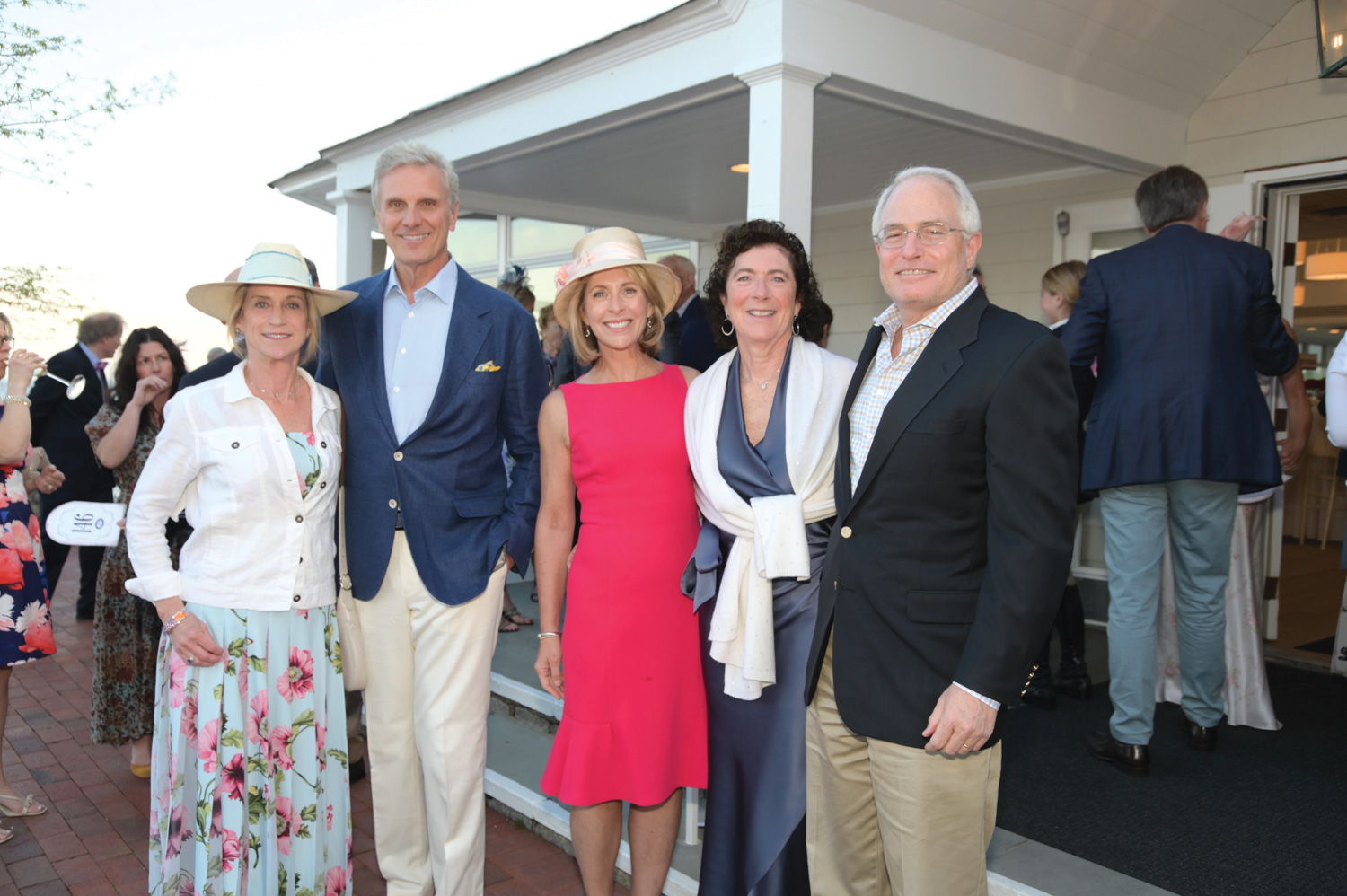
In a photograph from the Breeches and Bowties Gala, published in July 2025, he stands second from the left among fellow guests. A blue jacket, pale trousers, a yellow pocket square: ordinary details outside the transaction record. The picture does what a company title cannot. It puts a person among people, with no need for a valuation underneath.
Return to the Calixa agreement and the two signatures. They are a compact account of the larger career: more than one responsibility, held by the same person, at the same moment. The next beginning may involve a new company, a familiar colleague, or a continuing seat on a board. For Dennis Podlesak, the story has repeatedly moved forward through that combination.
Follow the next chapter
Public profiles, company pages, and further reading.