A good idea enjoys a very comfortable life. It can sit in a notebook for years, admired by its owner, protected from customers, competitors and the awkward question of who will pay. Chad Staheli is interested in what happens when it has to leave the notebook. The Philo Ventures co-founder and CEO works in that uncomfortable interval between imagining a business and making one function.
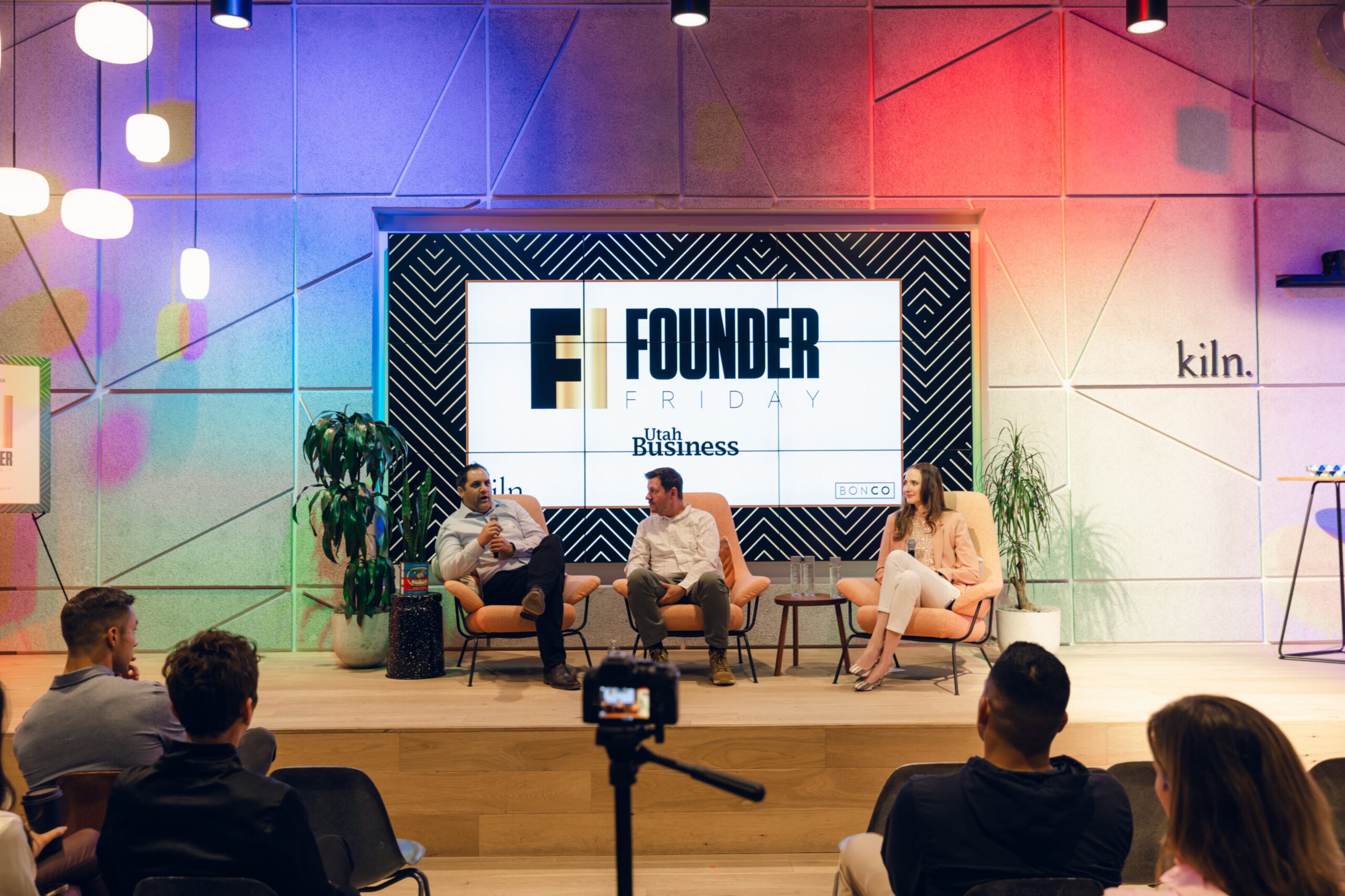
At a founder discussion in September 2023, he put his view plainly: “Ideas are a dime a dozen.” His attention went to execution and the people capable of carrying it out. It is an unfashionably practical starting point for an industry fond of the light-bulb moment. A light bulb, after all, still requires wiring.
Staheli’s work stretches across startup investment, company building, real estate and hospitality. The interesting connection is the unfinished state in which he encounters things. A company needs customers. A property needs a workable development path. A hotel needs daily operations that justify the promise in its photographs. Possibility is abundant; completing the job takes rather more organization.
Three degrees, then a different kind of classroom
His education covers three distinct approaches to decisions: an MBA from Wharton, a law degree from BYU’s J. Reuben Clark Law School, and a doctorate in leadership from Brigham Young University. The combination is an intriguing one for a company builder. Money, obligations and people have a habit of arriving at the same meeting.
Before Philo, Staheli launched and managed Vere Capital, a family office focused on early-stage investment. That role placed him close to enterprises still working out what they could become. It also establishes a continuity in his career: his interest in young businesses predates the studio that now gives that interest an operating structure.
Philo was co-founded in 2020. By December 2022, its studio was publicly launching in Utah’s Silicon Slopes. Staheli, Cory Cozzens and Greg Whitehead were the partners behind a group whose activities included creating companies, investing in outside startups and developing real estate. Christian Gardner and Dan Shaw were named among its advisory and capital partners.
The arrangement gave the venture a wider working surface than a software portfolio alone. Its launch materials described shared recruiting, tools and networks, with a dedicated team for the earliest stage of business creation. The intention was to carry learning from one startup into the next. Every new business would still have its own problems; it need not invent every administrative wheel.
A venture that stopped at the gate
One earlier episode makes that emphasis on judgment more tangible. Staheli served as CEO of Southern Red Sands, a proposed frac-sand operation in southern Utah. In 2019, the venture faced local opposition concerning water use and environmental effects. He described its commercial logic in terms of logistics: supplying a market closer to Utah than the established sand-producing regions of the Upper Midwest.
In January 2020, the company announced it would step away from its Kane County ventures after feasibility assessments. The proposed mine did not move forward. That outcome belongs in a career built around early-stage opportunities, where the decision to stop can matter as much as the decision to begin.
At a March 2020 water district meeting, Staheli attributed the withdrawal to economic analysis, production costs, logistics and technology. The meeting record also describes him presenting a $150,000 check on behalf of Southern Red Sands and Gardner Company. It records his statement that water availability had not driven the withdrawal. Those were his explanations to the board, rather than a resolution of every disagreement surrounding the proposal.
The episode supplies a useful limit to any romantic account of entrepreneurship. A project may have financial backers, a management team and a commercial thesis, and still fail to justify proceeding. A plan has to survive contact with its economics and its setting. Enthusiasm has no special exemption from either.
Making room for the useful mess
In a January 2023 podcast conversation, Staheli and Cozzens discussed the transition from day-to-day co-founder involvement toward investment and mentorship. They also addressed passing on opportunities and letting go of a passion project. The discussion framed company creation as a sequence of changing responsibilities, rather than a permanent claim on the founder’s chair.
That distinction helps explain Staheli’s place in the current Philo team. He is described as providing the capital and backing that allow the work to continue. Cozzens brings an operating background that includes aviation businesses. Other colleagues contribute product strategy, engineering, design, finance and sales. The cast matters because the underlying task refuses to stay inside a single professional specialty.
“That’s the game we play every day.”
Chad Staheli, on balancing startup freedom with structure
At the 2023 founder discussion, Staheli argued for reducing unnecessary startup chaos while preserving space for creativity. That is a delicate managerial ambition. Too little structure leaves everyone rediscovering the same problems. Too much can turn a young company into a committee with a product somewhere on the agenda.
His emphasis on specialists gives the proposition a human dimension. The question becomes who should join a particular business, and when their skill becomes essential. An investor can approve a budget. A designer, engineer or salesperson then has to make something happen. The distance between those two acts is where the studio earns its keep.
The idea gets five chances to prove itself
Philo’s published framework divides startup development into discovery, ideation, validation, launch and spinout. Discovery identifies a problem. Ideation examines possible solutions and the intended customer. Validation tests assumptions with users. Launch brings a working product and early revenue. Spinout pursues a business capable of securing outside funding or reaching breakeven.
- 01Discovery
- 02Ideation
- 03Validation
- 04Launch
- 05Spinout
The increasing burden of evidence is the revealing detail. As resources committed to a project grow, the case for continuing must grow too. A promising conversation is useful at one stage; actual customer behavior becomes necessary at another. The framework gives teams a way to distinguish progress from the agreeable sensation of being busy.
Today, Philo’s Explore program offers two funded months and $25,000 for testing an idea through customer development and prototypes. Its structure allows a founder to change direction as evidence arrives. A participant can continue into Build or pursue the work independently. The first experiment therefore includes the working relationship as well as the business concept.
Build is a ten-month engagement with design, engineering, sales and administrative support. Philo advertises $450,000 in operating capital on its main site. These are program offerings and intended timelines, rather than results promised to every company. Their practical appeal is straightforward: a founder can work on customers and product with more of the surrounding tasks already staffed.
A trailer, a hotel, a piece of Utah
The breadth of Staheli’s interests becomes easier to grasp when the portfolio moves outdoors. In 2024, Philo announced a $2.5 million investment of capital and resources in ADDAX Overland, a maker of overlanding equipment. The investment was intended to support manufacturing, product development and operational work. Staheli connected the decision to products that help individuals and families spend time outside.
Capital and resources announced for ADDAX Overland in 2024.
An investment in a portfolio company, not Staheli’s personal wealth.
Marshall Smith was appointed ADDAX CEO, bringing experience from Manly Bands and Taft. That detail makes the operating argument concrete: financing arrived alongside a leadership change and support in strategy, sales and operations. A trailer still has to be manufactured and sold. Dusty adventures do not relieve a business of ordinary business duties.
Philo Hospitality follows another part of the outdoor economy. It owns and operates hotels across the American West, with a stated focus on preserving a property’s identity while improving design and operations. Its portfolio lists Broken Spur Inn and Steakhouse, acquired in 2022, and Tammah Jackson Hole, built in 2023. It also lists Surfside Oceanfront Resort as a 2026 acquisition.
Real estate adds a longer horizon. Philo Development works with landowners on projects in the Mountain West, moving properties through entitlement and development. A December 2025 event featuring Staheli and Christian Gardner described the Willow project near Kanab as including 1,400 housing units and a planned Wasatch County community spanning 4,500 acres. These were development plans, rather than completed communities.
The shared question is what the next stage requires. A startup may need its first paying customer. A hotel may need a more coherent guest experience. Land development asks how a place will accommodate people over time. Each setting supplies a different test of the same appetite for building.
The person beyond the pitch
Staheli’s official biography includes whitewater rafting, aviation and yard work among his interests, along with time spent with his wife and five children. Yard work is a pleasing entry on a venture executive’s list. It has a reliable way of returning an ambitious person to tasks that cannot be completed by arranging another meeting.
Those details should remain details, rather than a theory of his character. They offer a glimpse of a life outside the investment vocabulary. His public appearances offer the professional counterpart: conversations about validation, recruiting founders and Utah’s capacity to support new businesses. In January 2025, he returned to the Silicon Slopes Show to discuss Philo’s model and the challenge of finding founders-in-residence.
Philo has also announced a $3 million Sandbox Fund intended to back more than 30 student-led teams over three years. That extends the group’s early-stage attention into university entrepreneurship. Staheli’s larger project remains recognizable across these activities: put resources near the point where a person is ready to attempt something. Then let the work supply the next answer.