In a car dealership, truth used to live in a folder. A thick one. Salespeople called it an evidence manual or a value folder, and it might contain a Carfax report, the original window sticker, warranty pages, inspection receipts, repair orders and brochures. Someone had to print every sheet, arrange the stack, hide what should not be shared, place it in a filing cabinet and retrieve it at precisely the moment a skeptical shopper asked, “Why is this one worth more?”
Seve Astorg knew the ritual because his family had been in the West Virginia car business since the 1960s. He sold cars, worked in finance and watched his dealership adopt one-price selling. A non-negotiable price creates a wonderfully clarifying problem: if you will not move the number, you had better show your work. In 2012, Astorg and technologist Ken Wilkinson built AutoIPacket to gather what the dealership knew about each car and put it into one shareable digital place.
It is a classic vertical-software origin, mostly because it sounds too ordinary to be a startup pitch. There was no grand theory about reordering transportation. There was a recurring task inside a real business, a customer waiting on the other side of it and two founders who knew which documents mattered. The folder was not glamorous. It was useful.
The paper cracked first
What failed first was not a rival app. It was the physical workflow. One manual could run past 20 pages. Multiply that by a used-car inventory, print revisions when a price changed, and then try sending the thing to a shopper on a phone. The evidence existed, but it was expensive to assemble and stubbornly attached to the building. Meanwhile, buyers had learned to consult history services, pricing sites and dealership pages before visiting a lot.
That mismatch changed the founders’ frame. The job was not “scan this folder.” It was “make vehicle proof travel.” iPacket began collecting VIN-specific material from OEM and partner sources, connecting to dealership systems and producing dealer-branded presentations without a salesperson scanning or uploading every item. A shopper could see the build sheet, service history, inspection, warranty and pricing support from a link. The salesperson could pull the same packet from a phone.
The useful insight was hiding in plain sight: price becomes less lonely when proof travels with it.
The current core product adds a behavioral layer. Live View can tell a salesperson when a packet is open. MicroData heatmaps show which modules attracted attention and how long the shopper lingered. That makes the packet both presentation and intent signal. A customer spending six minutes on warranty information deserves a different follow-up from one repeatedly opening the original sticker.
A packet with a product ladder inside
Once a dealership relies on iPacket at the sales conversation, adjacent problems become visible. Cars cannot be presented well if they are stuck in reconditioning. Interested shoppers disappear after closing the tab. Appraisers compare two vehicles by year and trim while ignoring equipment that made their original prices radically different. iPacket’s suite now follows those leaks.
One data trail, four paid jobs
Digital Vehicle Presentations assemble the receipts, stickers and records that make a vehicle legible.
iPacket Recon tracks the car through inspection, approval, service, parts, detail, photography and the front line.
OnTargeting uses first-party packet engagement to serve VIN-specific ads to shoppers who already raised a hand.
iPacket Value uses normalized OEM MSRP and option data to improve appraisals and defend the asking price.
Recon is the operational product. It gives each department the same live view of where a vehicle sits and how long it has sat there. Custom stages can cover in-transit, inspection, approvals, maintenance, parts holds, outside vendors, detail and photography. The mechanics are deliberately unromantic: mobile notifications, vendor access, recall updates, parts-arrival tracking and real-time reporting. A day removed from recon is a day returned to the selling life of the asset.
OnTargeting is the marketing extension. It does not begin with a purchased audience. It begins when somebody opens an iPacket from a text, email, dealer website button or QR code. Ads can then feature the actual vehicle viewed rather than a generic dealership creative. iPacket says dealers pay for media delivery, not access to their own interaction data. Its published lift figures come from select case studies, so they are a prompt for a test, not a promise for every rooftop.
The database finally speaks
iPacket Value, launched in January 2026, is the clearest sign that the company sees more than documents in its archive. A decade of collecting and normalizing original MSRP and equipment data can help distinguish vehicles that conventional comparison sets flatten together. Two cars may share a badge, model year and trim but differ by tens of thousands of dollars in factory options. If an appraisal tool misses that, a dealer can overpay for the plain example or undervalue the loaded one.
Value builds competitive sets around OEM-verified MSRP and options, connects the appraisal workflow to existing dealer systems and carries the explanation into the shopper-facing packet. The arc is neat: records that once defended a sale now influence what the dealership should pay before the car is acquired. In May 2025, iPacket also joined FICO’s marketplace with a Vehicle Verification Service for manufacturer data, market pricing and history checks. That puts its information outside the showroom and closer to lending and risk decisions.
This is where iPacket differs from a PDF tool. The defensible position is the relationship between a VIN, OEM evidence, dealer workflow and shopper behavior - plus more than 150 claimed platform integrations. Competitors live in every layer: digital-retail suites, CRM modules, recon specialists, appraisal incumbents and the free but chaotic combination of shared drives and email. iPacket’s answer is not that each individual feature is impossible to reproduce. It is that the same evidence can move through several jobs without being rebuilt.
What it costs - and what it saves
There is no public menu with a monthly price. iPacket sells to dealerships through demos and service agreements, a sensible choice for software whose cost changes with rooftops, inventory, integrations and modules. OnTargeting adds media-delivery spend. Anyone evaluating it should insist on a baseline: labor spent assembling records, printing, average days in recon, holding cost per vehicle, packet usage, lead response time and gross profit. Without the before picture, every efficiency claim becomes showroom lighting.
The older cost is easier to see. iPacket calculated that 50 million digital packets, at an assumed 20 pages apiece, represented one billion sheets not printed - roughly 100,000 trees under its stated paper-per-tree assumption. Environmental math aside, the operational savings are the better buying case: fewer manual uploads, less document hunting, a faster recon queue and marketing aimed at people who viewed a specific vehicle.
The operator’s copybook
- Find the evidence bundle. Every industry has a folder people assemble before an important decision. Make it automatic and shareable.
- Organize around the object. iPacket uses the VIN. Your anchor might be an invoice, patient, property, shipment or machine.
- Instrument attention. Do not merely deliver the bundle. Learn which proof the buyer studies and time follow-up accordingly.
- Expand along the same data trail. Presentation led to recon, retargeting and valuation because each job touches the same vehicle.
- Sell behavior, not storage. The packet matters when a salesperson actually sends it and a manager uses its signals.
Where the machinery can stall
The first risk is garbage wearing a nice jacket. An elegant packet cannot repair incomplete service records, stale inventory feeds or incorrect option data. OEM retrieval and integrations reduce manual work, but every automated source needs monitoring. Transparency software is especially exposed because a wrong fact damages the very trust it was purchased to create.
The second risk is organizational. A recon board only works if technicians, managers and outside vendors update stages. An alert only helps if the salesperson follows up with context instead of announcing, creepily, that they watched the shopper click. Heatmaps can improve a conversation, or become another dashboard nobody opens. Implementation and training are part of the product even when they are not visible in the screenshot.
Conditions where this playbook breaks
- The underlying records are sparse, unreliable or legally difficult to share.
- The business lacks a stable identifier like a VIN to join systems together.
- Frontline teams receive signals but have no authority, habit or incentive to act.
- Inventory volume is too low for specialized software and integration work to pay back.
- The packet becomes a substitute for honest pricing instead of evidence for it.
The company’s own evolution suggests it understands the adoption problem. Its site emphasizes onboarding and daily support, and its remote workforce includes people with dealership experience. Publicly named customers range from single rooftops to groups such as Sonic Automotive, Group 1 Automotive, Sewell and Bobby Rahal Automotive Group. General Motors selected iPacket for its IMR program in 2024, allowing qualifying dealers to use co-op support for its services.
A very specific kind of ambition
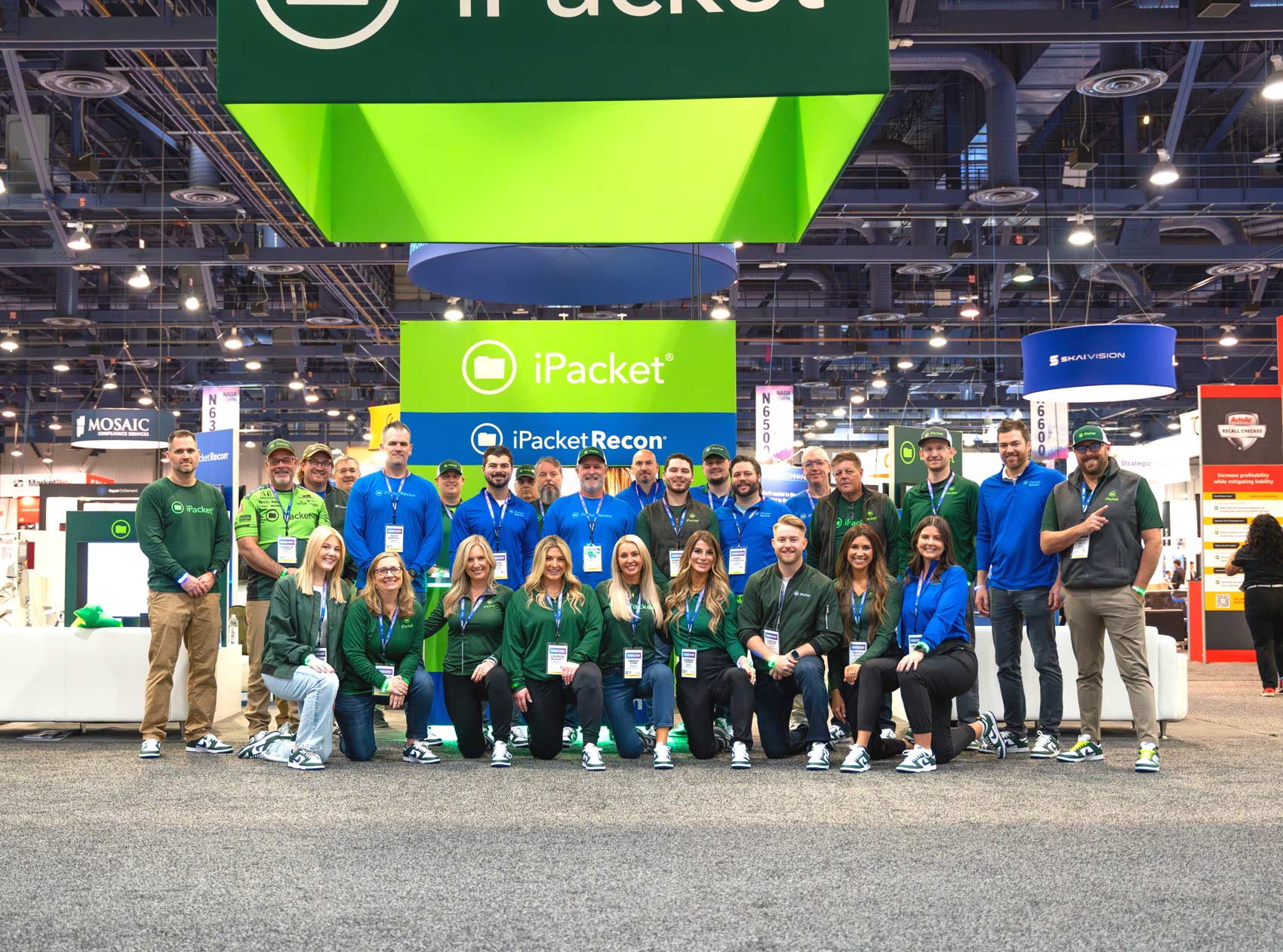
iPacket has about 130 employees by current public and supplied records. It remains privately held, headquartered in Parkersburg and fully remote. The company advertises unlimited PTO, paid parental leave, health benefits, a 401(k) match and online learning. At its 2025 gathering in Scottsdale, the team did goat yoga, built bikes for children and sang “Take Me Home, Country Roads.” Software companies spend fortunes searching for culture; sometimes the state anthem will do.
The lasting lesson is not “digitize paper,” advice that expired years ago. It is to notice when a humble packet contains a business system in miniature. The documents explain the product. The act of opening them reveals intent. The missing records expose operational delays. The accumulated history improves valuation. Each adjacent product is credible because the company began close to the ground, inside a dealership, with the nuisance everybody could see.
That is what iPacket did: it made the proof portable, learned from its movement and followed the same vehicle into the next expensive decision. The folder disappeared. Its logic became the company.